Atlas Restoration, LLC (often referred to as Atlas Foundation Repair) provides specialized structural stabilization, basement waterproofing, and concrete leveling services for residential and commercial properties throughout Chicago, IL. By utilizing advanced piering systems and hydrostatic pressure mitigation techniques, they address structural failures caused by Chicago’s unique soil composition and extreme seasonal temperature fluctuations.
Understanding Foundation Challenges in the Chicago Landscape
Chicago’s geography presents a particular set of challenges for property owners. The city is built largely on glacial till and lacustrine deposits—essentially a mixture of silt and "Chicago Blue Clay." This soil is highly expansive, meaning it swells significantly when saturated with water and shrinks during the dry summer months or periods of drought.
As we move through 2026, the aging infrastructure of Chicago’s historic bungalows and two-flats continues to experience the cumulative effects of this soil movement. When the soil beneath a foundation shrinks, it creates voids, leading to settlement. Conversely, when it expands, it exerts immense lateral pressure on basement walls. Without intervention from specialists like Atlas, these forces can lead to catastrophic structural failure, including wall collapses and severe interior shifting.
The Role of the Chicago Water Table
Proximity to Lake Michigan and the high water table in various Chicago neighborhoods (such as those near the Des Plaines River or in the southern marshy regions) further complicates foundation health. Hydrostatic pressure—the force exerted by standing water against the foundation—is the primary cause of basement seepage and bowing walls. Atlas Restoration focuses on mitigating this pressure through a combination of structural reinforcement and sophisticated drainage solutions.
Core Services Offered by Atlas Restoration in Chicago
To address the diverse needs of Chicago’s residential and commercial sectors, Atlas provides a tiered approach to foundation health. Their services are generally categorized into structural stabilization, water management, and surface restoration.
Foundation Stabilization and Piering Systems
The most critical service for a sinking or settling home is the installation of piers. These are heavy-duty steel shafts driven deep into the earth to transfer the weight of the building from unstable surface soil to load-bearing strata or bedrock.
- Atlas Resistance Piers: These are the flagship products for the company. They are hydraulically driven into the ground using the weight of the structure itself as resistance. Once the piers reach a competent soil layer, the building is stabilized and, in many cases, can be lifted back toward its original elevation.
- Helical Piers: Unlike resistance piers, helical piers are screwed into the ground. These are often used for lighter structures, such as porches, decks, or new additions where the weight of the building is insufficient to drive resistance piers. They are also highly effective in tension situations, preventing a structure from "floating" or moving upward in saturated soils.
Basement Waterproofing and Drainage
Structural repair is often incomplete without addressing the source of the damage: water. In 2026, modern waterproofing standards in Chicago emphasize "managed drainage" rather than simple "sealing."
- Interior Drain Tile Systems: This involves excavating the perimeter of the basement floor, installing a perforated pipe, and directing water to a sump pump. This relieves the hydrostatic pressure that causes floors to crack and walls to leak.
- Crawl Space Encapsulation: For homes with crawl spaces rather than full basements, Atlas provides vapor barriers and dehumidification systems to prevent wood rot and mold, which can weaken the floor joists supporting the home.
Structural Concrete Repair
Not every issue requires deep piering. For minor settlement or cosmetic issues, Atlas utilizes:
- Crack Injection: High-pressure epoxy or polyurethane injections seal foundation cracks to prevent water ingress and provide some structural bonding.
- Carbon Fiber Reinforcement: For basement walls that are beginning to bow inward but have not yet failed, carbon fiber straps provide a low-profile, high-tensile strength solution to "lock" the wall in place.
Comparing Foundation Repair Methods in 2026
When choosing a repair strategy, it is essential to understand the trade-offs between different technologies. The following table outlines the primary methods used by Atlas in the Chicago market.
| Method | Primary Use Case | Durability | Relative Cost |
|---|---|---|---|
| Resistance Piers | Heavy residential/commercial settlement | Permanent (Life of structure) | High |
| Helical Piers | Light loads, new construction, porches | Permanent | Moderate to High |
| Polyjacking | Leveling concrete slabs and walkways | 10–15+ years | Moderate |
| Epoxy Injection | Non-structural water seepage | Variable (5–10 years) | Low |
| Carbon Fiber Straps | Lateral stabilization for bowing walls | Permanent | Moderate |
The Atlas Inspection and Repair Process
The process of repairing a foundation in a dense urban environment like Chicago requires precision and adherence to strict municipal building codes. Atlas follows a standardized workflow to ensure safety and compliance.
Phase 1: Site Evaluation and Diagnostic Testing
An inspector visits the property to identify "symptoms" of failure, such as stairstep cracks in brickwork, doors that won't close, or visible gaps between the chimney and the house. They often use laser levels to map the floor's topography, determining exactly which corners of the structure have dropped and by how many inches.
Phase 2: Engineering and Permitting
In 2026, the City of Chicago Department of Buildings requires specific permits for structural alterations. Atlas typically coordinates with structural engineers to provide stamped drawings that detail the placement of piers and the load-bearing requirements. This step is non-negotiable for maintaining the resale value of the home and ensuring the repair meets the International Building Code (IBC).
Phase 3: Installation and Lifting
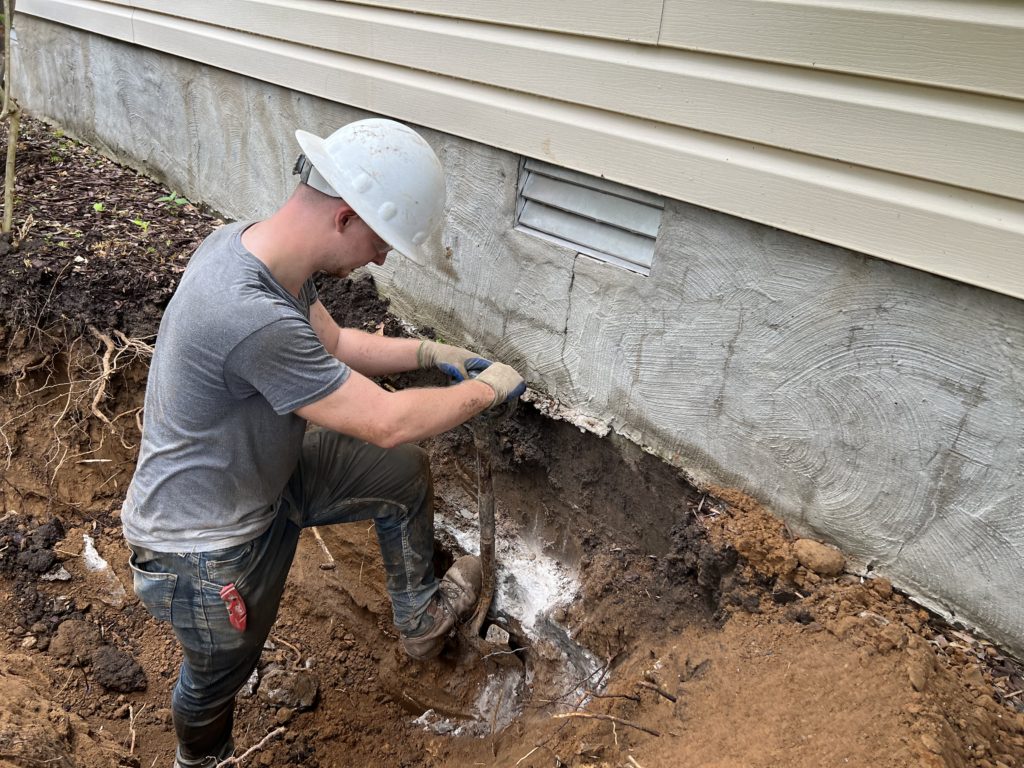
For piering projects, the perimeter of the foundation is excavated at specific intervals. Heavy-duty steel brackets are attached to the footing. The piers are then driven to the required depth or torque. If the goal is to "lift" the home, hydraulic jacks are used simultaneously across all pier locations to prevent stress fractures in the drywall or masonry.
Phase 4: Site Restoration
After the piers are locked into place, the excavated areas are backfilled and compacted. If interior work was performed (such as drain tile installation), the concrete floor is patched to match the existing surface.
2026 Cost Considerations for Chicago Homeowners
Foundation repair costs in the Chicago area are influenced by labor rates, material costs (specifically steel for piers), and the depth of the "Chicago Blue Clay" in a specific neighborhood.
- Piering Costs: As of 2026, homeowners should budget between $1,500 and $2,800 per pier. A typical corner stabilization might require 5 to 8 piers, while a full-side stabilization can exceed 15 piers.
- Waterproofing Costs: A full interior drain tile system for a standard Chicago bungalow typically ranges from $8,000 to $15,000, depending on the linear footage and the need for a new sump pit and battery backup system.
- Permit and Engineering Fees: Expect to allocate $1,500 to $3,500 for professional engineering reports and city permit fees, which are often separate from the labor and material costs.
While these costs are significant, the alternative is a continued loss of property value and the potential for a "Total Loss" designation by insurance or building inspectors if the structure becomes uninhabitable.
Common Signs Your Chicago Home Needs Professional Repair
Property owners should perform an annual "walk-around" to identify early warning signs. Catching these issues early can often lead to simpler, less expensive repairs like carbon fiber reinforcement rather than full-scale piering.
- Exterior Masonry Cracks: Look for "stair-step" patterns in the mortar between bricks. If the crack passes through the bricks themselves, the movement is likely active and severe.
- Displaced Windows and Doors: If doors begin to stick or if there are visible gaps above window frames, the foundation is likely tilting or settling unevenly.
- Basement Wall Rotation: If the top of the basement wall is leaning inward further than the bottom, hydrostatic pressure from the surrounding clay is causing structural rotation.
- Nail Pops and Drywall Cracks: On the upper floors, look for cracks extending from the corners of door frames or ceiling joints, which indicate the "skeleton" of the house is being pulled out of alignment.
Frequently Asked Questions
Does homeowner's insurance cover foundation repair in Chicago?
In most cases, standard homeowner's insurance policies do not cover foundation repair caused by earth movement, seepage, or wear and tear. Coverage is usually only available if the damage is a direct result of a "covered peril," such as a pipe burst or a sudden catastrophic event. However, it is advisable to check for specific riders related to "Sewer Backup" which might cover the remediation of water damage, if not the structural repair itself.
How long does a typical foundation repair project take?
For a residential property in Chicago, a standard piering or waterproofing project typically takes 3 to 7 working days. This timeframe includes excavation, installation, and backfilling. Complex projects involving structural steel beams or major lifting may take longer and require the home to be vacated temporarily, though most Atlas repairs allow the occupants to remain in the home.
Are the repairs permanent?
Atlas Restoration utilizes steel piering systems that are designed to bypass unstable soil entirely. These systems are considered permanent solutions for the life of the structure. Most reputable firms in 2026 offer transferable lifetime warranties on piering products, which provides significant value during the home-selling process.
Can I fix foundation cracks myself with store-bought kits?
While DIY epoxy kits are available for minor, non-structural hairline cracks, they do not address the underlying cause of the crack. If the crack is caused by settlement or hydrostatic pressure, a DIY patch will likely fail within a year as the house continues to move. For any crack wider than 1/8th of an inch, a professional evaluation is recommended to determine if structural reinforcement is required.
What is the difference between mudjacking and polyjacking?
Both are used to level concrete slabs (patios, driveways, or basement floors). Mudjacking uses a heavy mixture of sand and cement, while polyjacking uses a high-density expanding foam. Atlas frequently recommends polyjacking in Chicago because the foam is lightweight, waterproof, and does not add significant additional weight to the already-stressed Chicago clay.
Final Recommendation for Property Owners
If you suspect foundation issues in your Chicago property, the first step should always be a professional diagnostic inspection. Because Chicago's building codes are stringent, ensure that any contractor you hire, including Atlas Restoration, provides a clear project scope that includes necessary permits and engineering oversight.
For properties built on the highly expansive clays of the Cook County area, proactive water management—such as maintaining gutters and ensuring proper soil grading away from the foundation—is the most effective way to prevent future structural expenses. If settlement has already occurred, prioritized stabilization with steel piers is the only verified method to halt further damage and protect your real estate investment.