The evolution of Ariana Grande’s studio discography traces a remarkable trajectory from teen-oriented bubblegum pop and R&B-infused adolescent records to sophisticated, Grammy-winning dance-pop, neo-soul, and atmospheric trap-pop. Across multiple full-length releases, her artistic maturation has generated continuous public debate among critics and fans alike regarding vocal clarity, lyrical growth, cultural appropriation accusations, and the blurring lines between personal trauma and commercial art. Evaluating this discography requires looking past tabloid headlines to examine how her sonic palette, production choices, and vocal delivery have shifted over more than a decade in the public eye.
The Early Nickelodeon Era and the Transition to Mainstream Pop
Ariana Grande’s entry into the recording industry began during her tenure as an actor on the Nickelodeon television series Victorious and its spin-off Sam & Cat. Her early musical output was shaped by record executives seeking to capitalize on her television fanbase while establishing her as a viable pop and R&B vocalist. Her debut studio album, Yours Truly (2013), arrived with heavy comparisons to Mariah Carey due to its retro-leaning 1990s R&B production, prominent whistle tones, and smooth vocal arrangements.
Yours Truly and the R&B Blueprint
Released in August 2013, Yours Truly established Grande’s vocal capabilities through collaborations with producers like Harmony Samuels and Babyface. Tracks like "The Way" featuring Mac Miller and "Baby I" demonstrated a clear debt to the late-90s urban-pop landscape. Critics praised the album for showcasing an impressive vocal instrument for a 20-year-old artist, though debate centered on whether she relied too heavily on past stylistic templates rather than forging an original identity.
My Everything and the Global Shift
Her second studio album, My Everything (2014), shifted away from pure retro-R&B toward high-gloss EDM-pop and mainstream radio formulas. Working with major hitmakers such as Max Martin, Savan Kotecha, and Zedd, Grande delivered massive global singles including "Problem," "Break Free," and "Love Me Harder."
This period sparked the first major debate regarding her artistic direction:
- The Commercialist Perspective: Supporters argued that My Everything successfully transitioned her from a niche television star into a powerhouse global pop diva capable of dominating international charts.
- The Purist Critique: Traditionalists and early fans argued that the heavy-handed electronic production and trend-chasing stripped away the acoustic warmth and vocal nuance that made Yours Truly distinctive.
The Mid-Career Pivot: Maturity, Trap-Pop, and Cultural Aesthetics
As Grande transitioned from her early twenties into adulthood, her music grew darker, more experimental, and increasingly influenced by contemporary hip-hop and trap music. This era also introduced intense public scrutiny regarding her visual presentation, vocal diction, and stylistic borrowing.
Dangerous Woman: Bridging Pop and R&B
With Dangerous Woman (2016), Grande asserted greater creative control over her sound. The title track leaned into a smoldering, mid-tempo R&B groove, while songs like "Side to Side" incorporated heavy reggae-pop rhythms. Critics noted a growing confidence in her lower register and a willingness to explore mature lyrical themes without relying entirely on vocal acrobatics. The debate during this era shifted toward her public persona, as discussions surrounding her evolving aesthetic—often labeled by critics as "blaccent" or stylistic code-switching—began to polarize cultural commentators.
Sweetener: Trauma, Healing, and Experimental Production
Following the tragic May 2017 Manchester Arena bombing during her Dangerous Woman Tour and the sudden death of her ex-partner Mac Miller, Grande’s music took on profound emotional weight. Sweetener (2018), largely produced alongside Pharrell Williams, blended avant-garde pop structures with upbeat affirmations and vulnerable balladry.
Tracks like "No Tears Left to Cry" provided an anthemic response to grief, while experimental cuts like "The Light Is Coming" polarized listeners. Pharrell’s erratic, dissonant production choices on several tracks became a lightning rod for debate:
- Some critics hailed Sweetener as a visionary, risk-taking masterclass in modern pop texture.
- Others found the production jarring and argued that it obscured Grande's vocal delivery behind unnecessary sonic clutter.
The Commercial Peak and Self-Actualization
Following the whirlwind release of Sweetener, Grande capitalized on her creative momentum with unprecedented speed, dropping two blockbuster albums that cemented her status as a defining pop icon of the 2010s and 2020s.
Thank U, Next: Speed, Confession, and Trap Dominance
Released just six months after Sweetener, thank u, next (2019) was born out of intense personal heartbreak, public breakups, and the grieving process. Abandoning the eccentric R&B-pop of her previous work, Grande leaned heavily into sparse trap-pop beats, conversational lyricism, and direct self-reflection.
The title track, "7 rings," and "break up with your girlfriend, i'm bored" dominated the Billboard charts. However, this era reignited intense cultural debate:
- The Accusations of Appropriation: "7 rings" faced heavy criticism for cultural appropriation, borrowing heavily from hip-hop cadences, trap aesthetics, and borrowing melodic phrasing from artists like 2K Baby, Soulja Boy, and Rodgers and Hammerstein. Critics argued that Grande was selectively adopting Black American urban culture when commercially convenient.
- The Vulnerability Defense: Conversely, defenders praised the album's raw emotional honesty, highlighting how Grande processed public trauma in real time through catchy, self-aware songwriting.
Positions: Smooth R&B and Domestic Contentment
Positions (2020), released during the COVID-19 pandemic, represented a quieter, more cohesive return to mid-tempo R&B. Anchored by the lead single "Positions" and tracks like "34+35," the album focused on themes of domesticity, romance, and sexual autonomy. While commercially successful, it generated debate regarding creative fatigue. Some critics viewed the record as a safe, overly uniform collection that lacked the sharp lyricism of thank u, next or the sonic ambition of Sweetener, while R&B purists appreciated its smooth, unpretentious vocal layering.
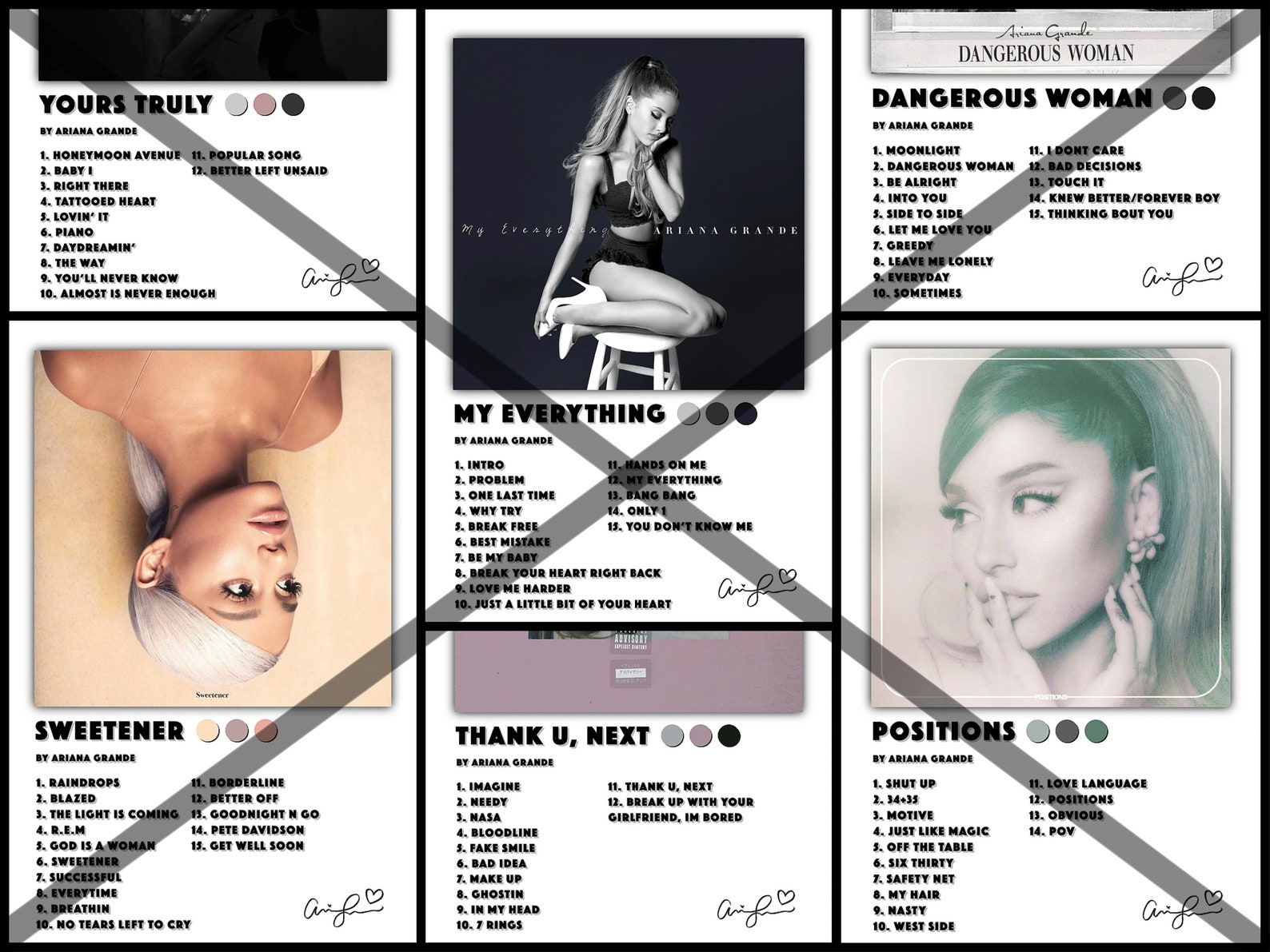
| Album Title | Release Year | Primary Musical Style | Landmark Commercial Single | Core Critical Debate |
|---|---|---|---|---|
| Yours Truly | 2013 | Retro R&B, Doo-Wop | "The Way" | Derivative Mariah Carey comparisons vs. impressive vocal talent. |
| My Everything | 2014 | EDM-Pop, Mainstream Pop | "Problem" | Chart dominance vs. loss of acoustic, soulful identity. |
| Dangerous Woman | 2016 | Arena Pop, R&B, Reggae-Pop | "Dangerous Woman" | Vocal growth vs. debates over cultural signifiers and aesthetic shifts. |
| Sweetener | 2018 | Experimental Pop, Trap-Pop | "No Tears Left to Cry" | Visionary avant-garde production vs. jarring, over-complicated beats. |
| thank u, next | 2019 | Trap-Pop, R&B | "7 rings" | Raw confessional songwriting vs. cultural appropriation and borrowing. |
| Positions | 2020 | Smooth R&B, Urban-Pop | "Positions" | Cohesive bedroom R&B vs. creative stagnation and lyrical repetition. |
| Eternal Sunshine | 2024 | House-Pop, Synth-Pop, R&B | "yes, and?" | Introspective maturity vs. tabloid-adjacent thematic fatigue. |
The Return to Form: Eternal Sunshine
After a multi-year hiatus dedicated to filming her role as Glinda in the cinematic adaptation of the musical Wicked, Grande returned with her seventh studio album, Eternal Sunshine (2024). Named after the film Eternal Sunshine of the Spotless Mind, the record serves as a mature concept album examining the dissolution of a marriage, public scrutiny, and the complexities of moving on.
Working closely with producer Max Martin and Ilya Salmanzadeh, Grande married the lush vocal arrangements of her earlier career with sophisticated house-pop and introspective synth-pop textures. Lead single "yes, and?" nodded directly to Madonna’s "Vogue" and house music foundations, sparking conversations about media intrusion and public judgment. Tracks like "we can't be friends (wait for your love)" received widespread critical acclaim for their emotional resonance, crisp production, and restrained vocal delivery.
The debate surrounding Eternal Sunshine largely centered on her personal life—specifically her public relationship status—overshadowing the musical craftsmanship. Yet, most critics agreed that the album represents her most cohesive, emotionally grounded, and structurally unified body of work to date.
Common Criticisms and Ongoing Debates
Throughout her career, Ariana Grande’s artistic output has been accompanied by recurring public and critical debates that extend beyond the music itself. Understanding her discography requires acknowledging these friction points.
Vocal Diction and Enunciation
One of the most persistent criticisms leveled against Grande, particularly from the Dangerous Woman era onward, is her lack of clear enunciation. As she adopted more R&B-inflected vocal runs and trap cadences, her lyrics frequently became difficult to understand without reading the liner notes. While supporters view this as an intentional stylistic choice where the human voice functions as an additional instrument within the mix, detractors argue it reflects sloppy delivery and a lack of lyrical clarity.
The Intersection of Trauma, Tabloid Culture, and Art
Grande’s career has intersected with extraordinary personal loss and high-profile public relationships. Critics often debate how much her artistic credibility relies on the public's fascination with her personal life. Albums like thank u, next and Eternal Sunshine lean heavily into real-time autobiographical heartbreak. While this provides a compelling narrative arc for her fans, cultural critics frequently question whether the music functions primarily as a soundtrack to celebrity gossip or stands firmly on its own artistic merits.
Frequently Asked Questions
What is Ariana Grande’s best-received album critically?
Sweetener (2018) and Eternal Sunshine (2024) generally contend for the highest critical acclaim within her catalog. Sweetener won the Grammy Award for Best Pop Vocal Album and is frequently praised for its daring sonic risks, while Eternal Sunshine is lauded for its thematic maturity and cohesive songwriting.
How has Ariana Grande’s vocal style changed over time?
Grande began her career utilizing a bright, soaring soprano voice heavily inspired by 1990s R&B vocalists, complete with whistle tones and complex ad-libs. As her career progressed, she incorporated lower chest registers, conversational phrasing, and subdued vocal stacking inspired by contemporary hip-hop and house music production.
Why is there a debate regarding cultural appropriation in her music?
Critics have frequently pointed to Grande’s changing aesthetic presentation, vocal cadences, and stylistic choices—particularly during the Dangerous Woman and thank u, next eras—arguing that she adopts elements of Black American urban culture and trap aesthetics when commercially convenient, only to revert to a different aesthetic during other career phases.
Which album marked her transition from teen pop to adult pop?
Dangerous Woman (2016) is widely considered the pivot point where Grande shook off her Nickelodeon-associated teen-pop image and established herself as a mature, independent adult pop artist capable of commanding global arena stages.
How did personal events influence thank u, next?
thank u, next was written and recorded in a rapid two-week burst following the death of her ex-boyfriend Mac Miller and the end of her engagement to comedian Pete Davidson. The album channeled her grief and public scrutiny into a direct, confessional trap-pop record that prioritized rapid emotional processing over polished perfectionism.
Conclusion and Next Actions
Evaluating Ariana Grande’s discography reveals an artist constantly negotiating the boundary between hyper-commercial pop stardom and personal artistic expression. Whether one prefers the retro R&B of her debut or the sleek synth-pop configurations of her later work, tracing her album evolution demonstrates a persistent drive to refine her craft. For listeners looking to explore her catalog deeply, beginning with Sweetener provides a masterclass in modern pop experimentation, while Eternal Sunshine offers a rewarding look at an artist achieving mature self-possession.