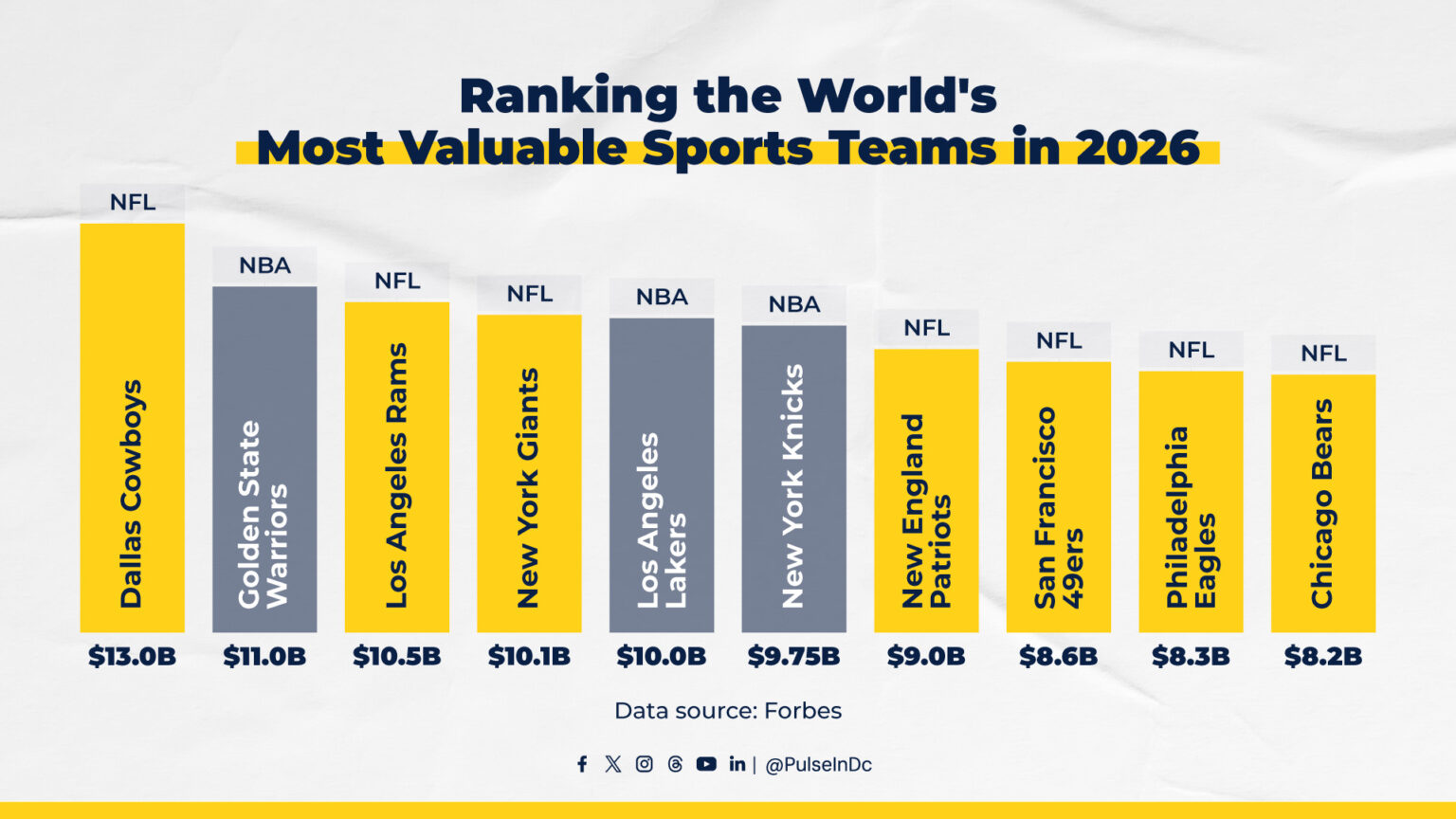
As of 2026, the Dallas Cowboys are the most valuable sports franchise in America, with a market valuation estimated at approximately $11.5 billion. Their financial dominance is fueled by record-breaking NFL national media contracts, an industry-leading sponsorship portfolio, and the massive commercial success of their Frisco-based headquarters, "The Star," which serves as a global blueprint for sports-centric real estate.
The Financial Architecture of the Dallas Cowboys
To understand how the Dallas Cowboys have maintained their status as the most valuable sports franchise in North America for nearly two decades, one must look beyond the win-loss record on the field. The valuation of a professional sports team in 2026 is an amalgamation of scarcity, media rights, and the ability to monetize a brand independently of league-wide revenue sharing.
The Power of Independent Brand Monetization
Unlike many other NFL teams that rely heavily on the league's collective revenue-sharing pool, Jerry Jones and the Cowboys organization have historically leveraged a unique 2004 legal settlement that allows them to market their own merchandise and sponsorship deals separately. While the team still shares national television revenue, their ability to sign "blue-chip" partnerships with global brands—ranging from telecommunications to luxury apparel—provides a significant "local revenue" surplus that other franchises struggle to match.
By 2026, this independent marketing engine has expanded into the digital realm. The Cowboys have pioneered direct-to-consumer content and exclusive digital collectibles that bypass traditional media intermediaries, allowing them to capture 100% of the margins on specific fan engagements. This technical advantage in data harvesting and fan-base monetization is a primary reason for their multi-billion dollar lead over the nearest competitors.
Real Estate as a Value Multiplier: The Star
The valuation of the Cowboys is no longer tied solely to the 100 yards of turf at AT&T Stadium. A massive portion of the franchise's $11.5 billion worth is derived from The Star in Frisco. This 91-acre campus includes the team's world headquarters, training facilities, a 12,000-seat indoor stadium, luxury hotels, medical centers, and high-end retail.
In the current 2026 economic landscape, the "stadium-anchored development" model has become the standard for sports investment. However, the Cowboys were the first to execute this at a scale where the real estate assets generate year-round revenue independent of the NFL schedule. Investors value this stability, as it mitigates the financial risk of a "down year" on the field.
Comparing the Titans: Top Valuations in 2026
While the Dallas Cowboys sit at the apex, the gap between the top five franchises in America has narrowed as media rights for the NBA and MLB have also reached historic highs. The following table provides a breakdown of the leading American sports franchises by valuation and their primary growth drivers as of the current 2026 fiscal year.
| Franchise | League | 2026 Estimated Value | Primary Revenue Driver | Key Asset/Venue |
|---|---|---|---|---|
| Dallas Cowboys | NFL | $11.5 Billion | Sponsorship & Real Estate | AT&T Stadium / The Star |
| New York Yankees | MLB | $8.2 Billion | Regional Sports Network (YES) | Yankee Stadium |
| Golden State Warriors | NBA | $8.0 Billion | Arena Events & Tech Integration | Chase Center |
| New York Knicks | NBA | $7.5 Billion | Premium Seating & Market Size | Madison Square Garden |
| New England Patriots | NFL | $7.4 Billion | League Media Rights & Patriot Place | Gillette Stadium |
The Rise of the Golden State Warriors
It is noteworthy that the Golden State Warriors have surged into the top three, rivaling the New York Yankees. Their valuation growth is a case study in privately financed infrastructure. By owning the Chase Center in San Francisco, the Warriors control all revenue from concerts, corporate events, and non-NBA programming. In 2026, the ability to control the "gate" and the ancillary spending of high-net-worth fans in the Silicon Valley corridor has made them the gold standard for NBA valuations.
The Yankees and the "Premium" Market
The New York Yankees remain the most valuable non-football entity in America. Their value is bolstered by the YES Network, which remains one of the most profitable regional sports networks despite the broader shift toward streaming. In 2026, the Yankees have successfully integrated "hyper-local" streaming options that allow them to monetize their massive global fan base directly, proving that historic brands can transition into the digital age without losing their premium status.
The Engine of Growth: NFL Media Contracts in 2026
The single largest factor supporting the valuations of the Cowboys, Patriots, and other NFL teams is the massive influx of capital from national broadcasting and streaming partners. The long-term media deals signed earlier this decade—involving partners like Amazon, Disney (ESPN/ABC), NBC, CBS, and FOX—have provided a guaranteed revenue floor that grows annually.
The Impact of Streaming Giants
By 2026, the transition of "NFL Sunday Ticket" to YouTube and the expansion of exclusive games on platforms like Amazon Prime Video and Peacock have fundamentally changed the valuation metrics. These tech companies do not view NFL rights through the lens of traditional ad sales; they view them as a customer acquisition tool for their broader ecosystems. This "tech-premium" has driven the price of rights to levels that were unthinkable a decade ago, directly inflating the value of every NFL franchise.
Gambling and Sports Betting Integration
Another significant pillar of the 2026 valuation is the full-scale integration of legal sports betting. The Dallas Cowboys have been at the forefront of securing "official betting partnerships" that integrate live odds into the stadium experience and digital broadcasts. This provides a high-margin revenue stream that scales with fan engagement, regardless of whether the team wins the Super Bowl.
The Scarcity Factor and the Billionaire "Trophy" Effect
From a technical investment standpoint, the valuation of America’s most valuable sports franchise is also driven by extreme scarcity. There are only 32 NFL teams, and they are rarely put up for sale. When a team does enter the market—such as the record-breaking sales seen in the mid-2020s—the price is often dictated not by a standard 10x EBITDA multiple, but by the "trophy asset" status.
Why Billionaires Pay the Premium
For the ultra-high-net-worth individuals who purchase these teams, the ROI is found in two places:
- Capital Appreciation: Sports franchises have historically outperformed the S&P 500 in terms of value growth over 20-year periods.
- Tax Advantages: Owners can often amortize the purchase price (goodwill and player contracts) over a set period, providing a significant tax shield for their other business interests.
In 2026, as global capital seeks "safe haven" assets with high barriers to entry, American sports teams—particularly the Cowboys—represent the ultimate stable investment.
Challenges to Future Valuation Growth
While the trajectory for the Dallas Cowboys seems perpetually upward, several economic factors could temper growth as we move toward 2030.
The Squeeze on Discretionary Spending
Even for a brand as powerful as the Cowboys, there is a ceiling on what fans can pay for "premium" experiences. By 2026, the cost of a family of four attending a game at AT&T Stadium has reached levels that exclude many traditional fans. If franchises lose the "next generation" of fans due to pricing, long-term brand equity could suffer.
The Regional Sports Network (RSN) Collapse
While the NFL is insulated by national deals, MLB and NBA teams are currently navigating the fallout of the RSN model's decline. Teams that do not own their networks or have not successfully launched a robust streaming alternative may see their valuations stagnate. The Yankees and Warriors have mitigated this, but for "mid-market" franchises, the gap between the "haves" and "have-nots" is widening.
How to Verify Sports Franchise Valuations
Determining the exact net worth of a private entity like the Dallas Cowboys requires looking at several audited and reported sources. While the teams do not release full financial statements, analysts use the following markers to verify valuations:
- Publicly Traded Comps: Organizations like Madison Square Garden Sports (Knicks/Rangers) are publicly traded, providing a transparent baseline for market caps and revenue multiples.
- League Audits: The NFL and other leagues conduct internal audits to manage revenue sharing, parts of which are occasionally leaked or reported by business journals.
- Municipality Records: Stadium debt, tax breaks, and lease agreements are often public records, allowing analysts to estimate venue-related income.
- Forbes and Bloomberg Sports Indices: These remain the industry standard for annual valuation rankings, utilizing deep-access reporting to estimate EBITDA and debt-to-value ratios.
Common Mistakes in Assessing Franchise Value
A frequent error made by casual observers is equating a team's on-field performance with its market value. For instance, the Dallas Cowboys have not won a Super Bowl in the 21st century, yet their value has increased by over 1,000% in that timeframe.
- Mistake: Thinking winning equals value.
- Reality: Market size, stadium ownership, and media rights are much stronger predictors of value than playoff wins.
- Mistake: Assuming all revenue is shared.
- Reality: Local sponsorships, luxury suite sales, and non-sporting events are retained by the team, creating the massive valuation gap between top-tier and bottom-tier teams.
Frequently Asked Questions
Are the Dallas Cowboys more valuable than Real Madrid or Manchester United?
Yes. As of 2026, the Dallas Cowboys are more valuable than any European soccer club. While clubs like Real Madrid and Manchester United have larger global fan bases, the American closed-league system (no relegation) and the massive domestic TV contracts of the NFL create a more profitable and lower-risk business environment for owners.
Why is an NFL team worth more than an NBA team?
The primary reason is the NFL's national TV contracts. The NFL’s ability to command massive audiences for "appointment viewing" makes its broadcast rights significantly more expensive than the NBA's. Additionally, NFL stadiums are generally larger, allowing for higher game-day revenue through ticket sales and concessions, even with fewer home games.
Does Jerry Jones own AT&T Stadium?
The stadium is technically owned by the City of Arlington, but the Dallas Cowboys hold a long-term lease and control all operations. Most importantly, the team retains the vast majority of the revenue generated by the venue, including naming rights, concessions, and parking.
Can I buy shares in the Dallas Cowboys?
No. The Dallas Cowboys are a privately held entity owned primarily by the Jones family. Unlike the Green Bay Packers (which have a unique "community" ownership structure) or the New York Knicks (which are part of a publicly traded company), there is no way for a retail investor to buy stock in the Cowboys.
How does "The Star" in Frisco contribute to the team's value?
"The Star" is a diversified real estate asset. Because it hosts corporate headquarters, medical facilities, and retail, it generates rent and service revenue 365 days a year. This makes the franchise less dependent on the 8 or 9 home games played at AT&T Stadium, significantly increasing its overall valuation through asset diversification.
Practical Recommendation for Observers and Investors
If you are tracking sports franchise valuations for investment or business analysis, focus on stadium ownership and real estate development. The most valuable teams in 2026 are no longer just sports teams; they are media and real estate conglomerates. When evaluating a franchise's growth potential, look at their "ancillary revenue" streams—such as mixed-use developments around their arenas—as these are now the primary drivers of billion-dollar valuation jumps.
For fans and students of the game, understanding these economics explains why certain teams can afford state-of-the-art facilities and high-priced coaching staffs even during periods of lackluster on-field performance. The Dallas Cowboys have successfully decoupled their financial health from their win-loss record, securing their spot as America's most valuable sports franchise for the foreseeable future.