Alton Brown’s turkey brining method is a kitchen-tested technique that uses a saltwater and aromatic solution to ensure a moist, flavorful, and perfectly seasoned bird. By soaking the turkey in a mixture of salt, sugar, vegetable stock, and spices for 8 to 16 hours, the meat retains more moisture during the roasting process, preventing the common issue of dry breast meat.
For over two decades, the "Good Eats" method has remained the gold standard for Thanksgiving preparation. While culinary trends shift, the fundamental science behind Brown’s wet brine remains one of the most reliable ways to guarantee a successful holiday centerpiece. As we look at the best practices for 2026, understanding the precise measurements, the chemical reactions at play, and the roasting specifics is essential for both novice and veteran cooks.
The History and Impact of "Romancing the Bird"
First introduced in the 1999 "Good Eats" episode titled "Romancing the Bird," Alton Brown’s turkey recipe revolutionized how American home cooks approached the holiday. Before this episode, many relied on "low and slow" roasting methods that often resulted in sawdust-dry white meat and rubbery skin. Brown’s approach was radical because it combined rigorous food science with practical hardware-store solutions.
The method focuses on two primary goals: moisture retention through osmosis and flavor infusion through aromatics. By treating the turkey as a biological vessel that can be manipulated through salt concentration, Brown moved the conversation away from "secret family recipes" and toward "repeatable culinary results." In 2026, this recipe continues to be the most searched-for turkey preparation method because it prioritizes results over tradition.
The Science of Brining: How It Works
To master the Alton Brown turkey, one must understand the "why" behind the "how." Brining is not merely about "soaking" a bird; it is a process of physical and chemical transformation.
Osmosis and Diffusion
When you place a turkey in a brine, the salt concentration in the water is much higher than the salt concentration inside the turkey’s cells. Through the process of diffusion, salt ions move from the water into the meat. Once inside, the salt interacts with the protein filaments, specifically myosin.
Protein Denaturation
Salt causes the tightly wound protein strands in the muscle to unwind or "denature." As these proteins relax, they create a matrix that can trap and hold onto water. When the turkey hits the hot oven, the proteins contract. In an unbrined bird, this contraction squeezes out moisture (like a sponge). In a brined bird, the relaxed protein structure holds onto that extra liquid, resulting in a finished product that is significantly juicier.
Flavor Carrying
Water is a solvent. By boiling aromatics like peppercorns, allspice, and ginger in the brine concentrate, you dissolve their essential oils into the liquid. As the salt carries water into the cells, it brings these flavor molecules along for the ride, seasoning the meat from the inside out rather than just on the surface.
Essential Ingredients for the Alton Brown Brine
The classic recipe requires specific ingredients that work in harmony. While it is tempting to substitute, the balance of salt and sugar is critical for both flavor and the Maillard reaction (browning).
- Kosher Salt (1 cup): It is vital to use Kosher salt rather than table salt. Table salt is much denser; using a cup of table salt would make the bird inedibly salty. If using Diamond Crystal, you may need slightly more by volume than if using Morton’s.
- Light Brown Sugar (1/2 cup): The sugar doesn't make the turkey sweet. Instead, it balances the salt and provides the fuel for the Maillard reaction, helping the skin achieve a deep mahogany color.
- Vegetable Stock (1 gallon): Brown prefers vegetable stock over chicken stock to keep the flavor profile "clean" and focused on the aromatics.
- Black Peppercorns (1 tablespoon): Provides a subtle back-end heat.
- Allspice Berries (1 1/2 teaspoons): This is the "secret" ingredient that gives the turkey its classic, warm holiday aroma.
- Candied Ginger (1 1/2 teaspoons): The ginger adds a bright, sharp note that cuts through the richness of the poultry fat.
- Ice Water (1 gallon): This is used to cool the brine instantly, ensuring the turkey never enters the "danger zone" for bacterial growth.
Equipment and Prerequisites
Before starting, you must ensure you have the proper vessel for the brine. A standard stockpot is rarely large enough to hold a 14-16 pound turkey plus two gallons of liquid.
- A 5-Gallon Food-Grade Bucket: This is the traditional Alton Brown recommendation. Ensure it is "food-grade" (often found at restaurant supply stores or high-end hardware retailers) to avoid plastic chemicals leaching into the brine.
- A Heavy-Duty Cooler: If your refrigerator is full, a well-insulated cooler can keep the turkey at a safe temperature (below 40°F/4°C) for the duration of the brine, provided you use enough ice.
- Digital Probe Thermometer: This is non-negotiable. Roasting by time is a recipe for failure; roasting by internal temperature is the only way to ensure safety and juiciness.
- Heavy Duty Aluminum Foil: Used to create a "breast shield" during the roasting process.
Step-by-Step Execution: The Brining Process
1. The Brine Concentrate
Combine the vegetable stock, salt, brown sugar, peppercorns, allspice, and ginger in a large pot over medium-high heat. Stir occasionally to ensure the salt and sugar dissolve completely. Bring the mixture to a boil, then immediately remove it from the heat.
2. Cooling the Solution
Never put a raw turkey into hot or warm liquid. This would begin cooking the exterior and invite bacterial growth. Combine the hot concentrate with the gallon of ice water in your brining container. The temperature of the liquid must be below 40°F before the turkey is added.
3. Prepping the Bird
Remove the giblets and the neck. This is a crucial step—if you leave the plastic bag of innards inside, the brine cannot circulate through the cavity, and the plastic may melt during roasting. Rinse the turkey (though modern USDA guidelines suggest skipping the rinse to avoid splashing bacteria, Brown’s original method included it; proceed with caution and sanitize your sink afterward).
4. The Soak
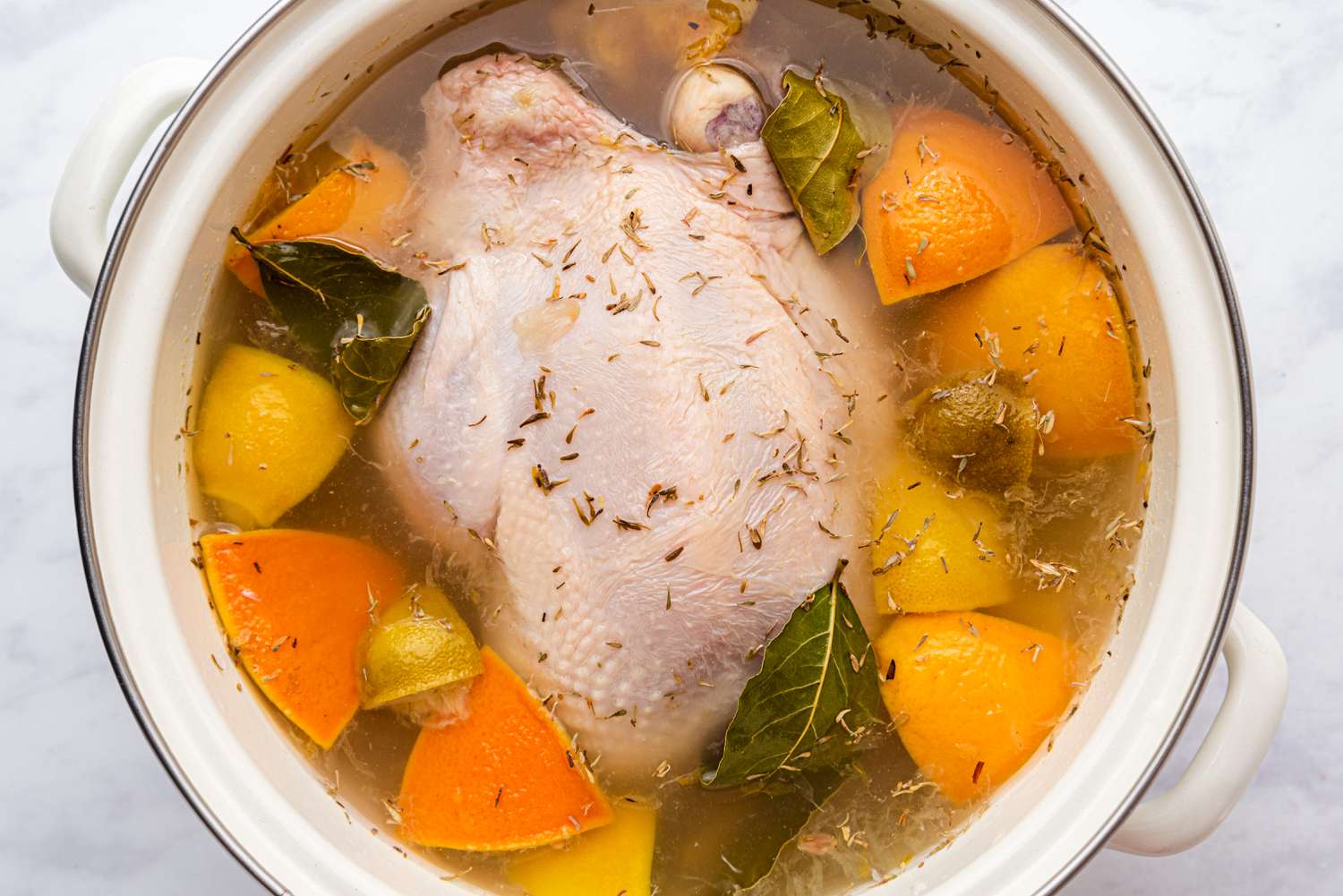
Submerge the turkey breast-side down in the brine. If the bird floats, weigh it down with a heavy plate or a gallon jug filled with water. Place the container in the refrigerator (or a cooler with ice) for 8 to 16 hours. Do not exceed 24 hours, or the meat will become "mushy" and overly salty.
5. The Drying Phase (The "Secret" Step)
After brining, remove the bird and pat it dry with paper towels. For the best skin, place the turkey on a rack in the refrigerator for another 2 to 4 hours (or even overnight) uncovered. This air-drying allows the skin to dehydrate slightly, which leads to maximum crispness once it hits the heat.
The Alton Brown Roasting Technique
Brining is only half the battle. The roasting method Brown employs is designed to cook the dark meat and white meat to their respective ideal temperatures simultaneously.
- The High-Heat Blast: Preheat your oven to 500°F (260°C). This intense heat triggers the Maillard reaction immediately, crisping the skin and sealing in juices.
- The Breast Shield: Create a triangle out of heavy-duty aluminum foil. Once the turkey has been at 500°F for about 30 minutes, the skin should be golden. Remove the turkey briefly, place the foil shield over the breast meat (to reflect heat and slow its cooking), and reduce the oven temperature to 350°F (175°C).
- The Target Temperature: Insert your probe thermometer into the thickest part of the breast. Roast until the thermometer reads 161°F (72°C).
- The Carry-Over Cooking: Remove the turkey from the oven. The internal temperature will continue to rise to the USDA-recommended 165°F while the bird rests.
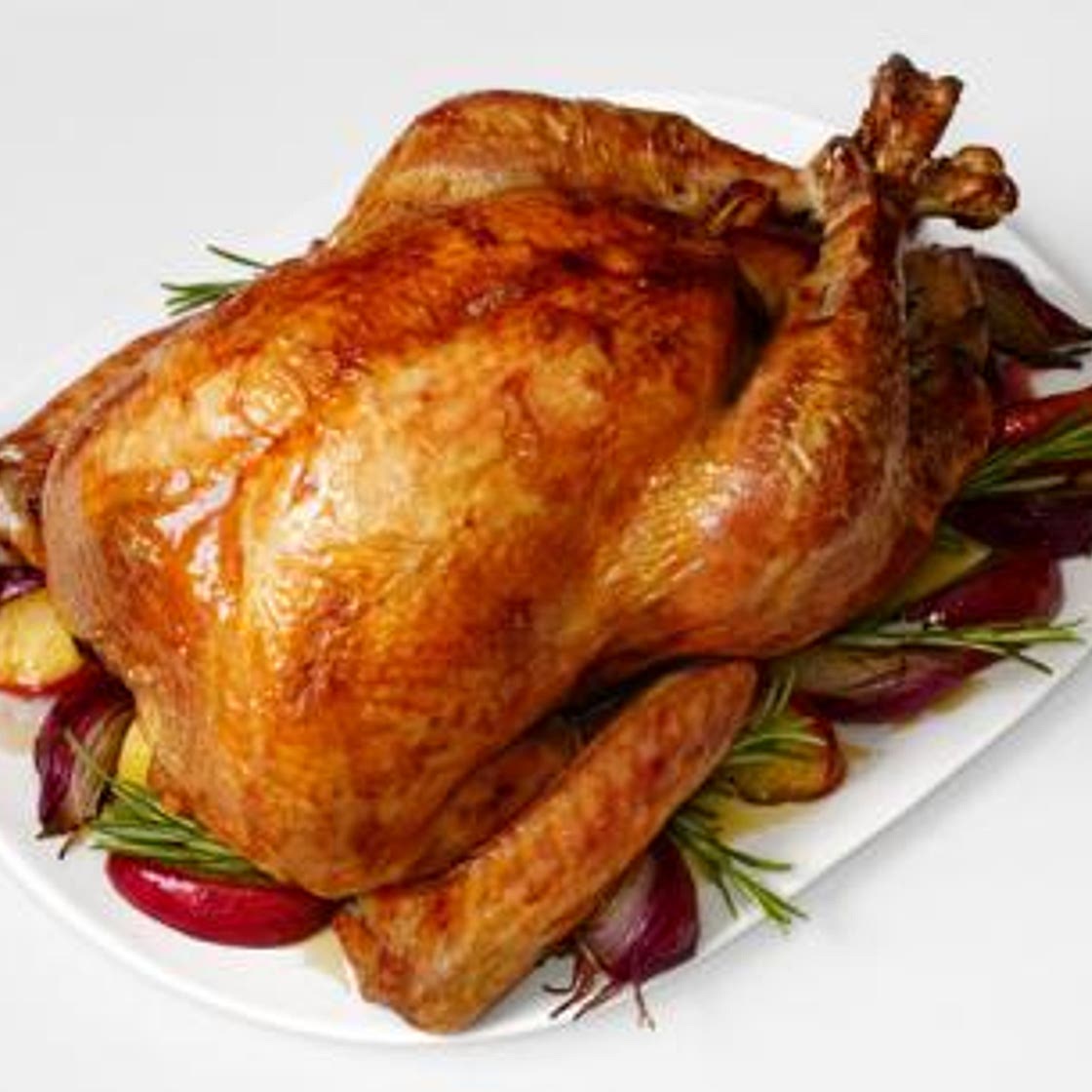
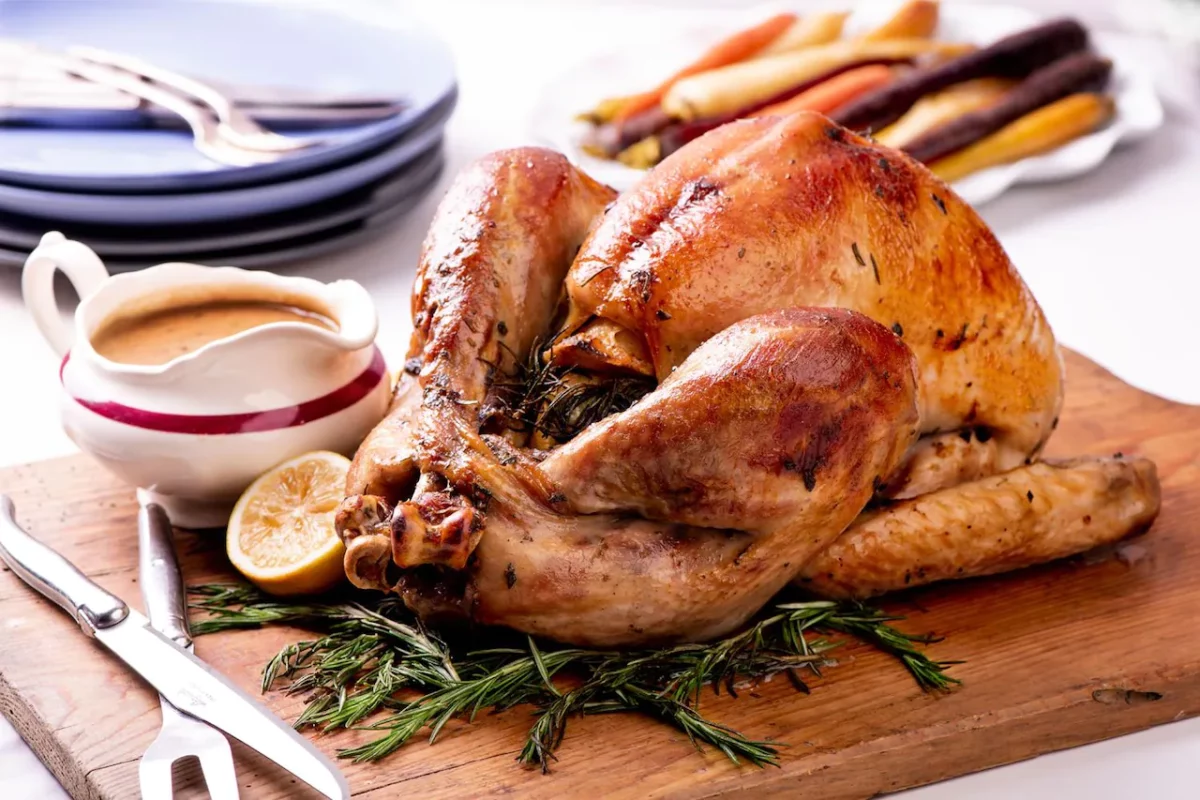
- The Rest: Let the turkey rest for at least 30 minutes before carving. This allows the juices to redistribute through the muscle fibers. If you carve too soon, the moisture you worked so hard to add during the brining phase will simply run out onto the cutting board.
Comparison: Wet Brining vs. Dry Brining
While Alton Brown’s 1999 method is a wet brine, he has also explored dry brining in later years. Here is how the classic wet brine compares to modern alternatives in 2026.
| Feature | Alton Brown Wet Brine | Modern Dry Brine |
|---|---|---|
| Primary Mechanism | Osmosis via saltwater solution | Salt drawing out and reabsorbing meat juices |
| Moisture Gain | High (adds roughly 10% weight in water) | Moderate (retains natural juices only) |
| Flavor Profile | Subtly infused with aromatics | Pure turkey flavor, salt-forward |
| Skin Texture | Good (if air-dried properly) | Excellent (naturally crisper) |
| Space Required | High (requires 5-gallon container/fridge space) | Low (sits on a tray in the fridge) |
| Preparation Time | 8–16 hours | 12–72 hours |
| Effort Level | Moderate (boiling/cooling/lifting) | Low (rubbing with salt) |
Common Mistakes to Avoid
- Using a Self-Basting Turkey: Many commercial turkeys (like Butterball) are "pre-brined" with a salt solution. If you put a self-basting turkey into an Alton Brown brine, the result will be extremely salty. Always look for a "natural" turkey with no added ingredients.
- Improper Cooling: Adding a turkey to a lukewarm brine is the most common cause of foodborne illness during Thanksgiving. Use a thermometer to ensure the brine is below 40°F before the bird goes in.
- Over-Brining: If life gets in the way and you leave the turkey in the brine for 48 hours, the salt will begin to "cure" the meat, giving it a texture more like ham than roasted poultry. Stick to the 16-hour limit.
- Ignoring the Rest: If you do not let the bird rest for 30 minutes, the breast meat will be dry despite the brine.
Frequently Asked Questions
Can I use a frozen turkey for the Alton Brown brine?
The turkey must be completely thawed before it enters the brine. Brining a frozen bird is ineffective because the salt ions cannot penetrate the ice crystals to reach the muscle fibers. Plan for 24 hours of thawing time in the refrigerator for every 4–5 pounds of turkey.
Do I need to rinse the turkey after taking it out of the brine?
Alton Brown's original instructions suggest a rinse, but modern safety guidelines suggest that rinsing raw poultry can spread bacteria around the kitchen. The most important step is to pat the bird thoroughly dry. If you are worried about saltiness, a quick rinse is fine, provided you sanitize the sink and surrounding counters immediately after.
What if I don't have a 5-gallon bucket?
You can use a large stockpot or even a heavy-duty "brining bag" (double-bagged for safety) placed inside a roasting pan. The key is to ensure the turkey is fully submerged. If using a bag, ensure it is squeezed of air so the liquid stays in contact with all surfaces of the bird.
Can I substitute the vegetable stock with water?
You can, but you will lose a significant layer of flavor. If you use water, consider doubling the aromatics (allspice, ginger, and peppercorns) to compensate for the loss of the savory base provided by the stock.
Is the candied ginger absolutely necessary?
The candied ginger provides both a specific sweetness and a sharp ginger note that defines the Alton Brown profile. If you cannot find it, you can substitute with two tablespoons of fresh sliced ginger and an extra tablespoon of brown sugar, though the flavor will be slightly less "warm."
Final Recommendation
For those hosting a holiday meal in 2026, the Alton Brown wet brine remains the most reliable method for producing a succulent turkey that impresses guests. Its success lies in the balance of salt and sugar, which provides both a safety net against overcooking and a superior flavor profile. If you have the refrigerator space and a food-grade bucket, this method is superior to standard roasting in every measurable way. Ensure you use a digital thermometer to pull the bird at 161°F, and do not skip the 30-minute rest period—it is the final step in securing the moisture you worked so hard to build.