Liability-only auto insurance from Allstate provides the essential legal protection required to operate a vehicle, covering costs associated with bodily injuries and property damage you cause to others in an accident. In 2026, these policies remain the most affordable way to maintain legal compliance, typically excluding optional protections like collision or comprehensive coverage.
Auto insurance serves as a financial safety net, but for many drivers in 2026, the primary goal is balancing legal compliance with a manageable monthly budget. Allstate, one of the nation’s largest insurance providers, offers "liability-only" policies that cater specifically to this need. To understand Allstate’s rates for this specific tier of coverage, one must look at how the company calculates risk, the state-mandated minimums, and the various factors that can drive premiums up or down.
What is Allstate Liability-Only Coverage?
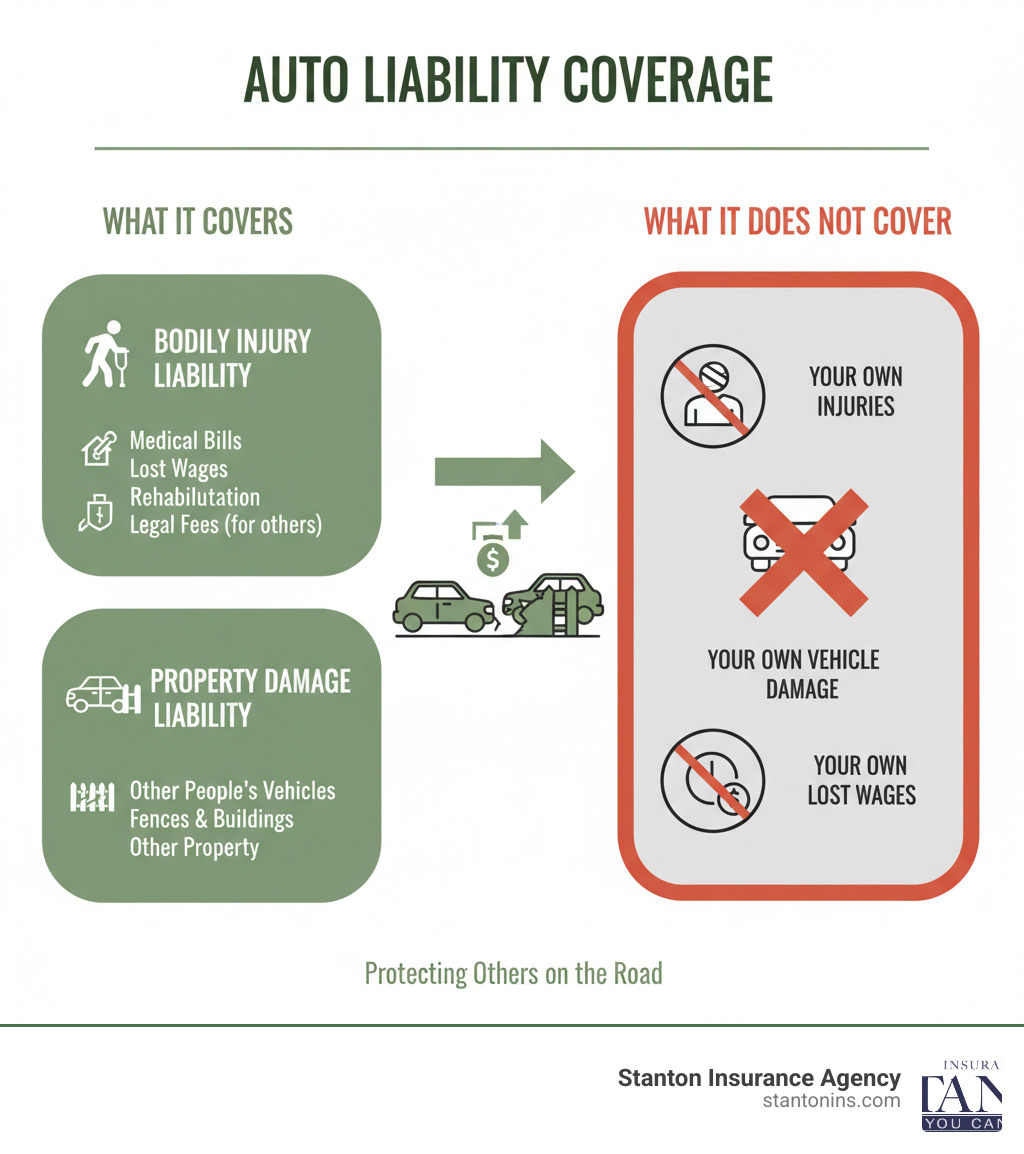
Liability-only insurance is often referred to as "minimum coverage," though you can choose to set your liability limits higher than the state-mandated minimums. This type of policy consists of two primary components: Bodily Injury Liability and Property Damage Liability.
Bodily Injury Liability (BI)
If you are found at fault in an accident that injures another person—whether they are a driver in another car, a passenger, or a pedestrian—Bodily Injury Liability covers their medical expenses, loss of income, and legal fees if they sue you. Allstate typically lists these limits in a split-limit format, such as $25,000/$50,000. This means the policy will pay up to $25,000 per person and $50,000 total per accident.
Property Damage Liability (PD)
This component covers damage you cause to someone else's property. While this most commonly applies to the other driver's vehicle, it also covers damage to fences, lamp posts, buildings, or any other physical structures. In the common split-limit notation (e.g., 25/50/10), the final number represents the property damage limit—in this case, $10,000.
It is critical to remember that liability-only coverage does not pay for damage to your own vehicle or your own medical bills if you are at fault. If your car is stolen, vandalized, or damaged in a collision, an Allstate liability-only policy provides zero reimbursement for those losses.
Factors Influencing Allstate Liability Rates in 2026
In 2026, insurance companies like Allstate utilize sophisticated AI-driven algorithms to determine premiums. While many factors remain traditional, the weight given to specific data points has evolved.
Driving Record and History
Your "Motor Vehicle Record" (MVR) remains the most significant factor in liability pricing. Because liability insurance is designed to pay out when you make a mistake, a history of speeding tickets, at-fault accidents, or DUIs signals to Allstate that you are a high-risk client. In 2026, drivers with a "clean" five-year record see significantly lower liability rates compared to those with even a single minor infraction.
Location and ZIP Code
Where you park your car matters as much as how you drive it. Rates are heavily influenced by the litigation environment and accident frequency of your specific location. For example, a driver in a densely populated area of Miami or Philadelphia will pay substantially more for liability-only coverage than a driver in rural Iowa. This is due to the higher statistical probability of a collision occurring in heavy traffic and the higher average costs of medical care and legal settlements in those jurisdictions.
Credit-Based Insurance Scores
In states where it is legally permitted, Allstate uses credit-based insurance scores to help predict the likelihood of a claim. Actuarial data consistently shows a correlation between financial responsibility and driving habits. In 2026, a driver with an "Excellent" credit score may pay 30% to 50% less for the same liability limits than a driver with "Poor" credit, regardless of their driving history.
The Vehicle's Potential for Damage
While liability insurance doesn't cover your car, it does consider what your car can do to others. A heavy, large SUV or a powerful truck can cause more significant property damage and more severe bodily injuries than a compact sedan. Allstate adjusts the property damage portion of the liability rate based on the vehicle’s weight and safety features that might mitigate the severity of an impact.
Estimated Allstate Liability-Only Rates for 2026
The following table provides a generalized look at how different driver profiles impact monthly liability-only premiums at Allstate. These figures are estimates based on national averages for 2026 and assume state-minimum coverage limits.
| Driver Profile | Annual Premium Estimate | Monthly Payment Estimate |
|---|---|---|
| Clean Record, High Credit Score | $650 – $850 | $54 – $71 |
| Clean Record, Average Credit Score | $900 – $1,200 | $75 – $100 |
| One At-Fault Accident | $1,400 – $1,800 | $116 – $150 |
| Young Driver (18-21) | $2,000 – $3,100 | $166 – $258 |
| Senior Driver (65+) | $800 – $1,100 | $66 – $92 |
Note: Actual rates vary significantly by state and specific ZIP code. These figures are illustrative of 2026 market trends for Allstate specifically.
Why Choose Higher Liability Limits?
While the goal of a liability-only policy is often cost-savings, carrying only the state-mandated minimum can be a significant financial risk. In 2026, the cost of medical care and vehicle repairs has reached historic highs.
If you carry a $25,000 property damage limit but total a modern electric vehicle worth $60,000, you are personally responsible for the $35,000 difference. Allstate will pay the limit of your policy, and the other party (or their insurer) may sue you for the remainder. For this reason, many experts recommend "100/300/100" limits ($100,000 per person, $300,000 per accident for BI, and $100,000 for PD), even if you choose not to carry collision or comprehensive coverage.
Ways to Lower Allstate Liability Costs
Allstate provides several avenues to reduce the cost of a liability-only policy. Leveraging these can make the difference between an affordable premium and a financial burden.
Allstate Drivewise®
Drivewise is Allstate’s telematics program. By using a mobile app to track your driving habits—such as speed, braking intensity, and the time of day you drive—you can earn significant discounts. In 2026, telematics is the most direct way for a safe driver to decouple their rates from the "average" risk of their demographic and be priced based on their actual behavior.
Policy Bundling
Even if you only want liability on your vehicle, bundling that policy with Allstate homeowners, renters, or life insurance can trigger a multi-policy discount. This is often one of the largest discounts available, sometimes reducing the auto portion of the bill by up to 25%.
Responsible Payer and Paperless Discounts
By setting up automatic payments and choosing electronic document delivery, you reduce Allstate’s administrative costs. These savings are often passed back to the consumer in the form of small, recurring discounts that add up over the life of the policy.
Anti-Lock Brakes and Anti-Theft Technology
Even on a liability-only policy, having a car equipped with advanced safety features can lower the Bodily Injury portion of your premium. If the car is less likely to be involved in a high-speed crash due to automatic emergency braking (AEB), Allstate views the liability risk as lower.
Is Liability-Only Right for You?
Choosing liability-only coverage is a strategic decision that usually depends on the value of the vehicle being insured.
- The "10% Rule": A common rule of thumb is that if the annual cost of comprehensive and collision coverage exceeds 10% of your car's total book value, it may be time to switch to liability-only.
- Older Vehicles: If you drive a vehicle that is over 10 or 12 years old, the maximum payout you would receive from Allstate after a total loss (minus your deductible) might be less than the premiums you are paying to keep the coverage.
- Self-Insurance Capability: You should only choose liability-only if you have enough savings to replace your vehicle out-of-pocket if you are in an accident or if the car is stolen.
If you are currently financing or leasing your vehicle, you generally cannot choose liability-only. Lenders almost universally require full coverage (collision and comprehensive) to protect their financial interest in the asset until the loan is paid in full.
Frequently Asked Questions
Does Allstate liability-only cover me if I hit a deer?
No. Hitting an animal is typically covered under Comprehensive insurance. Since a liability-only policy excludes comprehensive coverage, you would be responsible for all repair costs to your vehicle.
Will Allstate pay for my medical bills with a liability policy?
Only if you have added an endorsement like Medical Payments (MedPay) or Personal Injury Protection (PIP), depending on your state. Basic liability-only insurance only pays for the medical bills of the other party when you are at fault.
How much does Allstate's liability-only cost compared to Geico or Progressive?
In 2026, Allstate is often positioned as a "full-service" carrier with local agents, which can sometimes result in higher base rates for minimum coverage compared to "direct-to-consumer" brands like Geico. However, for drivers who bundle multiple policies, Allstate’s total package price can frequently be more competitive.
Can I change my liability limits at any time?
Yes. You can contact your Allstate agent or use the Allstate mobile app to increase or decrease your limits at any time during the policy term. Note that decreasing your limits may lower your premium but increases your personal financial exposure.
Does liability insurance cover theft or vandalism?
No. Theft, vandalism, fire, and falling objects are all covered under Comprehensive insurance. A liability-only policy provides no protection against these "acts of God" or criminal activities.
Next Steps: Getting an Accurate Quote
To get the most accurate liability-only rate from Allstate in 2026, you should prepare your vehicle identification number (VIN), your current mileage, and a history of any safety courses you have completed.
- Evaluate Your Assets: Before choosing the lowest possible limits, consider what assets (house, savings) you need to protect from a potential lawsuit.
- Request a Quote: Use the official Allstate website or a local agent to run a quote for liability-only.
- Compare Tiers: Ask for a comparison between state-minimum limits and 100/300/100 limits. Often, the difference in cost is only a few dollars per month, but the difference in protection is substantial.
- Inquire About Drivewise: Ensure you ask about the telematics discount to maximize your initial savings.
By understanding the mechanics of liability insurance and how Allstate evaluates risk, you can ensure you are meeting your legal obligations without overpaying for coverage you may not strictly need for an older vehicle.