The mutant dinosaurs of the Jurassic World franchise represent a departure from traditional de-extinction, focusing on "hybrids" engineered by combining the DNA of multiple species. The primary mutant dinosaurs featured in the films and canon television series include the Indominus rex, the Indoraptor, the Scorpios rex, and the Spinoceratops. These creatures were designed by Dr. Henry Wu to satisfy corporate demands for "bigger, scarier, and cooler" attractions or to serve as biological weapons.
The Evolution of Genetic Manipulation in the Jurassic Era
To understand the mutant dinosaurs of Jurassic World, one must first acknowledge that within the franchise's lore, no dinosaur is a 100% "pure" prehistoric clone. As established in the original 1993 incident, InGen scientists used amphibian DNA—specifically from West African bullfrogs—to fill gaps in decayed dinosaur genomes. This initial "mutation" allowed for spontaneous sex changes in a single-sex population, the first hint that genetic tinkering carries unpredictable consequences.
However, by the time the Jurassic World park opened in 2005, the public had grown accustomed to dinosaurs. The "wow" factor had faded. Under the direction of Simon Masrani and the technical expertise of Dr. Henry Wu, the laboratory shifted from filling gaps to intentional hybridization. This process, known as Gene Splicing, created entirely new genus-level entities that never existed in the fossil record. As of 2026, these creatures are viewed as cautionary tales of "scientific power without discipline," a recurring theme in the history of the Nublar and Sorna archipelagos.
Indominus rex: The Untamable Queen
The Indominus rex was the first official hybrid created for public display in Jurassic World. Intended to be the park's new flagship attraction, it was engineered to be larger than a Tyrannosaurus rex and more intelligent than a Velociraptor.
Genetic Composition and Abilities
The Indominus rex was a "genetic cocktail." While its base genome was Tyrannosaurus rex, it incorporated DNA from several other predators and modern animals:
- Abelisaurids (Carnotaurus, Majungasaurus, Rugops): These contributed to the creature's tough osteoderms (bony skin plates) and distinctive horns.
- Giganotosaurus: Used to achieve a massive size, exceeding 50 feet in length.
- Velociraptor: Provided high-level problem-solving skills and the ability to communicate with other dromaeosaurids.
- Cuttlefish: Allowed for chromatophore-based camouflage, letting the creature blend into its environment perfectly.
- Tree Frog: Enabled the animal to modulate its thermal signature, effectively becoming invisible to infrared sensors.
- Pit Viper: Granted the ability to sense thermal heat signatures, making it a master nocturnal hunter.
Behavioral Instability
The Indominus was a failure of animal husbandry. Because it was raised in isolation and possessed high intelligence, it lacked social cues. It did not hunt for food; it hunted for sport. This psychological instability, combined with its overwhelming physical advantages, led directly to the 2015 Isla Nublar incident. The creature demonstrated that "mutant" status wasn't just a physical trait but a cognitive one, as the animal struggled to find its place in an ecosystem that had no niche for it.
Indoraptor: The Weaponized Prototype
Following the destruction of Jurassic World, the focus shifted from entertainment to militarization. The Indoraptor, introduced during the Lockwood Manor incident, was the brainchild of Eli Mills and Henry Wu. It was designed to be a "living weapon."
Design Specifications
The Indoraptor was significantly smaller than its predecessor, standing about 10 feet tall. This allowed it to enter buildings and navigate human-sized corridors. Its genome was a refined version of the Indominus rex, balanced with more Velociraptor DNA to enhance agility and pack-hunting instincts.
- Echolocation/Heightened Senses: The Indoraptor was sensitive to sound and light, designed to respond to specific frequencies.
- Targeting System: It was programmed to attack any target painted with a high-frequency laser and triggered by an acoustic signal.
- Aesthetic Mutation: Unlike the pale Indominus, the Indoraptor was jet black with a gold streak, reminiscent of the Blue (the Velociraptor) but twisted into a more skeletal, nightmare-inducing form.
The Missing Link: Empathy
The primary flaw of the Indoraptor was its lack of a social anchor. Dr. Wu insisted that the creature needed a mother figure—specifically Blue—to provide the behavioral imprinting necessary for "loyalty." Without this, the Indoraptor was a pure sociopath, exhibiting sadistic behavior towards its prey. It remains the most dangerous mutant dinosaur ever produced because it combined tactical intelligence with a complete lack of biological restraint.
Scorpios rex: The "E750" Failed Experiment
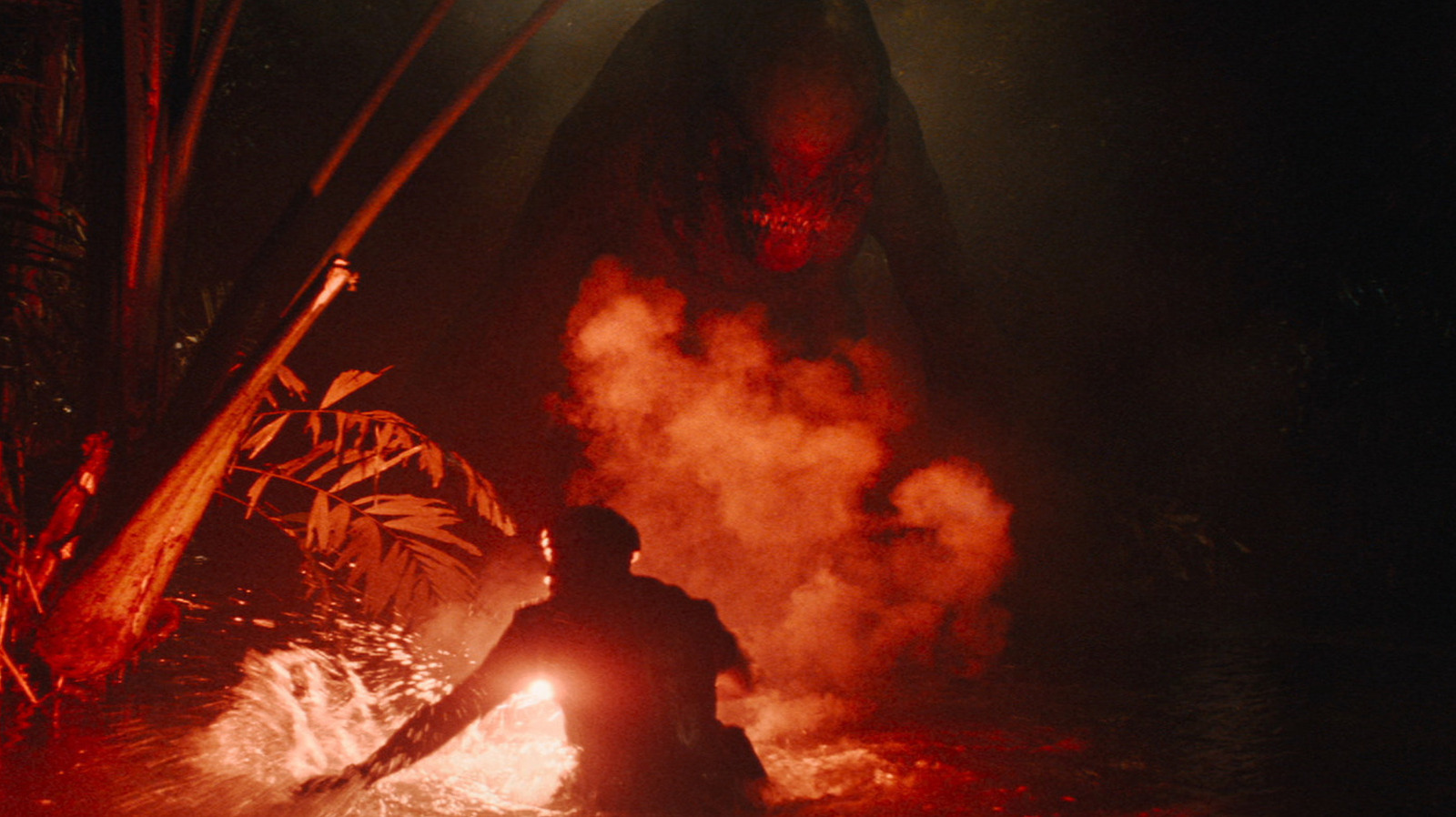
Chronologically, the Scorpios rex was Dr. Wu’s first successful foray into hybridization, predating the Indominus rex. Hidden away in a secret cryogenic wing of Isla Nublar, it was deemed too dangerous and deformed for public display.
Physical Deformities and Lethality
The Scorpios rex (Experiment 750) was a biological mess. It suffered from respiratory issues, an unstable gait, and a fractured mind. However, its lethality was unmatched.
- Venomous Quills: Taking DNA from the scorpionfish, the Scorpios rex could eject venomous spines from its tail. These quills could paralyze or kill a human-sized target within minutes.
- Arboreal Mobility: Unlike the larger hybrids, the Scorpios could climb trees, making it a multi-level threat in the jungle.
- Asexual Reproduction: In a terrifying return to the "Life finds a way" theme, the Scorpios rex was capable of parthenogenesis, allowing a single individual to produce offspring without a mate.
The existence of the Scorpios rex highlights the ethical bankruptcy of the InGen research during the transition from the old park to the new. It was a creature created without any consideration for the animal's quality of life, resulting in a perpetually pained and aggressive mutant.
Spinoceratops: The Hybrid "Sino-Spino"
While most mutant dinosaurs were designed for carnage, the Spinoceratops (often referred to as "Angel" and "Rebel") represents a different branch of genetic experimentation. These creatures were discovered in the Mantah Corp facilities, separate from InGen’s mainstream projects.
Genetic Makeup
The Spinoceratops is a cross between a Spinosaurus and a Sinoceratops. This resulted in a creature with the massive sail and crocodilian snout of a Spinosaurus but the bulky frame and frilled head of a Ceratopsian.
- Temperament: Unlike the Indominus or Indoraptor, the Spinoceratops demonstrated more traditional herbivore/omnivore social behaviors, including bonding and territoriality.
- Adaptability: These hybrids were highly adaptable to different climates, including tundra and desert environments, proving that hybridization could be used for survival rather than just predation.
Comparative Analysis of Major Hybrid Species
The following table compares the primary attributes of the most notable mutant dinosaurs within the Jurassic World continuity.
| Species Name | Primary DNA Bases | Key "Mutant" Trait | Primary Function | Status (as of 2026) |
|---|---|---|---|---|
| Indominus rex | T-Rex / Velociraptor | Active Camouflage | Theme Park Attraction | Extinct (Sample DNA remains) |
| Indoraptor | Indominus / Raptor | Tactical Target Tracking | Biological Weapon | Extinct (Prototype destroyed) |
| Scorpios rex | Various / Scorpionfish | Venomous Quills | Genetic Feasibility Test | Extinct (Both specimens killed) |
| Spinoceratops | Spinosaurus / Sinoceratops | Frilled Sail / Durability | Climate Adaptation Study | Active (Protected status) |
| Stegoceratops | Stegosaurus / Triceratops | Dual-Defensive Plating | Theoretical Hybrid | Unconfirmed (Digital only) |
The "Soft" Mutants: Modified Pure Species
It is a common misconception that only the "hybrids" are mutants. In the Jurassic World era, even the "pure" dinosaurs like the Atrociraptor and the Giganotosaurus (as seen in Dominion) underwent genetic tweaking.
The Atrociraptors were bred specifically for speed and dogged persistence, far beyond their natural Cretaceous counterparts. Similarly, the "Version 2" clones seen in later years were often modified to be more colorful or larger to better match the "public image" of what a dinosaur should be. This "aesthetic mutation" became a standard practice in the industry, blurring the line between a resurrected animal and a manufactured product.
The Ethical Implications of Genetic Mutants
The creation of these species raised significant legal and ethical questions that the world is still grappling with in 2026. The Malta Black Market trade flourished primarily because of the demand for these modified species. Unlike naturally occurring animals, mutant dinosaurs often fall into a legal gray area regarding "intellectual property."
The Legacy of Dr. Henry Wu
Dr. Wu's career serves as the ultimate case study in the dangers of unregulated biotechnology. His shift from a brilliant scientist to a man obsessed with "the next step" mirrors the mutation of the dinosaurs themselves. The Indominus rex wasn't just an animal; it was a corporate asset that evolved into a liability. The Indoraptor wasn't just a predator; it was an invention that escaped its patent.
Ecological Impact
When these mutants are introduced to the wild, as seen following the 2018 eruption of Mt. Sibo, they disrupt local ecosystems. A "pure" predator like a T-Rex has a predictable ecological role. A mutant like the Scorpios rex, with its venom and climbing ability, creates an "invasive species" crisis on a global scale.
Frequently Asked Questions
Which mutant dinosaur is the strongest?
In terms of raw power and versatility, the Indominus rex remains the strongest. While the Indoraptor was faster and the Scorpios rex had venom, the Indominus rex had the sheer size, camouflage, and thermal dampening that allowed it to defeat nearly any opponent, including a veteran Tyrannosaurus rex and a pack of Velociraptors simultaneously.
Are the dinosaurs in the original Jurassic Park mutants?
Yes, technically. As Dr. Wu explains in the Jurassic World film, the "classic" dinosaurs are not 100% accurate. They were modified with frog DNA, which is why the Dilophosaurus has a frill and venom (traits not found in the fossil record) and why the Velociraptors are much larger than their real-world counterparts. However, they are not classified as "Hybrids" because they were not intended to be entirely new species.
Did any mutant dinosaurs survive into the wild?
According to records from the Department of Prehistoric Wildlife (DPW) as of 2026, there are no confirmed sightings of Indominus or Indoraptor specimens in the wild. These were highly controlled prototypes. However, the genetic blueprints and smaller-scale hybrids like the Spinoceratops have been documented in private sanctuaries and off-grid facilities.
Can hybrid dinosaurs reproduce?
Most hybrids were designed to be sterile, but the Scorpios rex proved that genetic mutation can lead to asexual reproduction (parthenogenesis). This is a significant concern for biologists, as it means a single escaped mutant could theoretically start an entire population.
What is the E750 project?
E750 was the internal codename for the Scorpios rex. It was the first "successful" hybrid created by Henry Wu, but it was considered a failure due to its extreme mental instability and grotesque appearance. It was kept in cryogenic suspension until it was accidentally released during the events of the Nublar bypass.
Recommendations for Further Study
For those interested in the technical and ethical history of these creatures, several resources are available:
- The Dinosaur Protection Group (DPG): For records on the ethical treatment and rescue efforts of modified species.
- Department of Prehistoric Wildlife (DPW) Databases: For current tracking of dinosaur sightings and safety protocols regarding invasive hybrids.
- InGen Corporate Archives: (Restricted access) For the original gene-sequencing data used to create the "Big Three" hybrids.
The history of mutant dinosaurs in Jurassic World is a testament to the risks of prioritizing profit and power over biological integrity. As we move further into the decade, the focus has shifted from creating new monsters to managing the ones that already roam our forests and suburbs.