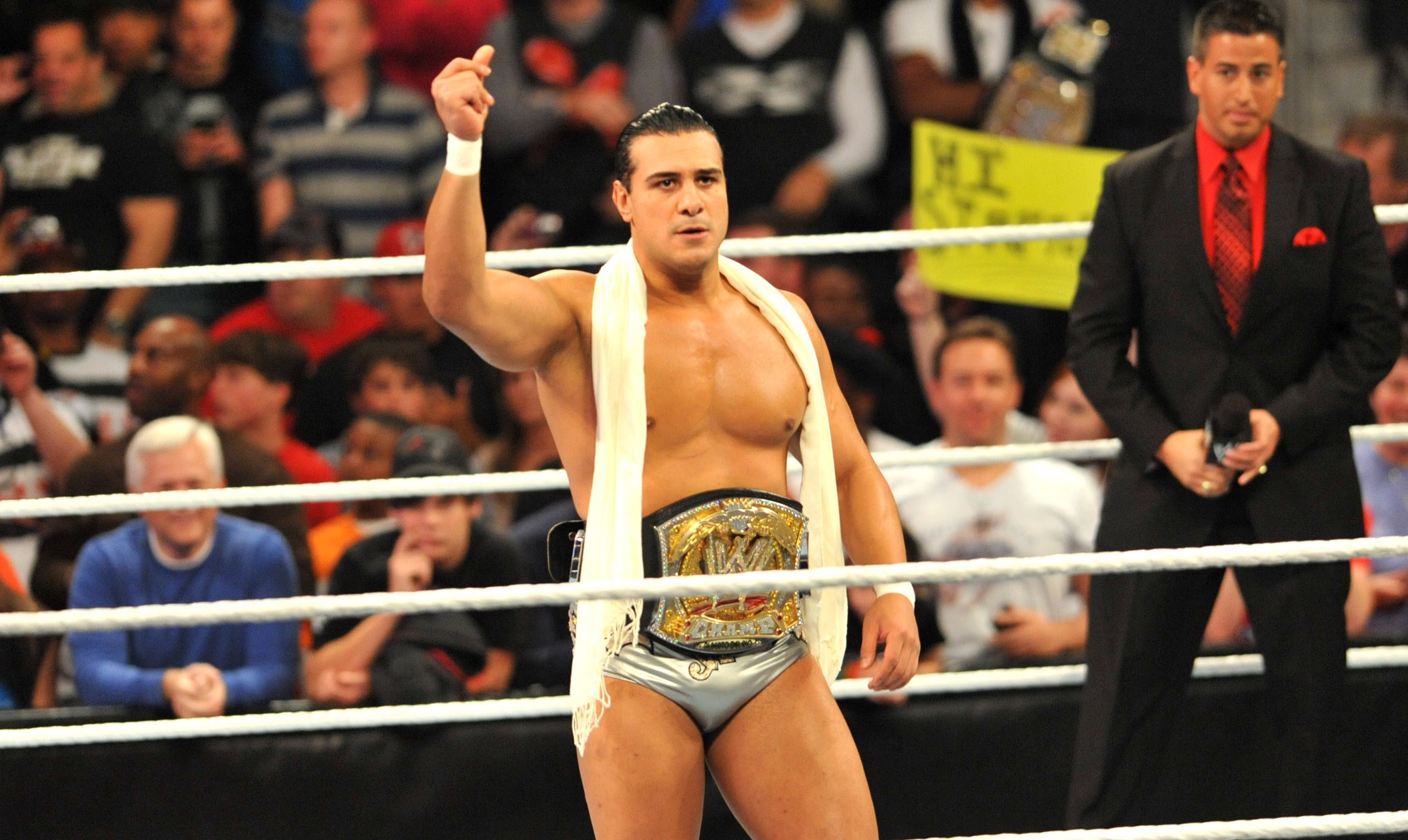
Alberto Del Rio, born José Alberto Rodríguez Chucuan, is a multi-time world champion wrestler and former mixed martial artist known for his "Mexican Aristocrat" persona. Achieving peak success in WWE and Impact Wrestling, he is one of the few performers to successfully transition from masked Lucha Libre royalty to a global mainstream superstar.
Born into one of the most prestigious families in professional wrestling, the man known to the world as Alberto Del Rio (and later Alberto El Patrón) represents a bridge between traditional Mexican Lucha Libre and the high-production world of American sports entertainment. His career, spanning over two decades, is a study in natural athletic talent, character reinvention, and the volatile nature of fame. As of 2026, his legacy remains a subject of intense debate among fans and historians, balancing his undeniable in-ring prowess against a series of high-profile personal and professional controversies. To understand the "Essence of Excellence," one must look beyond the luxury cars and gold championships to the technical foundation and familial expectations that shaped one of the 21st century’s most polarizing figures.
The Foundation of a Dynasty: Early Life and Greco-Roman Roots
Before he was an international superstar, Rodríguez was a decorated amateur athlete. The son of the legendary Dos Caras and the nephew of Mil Máscaras, he was born into the "First Family" of Lucha Libre. However, rather than jumping straight into the professional ring, he sought to establish his own credentials in the world of legitimate combat sports. He attended the Universidad Autónoma de San Luis Potosí, where he excelled in Greco-Roman wrestling. His talent was sufficient to earn him a spot on the Mexican national team, and he was on track to compete in the 2000 Sydney Olympics before funding issues and administrative complications for the Mexican wrestling team altered his trajectory.
This amateur background is critical to understanding his professional style. Unlike many of his contemporaries who relied solely on high-flying maneuvers, Del Rio brought a grounded, suplex-heavy approach to the ring. His ability to manipulate an opponent's joints and maintain top-tier positioning was a direct result of his years on the mats. When he eventually made his professional debut as Dos Caras Jr., he did so with a physical presence that commanded respect, standing over 6'4" and possessing a legitimate athletic pedigree that many "legacy" wrestlers lack.
The MMA Chapter: Dos Caras Jr. in PRIDE
In the early 2000s, the lines between professional wrestling and mixed martial arts (MMA) were frequently blurred, particularly in Japan. Competing under his masked persona, Dos Caras Jr., Rodríguez entered the world of legitimate fighting. He is perhaps most famously remembered in the MMA world for his 2003 bout against Mirko "Cro Cop" Filipović in the PRIDE Fighting Championships. While the fight ended in a knockout loss for Rodríguez via a legendary head kick, the fact that he stepped into the ring with one of the most feared strikers in history while wearing a traditional wrestling mask cemented his reputation for toughness.
His MMA record (9-6-0) reflects a fighter who was technically proficient in grappling but often undersized or outmatched in striking against world-class specialists. However, this period served a vital purpose for his future wrestling career. It gave him "shoot" credibility—the knowledge among fans that he could actually fight. This credibility allowed him to transition into the "Alberto Del Rio" character with an edge of danger that other heels (villains) lacked. When he applied his signature Cross Armbreaker, the audience believed in its lethality because they knew his background in legitimate submission arts.
The Rise of Alberto Del Rio: WWE and the "Destiny" Era
In 2009, Rodríguez signed with World Wrestling Entertainment (WWE), initially reporting to their developmental territory. In 2010, he debuted on the SmackDown brand as Alberto Del Rio. This character was a significant departure from his time as the masked Dos Caras Jr. He was portrayed as a wealthy, arrogant aristocrat from San Luis Potosí, arriving at the arena in a different luxury car every week, accompanied by his personal ring announcer, Ricardo Rodriguez.
The Del Rio character was a masterclass in modern heel work. While many Mexican wrestlers in the US were historically cast as underdogs or high-flyers, Del Rio was a dominant, wealthy powerhouse. He spoke about "Destiny" with a smug confidence that immediately drew the ire of the audience. His impact was immediate; within his first year, he won the 2011 Royal Rumble (the largest in history with 40 participants) and the Money in the Bank ladder match.
Between 2011 and 2013, he captured the WWE Championship and the World Heavyweight Championship multiple times, engaging in high-profile feuds with icons like John Cena, CM Punk, and Randy Orton. His technical proficiency made him a "wrestler’s wrestler," capable of having a four-star match with almost anyone on the roster.
The International Journey: AAA, Lucha Underground, and Impact
The relationship between Del Rio and WWE soured in 2014 following a backstage incident involving a WWE employee who allegedly made a racist remark. Del Rio’s departure was abrupt, leading him back to the independent circuit and Mexico under the name Alberto El Patrón. This era saw a more aggressive, liberated version of the performer.
He made a triumphant return to AAA (Asistencia Asesoría y Administración) in Mexico, winning the AAA Mega Championship. He also became a central figure in the cult-hit series Lucha Underground, where his intensity was dialed up for a television-centric format. Shortly after, he joined Impact Wrestling, where he captured the Global Championship. This period proved that he was a "needle-mover" outside the WWE machine. Promoters across the globe, from the UK to Japan, sought him out because he carried the "big-match feel" that only a few wrestlers in the world possess.
Career Comparison and Statistical Highlights
To appreciate the scale of Alberto Del Rio's career, it is helpful to look at his achievements across the major organizations he has headlined.
| Organization | Major Titles & Achievements | Notable Rivals | Signature Style Elements |
|---|---|---|---|
| WWE | WWE Champion (2x), World Heavyweight Champion (2x), Royal Rumble Winner (2011) | John Cena, CM Punk, Rey Mysterio | Luxury cars, Ricardo Rodriguez, Cross Armbreaker |
| AAA | AAA Mega Champion (1x) | El Texano Jr., Myzteziz | Technical Lucha, Nationalist pride |
| Impact Wrestling | Impact World Champion (1x), GFW Global Champion (1x) | Bobby Lashley, Eli Drake | "El Patrón" persona, high-intensity promos |
| MMA (PRIDE/DEEP) | Competed in PRIDE Bushido | Mirko Cro Cop, Kazuhiro Nakamura | Masked combat, Greco-Roman takedowns |
| CMLL | CMLL World Heavyweight Champion (1x) | Universo 2000, Dr. Wagner Jr. | Traditional Lucha Libre (as Dos Caras Jr.) |
Technical Analysis: The Cross Armbreaker and In-Ring Psychology
Del Rio’s success can be attributed to his "hybrid" style. He combined the agility and rolling transitions of Lucha Libre with the brutal efficiency of a catch-wrestler. His finishing move, the Cross Armbreaker (a rolling armbar), was presented as one of the most inescapable submissions in the industry. Unlike many performers who simply "apply" a move, Del Rio spent the duration of his matches targeting the opponent's arm—using the ring posts, the barricades, and various arm-wringers—to weaken the limb before the finale.
This commitment to in-ring psychology set him apart. He understood that a finisher is only as good as the story told leading up to it. His kicks, particularly his step-up enzuigiri in the corner, were delivered with a "snugness" that blurred the line between choreographed entertainment and a real strike. In an era where "selling" (acting as if hurt) was often overlooked, Del Rio’s offense looked genuinely painful, which helped maintain his status as a top-tier villain.
Controversy and the Road to Redemption
It is impossible to discuss the career of Alberto Del Rio without addressing the significant legal and personal hurdles he faced in the early 2020s. In 2020, he was arrested in San Antonio, Texas, and charged with aggravated kidnapping and sexual assault. These allegations severely damaged his reputation and led to a hiatus from major televised promotions.
However, in December 2021, all charges against him were dismissed by the Bexar County District Attorney's office due to a lack of evidence and the unavailability of a witness. While the legal resolution cleared his name in the eyes of the law, the court of public opinion remained divided. Del Rio has since been vocal about the "cancel culture" he felt he endured and has focused on rebuilding his brand through international tours and his own promotion, Nación Lucha Libre. As we look at his status in 2026, he remains a veteran figure who continues to draw crowds in Latin America and on the global independent circuit, though a return to the "Big Two" (WWE or AEW) remains a point of persistent speculation and debate.
Frequently Asked Questions
Why did Alberto Del Rio leave WWE the first time?
In August 2014, Del Rio was released from WWE due to "unprofessional conduct." It was later revealed that he had been involved in an altercation with a WWE social media manager. According to Del Rio and various reports, the employee had made a racist joke at Del Rio's expense. Del Rio demanded an apology, and when he didn't receive one, he slapped the employee. He was briefly rehired in 2015 before leaving again in 2016.
Is Alberto Del Rio related to Mil Máscaras?
Yes, Alberto Del Rio is the nephew of Mil Máscaras, who is considered one of the "Big Three" of Lucha Libre alongside El Santo and Blue Demon. His father is Dos Caras, another legendary figure. This lineage makes him part of one of the most influential wrestling families in history, similar to the Anoa'i family (The Rock, Roman Reigns) in the United States.
Did Alberto Del Rio actually fight in MMA?
Yes. He had a professional MMA career primarily between 2001 and 2010. He finished with a record of 9 wins and 6 losses. He notably fought in the PRIDE Fighting Championships in Japan. His most famous fight was a loss to Mirko Cro Cop, but he also secured several submission wins using his wrestling and grappling expertise.
What is his "Destiny" gimmick?
The "Destiny" gimmick was the cornerstone of his first WWE run. He portrayed a man who believed he was destined for greatness because of his royal blood and immense wealth. This was highlighted by his entrance in expensive cars and his insistence that "it is my destiny" to become champion. It was a subversion of the typical immigrant "working hard for a dream" narrative, instead portraying a character who felt the world owed him everything.
What is his current status in 2026?
As of 2026, Alberto Del Rio (wrestling as Alberto El Patrón) continues to compete on the international independent circuit and remains active in the management of Lucha Libre promotions. He focuses heavily on the Mexican and European markets, where his name value remains high. While he has expressed interest in a WWE Hall of Fame induction or a final run, he currently operates as a prominent veteran and mentor to younger Lucha Libre talent.
Recommendation for Fans and Historians
To truly appreciate Alberto Del Rio the wrestler, one should look at his work from 2011 to 2013, specifically his matches with Christian, CM Punk, and John Cena. These bouts showcase a performer at the height of his physical and psychological powers. While his career has been marred by external noise, his internal work—the mechanics of how he wrestled and the charisma he brought to the "aristocrat" character—remains a blueprint for how to portray a modern, credible heel. For those interested in the technical side of the sport, his transition from a Greco-Roman specialist to a pro-wrestling world champion offers a masterclass in how legitimate combat skills can be adapted for the "squared circle."