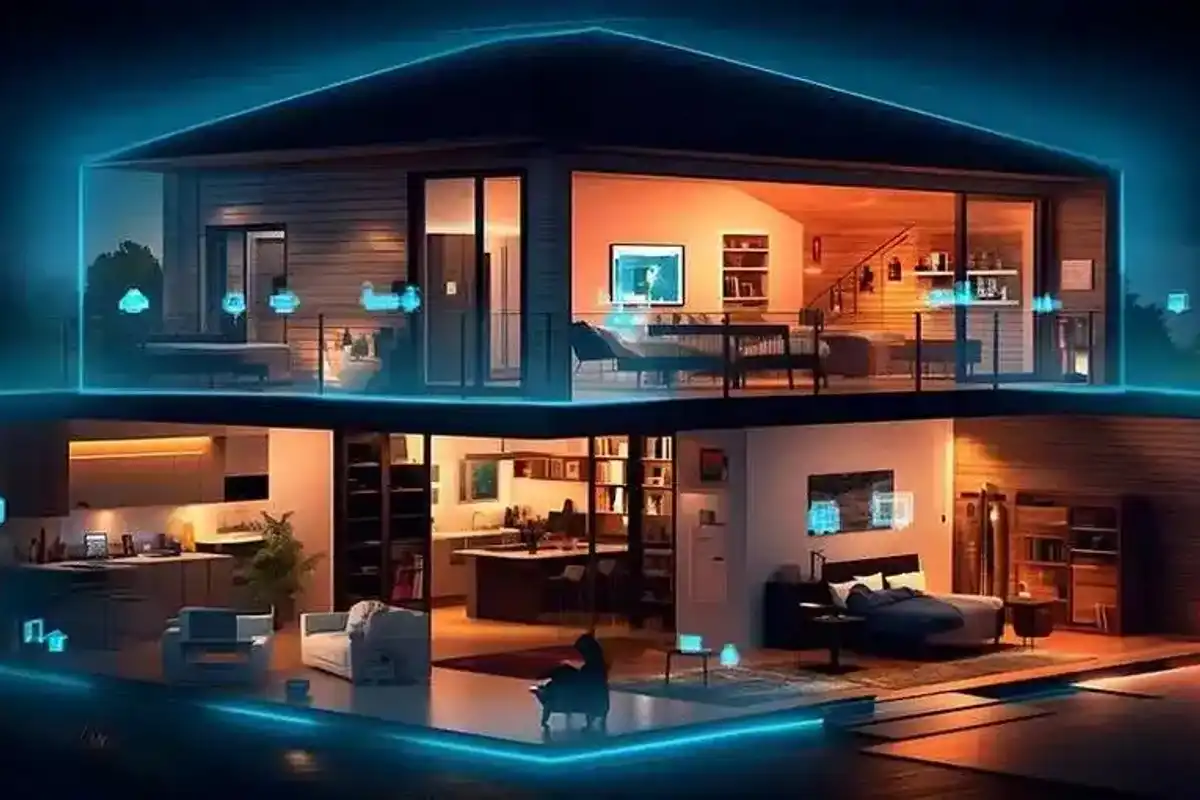
The intersection of high-profile private estates, intense media scrutiny, and rapidly evolving domestic technology catalyzed a transformative shift toward advanced residential security, laying the groundwork for modern smart home ecosystems.
Introduction: Resolving the Context of Al Fayed and Smart Home Security
When examining the historical trajectory of residential surveillance and automation, the name Al Fayed frequently surfaces in discussions regarding ultra-high-net-worth property protection. Mohamed Al Fayed, the prominent Egyptian businessman and former owner of Harrods and the Hôtel Ritz Paris, maintained several high-profile residences, most notably his Surrey estate, Park House in Oxted, and his central London properties. Because of his immense wealth, public profile, and the intense media spotlight that followed him, Al Fayed’s properties required extraordinary security measures.
In the late 20th century, the security demands of such estates were miles ahead of the consumer market. Protecting sprawling grounds, multi-million-dollar art collections, and high-profile occupants necessitated custom-built, closed-circuit television (CCTV) grids, perimeter sensors, and dedicated security operations centers. However, the foundational engineering, sensor integration, and remote-monitoring concepts pioneered for these elite properties did not remain confined to billionaire estates. Over the subsequent decades, these heavy-duty, proprietary technologies trickled down, scaled, and transformed into the modern smart home security systems used by everyday homeowners today.
This article explores how the security requirements of high-net-worth figures like Al Fayed mirrored and influenced the broader technological leap from analog watchtowers and basic burglar alarms to AI-driven, interconnected smart home security ecosystems.
The State of Luxury Estate Security in the Late 20th Century
To understand the evolution of modern smart home security, one must first look at how security infrastructure operated during the peak of traditional estate management in the 1980s and 1990s. For properties like those managed by Mohamed Al Fayed, standard off-the-shelf consumer security products were entirely inadequate.
Custom-Engineered Analog Infrastructures
Estate security during this era relied heavily on hardwired analog systems. These setups featured coaxial cables running hundreds of meters across sprawling grounds to feed video signals back to dedicated security rooms.
- CCTV Limitations: Cameras were bulky, weather-sensitive, and offered low-resolution black-and-white or grainy color imagery. They required continuous manual monitoring by security personnel.
- Perimeter Intrusion Detection: Infrared beams, pressure-sensitive mats, and magnetic reed switches formed the first line of defense. If a circuit was broken, an analog signal triggered a local siren or a silent alarm routed directly to a private security firm or local police.
- Access Control: Gates and heavy doors relied on mechanical deadbolts, heavy-duty strikes, and early magnetic swipe cards or keypad codes.
The Human Element and Centralized Control
Unlike modern automated systems that send push notifications directly to a smartphone, late-20th-century estate security was intensely labor-intensive. It required 24/7 human oversight. Security teams sat in fortified control rooms staring at walls of cathode-ray tube (CRT) monitors, manually switching camera feeds, and patrolling grounds with physical guard dogs and patrols. The high cost of installing and maintaining this bespoke infrastructure meant that advanced surveillance was exclusively the domain of corporations, governments, and ultra-wealthy individuals.
The Technological Catalyst: From Analog to Digital
The digital revolution of the late 1990s and early 2000s dismantled the barriers that kept advanced security locked inside billionaire compounds. Several key technological milestones bridged the gap between industrial-grade estate security and consumer smart home tech.
The Shift to IP (Internet Protocol) Video
The invention of network cameras changed everything. Instead of transmitting raw analog video signals over dedicated coaxial cables, digital IP cameras compressed video data and transmitted it over standard computer networks. This meant that video feeds could be viewed remotely via web browsers and, eventually, mobile applications. High-net-worth estates were among the earliest adopters of IP-based camera networks, scaling down the massive control rooms of the past into server racks that could be managed by smaller teams or accessed remotely by the estate owner.
Wireless Sensor Protocols and Mesh Networking
Early wireless alarms suffered from interference, short battery lives, and unreliable signal ranges, making them unpopular for large properties. However, the development of robust wireless communication protocols—such as Zigbee, Z-Wave, and later, specialized Wi-Fi chips—allowed sensors to communicate securely across vast distances without the need to trench cables through manicured lawns or historic stone walls.
Miniaturization and Cost Reduction
As microprocessors became smaller, cheaper, and vastly more powerful, the expensive specialized hardware previously required for motion detection, night vision, and encrypted data transmission was integrated into inexpensive silicon chips. This democratization of computing power allowed consumer brands to manufacture high-performance security hardware at a fraction of historical costs.
Core Components of Modern Smart Home Security
Today’s smart home security ecosystem directly mirrors the multi-layered defense strategies once unique to high-end estates like those of Al Fayed, but packaged for accessibility, ease of installation, and user control.
- Perimeter Layer
- Smart locks
- Video doorbells
- Geofencing
- Internal Layer
- Glass-break sensors
- Motion detectors
- Visual Layer
- AI-powered IP cameras
- Local/cloud storage
- Control Layer
- Smartphone apps
- Voice assistants
- Automation
1. Perimeter and Entry Point Protection
Modern smart locks, video doorbells, and intelligent garage door controllers replace the manual deadbolts and security guards of the past. Homeowners can grant temporary digital keys, monitor who enters and leaves in real-time, and automate doors to lock automatically based on geofencing (location tracking of the user's smartphone).
2. Intelligent Visual Surveillance
Modern security cameras feature high-definition (1080p to 4K) resolution, wide dynamic range (WDR) for handling harsh lighting, and infrared night vision. Crucially, onboard artificial intelligence can now distinguish between a rustling tree branch, a neighborhood stray cat, and an unauthorized human intruder, drastically reducing the false alarms that plagued early motion-detection systems.
3. Integrated Environmental and Safety Monitoring
Smart security has expanded beyond mere intrusion detection to encompass comprehensive home health and safety. Integrated smoke detectors, carbon monoxide monitors, water leak sensors, and freeze detectors communicate on the same mesh network, alerting homeowners instantly to plumbing failures or electrical fires before catastrophic damage occurs.
Comparative Evolution: Estate Security vs. Modern Smart Homes
To fully grasp how far residential security has advanced, it is helpful to compare the methods used to protect high-profile properties in the past with the smart home capabilities available today.
| Feature / Capability | 1990s Elite Estate Security (e.g., Al Fayed Era) | Modern Smart Home Security (2026 Standard) |
|---|---|---|
| Primary Monitoring | 24/7 manned security guards, dedicated CRT control rooms | Automated AI alerts pushed directly to mobile devices |
| Video Transmission | Coaxial analog cables, bulky closed-circuit systems | Encrypted wireless IP streams, cloud or local NVR storage |
| Access Control | Heavy physical keys, magnetic swipe cards, intercoms | Biometric scanners, smart locks, remote digital key sharing |
| False Alarm Management | High rate of false positives requiring physical patrols | AI-driven object recognition (differentiating people from pets/vehicles) |
| Installation Complexity | Months of professional wiring, trenching, and structural work | DIY-friendly wireless sensors, peel-and-stick hardware |
| Cost Barrier | Tens to hundreds of thousands of dollars | Scalable tiers ranging from budget DIY kits to professional setups |
Privacy, Cybersecurity, and Operational Challenges
While the democratization of high-end security technology offers unprecedented peace of mind, it also introduces modern vulnerabilities that high-profile figures and everyday homeowners alike must navigate.
The Threat of Cyber Intrusion
When security cameras, smart locks, and alarm panels connect to the internet, they become potential entry points for hackers. In the past, compromising an estate's security required physical tampering with cables or bypassing local guards. Today, a poorly secured home Wi-Fi network or a reused default password can allow unauthorized actors to view private camera feeds or disable alarm systems remotely. Mitigating this risk requires robust cybersecurity hygiene, including:
- Changing default router and device credentials immediately upon setup.
- Utilizing separate Virtual Local Area Networks (VLANs) or guest networks for Internet of Things (IoT) devices.
- Enabling Multi-Factor Authentication (MFA) for all security accounts.
- Ensuring automatic firmware updates are enabled to patch newly discovered vulnerabilities.
Data Privacy and Cloud Storage Concerns
Modern cloud-connected cameras upload vast amounts of personal video footage to remote servers operated by third-party tech companies. High-profile individuals, much like public figures in decades past, are acutely sensitive to privacy leaks. To counter privacy concerns, many modern homeowners opt for Local Network Video Recorders (NVRs) or Apple HomeKit Secure Video, which encrypts footage locally before sending it to private cloud storage, ensuring that video feeds cannot be viewed by unauthorized third parties.
The Future of Residential Protection
As artificial intelligence, edge computing, and sensor technology continue to converge, the evolution of home security moves closer toward total autonomy. Predictive analytics can now analyze routine household patterns and automatically arm systems or adjust lighting based on behavioral anomalies.
The journey from the heavily guarded, custom-engineered analog fortresses of figures like Mohamed Al Fayed to the sleek, interconnected smart home devices of today underscores a fundamental truth: the desire for privacy, safety, and absolute control over one's living space remains constant, even as the tools to achieve it undergo a complete technological metamorphosis.
Frequently Asked Questions
How did high-profile estates secure their properties before modern smart home technology?
In the late 20th century, estates relied on heavy physical security infrastructure, including dedicated analog CCTV camera grids connected via coaxial cables to on-site security control rooms, perimeter infrared beams, pressure sensors, and 24/7 patrols by private security personnel.
Are modern smart home security systems as secure as commercial-grade estate systems?
Yes, in many ways modern consumer systems surpass older commercial setups due to advanced encryption, high-definition digital video, and AI-driven threat detection. However, their security heavily depends on the homeowner maintaining strong Wi-Fi network security and using multi-factor authentication.
What is the advantage of local storage over cloud storage for smart cameras?
Local storage (such as a local NVR or hard drive) keeps your video footage physically inside your home, preventing third-party cloud providers or hackers from accessing your private data over the internet. It also ensures your security system continues to record even if your internet connection drops.
How do modern systems prevent false alarms caused by pets or weather?
Modern smart security cameras and motion sensors use Edge AI (artificial intelligence processed directly on the device chip) to analyze visual patterns, allowing the system to accurately differentiate between human intruders, passing vehicles, pets, and environmental movements like swaying tree branches.
What are the essential steps to secure a smart home network against hackers?
To protect your smart home security ecosystem, you should change all default manufacturer passwords, create an isolated guest network or IoT VLAN for smart devices, enable multi-factor authentication across all associated apps, and keep all device firmware updated.