Agriculture loan rates are the interest percentages charged on credit extended to farmers and ranchers for land acquisition, equipment, or operational expenses. In 2026, these rates typically range from 4.5% to 9.5%, depending on whether the lender is a government agency like the FSA or a private commercial bank, as well as the borrower's credit profile.
Agricultural financing is the backbone of the global food supply chain, providing the necessary capital for producers to manage the inherent volatility of farming. Unlike standard residential or commercial real estate loans, agriculture loans are tailored to the unique seasonal cash flows of the industry. Understanding how these rates are determined, where to find the best terms, and how to qualify is essential for maintaining a profitable operation in today’s economic climate.
The Architecture of Agriculture Loan Rates
To understand agriculture loan rates, one must first recognize that they are not arbitrary figures set by banks. Instead, they are the result of a complex interplay between macroeconomic indicators, federal policy, and individual risk assessments.
Benchmark Rates and the Federal Reserve
In 2026, the primary driver of all lending rates remains the Federal Reserve’s federal funds rate. When the Fed adjusts this benchmark to manage inflation or stimulate growth, agriculture lenders follow suit. Most private lenders use the Secured Overnight Financing Rate (SOFR) or the Prime Rate as their base. A lender might offer a rate of "Prime + 1%," meaning if the Prime Rate is 7.5%, the farmer’s rate is 8.5%.
The Role of the Farm Service Agency (FSA)
The USDA’s Farm Service Agency acts as a "lender of last resort" for producers who cannot obtain credit elsewhere. FSA rates are typically the lowest in the market because they are subsidized by the federal government. These rates are adjusted monthly based on the cost of borrowing for the U.S. Treasury. For many beginning farmers or those facing financial hardship, FSA direct loans provide a lifeline with interest rates significantly lower than commercial alternatives.
Risk Premiums and Credit Spreads
Lenders add a "risk premium" to the base rate. This premium accounts for the possibility that the loan might not be repaid. In agriculture, risk is multifaceted:
- Production Risk: The chance of crop failure due to weather or pests.
- Market Risk: The volatility of commodity prices.
- Financial Risk: The borrower’s existing debt-to-asset ratio. A farmer with a high credit score and significant equity in their land will receive a lower risk premium—and thus a lower interest rate—than a first-generation farmer with minimal collateral.
Types of Agriculture Loans and Their Rate Structures
Agriculture loans are not one-size-fits-all. The purpose of the loan dictates the term length and the interest rate structure.
Farm Ownership Loans
These are long-term loans used to purchase or enlarge a farm, construct buildings, or promote soil and water conservation. Because these loans are secured by real estate, they often feature the lowest interest rates among commercial products. In 2026, a 20-year or 30-year fixed-rate farm ownership loan is the standard for stability, protecting producers from future interest rate hikes.
Operating Loans
Operating loans are shorter-term (usually 1 to 7 years) and are used to purchase livestock, equipment, feed, seed, and fuel. They can also cover family living expenses while a crop is growing. These rates are often slightly higher than ownership loans because the collateral (like machinery or future harvests) depreciates or is "consumed" during the loan term. Many operating loans utilize variable rates, which can fluctuate over the course of the year.
Microloans
Designed for small, niche, or beginning farmers, microloans have a simplified application process and a lower ceiling (typically up to $50,000). The rates are usually identical to standard FSA operating or ownership rates but are more accessible to those who lack the extensive financial history required by major commercial banks.
Emergency Loans
When a county is declared a disaster area due to drought, flooding, or other natural catastrophes, emergency loans become available. These carry fixed interest rates that are often capped by statute to ensure they remain affordable during times of crisis.
Comparing 2026 Agriculture Loan Rate Estimates
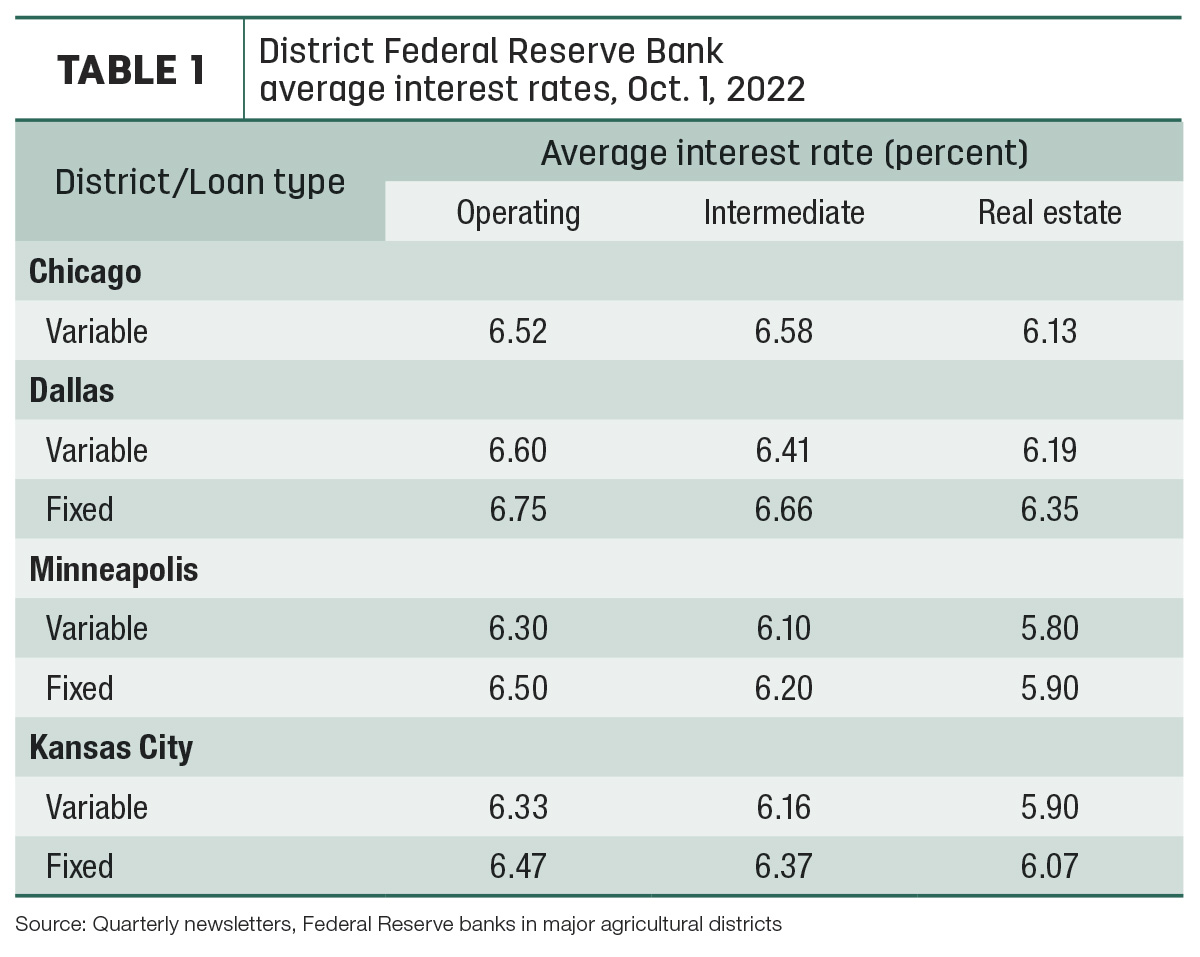
The following table provides a representative look at the expected interest rate environment in 2026. Note that these are estimates based on current economic projections and individual lender policies.
| Loan Type | Typical Lender | Estimated Rate Range (2026) | Common Term Length |
|---|---|---|---|
| FSA Direct Farm Ownership | USDA | 4.25% – 5.00% | Up to 40 Years |
| FSA Direct Operating | USDA | 4.50% – 5.25% | 1 – 7 Years |
| Commercial Farm Real Estate | Private Bank | 6.75% – 8.50% | 15 – 30 Years |
| Commercial Operating Line | Farm Credit / Bank | 7.00% – 9.00% | 1 Year (Renewable) |
| Equipment Financing | Captive/Dealer | 5.50% – 8.00% | 3 – 7 Years |
| FSA Emergency Loan | USDA | 3.75% (Fixed) | Varies |
Factors That Influence Your Specific Interest Rate
While market averages provide a baseline, your specific agriculture loan rate will be determined by your financial "health" and the specifics of your operation.
Credit Score and Financial History
While some government programs are more lenient, commercial lenders heavily weigh your credit score. A score above 720 generally qualifies a borrower for the "best available" rates. Lenders also examine your Debt-to-Asset (D/A) Ratio. A ratio below 40% suggests a strong equity position, which reduces the lender's risk and can lead to rate discounts.
Collateral Quality
The type of security you offer matters. Tillable, high-quality cropland in a prime location is considered "gold-standard" collateral. Conversely, specialized facilities (like a highly specific poultry barn) may be harder to liquidate, leading a lender to charge a slightly higher rate to offset the potential difficulty in recovering funds.
Loan-to-Value (LTV) Ratio
The more "skin in the game" you have, the better your rate. If you are asking a bank to finance 50% of a land purchase while you provide 50% as a down payment, your rate will be lower than if you were asking for 90% financing. High LTV loans are riskier for lenders, and the interest rate reflects that risk.
Fixed vs. Variable Rates
In 2026, the choice between fixed and variable rates is a strategic gamble.
- Fixed Rates: Provide certainty. Your payment stays the same for the life of the loan. This is ideal if you believe interest rates will rise in the future.
- Variable Rates: Usually start lower than fixed rates but can increase if market benchmarks rise. These are often used for short-term operating lines where the loan will be paid off after the harvest.
How to Secure the Lowest Agriculture Loan Rates
Securing a competitive rate requires preparation and a proactive approach to financial management.
- Improve Your Balance Sheet: Before applying, look for ways to reduce short-term consumer debt. Increasing your liquidity (cash on hand) makes you a more attractive candidate for lower rates.
- Develop a Robust Business Plan: Lenders are more likely to offer favorable terms to producers who can demonstrate a clear path to profitability. This includes detailed yield projections, marketing plans, and risk mitigation strategies (such as crop insurance).
- Shop Multiple Lenders: Do not settle for the first quote. Compare the Farm Credit System, local community banks, and national agricultural lenders. Each has different "appetites" for specific types of agricultural risk.
- Inquire About Buy-Down Programs: Some states offer "Aggie Bond" programs or interest rate buy-downs for beginning farmers. These programs use tax-exempt bonds to provide lower-than-market interest rates to eligible borrowers.
- Utilize USDA Guarantees: If you don't qualify for a direct FSA loan, ask your commercial bank about a Guaranteed Loan. The USDA guarantees up to 95% of the loss on the loan, which reduces the bank's risk and often allows them to offer you a lower interest rate or better terms than they would otherwise.
Common Pitfalls in Agricultural Financing
Many producers focus solely on the "headline" interest rate while ignoring other costs that can make a loan expensive.
- Closing Costs and Fees: Appraisal fees, environmental site assessments, and loan origination fees can add thousands to the cost of borrowing. Always ask for an Annual Percentage Rate (APR), which includes these fees, to compare loans accurately.
- Prepayment Penalties: Some fixed-rate agricultural loans charge a fee if you pay the loan off early (for example, if you sell the land or refinance when rates drop). Ensure you understand the "yield maintenance" or prepayment clauses in your contract.
- Restrictive Covenants: Lower rates sometimes come with "strings attached," such as requiring you to maintain a certain debt-coverage ratio or limiting your ability to take on further debt without the lender's permission.
Frequently Asked Questions
Can I get a 0% interest agriculture loan?
Truly 0% interest loans are extremely rare in agriculture and are usually limited to specific dealer-sponsored equipment promotions (e.g., "0% for 60 months" on a new tractor). Government and commercial loans always carry an interest rate to cover administrative costs and inflation. However, certain state-level beginning farmer programs may offer rates near 1% or 2% during the initial years of the loan.
How often do FSA loan rates change?
FSA interest rates are updated on the first day of every month. Once you close on a direct FSA loan, your rate is typically fixed for the life of that loan. It is important to monitor the monthly announcements if you are in the application pipeline, as the rate is usually set at the time of loan approval or loan closing, whichever is lower.
Does crop insurance affect my interest rate?
While crop insurance may not directly lower the "quoted" interest rate, it is often a prerequisite for obtaining a loan at all. Lenders view crop insurance as a primary risk-mitigation tool. By guaranteeing a minimum level of income, you reduce the probability of default, which can help you qualify for the more competitive "tier 1" rates at commercial banks.
What is the difference between a farm loan and a regular mortgage?
Regular residential mortgages are based on the borrower’s personal income (W-2 or 1099) and the value of the home. Farm loans are based on the "productive value" of the land and the projected income generated by the agricultural operation. Farm loans also offer much more flexible repayment schedules—such as annual or semi-annual payments—to align with harvest cycles.
Can I refinance my agriculture loan if rates drop in 2027?
Yes, refinancing is common in agriculture. However, you must factor in the cost of a new appraisal, title work, and origination fees. If the interest rate drop is significant (usually 1% or more), the long-term savings often outweigh the closing costs. Always check for prepayment penalties on your current loan before initiating a refinance.
Next Steps for Borrowers
If you are planning to seek financing in 2026, start by gathering three years of tax returns and a current personal financial statement. Reach out to your local USDA Service Center to determine your eligibility for FSA programs, as these often serve as the benchmark for the rest of the market. By understanding the mechanics of agriculture loan rates, you can position your operation to minimize interest expenses and maximize long-term equity.