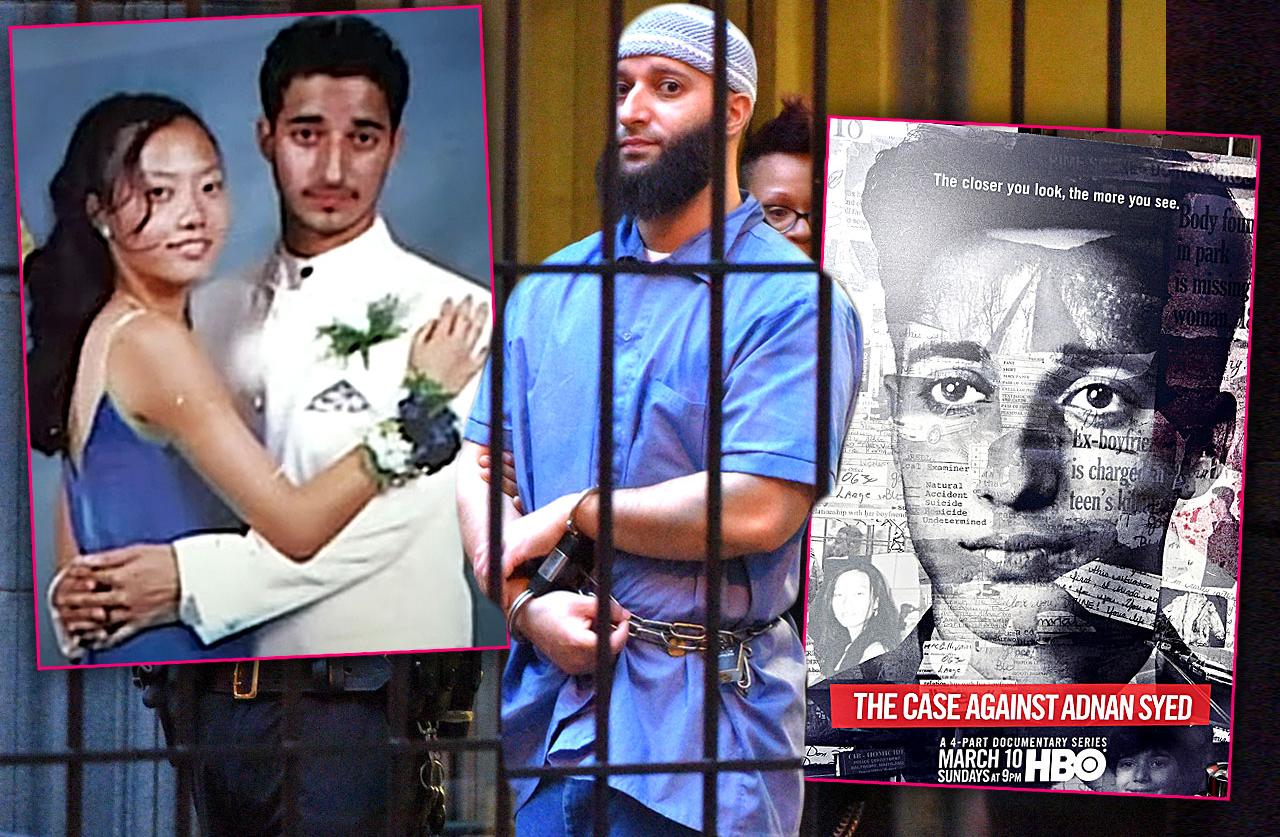
As of 2026, the question of whether Adnan Syed is innocent or guilty remains one of the most debated topics in American true crime history. While his 2000 conviction for the murder of Hae Min Lee was vacated in 2022 following the discovery of undisclosed evidence and DNA that did not match his profile, subsequent procedural appeals by the victim’s family have created a complex legal limbo regarding his official status.
The case of Adnan Syed is not merely a "whodunit" popularized by the Serial podcast; it is a profound study of the American judicial system’s mechanics, the fallibility of witness testimony, and the evolving role of forensic science. To understand the current debate over his guilt or innocence, one must look past the headlines and examine the specific evidence, the procedural failures of the original trial, and the new findings that led to his release from prison after 23 years.
The Original Prosecution: Why Adnan Syed Was Convicted
To understand why a jury found Adnan Syed guilty of first-degree murder in February 2000, it is necessary to examine the State’s original theory. The prosecution’s case rested primarily on two pillars: the testimony of Jay Wilds and cell tower "pings" that purportedly placed Syed at the location where Hae Min Lee’s body was discovered.
The Testimony of Jay Wilds
Jay Wilds, an acquaintance of Syed, was the State’s star witness. Wilds testified that Syed had expressed a desire to kill Lee because he felt "besmirched" by their breakup. According to Wilds, Syed showed him Lee’s body in the trunk of a car at a Best Buy parking lot and later forced Wilds to help bury her in Leakin Park.
While Wilds’ testimony was inconsistent across multiple police interviews—changing the location of the "trunk pop" and the timeline of events—prosecutors argued that the "spine" of his story remained consistent. For the jury, the fact that Wilds knew the location of Lee’s missing vehicle was a powerful indicator that he was involved and, by extension, that his testimony against Syed was credible.
Cell Tower Data and the 1999 Timeline
The prosecution used 1999-era cell phone records to corroborate Wilds' timeline. Specifically, they focused on two incoming calls received by Syed’s phone on the evening of January 13, 1999. These calls "pinged" a tower covering the Leakin Park area. At the time, this was presented as scientific proof that Syed was in the park burying the body during those specific minutes.
For the original jury, the combination of a witness who claimed to be an accomplice and technical data that seemed to track Syed’s movements was enough to secure a conviction, despite the total absence of physical evidence linking Syed to the crime scene.
The Case for Innocence: Forensic Gaps and Alibis
The movement to prove Syed’s innocence gained global momentum in 2014, but the legal arguments for his exoneration are based on specific evidentiary failures that occurred during the initial investigation and trial.
The Asia McClain Alibi
One of the most significant pieces of evidence in favor of Syed’s innocence is the testimony of Asia McClain, a high school classmate. McClain claimed she spoke with Syed in the Woodlawn Public Library at the exact time prosecutors alleged he was murdering Lee. Syed’s original defense attorney, Cristina Gutierrez, never contacted McClain or called her to testify. This failure became the basis for later "ineffective assistance of counsel" claims, as a credible alibi witness could have fundamentally dismantled the State’s narrow timeline.
Reliability of Cell Tower Evidence
Years after the trial, it was discovered that the AT&T cell phone records provided to the defense included a critical disclaimer: "Outgoing calls only are reliable for location status. Any incoming calls will NOT be considered reliable information for location."
The two crucial "Leakin Park pings" were incoming calls. Forensic experts have since testified that using incoming calls to determine location in 1999 was scientifically flawed due to how the network routed calls. Without the cell tower pings, the prosecution’s corroboration of Jay Wilds’ timeline largely evaporates.
The Absence of Physical Evidence
Despite a rigorous forensic examination of Lee’s car and the burial site in 1999, no DNA, fingerprints, or hair belonging to Adnan Syed were ever found on the victim or at the crime scene. In a case involving a manual strangulation and a burial in a wooded area, the lack of biological transfer between the suspect and the victim is considered by many forensic experts to be a significant "negative evidence" indicator of innocence.
The 2022 Vacatur and the Role of Brady Violations
The most definitive shift in the "innocent or guilty" debate occurred in September 2022, when Baltimore City prosecutors filed a motion to vacate Syed’s conviction. This was not just a result of public pressure, but a response to the discovery of Brady violations—a legal term referring to the prosecution’s failure to disclose exculpatory evidence to the defense.
The "Other Suspects"
The 2022 investigation revealed that the State had information in its files regarding two other potential suspects that was never shared with Syed’s defense team. One of these individuals had a motive to kill Lee and had allegedly threatened her, saying he would "make her disappear." One of the suspects was also linked to the location where Lee’s car was found. The failure to disclose these leads denied Syed a fair trial, as his lawyers could not pursue an "alternative suspect" defense.
Advanced DNA Testing
In 2022, the Baltimore City State’s Attorney’s Office conducted advanced "touch DNA" testing on Lee’s clothing, shoes, and fingernails—items that were not previously tested with modern technology. The results showed a DNA profile belonging to multiple individuals, but Adnan Syed’s DNA was not present on any of the items.
This forensic breakthrough was the primary catalyst for the State’s Attorney to drop all charges in October 2022, stating that the "conviction was based on a flawed foundation."
Legal Status vs. Moral Certainty (2023–2026)
While Syed was released in 2022, his legal journey took a procedural turn in 2023 and 2024. The Maryland Appellate Court and subsequently the Maryland Supreme Court dealt with a challenge from the victim’s brother, Young Lee, who argued that his right as a victim’s representative to attend the vacatur hearing in person had been violated.
The courts eventually ruled that the hearing must be redone to ensure the Lee family’s rights were respected. This did not necessarily mean the evidence against Syed had changed, but it reinstated the conviction on a technicality while the new hearing was pending. As we stand in 2026, Syed remains a free man, but the legal battle over the process of his exoneration has highlighted the tension between "legal innocence" (where the State cannot prove guilt) and "factual innocence."
| Category | Prosecution Argument (Guilt) | Defense/New Evidence Argument (Innocence) |
|---|---|---|
| Primary Witness | Jay Wilds provided a detailed account and knew the car's location. | Wilds' story changed multiple times; he may have been coached or pressured. |
| Forensic Evidence | Lack of an alibi during the "murder window." | DNA testing on Lee's shoes/clothing excludes Syed; presence of unknown profiles. |
| Location Data | Cell tower pings placed Syed near the burial site. | AT&T warned that incoming call location data was unreliable; experts now agree. |
| Motive | "Jilted lover" theory; Syed was heartbroken and angry. | Friends and teachers described the breakup as mutual and non-violent. |
| Alternative Suspects | None seriously considered during the 1999-2000 trial. | Two potential suspects were known to police but withheld from the defense. |
The Enduring Complexity of the Evidence
For those who believe Adnan Syed is guilty, the focus usually remains on the "coincidences." They argue it is unlikely that Jay Wilds would know the location of the car unless he was involved, and it is equally unlikely he would frame Syed—a friend—without cause. They point to the "I am going to kill" note found in Syed’s possession (though its context was debated) as evidence of premeditation.
Conversely, for those who believe he is innocent, the focus is on the total lack of physical evidence and the systemic failures of the Baltimore Police Department at the time. They argue that if the DNA doesn't match and the cell phone data is junk science, there is no case. The discovery of the Brady violations suggests that the police may have had tunnel vision, focusing on Syed while ignoring more viable suspects.
Frequently Asked Questions
Was anyone else ever charged with Hae Min Lee’s murder?
No. To date, Adnan Syed is the only person who has ever been charged or convicted in relation to the death of Hae Min Lee. While the 2022 vacatur mentioned two other potential suspects, their identities have not been publicly released by the State’s Attorney’s Office, and no new arrests have been made as of 2026.
Does the DNA evidence prove Adnan Syed didn't do it?
In a strictly scientific sense, the DNA results prove that Adnan Syed’s biological material was not on the specific items tested (like Lee’s shoes and fingernails). While this does not "prove" he wasn't there in the way a video recording would, it strongly supports his innocence, as it is difficult to commit a violent struggle and manual strangulation without leaving any DNA or picking up the victim's DNA.
Why was his conviction reinstated in 2023?
The reinstatement was not based on new evidence of guilt. It was a procedural ruling based on the rights of the victim's family. The Maryland Appellate Court found that the Lee family was not given "meaningful notice" of the hearing that set Syed free. The ruling was about the rights of the victim's family to participate in the judicial process, not about Syed's actual guilt or the validity of the DNA evidence.
Where is Jay Wilds now?
Jay Wilds has maintained a relatively low profile since the Serial podcast was released. In occasional interviews and through legal representatives, he has stood by his original testimony that Adnan Syed killed Hae Min Lee, though he has admitted to inconsistencies regarding the specific times and locations of the events.
Is Adnan Syed still in prison?
No. Despite the procedural fluctuations regarding his conviction status, Adnan Syed has remained out of prison since his release in September 2022. He has been working at Georgetown University's Prisons and Justice Initiative and continues to advocate for judicial reform while his legal team manages the ongoing appeals.
Final Practical Outlook
Whether Adnan Syed is "innocent or guilty" in the court of public opinion may never be settled. However, in the court of law, the burden of proof rests entirely on the State. With the primary forensic evidence (cell tower data) discredited and the DNA evidence excluding him, the State’s ability to secure a conviction in a hypothetical retrial is virtually non-existent.
For those following the case, the next logical action is to monitor the Baltimore City State’s Attorney’s Office for updates regarding the "alternative suspects" identified in 2022. True closure for the family of Hae Min Lee and for Adnan Syed likely depends on the identification and prosecution of a suspect whose DNA actually matches the profiles found at the crime scene. Until then, the case remains a hallmark of the complexities inherent in seeking justice decades after a crime has occurred.