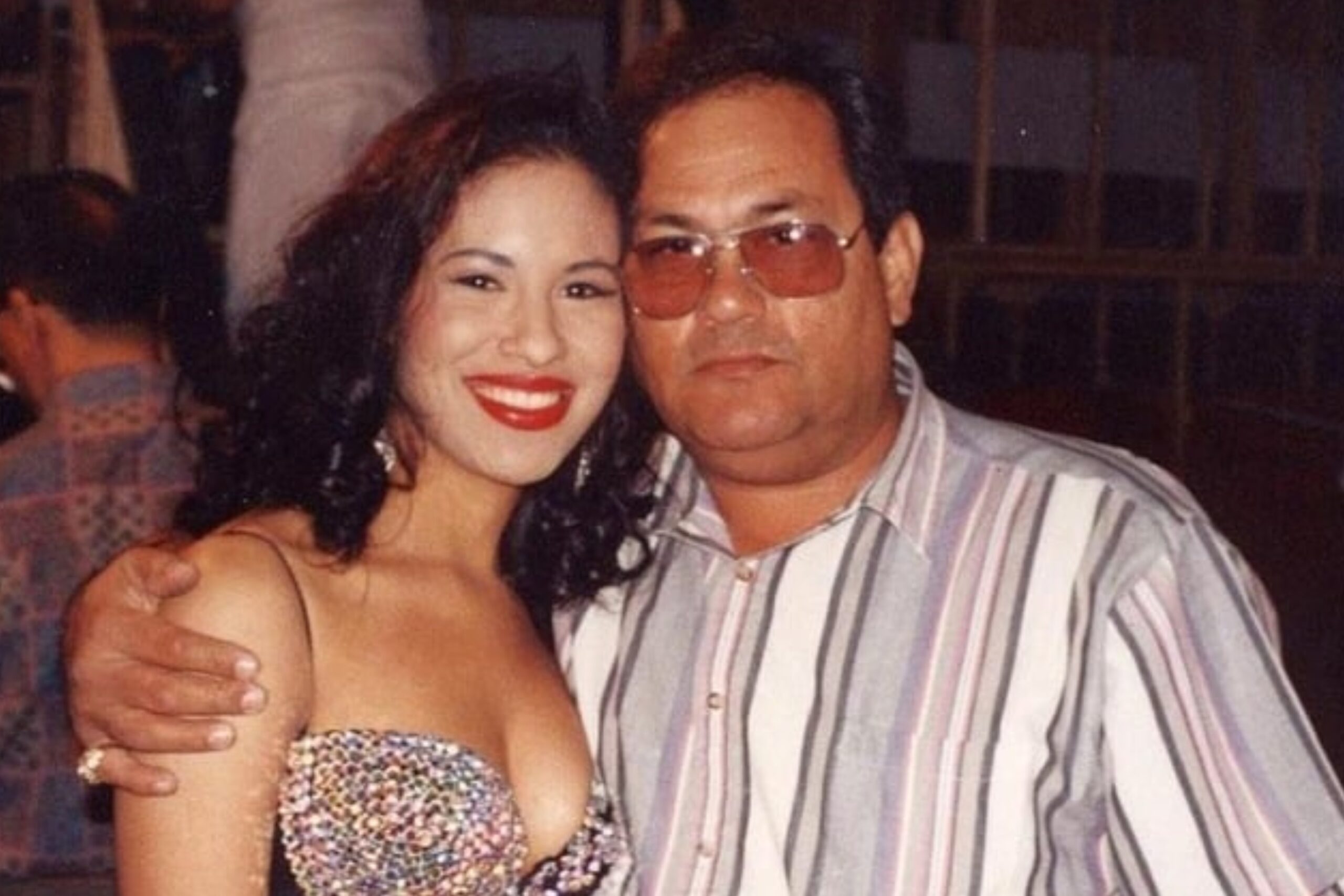
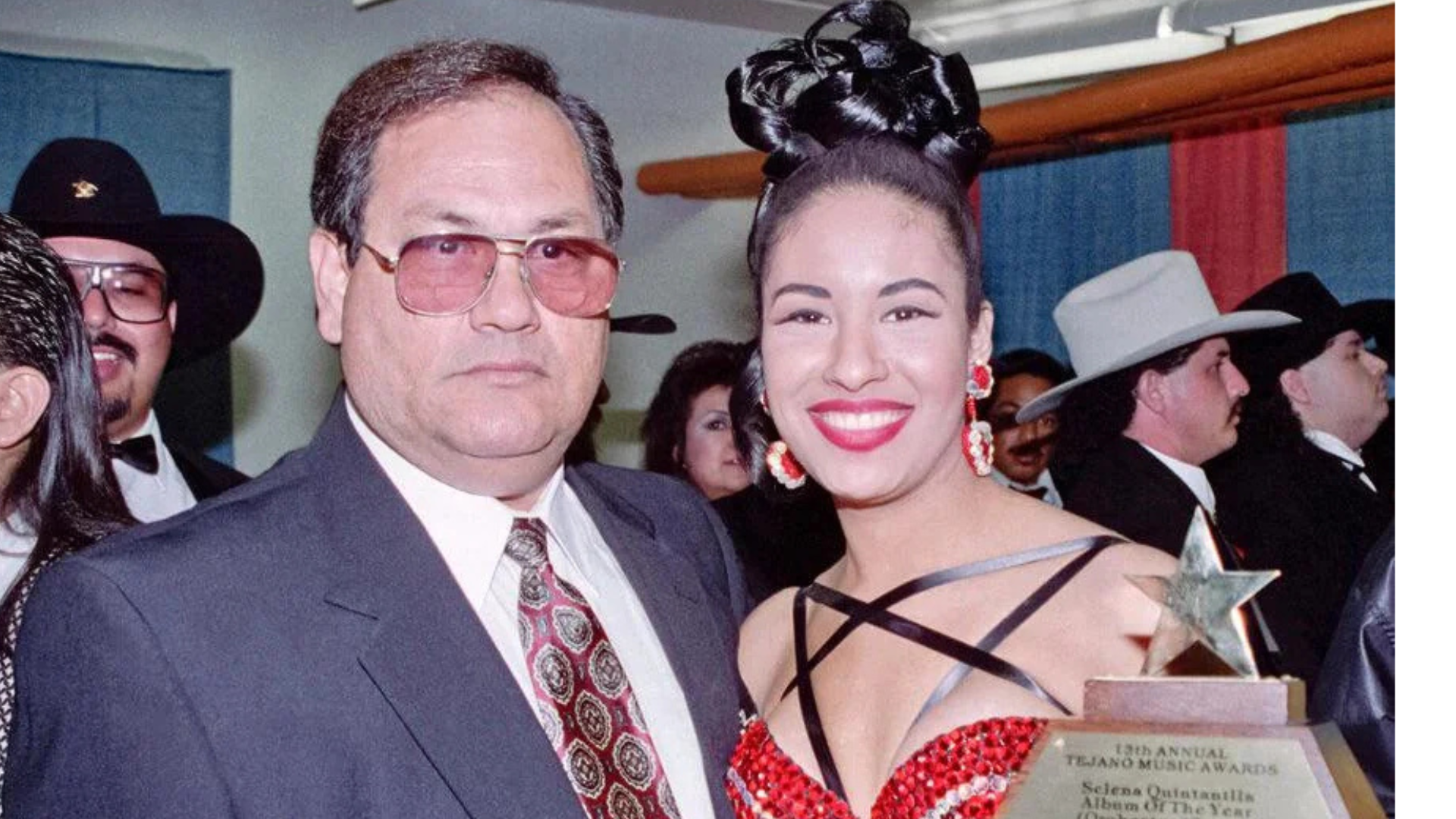
Abraham Quintanilla Jr. shaped the trajectory of Selena Quintanilla’s career from her childhood until her tragic passing in 1995, acting as her manager, producer, primary songwriter, and the driving force behind Selena y Los Dinos. His leadership blended strict family discipline with an ambitious vision for Tejano music, steering the group from local Texas venues to mainstream crossover success while navigating the complex commercial and cultural realities of the Latin music industry.
The Foundations of Selena y Los Dinos and Early Management
The story of Abraham Quintanilla Jr. as a manager began long before Selena achieved international stardom. A former musician himself—having played in a popular Chicano vocal group called The Dinos in the 1950s and 1960s—Abraham recognized musical talent early within his own household. When he discovered that his young daughter Selena possessed a remarkable, pitch-perfect voice, he formed a new family band, Selena y Los Dinos, featuring Selena on vocals, her older brother A.B. Quintanilla III on bass, and her older sister Suzette Quintanilla on drums.
In the initial years, Abraham’s management style was born out of necessity and economic survival. After losing his restaurant, Papagayos, during the oil bust in Texas in the early 1980s, the family faced severe financial destitution. Music became their primary hope for stability. Abraham took on every operational role imaginable. He acted as:
- Booking agent, cold-calling venue owners and wedding coordinators across South Texas.
- Sound engineer and road manager, hauling heavy equipment, setting up amplifiers, and running the mixing board.
- Transport coordinator, driving the family across long distances in a converted bus known as "Big Bertha."
- Financial controller, managing meager earnings to reinvest in instruments, costumes, and travel expenses.
This hands-on approach instilled a deep work ethic in the young performers. Rehearsals were rigorous, often taking place in the garage of their Lake Jackson home after long school days. Abraham insisted that the children maintain their education while pursuing performance, balancing textbooks with touring schedules. This foundational period forged a tight-knit family unit that insulated the rising stars from external exploitation while establishing absolute centralized control over the band's artistic and business affairs.
Crafting the Sound: Songwriting, Production, and Label Negotiations
As a manager, Abraham Quintanilla Jr. understood that raw talent and relentless touring were insufficient for long-term survival in the male-dominated Tejano music market. He recognized the need for a distinct musical identity and high-quality material. Drawing on his own background as a songwriter and performer, Abraham wrote and translated numerous tracks for Selena, while also empowering his son, A.B. Quintanilla III, to become the principal songwriter and producer for the group.
Tejano music was traditionally a male-dominated genre heavily influenced by traditional Mexican folk, polka, and country music. Abraham and A.B. modernised this sound by infusing contemporary pop, R&B, funk, and synth-pop elements into Selena y Los Dinos' arrangements. This sonic evolution broadened the band's demographic appeal, attracting younger audiences who listened to mainstream American radio alongside traditional Latin genres.
Securing a recording contract presented an equally formidable challenge. In the early stages, major record labels largely overlooked Tejano music, viewing it as a niche regional genre with limited commercial viability outside of Texas. Abraham sought out independent local labels, eventually securing deals with small regional companies such as Cara Records and GP Productions. These early releases allowed Selena y Los Dinos to build a loyal grassroots following across South Texas.
The turning point in Abraham's managerial career came in 1989 when he successfully negotiated a recording contract with EMI Latin, a newly formed division of EMI Records designed to tap into the burgeoning Hispanic market in the United States. This partnership proved pivotal. Under EMI Latin, Selena released self-titled albums that systematically climbed the regional charts. Abraham maintained strict oversight over the creative direction of these albums, ensuring that Selena's image remained family-friendly and culturally authentic while expanding her commercial reach.
| Milestone Year | Major Event in Management & Career | Significance |
|---|---|---|
| 1981 | Formation of Selena y Los Dinos | Established the family band framework following financial hardship. |
| 1984 | Release of first independent LP (Selena y Los Dinos) | Marked the transition into professional recording on local labels. |
| 1989 | Signing with EMI Latin | Provided major-label backing and professional distribution networks. |
| 1990 | Release of Ven Conmigo | Achieved historical milestone as the first gold-certified Tejano album. |
| 1994 | Release of Amor Prohibido | Solidified crossover potential, dominating Latin charts worldwide. |
Navigating Crossover Ambitions and Business Expansion
By the early 1990s, Abraham Quintanilla Jr. and his management team recognized that Selena had outgrown the regional boundaries of Tejano music. The strategic objective shifted toward the mainstream Anglo-American market through a major crossover English-language album. However, transitioning a regional Latin artist into a mainstream pop star required careful positioning.
Abraham acted as a fierce protector of Selena’s brand identity and personal safety. As the popularity of Selena y Los Dinos surged, security concerns multiplied. Massive crowds mobbed hotels, concert venues, and public appearances. Abraham implemented strict security protocols, limiting direct contact with unvetted outsiders and maintaining tight control over press access. This protective instinct sometimes drew criticism from external promoters and media figures who found him overly cautious, but Abraham viewed his role primarily through the lens of a father safeguarding his children in a notoriously predatory entertainment industry.
In addition to music production and touring, Abraham oversaw the expansion of Selena's business empire into retail fashion. In 1994, Selena launched her clothing line and opened two boutiques in Corpus Christi and San Antonio, named Selena Etc. Abraham supported these entrepreneurial ventures, helping manage the business side while Selena focused on design and performance.
Furthermore, Abraham navigated the complex negotiations surrounding Selena's acting debut and crossover recordings. He ensured that when major Hollywood studios approached Selena for film opportunities—such as her cameo appearance in the 1995 film Don Juan DeMarco—her professional commitments to music and her image were preserved. His centralized management ensured that every business venture, endorsement, and media appearance aligned with the core values of the Quintanilla family brand.
The Crisis of 1995 and Posthumous Legacy Management
The tragic murder of Selena Quintanilla on March 31, 1995, by Yolanda Saldívar—the president of her fan club and manager of her boutiques—shattered the Quintanilla family and the Latin music world. In the wake of this devastating loss, Abraham Quintanilla Jr. assumed a new, profoundly difficult management role: protecting and preserving his daughter's legacy.
In the immediate aftermath, Abraham worked tirelessly to coordinate public memorials that allowed hundreds of thousands of grieving fans to pay their respects at the Bayfront Plaza in Corpus Christi. Amid immense public grief, he also navigated the turbulent legal proceedings against Saldívar, attending the trial to ensure justice was served. The conviction and subsequent life sentence of Saldívar brought legal closure, but Abraham's work in managing Selena's memory had only just begun.
Over the subsequent decades, Abraham has maintained rigorous legal and creative control over Selena's name, likeness, and musical catalog through Q-Productions, the family-owned recording studio and production company based in Corpus Christi. His post-1995 managerial efforts include:
- Overseeing the release of posthumous recordings, most notably the 1995 crossover album Dreaming of You, which debuted at number one on the Billboard 200 chart.
- Collaborating with Warner Bros. on the biographical film Selena (1997), starring Jennifer Lopez, serving as an executive producer to ensure an accurate portrayal of his daughter's life and the family's struggles.
- Managing digital streaming releases, archival footage, and authorized television projects, such as the Netflix series Selena: The Series (2020–2021).
- Establishing scholarship funds and community outreach programs in Corpus Christi to support aspiring young musicians.
Through these initiatives, Abraham ensured that Selena's cultural impact endures, cementing her status as an enduring icon of Tejano and Latin pop music.
Frequently Asked Questions
Was Abraham Quintanilla Jr. Selena's only manager throughout her career?
Yes. From the inception of Selena y Los Dinos in the early 1980s until Selena's death in 1995, Abraham Quintanilla Jr. served as her primary manager, booking agent, and executive producer. While the family collaborated with major record labels like EMI Latin and booking agencies for specific tours, Abraham retained ultimate control over all professional decisions, contracts, and creative directions.
How did Abraham Quintanilla Jr. influence Selena's musical style?
Abraham helped shape Selena's musical repertoire by writing and translating songs, as well as encouraging his son, A.B. Quintanilla III, to blend traditional Tejano music with modern pop, R&B, and dance rhythms. This fusion expanded the band's audience appeal beyond traditional regional markets and laid the groundwork for Selena's crossover success.
What role did Abraham play in the launch of Selena Etc.?
Abraham supported Selena's entrepreneurial ambitions by helping establish her clothing boutiques and retail line, Selena Etc., located in Corpus Christi and San Antonio. He assisted with the administrative and logistical foundations of the business, allowing Selena to focus on her creative designs and musical performances.
How does Abraham Quintanilla Jr. protect Selena's estate today?
Through Q-Productions, the family's entertainment company, Abraham maintains strict legal control over Selena's name, likeness, trademarks, and master recordings. This oversight ensures that all authorized films, television series, documentaries, and merchandise align with the family's vision and respect Selena's memory.
Practical Guidance and Recommendations for Researching Selena's Career
For researchers, biographers, and fans seeking a deeper understanding of Abraham Quintanilla Jr.'s managerial role and Selena's historical impact, standardizing your approach to primary and secondary sources is essential.
- Consult Official Archives: Rely on documented court records from the 1995 trial, official releases from Q-Productions, and verified interviews given by Abraham Quintanilla Jr. over the decades to ensure factual accuracy.
- Examine Industry Context: Study the evolution of Tejano music in the 1980s and 1990s to understand the logistical and cultural barriers Abraham navigated while pushing for mainstream crossover success.
- Review Authorized Media: For narrative context regarding the family's early struggles, examine authorized projects such as the 1997 biographical film Selena and memoirs published by family members, while cross-referencing industry reporting from music journals like Billboard.