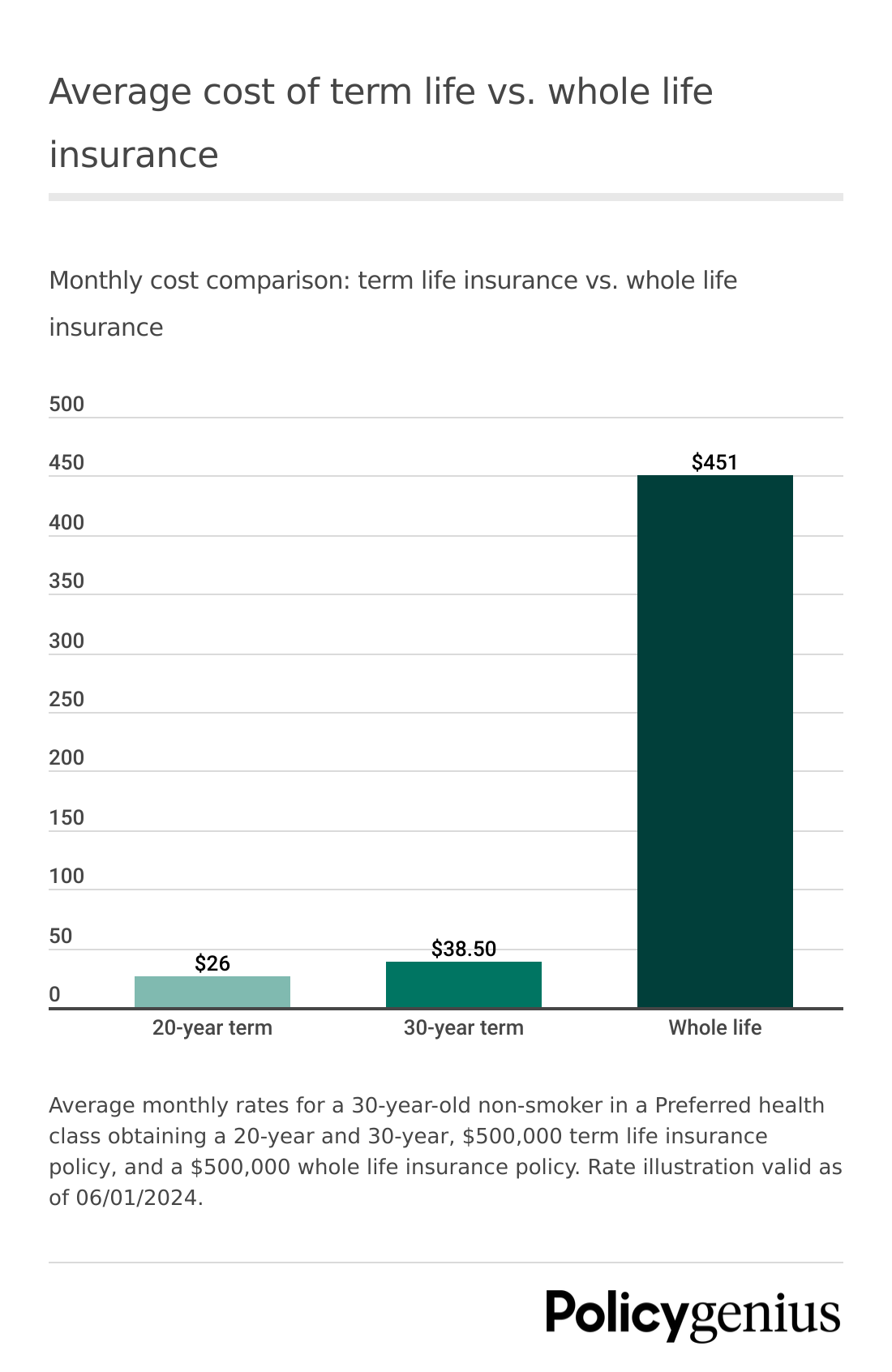
When 30-year term life insurance was first offered in the United States during the late 20th century, it fundamentally revolutionized consumer risk management, replacing traditional short-duration policies with multi-decade financial security. This innovation allowed families to lock in level premiums through crucial life stages—such as raising children and paying down a 30-year mortgage—transforming life insurance from a temporary income-replacement tool into a long-term asset planning instrument.
The Genesis of Level-Premium Term Insurance in America
To understand the introduction of the 30-year term structure, one must examine the evolution of the American life insurance market prior to the 1970s and 1980s. Historically, life insurance options for everyday consumers were sharply polarized between two major categories: whole life insurance and short-term yearly renewable term insurance.
Whole life insurance offered permanent coverage coupled with a cash value savings component, but its high cost frequently priced young families out of adequate protection. Conversely, yearly renewable term (YRT) insurance provided high death benefit face values for minimal initial outlays, but the premiums escalated annually. As a policyholder aged, these yearly price hikes eventually became unsustainable, forcing older adults to drop their coverage when they needed it most.
During the late 1970s and early 1980s, a period marked by high inflation and volatile interest rates, market demand shifted dramatically. Consumers and financial planners sought products that combined the affordability of term insurance with the cost stability of permanent coverage. This economic pressure catalyzed the creation of level-premium term life insurance. Initially, insurance carriers introduced 5-year and 10-year level term products. As actuarial data matured, reserve requirements stabilized, and computer modeling improved, forward-thinking carriers began pushing the envelope to 15-year, 20-year, and eventually 30-year durations.
Market Forces and Actuarial Milestones of the 1980s and 1990s
The formal introduction of 30-year term life insurance as a commercially viable product occurred during the late 1980s and gained widespread prominence through the 1990s. This timeline coincided with several critical structural shifts within the domestic insurance industry:
- Actuarial Table Updates: The implementation of modern mortality tables, such as the 1980 Commissioners Standard Ordinary (CSO) table, provided insurers with more accurate, long-range data regarding human longevity and risk prediction over extended timeframes.
- Reinsurance Market Growth: The expansion of the global reinsurance market allowed primary insurance carriers to offload portions of their multi-decade mortality risk, making it financially feasible to guarantee premium rates for three full decades.
- Competitive Product Differentiation: As deregulation and market competition intensified, mutual and stock life insurance companies needed innovative products to capture the attention of a financially literate baby boomer generation entering their peak family-formation and home-buying years.
By locking in premiums for 30 years, insurers took on significant risk regarding future inflation, medical cost inflation, and interest rate fluctuations. To mitigate this, companies priced these policies with conservative margins and instituted rigorous medical underwriting standards, frequently requiring comprehensive paramedical exams, blood panels, and attending physician statements (APS).
Economic Alignment: Mortgages, Families, and Long-Term Planning
The rapid adoption of the 30-year term product was deeply intertwined with broader trends in American consumer finance, most notably the dominance of the 30-year fixed-rate mortgage. Throughout the late 20th century, purchasing a home with a 30-year loan became the standard American dream.
However, if the primary breadwinner died prematurely, surviving family members often faced immediate foreclosure if their income could no longer service the debt. A 30-year term life insurance policy emerged as the exact financial mirror to a 30-year mortgage. Consumers could match the term length of their insurance policy directly to the amortization schedule of their home loan, ensuring that the death benefit would completely wipe out remaining housing debt if tragedy struck.
Beyond real estate, the 30-year term policy aligned perfectly with family planning timelines. A policy purchased by parents in their late 20s or early 30s would remain active until their newborn children graduated from college, entered the workforce, and achieved financial independence. This eliminated the anxiety associated with older term products that expired when children were still in middle or high school.
Comparison of Term Life Insurance Durations
| Feature / Metric | 10-Year Term | 20-Year Term | 30-Year Term |
|---|---|---|---|
| Primary Use Case | Short-term debt, specific business loans, temporary income replacement. | Raising young children, medium-term financial obligations. | 30-year mortgages, newborn children, long-term family protection. |
| Premium Stability | Level for 10 years; rises sharply upon renewal. | Level for 20 years; rises sharply upon renewal. | Level for 30 years; highest initial rate among term options. |
| Target Age Range | Typically ages 20 to 65. | Typically ages 20 to 55. | Typically ages 20 to 45 (due to age limits at expiration). |
| Underwriting Strictness | Standard to rigorous. | Rigorous. | Most rigorous due to the extended multi-decade risk exposure. |
Evolution of Underwriting and Product Features Over Time
When 30-year term policies were first commercialized, the application and underwriting process was entirely paper-based and notoriously slow, frequently taking four to eight weeks to issue a policy. Consumers were required to submit to physical fluid collection by a nurse examiner and wait for manual processing of medical records.
As technology advanced into the 21st century, the mechanics of securing a 30-year term policy transformed significantly. While traditional underwriting remains the gold standard for high-face-value policies, modern insurers now utilize accelerated underwriting programs. These programs leverage big data, prescription databases, motor vehicle records, and algorithmic risk scoring to approve healthy applicants for 30-year coverage without requiring a physical exam.
Furthermore, early iterations of 30-year term insurance were often rigid, standalone indemnity contracts. Over time, carriers introduced valuable policy riders to enhance flexibility:
- Conversion Privileges: Allowing policyholders to convert all or part of their term coverage into a permanent whole life or universal life policy without proving current insurability.
- Accelerated Death Benefits: Permitting the insured to access a portion of the death benefit early if diagnosed with a terminal illness or chronic condition.
- Waiver of Premium: Pausing premium payments if the insured becomes totally disabled due to injury or illness.
Frequently Asked Questions About 30-Year Term Life Insurance
Why was 30-year term life insurance not widely available in the early 20th century?
Early life insurance markets relied heavily on whole life products or short-term renewable contracts because insurers lacked the sophisticated computing power, long-range economic modeling, and reinsurance markets necessary to safely guarantee level pricing across three volatile decades.
How did the 30-year fixed-rate mortgage influence the success of this product?
The 30-year fixed-rate mortgage created a standardized multi-decade debt obligation for American households. Insurance companies designed the 30-year term policy to mirror this timeline, providing families with a direct financial hedge against the risk of losing the primary income earner before the home was paid off.
What happens when a 30-year term life insurance policy expires?
Once the 30-year level-premium period concludes, the policy typically expires or enters an annual renewable phase where premiums skyrocket based on the insured's attained age. Most policyholders either let the policy lapse, convert it to a permanent policy prior to expiration, or replace it if they still have an insurable need.
Are 30-year term premiums more expensive than 10-year or 20-year terms?
Yes, 30-year term policies carry higher initial annual premiums than shorter durations for the same face value. This is because the insurance company is locked into a fixed rate for a longer period, assuming greater risk of mortality inflation and economic fluctuation as the insured ages.
Can anyone qualify for a 30-year term life insurance policy?
Approval depends heavily on age and health status. Because policies extend over 30 years, most insurance carriers impose a maximum issue age—typically age 50 or 55—so that the policy does not stretch into advanced ages where mortality risk spikes exponentially. Individuals beyond this age threshold are usually restricted to 10-year or 20-year terms.
Practical Guidance and Next Steps for Consumers
Selecting a 30-year term life insurance policy requires balancing long-term budget stability with accurate assessments of your family's future financial obligations. When evaluating coverage, calculate the exact duration of your outstanding liabilities, including mortgage balances, the number of years until your youngest dependent becomes self-sufficient, and anticipated future income replacement needs.
Because underwriting criteria and pricing algorithms vary widely across carriers, consulting with an independent insurance broker or financial professional can help you compare multiple quotes from A-rated financial institutions. Ensure you apply while you are younger and healthier to lock in the lowest possible level premium for the full three-decade span.