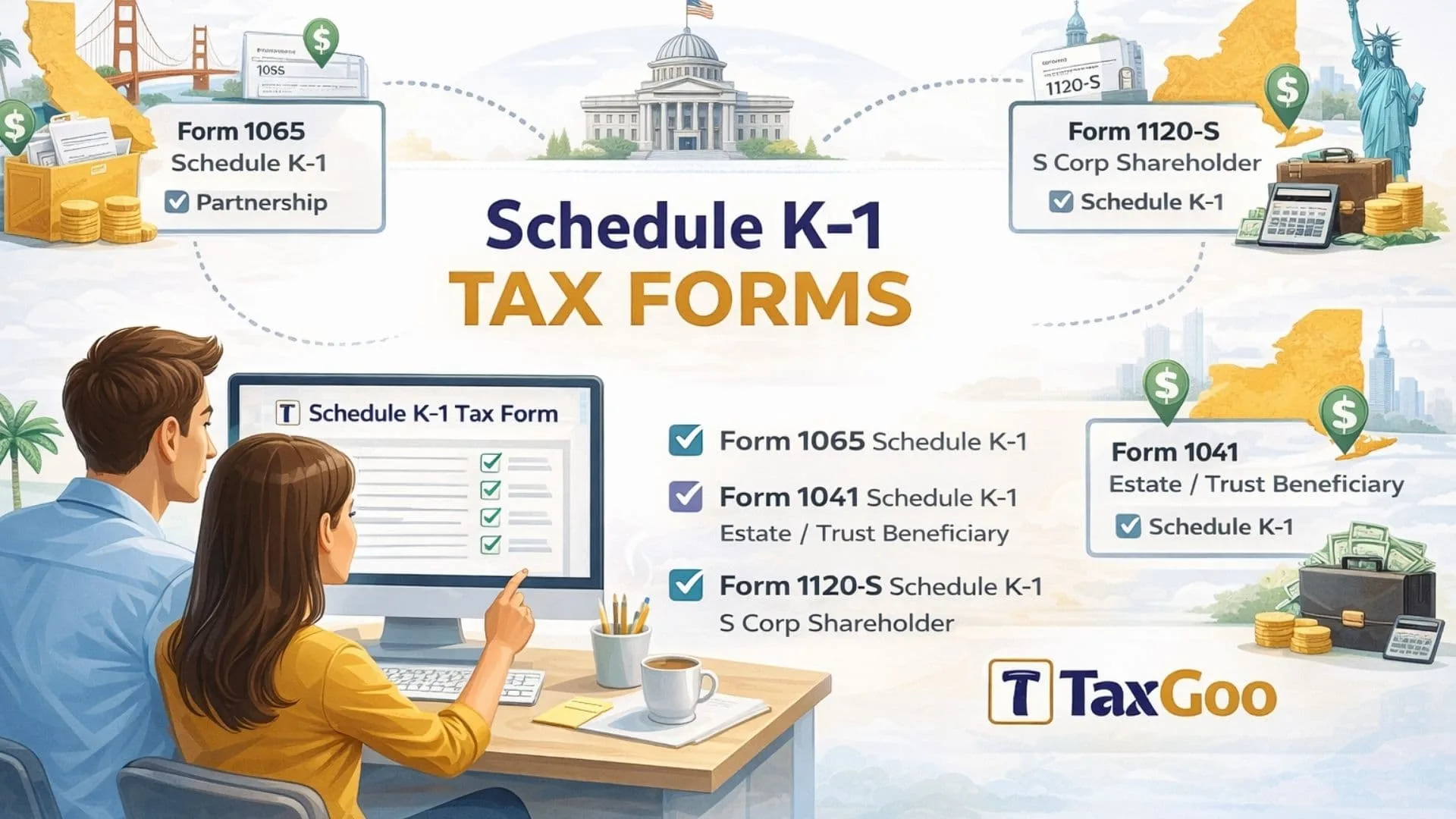
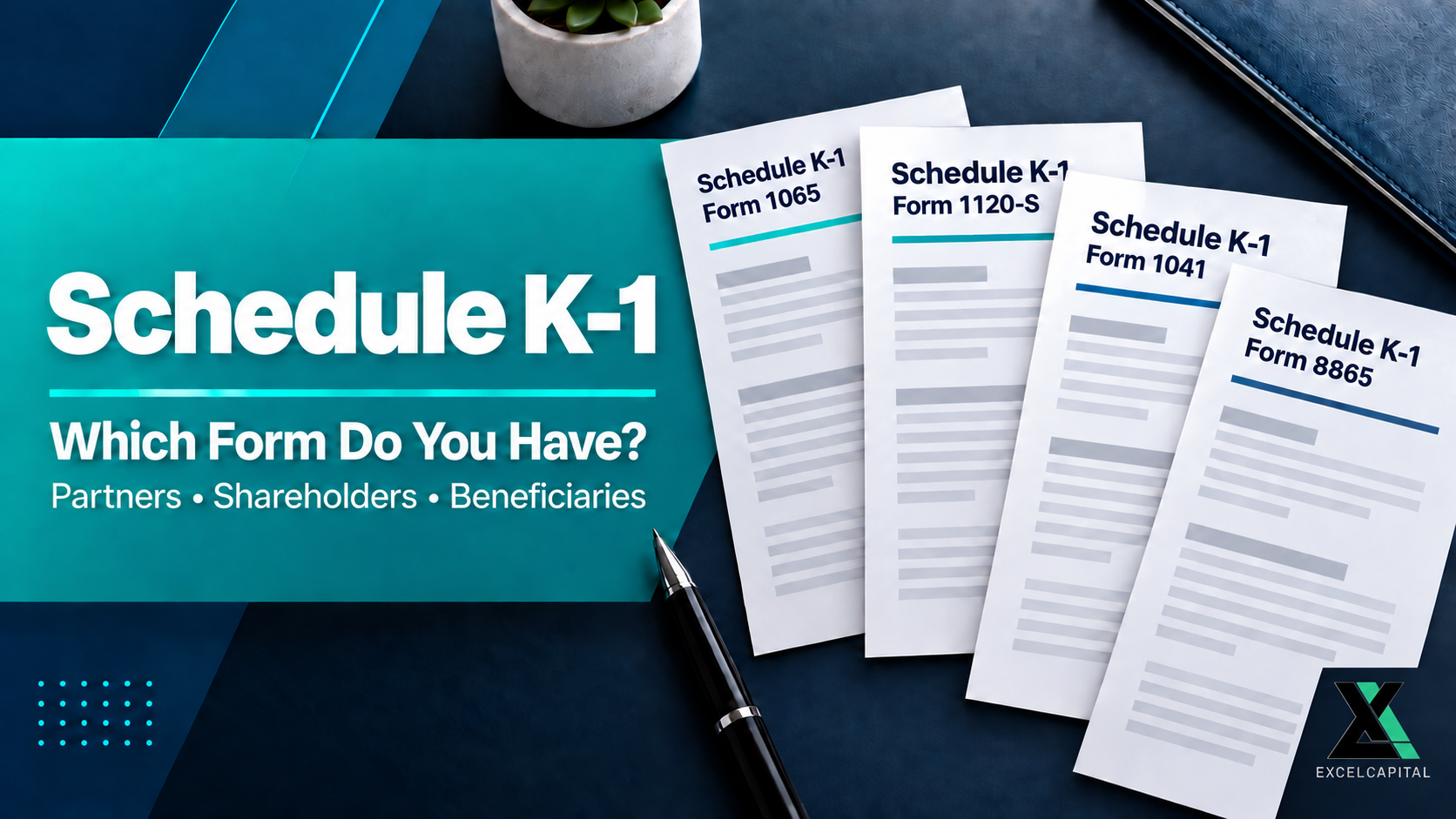
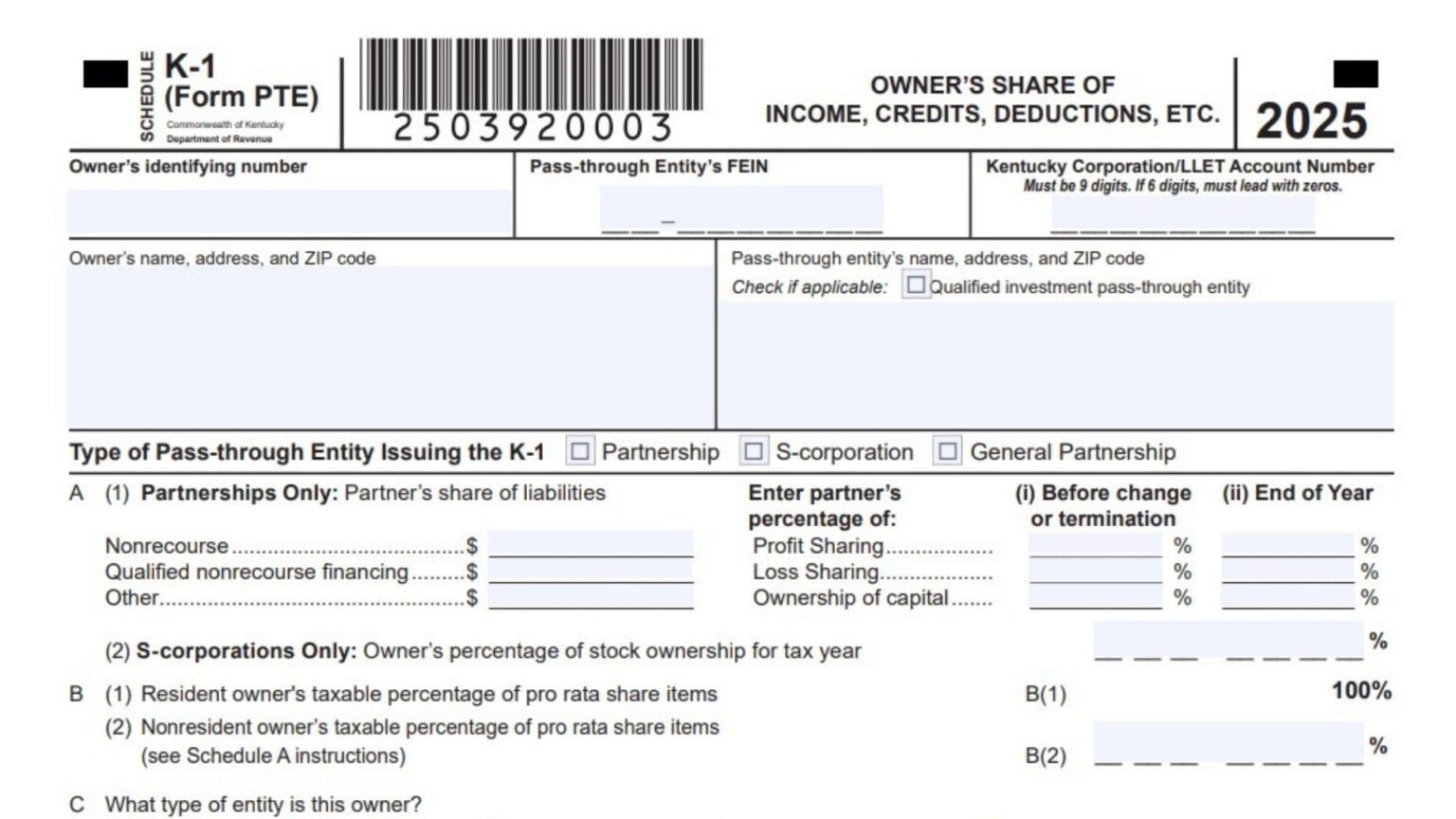
Schedule K-1 (Form 1065) uses letter codes in specific boxes—such as Boxes 11, 13, 15, 17, and 20—to report a partner’s share of partnership income, deductions, credits, and tax items for tax year 2025. These codes instruct taxpayers and tax software exactly where to report each item on Form 1040 and its supporting IRS schedules.
What Is IRS Form 1065 Schedule K-1?
Partnerships, limited liability companies (LLCs) taxed as partnerships, and joint ventures are pass-through entities for U.S. federal income tax purposes. The partnership itself generally pays no federal income tax. Instead, the entity files an annual information return on IRS Form 1065 (U.S. Return of Partnership Income) and issues a Schedule K-1 (Form 1065) to each partner.
Schedule K-1 summarizes your individual share of the partnership’s financial activity for the tax year. While standard numerical boxes on the schedule report straightforward figures—such as ordinary business income in Box 1 or net rental real estate income in Box 2—many sections rely on alphanumeric letter codes.
These codes break down complex tax transactions so you can properly apply statutory limitations, complete supplementary tax forms, and accurately calculate your individual tax liability on your federal income tax return.
Navigating Coded Boxes on the 2025 Schedule K-1
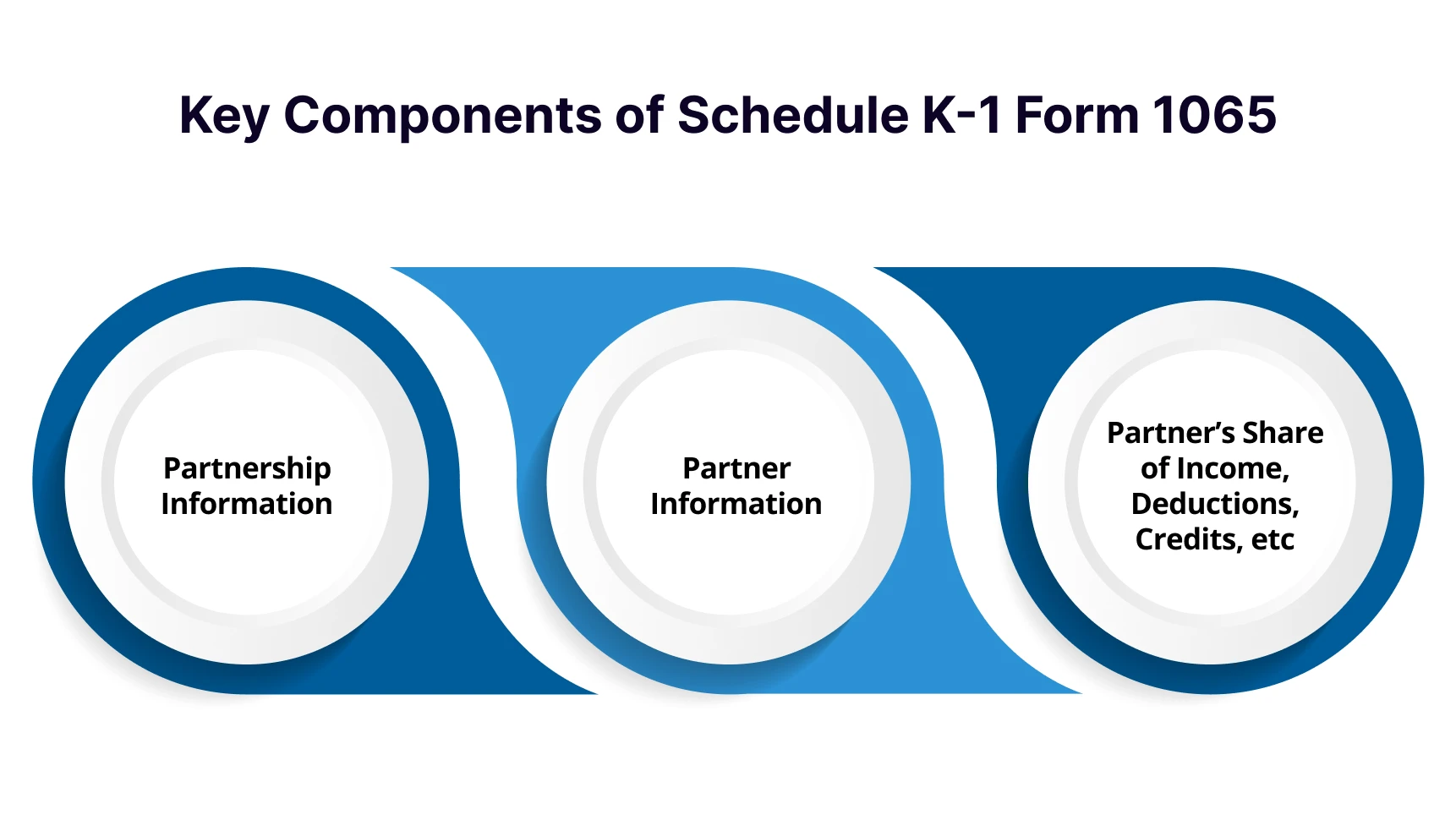
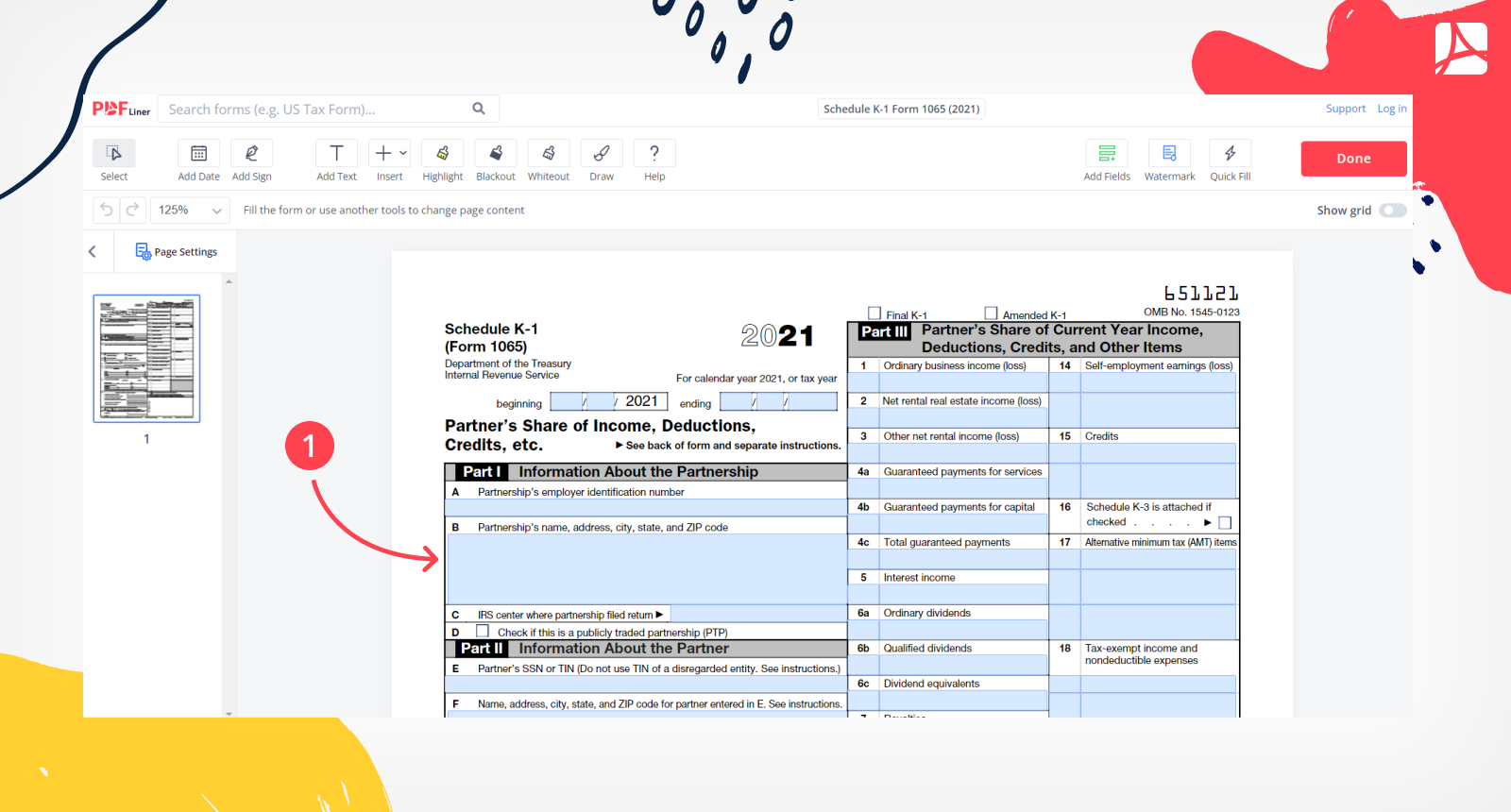
The layout of Schedule K-1 organizes tax items into clear functional categories. Coded boxes appear primarily in Part III of the form ("Partner’s Share of Current Year Income, Deductions, Credits, and Other Items").
When a partnership enters a letter code in one of these boxes, it signals that the reported dollar amount requires specific tax treatment or must be transferred to a specific IRS form or schedule.
- SCHEDULE K-1 (Form 1065) - Part III: Partner's Share of Current Year Items
- Box 11: Other Income: Codes A through ZZ
- Box 13: Other Deductions: Codes A through ZZ
- Box 15: Credits: Codes A through P
- Box 17: AMT Items: Codes A through F
- Box 20: Other Information: Codes A through ZZ / Statements
The primary boxes using letter codes include:
- Box 11 (Other Income/Loss): Captures income types that do not fit into standard categories, such as cancellation of debt, Section 1256 contracts, or foreign income inclusions.
- Box 13 (Other Deductions): Details deductible expenses subject to specific individual tax rules, including charitable contributions, Section 179 deductions, and research costs.
- Box 15 (Credits): Categorizes tax credits that directly offset your tax bill, such as the research credit, low-income housing credit, or work opportunity credit.
- Box 17 (Alternative Minimum Tax - AMT Items): Provides adjustments and preference items required to compute Alternative Minimum Tax on Form 6251.
- Box 20 (Other Information): Functions as the operational hub for critical supplemental tax computations, including Section 199A Qualified Business Income (QBI) details and Section 163(j) business interest expense limitations.
Key 2025 Schedule K-1 Box Codes Reference Table
The following reference table maps the most common letter codes across major boxes on the 2025 Schedule K-1 (Form 1065) to their tax meaning and standard IRS reporting locations:
| Box Number & Name | Code | Item Description | Primary IRS Form / Schedule Destination |
|---|---|---|---|
| Box 11: Other Income | Code A | Other portfolio income (loss) | Schedule E (Form 1040) / Form 8949 |
| Code E | Cancellation of debt (COD) | Form 1040, Schedule 1, Line 8z | |
| Code F | Section 951A(a) income (GILTI) | Form 8992 / Form 1040 | |
| Code I | Gain (loss) from Section 988 transactions | Form 1040, Schedule 1 | |
| Box 13: Other Deductions | Code A | Cash contributions (60% limit) | Schedule A (Form 1040), Line 11 |
| Code C | Noncash contributions (50% limit) | Schedule A (Form 1040) & Form 8283 | |
| Code G | Investment interest expense | Form 4952, Line 1 | |
| Code L | Research and experimental (R&E) expenses | Form 6765 / Schedule E / Statement | |
| Code T | Section 179 deduction | Form 4562, Line 12 / Schedule E | |
| Code W | Pre-2026 Section 163(j) excess business interest | Form 8990 Worksheet / Attachment | |
| Box 15: Credits | Code A/B | Low-income housing credit | Form 8586 |
| Code P | Work opportunity credit | Form 5884 | |
| Code M | Backup withholding | Form 1040, Line 25b | |
| Box 17: AMT Items | Code A | Post-1986 depreciation adjustment | Form 6251, Line 2l |
| Code C | Depletion adjustment | Form 6251, Line 2c | |
| Box 20: Other Information | Code A | Investment income | Form 4952, Line 4a |
| Code B | Investment expenses | Form 4952, Line 5 | |
| Code AE | Excess business interest income | Form 8990 | |
| Code AG | Excess taxable income | Form 8990 | |
| Code AH | Section 704(c) gain or loss | Supplemental Statement / Form 8949 | |
| Code AI | Section 199A Qualified Business Income | Form 8995 or Form 8995-A Attachment | |
| Code ZZ | Other information | See attached footnote/statement |
Deep Dive: Essential Schedule K-1 Codes by Box
Understanding the underlying rules for each code ensures that individual partner tax returns accurately reflect income, preserve capital loss treatment, and maximize allowable deductions.
Box 11: Other Income (Loss)
Box 11 reports items of income, gain, or loss that require special tax handling or separate tracking under internal revenue rules.
- Code A (Other portfolio income/loss): Represents portfolio income not classified as interest, ordinary dividends, royalties, or capital gains. This item generally flows to Schedule E (Form 1040).
- Code B (Involuntary conversions): Net gain or loss from involuntary conversions due to casualty, theft, or condemnation. Use Form 4684 to report these events.
- Code C (Section 1256 contracts and straddles): Net gain or loss from regulated futures contracts, foreign currency contracts, and non-equity options. Transfer these figures to Form 6781.
- Code E (Cancellation of debt): Reports your share of discharge of indebtedness income. Unless an insolvency or bankruptcy exclusion under Section 108 applies (reported on Form 982), this amount is recognized as taxable ordinary income on Schedule 1 (Form 1040).
- Code F (Section 951A(a) income): Reflects Global Intangible Low-Taxed Income (GILTI) inclusions from foreign corporations owned by the partnership.
- Code ZZ (Other income): A catch-all code for income items not categorized elsewhere. Partnerships must include an attached statement explaining the exact nature and tax treatment of the income.
Box 13: Other Deductions
Deductions reported in Box 13 do not reduce the partnership’s ordinary business income in Box 1. Instead, they pass through to partners individually, subject to partner-level tax limitations.
BOX 13: OTHER DEDUCTIONS
- Charitable Contributions
- Code A: Cash (60% AGI)
- Code C: Noncash (50% AGI)
- Code E: Capital Gain Prop. (20%)
- Business Deductions
- Code G: Investment Interest (Form 4952)
- Code L: R&E Expenditures (Form 6765)
- Code T: Sec. 179 Expense (Form 4562)
- Charitable Contributions
Codes A through F (Charitable Contributions):
- Code A: Cash contributions subject to the 60% Adjusted Gross Income (AGI) limit.
- Code B: Cash contributions subject to the 30% AGI limit.
- Code C: Noncash contributions subject to the 50% AGI limit.
- Code D: Noncash contributions subject to the 30% AGI limit.
- Code E: Capital gain property contributions subject to the 20% AGI limit.
- Note: Noncash contributions reported under Codes C, D, or E generally require completing IRS Form 8283 if total noncash contributions exceed $500.
Code G (Investment interest expense): Reports interest paid on borrowing allocated to holding investment property. Report this amount on Form 4952 (Investment Interest Expense Deduction).
Code L (Research and experimental expenditures): Reflects amounts paid for R&E activities under Section 174. Taxpayers must analyze whether these expenses are amortized over 5 years (domestic) or 15 years (foreign) under current federal rules.
Code T (Section 179 deduction): Your share of the partnership’s election to expense certain depreciable business assets. You must aggregate this amount with your Section 179 expenses from all other sources and apply the annual individual dollar cap on Form 4562.
Code W (Section 163(j) excess business interest): Represents excess business interest expense allocated to the partner. This amount is suspended at the partner level until the partnership generates excess taxable income in future years.
Code ZZ (Other deductions): Miscellaneous deductions accompanied by a detailed narrative schedule.
Box 15: Tax Credits
Tax credits directly offset tax liability dollar-for-dollar. Box 15 uses letter codes to direct these credits to the correct reporting forms.
- Codes A and B (Low-income housing credit): Reports low-income housing tax credits under Section 42. Code A applies to section 42(j)(5) partnerships for buildings placed in service before 2008; Code B applies to non-section 42(j)(5) partnerships or post-2007 structures. Complete Form 8586.
- Code C (Qualified rehabilitation expenditures): Rental real estate rehabilitation credits, reported on Form 3468.
- Code G (Work opportunity credit): Credit for hiring individuals from targeted groups, reported on Form 5884.
- Code J (Credit for increasing research activities): R&D tax credit passed through to partners, reported on Form 6765.
- Code M (Backup withholding): Reflects federal income tax withheld from partnership payments. This credit is claimed directly on Form 1040, Line 25b, as tax paid.
Box 17: Alternative Minimum Tax (AMT) Items
Because the Alternative Minimum Tax calculates taxable income under a parallel system, partners receive Box 17 codes to make the necessary AMT adjustments on Form 6251.
- Code A (Post-1986 depreciation adjustment): Measures the difference between standard tax depreciation and AMT depreciation (such as 150% declining balance vs. 200% declining balance). Enter this net positive or negative adjustment on Form 6251.
- Code B (Adjusted gain or loss): The difference between the gain/loss recognized for regular tax purposes and AMT purposes when property is sold, due to differing basis calculations.
- Code C (Depletion): The AMT depletion adjustment for mineral or oil and gas property.
- Codes D and E (Oil, gas, and geothermal items): Gross income (Code D) and deductions (Code E) allocated to oil, gas, and geothermal assets for computing the preference for excess intangible drilling costs.
Box 20: Other Information
Box 20 contains operational, statutory, and supplemental items that do not directly represent income or deduction totals, but are necessary to compute other tax elements correctly.
- Code A (Investment income) and Code B (Investment expenses): Used to complete Form 4952 when determining allowable investment interest expense.
- Code N (Interest expense allocated to portfolio income): Investment interest incurred by the partnership that must be evaluated at the individual level.
- Code AE (Excess business interest income): Used in Section 163(j) calculations to allow partners to deduct previously suspended business interest expense.
- Code AG (Excess taxable income): Represents taxable income from the partnership that permits partners to deduct current or suspended Section 163(j) interest on Form 8990.
- Code AH (Section 704(c) gain or loss): Identifies pre-contribution gain or loss allocated to a contributing partner under Section 704(c) rules.
- Code AI (Section 199A Qualified Business Income): Critical for calculating the 20% Qualified Business Income deduction. The partnership must attach a statement showing QBI income, Section 199A W-2 wages, and the unadjusted basis immediately after acquisition (UBIA) of qualified property.
How to Handle Attached Statements and Footnotes
A letter code in Schedule K-1 often comes with an attached statement, footnote, or supplemental schedule. The IRS requires partnerships to attach these schedules when a single box code contains multiple sub-components or requires additional tax disclosures.
- SCHEDULE K-1 BOX 20, CODE AI
- "See Attached Statement..."
- SUPPLEMENTAL STATEMENT
- Trade/Business #1: QBI Income
- W-2 Wages Allocated
- UBIA of Qualified Property
- SSTB (Yes/No Status)
When reviewing your K-1 packet, look out for the following critical attachments:
- Section 199A Statements (Code AI): Form 8995 and Form 8995-A require a detailed breakdown of QBI items by business trade or activity, including whether an activity is a Specified Service Trade or Business (SSTB).
- Passive Activity Reporting (Grouping Disclosures): If the partnership engages in multiple rental or business activities, an attached statement details income and losses by activity so you can apply passive loss limits on Form 8582.
- Schedule K-3 (Foreign Tax Items): Since 2021, foreign activity previously reported in Box 16 has been shifted to Schedule K-3 (Form 1065). If your partnership has foreign partners, foreign investments, or foreign operations, review Schedule K-3 for foreign tax credits (Form 1116).
- At-Risk Basis and Form 6198 Schedules: Footnotes providing details on nonrecourse debt, qualified nonrecourse financing, and recourse debt reported in Part II, Item K.
Common Tax Errors and Filing Best Practices
Navigating Schedule K-1 codes requires careful attention to detail. Missing or misinterpreting codes can lead to delayed refunds, IRS notices, or overstated tax liability.
1. Avoid Filing Before Receiving All K-1s
Partnerships often request extensions and may not issue Schedule K-1s until summer or early autumn. Filing an individual income tax return using estimated partnership numbers almost always requires an amended tax return (Form 1040-X) once the final K-1 arrives. If your K-1 is delayed, file an extension (Form 4868) for your individual return by the April tax deadline.
2. Verify Tax Basis Limitations First
Before claiming deductible losses from Box 1, Box 2, or Box 11 on Schedule E, ensure you have sufficient tax basis in your partnership interest. Losses that exceed your basis cannot be deducted in the current year. Keep a historic log of your inside and outside tax basis, updating it annually for distributions, capital contributions, and income allocations.
3. Match Software Entries to Code Descriptions
Modern tax software automatically prompts users for letter codes when entering Schedule K-1 data. Never skip entering letter codes or attached statements. If your software prompts for an attachment description (such as Box 20, Code ZZ), type the exact IRS classification provided on the partnership’s supplemental footnote page.
4. Watch for Excess Business Loss Rules (Section 461(l))
If your combined business losses across all pass-through entities exceed statutory indexed limits, excess losses are capped and carried forward as a net operating loss (NOL). Box 11, Code J, or supplementary notes flag these business loss limits.
Frequently Asked Questions
What should I do if my Schedule K-1 has a code not listed in the standard IRS instructions?
Check the supplemental pages attached to your Schedule K-1 packet. When a partnership uses general codes such as Box 11 Code ZZ, Box 13 Code ZZ, or Box 20 Code ZZ, IRS rules require it to include a statement detailing the item's specific tax identity, governing code section, and tax return entry point.
Why is foreign activity missing from Box 16 on modern K-1 forms?
The IRS moved foreign tax relevance items from Box 16 of Schedule K-1 to Schedule K-3 (Form 1065). If your partnership has items of international tax relevance, you will receive Schedule K-3 alongside your Schedule K-1.
How do Box 20, Code AI amounts affect my Section 199A QBI deduction?
Code AI indicates that the partnership has Qualified Business Income items. You cannot simply copy a single total onto Form 1040. You must reference the attached Section 199A statement to report your share of QBI income/loss, W-2 wages, and UBIA of qualified property on Form 8995 (Simplified) or Form 8995-A (Complex).
Can I deduct Section 179 expenses reported in Box 13, Code T immediately?
It depends on your individual tax situation. The Section 179 expense passed through from a partnership is subject to two main limits: the annual dollar limit and your individual aggregate business taxable income limit. If your total Section 179 deductions across all sources exceed statutory caps or your taxable business income is zero, the deduction is limited or carried forward on Form 4562.
Next Steps for Taxpayers and Partners
If you received a 2025 Schedule K-1 with coded entries, take the following steps to ensure accurate tax preparation:
- Gather the Complete K-1 Package: Ensure you have Part I, Part II, and Part III of Schedule K-1, along with all attached supplemental statements and any issued Schedule K-3.
- Cross-Reference Your Codes: Review each coded box against official IRS Schedule K-1 Partner Instructions to confirm which supporting forms (such as Form 4562, Form 4952, Form 6765, or Form 8995) must be included in your tax return.
- Track Basis and Loss Carryforwards: Calculate your adjusted tax basis and at-risk limits before applying losses against ordinary personal income.
- Consult a Tax Professional: Pass-through tax rules involve complex statutory provisions. If your Schedule K-1 contains Section 163(j) limitations, Section 704(c) allocations, or foreign tax items, work with a Certified Public Accountant (CPA) or Enrolled Agent (EA) to prepare your tax filings.
Disclaimer: This article is for informational purposes only and does not constitute formal legal, accounting, or professional tax advice. Federal tax laws and IRS regulations are subject to ongoing updates. Always consult a qualified CPA or tax attorney for specific tax planning advice tailored to your personal financial situation.