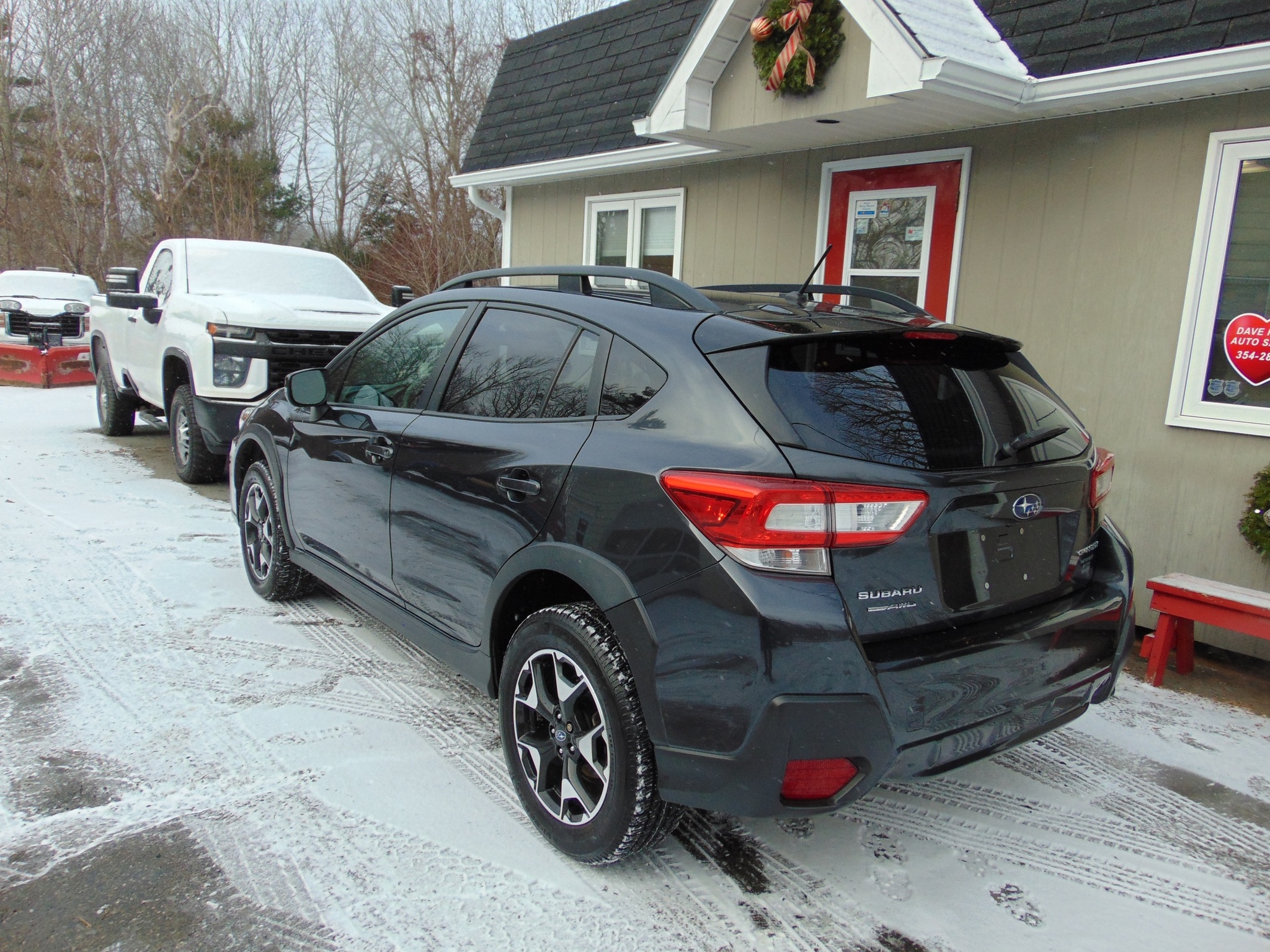
The 2019 Subaru Crosstrek is equipped with a 2.0-liter 4-cylinder SUBARU BOXER engine that produces 152 horsepower and 145 lb-ft of torque. This powertrain is engineered for a balance of efficiency and all-wheel-drive capability, serving as the standard configuration for all trim levels, including the base, Premium, and Limited models, regardless of the chosen transmission.
Engineering the Power: The 2.0-Liter BOXER Engine
The heart of the 2019 Subaru Crosstrek is its 2.0-liter direct-injection 4-cylinder engine. Subaru’s signature "BOXER" configuration distinguishes this vehicle from many of its competitors in the compact crossover segment. In a BOXER engine, the cylinders are arranged horizontally, with the pistons moving toward and away from each other. This low-profile design lowers the vehicle's center of gravity, which contributes to the Crosstrek’s notable handling stability and balance.
Delivering 152 horsepower at 6,000 RPM, the engine is designed to provide sufficient acceleration for daily commuting and moderate highway merging. The 145 lb-ft of torque peaks at 4,000 RPM, providing enough low-end responsiveness to navigate city streets. While this output is not designed for high-speed performance or aggressive racing, it is purposefully matched to the Crosstrek’s Symmetrical All-Wheel Drive (AWD) system, ensuring that power is distributed effectively across varying road conditions.
Transmission Options and Their Influence on Power Delivery
The 2019 Crosstrek offers two distinct transmission options, which fundamentally change how the 152 horsepower is felt by the driver. Understanding these differences is essential for prospective owners or current drivers attempting to evaluate their vehicle's performance characteristics.
- 6-Speed Manual Transmission: Standard on the base and Premium trims, this transmission offers a more mechanical, direct connection to the engine. For drivers who prefer to control shift points manually, the 6-speed provides a sense of engagement that can make the 152-horsepower engine feel more responsive during overtaking or mountain driving.
- Lineartronic Continuously Variable Transmission (CVT): Available as an option on the base and Premium trims and standard on the Limited trim, this transmission is designed for efficiency and smoothness. The CVT eliminates traditional gear steps, instead adjusting the drive ratio continuously. While this provides seamless acceleration, some drivers may find the "elastic" feel of a CVT different from the immediate feedback of a manual or traditional automatic transmission.
The Impact of All-Wheel Drive on Real-World Output
A critical aspect of the 2019 Crosstrek’s performance is the Symmetrical All-Wheel Drive system. Unlike many crossovers that operate primarily in front-wheel drive and only engage the rear wheels when slippage is detected, the Subaru system provides constant, active power to all four wheels.
While this configuration is excellent for traction in snow, mud, or rain, it is important to acknowledge that the AWD system consumes some of the engine's power through mechanical friction and rotational mass. When evaluating the 152-horsepower rating, drivers should consider that this power is tasked with driving all four wheels simultaneously. This is why the Crosstrek is often perceived as "adequately powered" rather than "fast." The focus is clearly on utility, safety, and all-weather confidence rather than raw acceleration metrics.
Technical Performance Specifications Comparison
To provide clarity on how the 2019 model stands against its contemporaries or similar variations, the following table breaks down the core mechanical specs:
| Feature | Specification |
|---|---|
| Engine Type | 2.0L DOHC 4-cylinder SUBARU BOXER |
| Horsepower | 152 hp @ 6,000 rpm |
| Torque | 145 lb-ft @ 4,000 rpm |
| Fuel Induction | Direct Injection |
| Standard Drive | Symmetrical All-Wheel Drive |
| Curb Weight (Manual) | Approximately 3,113 lbs |
| Curb Weight (CVT) | Approximately 3,170 lbs |
Driving Dynamics: Expectations vs. Reality
Many drivers research the horsepower of the 2019 Subaru Crosstrek because they are concerned about the vehicle's capability to climb steep hills or maintain speed on mountainous highways. Because the engine is naturally aspirated (it does not use a turbocharger), the horsepower output is constant regardless of how hard the engine works, but the perceived power can feel reduced at higher altitudes where the air is thinner.
If you are using the vehicle in high-altitude environments, you may notice a decrease in immediate throttle response. To mitigate this, drivers often utilize the paddle shifters available on CVT-equipped models. These allow the driver to simulate gear changes, keeping the engine in a higher RPM range where the horsepower and torque output are more readily accessible.
Efficiency and Fuel Economy
Engine output and fuel efficiency are intrinsically linked. Subaru’s focus with the 152-hp 2.0L engine was to achieve competitive fuel economy ratings without sacrificing the permanent all-wheel-drive feature that defines the brand.
Because the engine is modest in its power output, it does not require excessive fuel consumption to reach cruising speeds. Drivers of the 2019 model generally find that the engine hits a "sweet spot" for fuel efficiency during highway cruising. Maintaining a steady speed allows the engine to operate within its most efficient RPM band. However, aggressive acceleration—which forces the engine to reach its 6,000 RPM peak—will naturally lead to a sharper drop in fuel economy, as the transmission will hold lower ratios to generate the necessary power.
Maintenance Considerations for Optimal Power
To ensure the 2019 Subaru Crosstrek continues to deliver its full 152 horsepower, diligent maintenance is required. Over time, carbon buildup on the intake valves—a common occurrence in direct-injection engines—can subtly reduce power and responsiveness.
- Air Filters: Ensure the engine air filter is replaced at recommended intervals. A clogged filter restricts the air intake, which directly hampers the engine's ability to reach its peak power potential.
- Spark Plugs: Subaru recommends specific intervals for spark plug replacement. Worn plugs can cause misfires and a noticeable lack of smoothness in power delivery.
- Oil Quality: The 0W-20 synthetic oil specified for this engine is vital. Using the incorrect viscosity can increase internal friction and impact both efficiency and the engine's long-term health.
Frequently Asked Questions
Is the 2019 Subaru Crosstrek underpowered? Whether the vehicle feels underpowered is subjective. It is designed for efficiency and safety rather than high-performance driving. While it may not offer quick acceleration for lane changes at high speeds, it provides sufficient power for typical daily driving and handles highway merging effectively for most drivers.
How does the horsepower of the 2019 model compare to newer versions? The 2019 model uses the 2.0L engine across all trims. In later years, Subaru introduced a 2.5L engine option for higher trims, which offers more horsepower. If your priority is significant acceleration, you may find that the 2019’s 2.0L unit requires more patience, especially when the vehicle is fully loaded with passengers and cargo.
Can I increase the horsepower of my 2019 Crosstrek? While there are aftermarket modifications such as cold-air intakes or performance exhausts available, these typically provide negligible gains for a naturally aspirated engine. Any significant increase in power would likely require forced induction, which is not recommended as it can compromise the vehicle’s long-term reliability and warranty status.
Why does my Crosstrek feel slower when I am going up a mountain? Naturally aspirated engines lose power as altitude increases because the air is less dense. This is a physics-based limitation, not a mechanical fault. Using the manual mode on the CVT to keep the RPMs higher can help the car maintain its momentum more effectively during climbs.
Does the transmission choice affect horsepower output? The peak horsepower of 152 remains the same regardless of whether you choose the manual or the CVT. However, the delivery of that power feels different. The manual transmission allows the driver to hold gears for maximum power, whereas the CVT is optimized for fuel efficiency and smooth operation.
Final Recommendations for Owners
If you are currently driving a 2019 Subaru Crosstrek, the most effective way to manage your power delivery is to become familiar with your vehicle's torque curve. Because peak torque arrives at 4,000 RPM, the vehicle feels most capable when you allow the engine to rev into that mid-range before upshifting or accelerating hard. For those who find the power insufficient for their specific needs, ensure your vehicle is up to date on all service intervals, particularly regarding air filtration and spark plugs, to ensure you are accessing all 152 horsepower available. If you frequently haul heavy loads, consider minimizing excess weight inside the vehicle, as the power-to-weight ratio is significantly impacted by additional passenger weight and cargo.