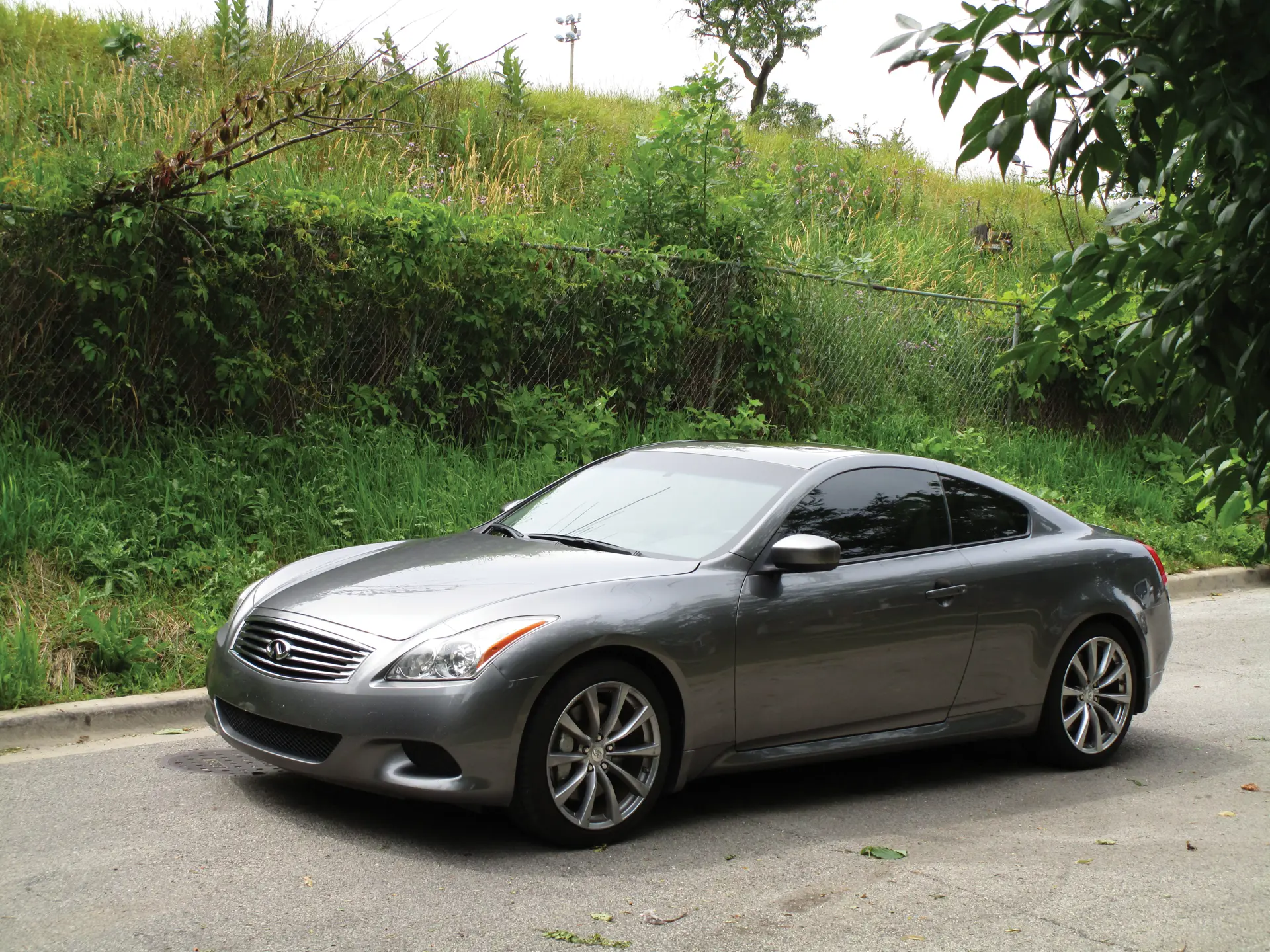
The 2015 Infiniti G37 occupies a unique and transitional chapter in automotive history, marking the unexpected final curtain call for a nameplate that defined Infiniti's sport-sedan identity for over a decade while its corporate sibling, the Q50, took center stage.
To understand the life and timeline of the 2015 Infiniti G37, one must recognize a fascinating quirk of automotive nomenclature and manufacturing strategy. While Infiniti officially rebranded its compact executive line to the "Q" nomenclature for the 2014 model year—introducing the Q50 sedan—high demand, dealer requests, and production overlap resulted in the G37 Sedan returning for one final encore specifically for the 2015 model year in North America, sold exclusively as the Infiniti Q40. Meanwhile, the iconic G37 Coupe and Convertible soldiered on under their original names for the 2015 model year before finally bowing out. This comprehensive timeline explores the origins, zenith, and final chapter of the 2015 Infiniti G37, tracing how a single alphanumeric badge became an enduring benchmark for Japanese performance engineering.
Roots of the Legend: The Genesis of the G Lineage
Before examining the final chapter of the 2015 model year, it is vital to trace the lineage that made the G37 a household name among driving enthusiasts. The modern era of Infiniti’s sport sedan began with the introduction of the G35 for the 2003 model year. Built on Nissan’s acclaimed front-midship (FM) platform, which it shared with the Nissan 350Z, the original G35 shook up a segment long dominated by the BMW 3 Series. It offered a potent 3.5-liter VQ-series V6 engine, rear-wheel-drive dynamics, and an aggressive stance that immediately resonated with buyers seeking Japanese reliability paired with rear-drive athleticism.
By the 2008 model year, the second-generation G arrived, bringing with it the displacement bump that birthed the G37. Equipped with the larger 3.7-liter VQ37VHR engine featuring Nissan’s VVEL (Variable Valve Event and Lift) technology, the car pumped out a formidable 330 horsepower in coupe configuration and 328 horsepower in the sedan. This generation expanded to include a sleek two-door coupe and a three-piece power-retractable hardtop convertible, cementing the G37 as a versatile luxury-performance portfolio.
The Rebranding Pivot: Why the G37 Survived Into 2015
In 2014, Infiniti underwent a sweeping corporate restructuring under the leadership of former-Audi chief Johan de Nysschen. As part of a global nomenclature overhaul, passenger cars were designated with a "Q" prefix, and SUVs received a "QX" prefix. The highly anticipated next-generation sport sedan was named the Infiniti Q50, launching for the 2014 model year with a high-tech cabin, available hybrid powertrains, and the debut of Infiniti's controversial Direct Adaptive Steering (DAS) system.
However, market realities complicated the transition. Many traditional driving enthusiasts preferred the hydraulic steering feel, unadulterated throttle response, and mechanical analog nature of the outgoing VQ37-powered platform over the new Q50’s electronic systems. To bridge a gap in pricing and capture value-conscious buyers who missed the traditional hydraulic setup, Infiniti made a strategic pivot.
For the 2015 model year, the V36-generation sedan was reintroduced to the market under a simplified guise: the Infiniti Q40. Mechanically, it was identical to the late-model G37 sedan, utilizing the same 3.7-liter V6 and 7-speed automatic transmission. Concurrently, the two-door G37 Coupe and G37 Convertible retained their traditional badges for the 2015 model year, as their replacements—the Q60 Coupe—were still in final development and would not arrive until the 2017 model year. Thus, 2015 marked the absolute final calendar year that the letters "G37" appeared on a Monroney window sticker in showrooms.
Chronological Breakdown of the 2015 Infiniti G37 Era
To map out the lifecycle of the 2015 Infiniti G37 variant, it helps to examine the chronological sequence of production milestones, market positioning, and eventual wind-down of the vehicle family.
| Model Variant | Production Span | Key Powertrain | Notable Characteristics |
|---|---|---|---|
| G37 Sedan (Transitional) | 2008–2013 (Renamed Q40 for 2015) | 3.7L V6 (VQ37VHR, 328 hp) | Final year of the V36 sedan architecture sold as an entry-level value alternative. |
| G37 Coupe | 2008–2015 | 3.7L V6 (VQ37VHR, 330 hp) | Retained the G37 badge for its final model year; rear-wheel or all-wheel drive. |
| G37 Convertible | 2009–2015 | 3.7L V6 (VQ37VHR, 325 hp) | Three-piece power hardtop; heavier chassis, final year of production in 2015. |
The 2015 G37 Coupe: The Final Year of a Classic
By 2015, the Infiniti G37 Coupe was a veteran in the luxury sports car market, yet its timeless proportions and mechanical purity kept it relevant. Riding on a 103.3-inch wheelbase, the coupe featured muscular rear haunches, a low roofline, and a driver-focused cockpit.
Under the hood rested the iconic 3.7-liter VQ37VHR V6, generating 330 horsepower at 7,000 RPM and 270 lb-ft of torque at 5,200 RPM. Buyers could choose between a responsive 7-speed automatic transmission with magnesium paddle shifters or, in the case of the enthusiast-focused IPL (Infiniti Performance Line) and Journey/Sport trims, a traditional 6-speed manual transmission. The rear-wheel-drive layout delivered classic push-to-pass handling dynamics, while the optional ATTESA E-TS all-wheel-drive system provided all-weather composure for buyers in northern climates.
The 2015 G37 Convertible: Open-Air Grand Touring
The 2015 Infiniti G37 Convertible represented the brand's premiere open-air grand tourer. Featuring a complex, fully automatic three-piece retractable hardtop designed by Karmann, the convertible could transform from a quiet coupe into an open-air cruiser in approximately 30 seconds.
To accommodate the reinforcement necessary for a convertible body style—adding roughly 400 pounds compared to the coupe—engineers retuned the suspension and reinforced the structural bulkheads. The engine output was rated at 325 horsepower. While critics noted that rear-seat room and trunk space with the top down were severely compromised, the G37 Convertible offered a naturally aspirated V6 soundtrack that became increasingly rare as turbocharged engines began dominating the luxury landscape.
Technical Specifications and Engineering Heritage
The defining characteristic of the 2015 Infiniti G37 lineup is its powertrain. The VQ37VHR engine is widely regarded as one of the most durable, high-revving naturally aspirated V6 engines produced during the golden era of Japanese performance engineering.
- Engine Displacement: 3,696 cc (3.7 liters)
- Valvetrain: DOHC 24-valve with VVEL (Variable Valve Event and Lift)
- Horsepower: 330 hp @ 7,000 RPM (Coupe) / 325 hp @ 7,000 RPM (Convertible)
- Torque: 270 lb-ft @ 5,200 RPM (Coupe) / 267 lb-ft @ 5,200 RPM (Convertible)
- Redline: 7,500 RPM
- Transmission Options: 7-speed automatic with Downshift Rev Matching (DRM) and manual shift mode; 6-speed close-ratio manual (Sport/IPL trims).
- Suspension: Independent front double-wishbone and rear multi-link setup with stabilizer bars.
Market Reception, Pricing, and Depreciation
When new in 2015, the Infiniti G37 Coupe and Convertible served as accessible alternatives to European benchmarks like the BMW 4 Series and Audi A5. With a starting MSRP hovering around $43,000 for base coupe models and climbing past $50,000 for fully optioned convertibles, the G-line offered significant feature content for the price, including standard leather seating, high-intensity discharge (HID) bi-xenon headlights, and automatic climate control.
Over the subsequent decade, the G37 has undergone a distinct depreciation curve, transitioning from a depreciated used luxury car into a cult-classic enthusiast platform. Because of its rear-wheel-drive architecture, robust aftermarket support, and ease of modification, the 2015 G37 remains highly sought after on the secondary market. Buyers today look to the final-year 2015 models as the most refined iterations of the V36 platform, benefiting from years of minor factory revisions that ironed out early-generation quirks.
Common Maintenance Items and Ownership Realities
Owning a 2015 Infiniti G37 requires understanding both the exceptional reliability of the Nissan mechanical base and the specific wear points inherent to high-revving V6 engines of that era.
- Gallery Gaskets: Early VQ37VHR engines (2008–2012) suffered from paper gaskets inside the oil timing gallery that could degrade and cause oil pressure loss. By 2015, updated metal gaskets were utilized from the factory, making the 2015 models largely immune to this catastrophic failure.
- Transmission Cooling and Valve Body: The 7-speed RE7R01A automatic transmission is generally robust, but harsh shifting or delayed engagement in high-mileage examples can indicate valve body wear, a known service item across Nissan/Infiniti applications.
- Catalytic Converters: Like many performance vehicles of its age, the stock high-flow catalytic converters can degrade over time, leading to rattles or efficiency codes. Many owners upgrade to aftermarket test pipes or high-flow cats.
- Suspension Bushings: Front control arm bushings and steering rack bushings are prone to fluid leaks or dry rot after a decade of service, requiring replacement to restore tight, responsive steering geometry.
Comparison: 2015 Infiniti G37 vs. Successors and Rivals
To contextualize the 2015 G37 within the broader automotive ecosystem, it is helpful to evaluate how it compares against its direct replacement and primary period competitors.
| Vehicle | Engine & Powertrain | Steering & Handling | Interior Technology | Character |
|---|---|---|---|---|
| 2015 Infiniti G37 Coupe | 3.7L Naturally Aspirated V6 (330 hp) | Hydraulic power steering; heavy, analog, engaging. | Older dual-screen setup, analog gauges, driver-focused. | Mechanical, raw, high-revving grand tourer. |
| 2015 Infiniti Q50 Sedan | 3.7L V6 / 3.5L Hybrid (Displaced G Sedan) | Electronic (DAS) or hydraulic rack depending on trim. | Modern dual-touchscreen Infiniti InTouch system. | Tech-forward transition model. |
| 2015 BMW 435i Coupe | 3.0L Turbocharged Inline-6 (300 hp) | Electric power steering; precise, highly balanced. | iDrive system, highly refined materials. | Turbocharged torque delivery, premium daily driver. |
| 2015 Audi A5 Coupe | 2.0L Turbocharged Inline-4 (220 hp) | Front-biased or Quattro AWD; stable, understeering limit. | MMI infotainment, class-leading interior design. | Stylish commuter with superior weather capability. |
Frequently Asked Questions
Is the 2015 Infiniti G37 the same car as the Infiniti Q50?
No. While the Q50 replaced the G37 sedan for the 2014 model year, the 2015 Infiniti G37 specifically refers to the two-door Coupe and Convertible models that continued production through 2015. (The G sedan was briefly sold as the Q40 for 2015). They utilize different chassis generations and distinct interior layouts.
What is the difference between the G37 Coupe and the Q60 Coupe?
The 2015 Infiniti G37 Coupe is the final evolution of the second-generation G platform. The Q60 nameplate was applied to the next-generation redesign that debuted for the 2017 model year, which featured entirely new styling and turbocharged Mercedes-Benz-sourced or Infiniti VR-series engines.
Is the 2015 Infiniti G37 reliable?
Yes. Because 2015 was the final year of production for the G37 coupe and convertible, Nissan/Infiniti had resolved most mechanical teething issues present in the early 2008–2010 models—including updates to oil gallery gaskets and transmission software calibration. Routine maintenance will yield high mileage without major mechanical failures.
Does the 2015 G37 have Bluetooth audio streaming?
Yes. By 2015, standard equipment included Bluetooth hands-free phone integration as well as Bluetooth audio streaming, allowing drivers to pair smartphones wirelessly for music playback and calls.
What gas does a 2015 Infiniti G37 require?
The high-compression 3.7-liter VQ37VHR engine requires premium unleaded gasoline (91 octane or higher) to achieve its rated horsepower and prevent engine knock under heavy acceleration.
Final Recommendation
The 2015 Infiniti G37 stands as a brilliant closing statement for an era of analog luxury performance. For driving enthusiasts seeking a naturally aspirated V6 engine, hydraulic steering feedback, and timeless rear-wheel-drive proportions without the complexity of modern turbochargers and intrusive digital assistants, tracking down a well-maintained 2015 G37 Coupe or Convertible remains one of the smartest enthusiast purchases available. Inspect service records for suspension wear, verify fluid maintenance, and enjoy one of Japan's finest modern classic grand tourers.