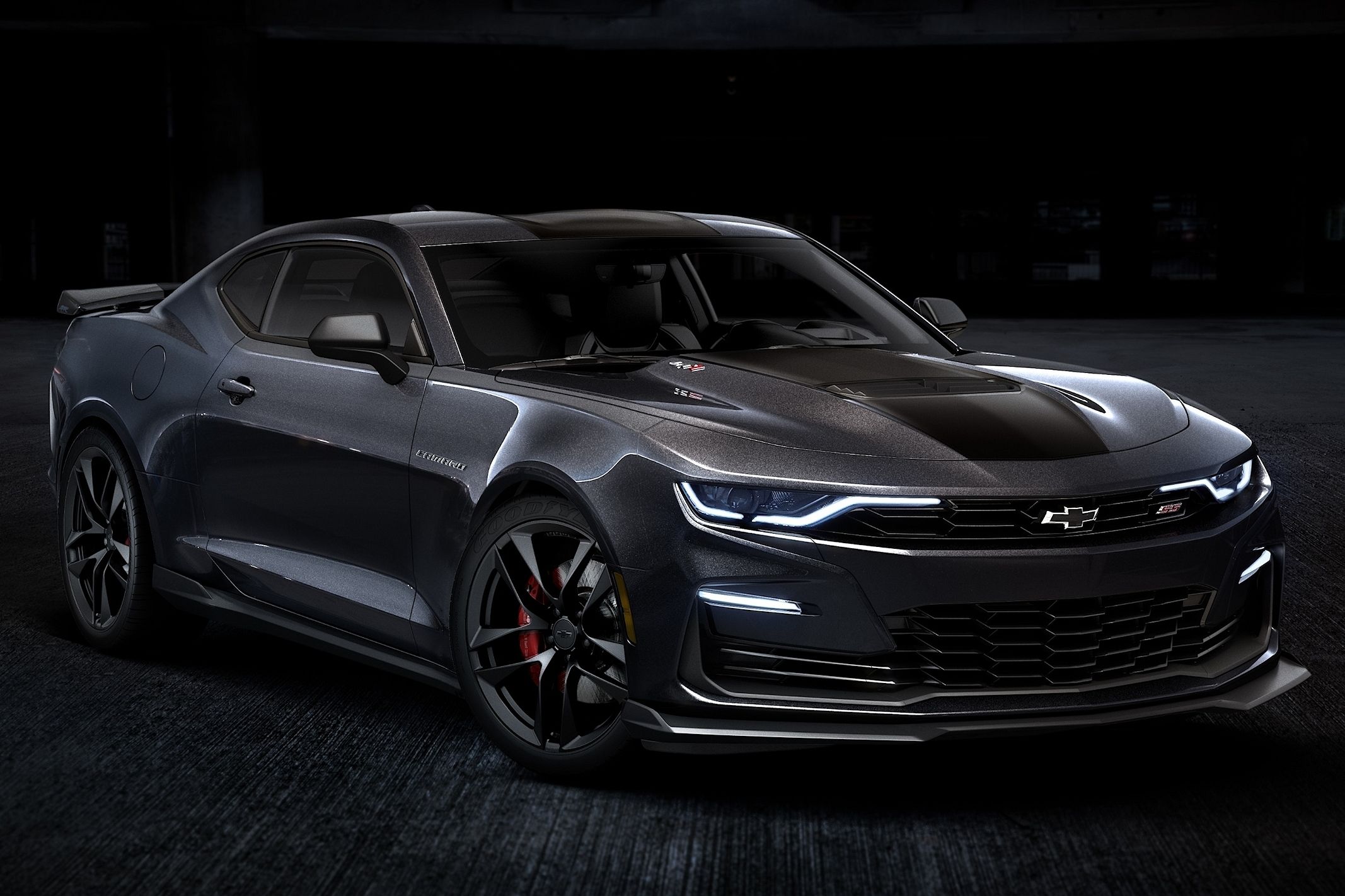
The 2013 V8 Chevrolet Camaro lineup features two distinct small-block configurations delivering between 400 and 580 horsepower. The naturally aspirated 6.2-liter LS3 V8 generates 426 horsepower in manual SS models, while the automatic L99 produces 400 horsepower. Crowned by the supercharged 580-horsepower LSA in the ZL1, the 2013 model year represents the pinnacle of Fifth-Generation mechanical purity.
Overview of the 2013 Fifth-Generation Camaro V8 Lineup
The 2013 model year occupies a unique and revered place in modern muscle car history. Built on General Motors' rear-wheel-drive Zeta platform—developed by GM's Australian Holden subsidiary—the Fifth-Generation Camaro revived the legendary nameplate for a modern era defined by independent rear suspensions, aggressive retro-futuristic styling, and potent pushrod V8 powerplants.
By 2013, Chevrolet had fully ironed out the early production quirks that accompanied the model's 2010 return. The 2013 model year is celebrated among enthusiasts as the sweet spot of the Fifth Generation. It retained the iconic, 1969-inspired exterior body lines—including the deep-set front grille and quad-element rear taillights—just prior to the controversial, slimmer front fascia and horizontal rear tail-lamp redesign introduced for 2014. Simultaneously, the 2013 cabin received modern electronic upgrades, such as the Chevrolet MyLink touchscreen interface, an updated instrument cluster font, and a revised steering wheel design that corrected the ergonomics of the initial 2010–2011 releases.
Mechanically, 2013 was transformative. It marked the introduction of the track-focused 1LE Performance Package for the manual SS and established the second production year of the flagship Camaro ZL1, which was newly available in both coupe and convertible configurations. Chevrolet offered three primary V8 engineering variants across the lineup: the manual-only LS3, the automatic-equipped L99, and the supercharged LSA.
Technical Specifications: The 2013 Camaro V8 Powertrains
Chevrolet deployed two distinct variants of the naturally aspirated Generation IV 6.2-liter (376 cubic inch) V8 engine in the 2013 Camaro SS, based strictly on the transmission selected, along with the supercharged flagship in the ZL1.
- 2013 Camaro V8 Engine Architectures
- 6.2L LS3
- 426 HP / 420 TQ
- 6-Speed Manual
- High-Rev Valvetrain & Aggressive Cam Timing
- 6.2L L99
- 400 HP / 410 TQ
- 6-Speed Auto
- AFM Cylinder Deactivation & VVT Technology
- 6.2L LSA Superch.
- 580 HP / 556 TQ
- Manual or Auto
- Eaton TVS1900
- Forged Crank & Blower Setup
- 6.2L LS3
The Naturally Aspirated 6.2-Liter LS3 (Camaro SS Manual)
Standard equipment for the 2013 Camaro SS fitted with the Tremec TR-6060 six-speed manual gearbox was the high-revving LS3 V8. The LS3 represents one of the crowning achievements of GM's small-block pushrod family, celebrated for its structural simplicity, low weight compared to overhead-cam competitors, and exceptional volumetric efficiency.
- Displacement: 6,162 cc (376.0 cu in)
- Horsepower: 426 hp @ 5,900 rpm
- Torque: 420 lb-ft @ 4,600 rpm
- Compression Ratio: 10.7:1
- Bore and Stroke: 4.065 in × 3.622 in (103.25 mm × 92.0 mm)
- Valvetrain: Pushrod, 2 valves per cylinder, hollow-stem intake valves
- Fuel Delivery: Sequential multi-port fuel injection
- Redline / Fuel Cutoff: 6,600 rpm / 6,700 rpm
The LS3 engine block is cast from 319-T7 aluminum with cast-iron cylinder liners. It utilizes rectangular-port cylinder heads derived from the racing-bred LS7 and L92 programs, accommodating large 2.165-inch intake valves and 1.590-inch exhaust valves. Because manual drivers demand high-rpm responsiveness, the LS3 features hollow-stem intake valves that reduce valvetrain mass, preventing valve float near its 6,600-rpm redline. The LS3 omits fuel-saving active cylinder management, ensuring full, uninterrupted V8 character and immediate throttle linearity across the entire power curve.
The 6.2-Liter L99 with AFM and VVT (Camaro SS Automatic)
When buyers optioned the Hydra-Matic 6L80 six-speed automatic transmission on the 2013 Camaro SS, Chevrolet replaced the LS3 with the L99 V8. While sharing the same 6.2-liter displacement and cast-aluminum engine block foundation, the L99 was calibrated to balance spirited performance with improved cruising fuel efficiency and lower emissions.
- Displacement: 6,162 cc (376.0 cu in)
- Horsepower: 400 hp @ 5,900 rpm
- Torque: 410 lb-ft @ 4,300 rpm
- Compression Ratio: 10.4:1
- Bore and Stroke: 4.065 in × 3.622 in (103.25 mm × 92.0 mm)
- Valvetrain: Pushrod, 2 valves per cylinder, variable valve timing (VVT)
- Efficiency Tech: Active Fuel Management (AFM) cylinder deactivation
- Redline: 6,000 rpm
To meet fuel-economy targets, the L99 incorporates GM's Active Fuel Management (AFM), which deactivates four cylinders (cylinders 1, 4, 6, and 7) under light-load highway cruising by collapsing the hydraulic lifters. The L99 also integrates variable valve timing (VVT), utilizing a hydraulic cam phaser to advance or retard camshaft timing across operating bands.
Because of the mechanical tolerances required by the AFM lifters and the modified piston profiles accommodating valve clearance, the compression ratio drops slightly to 10.4:1, and a milder camshaft profile is used. This results in an official output reduction of 26 horsepower and 10 lb-ft of torque compared to the manual LS3.
The Supercharged 6.2-Liter LSA (Camaro ZL1)
At the summit of the 2013 lineup stood the Camaro ZL1, engineered as a comprehensive track weapon capable of outperforming pure sports cars costing twice as much. Powering the ZL1 is the supercharged LSA V8, an engine closely related to the LS9 found in the Corvette ZR1 and the Cadillac CTS-V.
- Displacement: 6,162 cc (376.0 cu in)
- Induction: Eaton TVS (Twin Vortices Series) 1900 Roots-type supercharger
- Boost Pressure: Maximum 9.3 psi
- Horsepower: 580 hp @ 6,000 rpm
- Torque: 556 lb-ft @ 4,200 rpm
- Compression Ratio: 9.1:1
- Intercooling: Liquid-to-air integrated charge cooler
- Valvetrain: Pushrod, 2 valves per cylinder, high-strength silchrome alloy valves
- Redline: 6,200 rpm
To manage the thermal and mechanical stresses generated by 580 horsepower, the LSA features a specialized 319-T7 aluminum block with cast-iron cylinder liners, an upgraded forged-steel crankshaft with an 8-bolt flywheel flange, forged powdered-metal connecting rods, and hypereutectic aluminum pistons cooled by oil squirters mounted at the base of each cylinder bore. The supercharger utilizes four-lobe rotors twisted 160 degrees to enhance volumetric efficiency, suppress intake noise, and provide instantaneous, linear torque right off idle.
Side-by-Side Powertrain and Performance Comparison
The three primary V8 powertrains offered distinct driving dynamics, transmission calibrations, and performance figures:
| Metric / Specification | 2013 Camaro SS (Manual) | 2013 Camaro SS (Automatic) | 2013 Camaro ZL1 |
|---|---|---|---|
| Engine Code | 6.2L LS3 | 6.2L L99 | 6.2L LSA (Supercharged) |
| Aspiration | Naturally Aspirated | Naturally Aspirated | Supercharged (Roots TVS1900) |
| Output (HP @ RPM) | 426 hp @ 5,900 rpm | 400 hp @ 5,900 rpm | 580 hp @ 6,000 rpm |
| Torque (LB-FT @ RPM) | 420 lb-ft @ 4,600 rpm | 410 lb-ft @ 4,300 rpm | 556 lb-ft @ 4,200 rpm |
| Transmission Standard | Tremec TR-6060 6-Speed | Hydra-Matic 6L80 6-Speed | Tremec TR-6060 (Heavy Duty) |
| Transmission Optional | None | None | Hydra-Matic 6L90 6-Speed |
| Differential Ratio | 3.45:1 (3.91:1 on 1LE) | 3.27:1 | 3.73:1 (Man) / 3.23:1 (Auto) |
| 0–60 MPH Time | 4.5 – 4.7 seconds | 4.6 – 4.8 seconds | 3.9 – 4.0 seconds |
| Quarter-Mile Time | 12.9 – 13.1 s @ 110 mph | 13.0 – 13.2 s @ 108 mph | 12.0 – 12.2 s @ 117 mph |
| Top Speed | 155 mph (governed) | 155 mph (governed) | 184 mph (Coupe) |
| EPA Fuel Economy (MPG) | 16 City / 24 Hwy | 15 City / 24 Hwy | 14 City / 19 Hwy (Man) |
The 2013 Camaro SS 1LE: Transforming Muscle into a Road-Course Contender
Prior to 2013, the Fifth-Generation Camaro SS was routinely criticized by automotive journalists for its curb weight (roughly 3,850 to 3,900 pounds), soft suspension bushings, and noticeable understeer when pushed through tight corners. Chevrolet responded in 2013 by resurrecting the historic 1LE road-racing package, turning the SS into a genuine road-course contender without requiring the steep financial leap to the ZL1.
- 2013 Camaro SS 1LE Package Key Technical Upgrades
- Gearing & Trans
- TR-6060 (MM6)
- 3.91 Final Drive
- ZL1 Fuel Pump
- Chassis Dynamics
- Monotube Dampers
- 27mm Solid F-Sway
- 28mm Solid R-Sway
- Wheels & Aero
- 20x10" F / 20x11"R
- 285/35ZR20 Square
- Matte Black Hood
- Gearing & Trans
Available solely on manual-transmission SS coupes (either the 1SS or 2SS trim levels), the 1LE package retained the 426-horsepower LS3 engine while overhauling the vehicle's driveline, steering, and suspension geometry:
- Close-Ratio Transmission and Gearing: The standard SS manual utilized the Tremec TR-6060 (M10 variant) with a 3.45:1 final drive. The 1LE replaced this with the TR-6060-MM6, borrowed from the Corvette, featuring tighter gear ratios and a pairing with a short 3.91:1 ring-and-pinion rear axle. This substantially improved acceleration response out of corners.
- Track-Tuned Suspension Hardware: Engineers replaced the standard twin-tube dampers with aggressive, monotube rear dampers. Sway bars were upgraded to larger-diameter, solid spring steel bars (27 mm front, 28 mm rear), drastically reducing body roll and shifting the handling balance toward neutral rotation.
- Square Tire Setup on ZL1 Wheels: To combat front-end push, Chevrolet fitted lightweight 20x10-inch front and 20x11-inch rear aluminum wheels (finished in low-gloss black, adapted directly from the ZL1) wrapped in 285/35ZR20 Goodyear Eagle F1 Supercar G:2 tires at all four corners. This aggressive contact patch transformed front-end bite and lateral grip, allowing the car to exceed 1.00 g in skidpad tests.
- Structural Reinforcement and Reliability Upgrades: The 1LE received the ZL1's high-capacity in-tank fuel pump to eliminate fuel starvation during high-g cornering, a track-duty wheel-bearing and toe-link assembly, and an exterior matte-black hood wrap designed to eliminate track glare.
The 2013 Camaro SS 1LE proved that the Zeta platform could hold its own against dedicated European sports coupes on road courses, logging lap times at Virginia International Raceway that outpaced far more expensive machinery.
Chassis Dynamics, Steering, and Interior Refinements for 2013
Beyond pure powertrain options, several subtle but critical engineering updates distinguish the 2013 V8 Camaro from earlier iterations:
Introduction of Electric Power Steering (EPS)
For the 2013 model year, Chevrolet transitioned all SS V8 models from traditional hydraulic power steering to a rack-mounted Electric Power Steering (EPS) system developed by ZF. While initial purists voiced concern over potential loss of road feel, the system eliminated engine parasitic drag—freeing up usable horsepower—and allowed GM chassis tuners to program variable steering assist based directly on vehicle speed and steering angle. The steering calibration sharpened turn-in precision and eliminated the fluid-overheating issues that challenged older hydraulic SS models during extended track days.
Cabin Ergonomics and Chevrolet MyLink
The 2010–2011 Camaro steering wheel, frequently nicknamed the "deep dish" wheel, was widely criticized for its thick hub design and awkward thumb placement. For 2012, Chevrolet standardized a corporate three-spoke wheel design, and for 2013, integrated full control interfaces for the newly introduced Chevrolet MyLink 7-inch color touchscreen infotainment system.
- 2013 Center Stack Layout
- 7" Color MyLink Screen (Bluetooth / Nav Option)
- HVAC Dials & Audio Knobs
- [Oil P] [Oil T] [V] [Trn] Console Cluster (4-Pack Gauge Cluster (2SS))
In the 2SS and ZL1 models, this display integrated navigation, audio streaming, and backup camera capabilities, bringing the cabin into alignment with modern commuter expectations. Additionally, the iconic four-pack center console auxiliary gauges (measuring oil pressure, oil temperature, transmission fluid temperature, and battery voltage) featured updated backlighting and modernized fonts.
Long-Term Reliability, Known Issues, and Maintenance
From an ownership and mechanical longevity perspective, the 2013 Camaro V8 powertrains are among the most robust small-blocks ever built, with many cleanly surpassing 150,000 to 200,000 miles. However, prospective buyers and current owners should note specific platform traits:
L99 Active Fuel Management (AFM) Lifter Failure
The most common mechanical issue on the automatic L99 engine involves the spring-loaded collapsible lifters used for AFM. Over extended mileage or in cars that experienced delayed oil changes, the VLOM (Valve Lifter Oil Manifold) solenoids or the lifters themselves can fail, sticking in the collapsed position. This causes a pronounced valvetrain tick, misfires on the affected cylinder, and potential damage to the camshaft lobe.
Enthusiast Solution: Many owners elect to perform an "AFM delete" when upgrading camshafts, swapping in standard LS3 lifters, a non-AFM valley cover, and tuning out the cylinder deactivation in the engine control module (ECM).
Trunnion Bearing Failure on High-Mileage LS3/L99
The factory rocker arms on both the LS3 and L99 use caged needle bearings in their pivot trunnions. Under sustained high-rpm operation or aggressive aftermarket camshaft lift, these factory trunnion cages can spread or fail, releasing small needle bearings directly into the engine's oil system.
Enthusiast Solution: Installing an aftermarket bushing-style or upgraded full-capture trunnion kit provides reliable peace of mind for track-driven or modified engines.
Rear Axle Nut Retaining Torque
Fifth-Gen Camaros—especially those subjected to hard standing-start launches—can experience loose rear axle spindle nuts. If torque drops below factory specification, the axle splines can wear prematurely against the rear hub bearing assembly, leading to audible clicking noises under load changes and potential wheel bearing failure. Regular chassis inspections should always verify that rear axle nuts remain torqued to the updated GM service spec (199 lb-ft / 270 Nm).
Clutch Fluid Contamination (Manual SS)
The manual Tremec TR-6060 relies on a concentric slave cylinder located inside the bellhousing. In the factory configuration, the clutch hydraulic system shares its fluid reservoir with the brake master cylinder. Over time, heat and clutch dust degrade the hydraulic fluid, resulting in a pedal that can stick to the floor during aggressive high-rpm shifting.
Enthusiast Solution: Installing an isolated, dedicated aftermarket clutch fluid reservoir separates the systems, keeping the clutch fluid clean and making regular fluid flushing straightforward.
The Legacy of the 2013 V8 Camaro
Looking back through modern eyes, the 2013 model year represents an essential turning point for the Camaro. It was the transitional bridge between old-school American muscle and the precision-handling sports coupes that followed.
- Muscle Era (Straight-Line Focus): 2010-2011 Camaro SS
- Soft suspension
- Hydraulic steering
- Drag-strip legacy
- Transitional Pinnacle (Dual-Purpose Sweet Spot): 2013 Camaro SS / 1LE
- 1LE package arrives
- Retains retro styling
- Electric Power Steering
- Track Era (Alpha Chassis Precision): 2016-2024 Gen 6 Camaro
- Smaller Alpha chassis
- High tech / High cost
- Difficult visibility
The Pinnacle of Fifth-Gen Styling
For many enthusiasts, 2013 remains the definitive visual peak of the modern Camaro. The 2010–2013 front fascia, characterized by its deep, inset heritage grille, prominent hood bulge, and squared-off rear quarter shoulders, paid direct homage to the beloved 1969 Camaro.
When GM applied the mid-cycle refresh in 2014, it introduced a slimmer upper grille, a much larger lower intake, and one-piece horizontal rear taillights. While the 2014–2015 revisions were aerodynamically functional, a large portion of the enthusiast community favors the classic, muscular silhouette of the 2013 cars.
The Foundation of Modern Track Performance
The lessons learned during the development of the 2013 Camaro 1LE and ZL1 permanently altered Chevrolet’s engineering philosophy. Prior to 2013, the Camaro was frequently dismissed as purely a drag-strip cruiser. The handling discoveries made on the 2013 1LE—specifically around square tire sizing, aggressive front camber capabilities, and stabilizer bar tuning—laid the foundational DNA for the Sixth-Generation Camaro on the lightweight Alpha platform, which later produced legendary track variants like the ZL1 1LE.
The Modularity of the Generation IV Small Block
The 2013 Camaro V8s benefit from being at the absolute maturity apex of the GM Gen IV LS engine family. Because the LS architecture has an almost bottomless aftermarket catalog, these cars remain premier platforms for street and strip builds.
Unlike newer direct-injected engines (such as the Gen V LT1 found in 2016+ Camaros) that require expensive high-pressure fuel pumps and direct injectors to support major horsepower, the port-injected LS3 responds easily to bolt-on modifications. A simple combination of long-tube headers, a performance camshaft, and a dyno tune routinely pushes a naturally aspirated LS3 past 480 to 500 wheel horsepower on pump gas, with reliable longevity.
Frequently Asked Questions
What is the difference between an LS3 and an L99 in the 2013 Camaro SS?
The LS3 is paired exclusively with the six-speed manual transmission, while the L99 is paired with the six-speed automatic. The manual LS3 produces 426 horsepower and features a higher 6,600-rpm redline with a performance camshaft. The automatic L99 produces 400 horsepower and utilizes Active Fuel Management (AFM) cylinder deactivation and Variable Valve Timing (VVT) to improve fuel economy, utilizing a slightly lower compression ratio and milder camshaft.
How fast is the 2013 Camaro SS from 0 to 60 mph?
A manual 2013 Camaro SS (LS3) accelerates from 0 to 60 mph in 4.5 to 4.7 seconds, running the quarter-mile in roughly 12.9 to 13.1 seconds at 110 mph. Automatic models (L99) record 0–60 mph times between 4.6 and 4.8 seconds. When equipped with the performance-geared 1LE package, high-traction launch control allows repeatable 0–60 runs in the mid-4-second range.
What made the 2013 Camaro 1LE package unique?
The 1LE package turned the manual Camaro SS into a track-ready car. It added a close-ratio Tremec TR-6060-MM6 transmission, a shorter 3.91:1 final drive ratio, track-tuned monotube rear dampers, larger solid front and rear sway bars, ZL1 wheel and tire specifications (285-width tires all around), a high-capacity ZL1 fuel pump, and a distinctive matte-black hood to reduce glare.
Is the 2013 Camaro ZL1 supercharged?
Yes. The 2013 Camaro ZL1 features a factory-supercharged 6.2-liter LSA V8 engine utilizing an Eaton TVS1900 Roots-type supercharger running 9.3 psi of boost. It produces 580 horsepower and 556 lb-ft of torque, routing power through either a heavy-duty Tremec TR-6060 manual or a Hydra-Matic 6L90 automatic transmission, making it the most powerful production Camaro of the Fifth Generation.
Can the 2013 Camaro V8 run on regular 87-octane fuel?
Chevrolet strongly recommends 93-octane (or 91-octane minimum) premium fuel for both the LS3 and LSA engines to achieve their rated horsepower and prevent ignition timing retardation. While the automatic L99 can operate on regular 87-octane in emergencies via dual-knock sensor tables, doing so causes the ECM to pull timing, noticeably reducing engine performance and overall fuel efficiency.
Final Buyer Guidance and Practical Next Steps
For enthusiasts navigating the pre-owned market, the 2013 Chevrolet Camaro V8 remains an exceptional sweet spot of performance, visual heritage, and mechanical reliability. When shopping for or servicing one of these modern classics, focus on these critical actions:
- Prioritize the Powertrain for Your Purpose: If your goal is track days, road carving, or maximum owner engagement, seek out a genuine manual SS with the 1LE package (verified by the
1LEcode on the service parts identification sticker in the trunk). If you want an everyday cruiser or straight-line project, an automatic L99 is comfortable and capable, but budget for a mechanical AFM lifter delete down the road. - Inspect the Valvetrain and Maintenance Records: When evaluating an LS3 or L99, listen carefully for top-end valvetrain ticking on cold start-ups. Request comprehensive oil change histories, as dirty oil accelerates wear on both the L99 AFM solenoids and the LS3 trunnion bearings.
- Verify Suspension and Bushing Integrity: The Zeta platform is heavy, and aggressive driving wears factory rubber control arm and subframe bushings over time. Inspect the differential bushings for oil weeping or tearing, and upgrade to polyurethane rear subframe inserts to eliminate wheel hop during hard launches.
The 2013 V8 Camaro represents the modern muscle car formula at its best: simple, durable pushrod engineering paired with an instantly recognizable retro design and legitimate track capability.