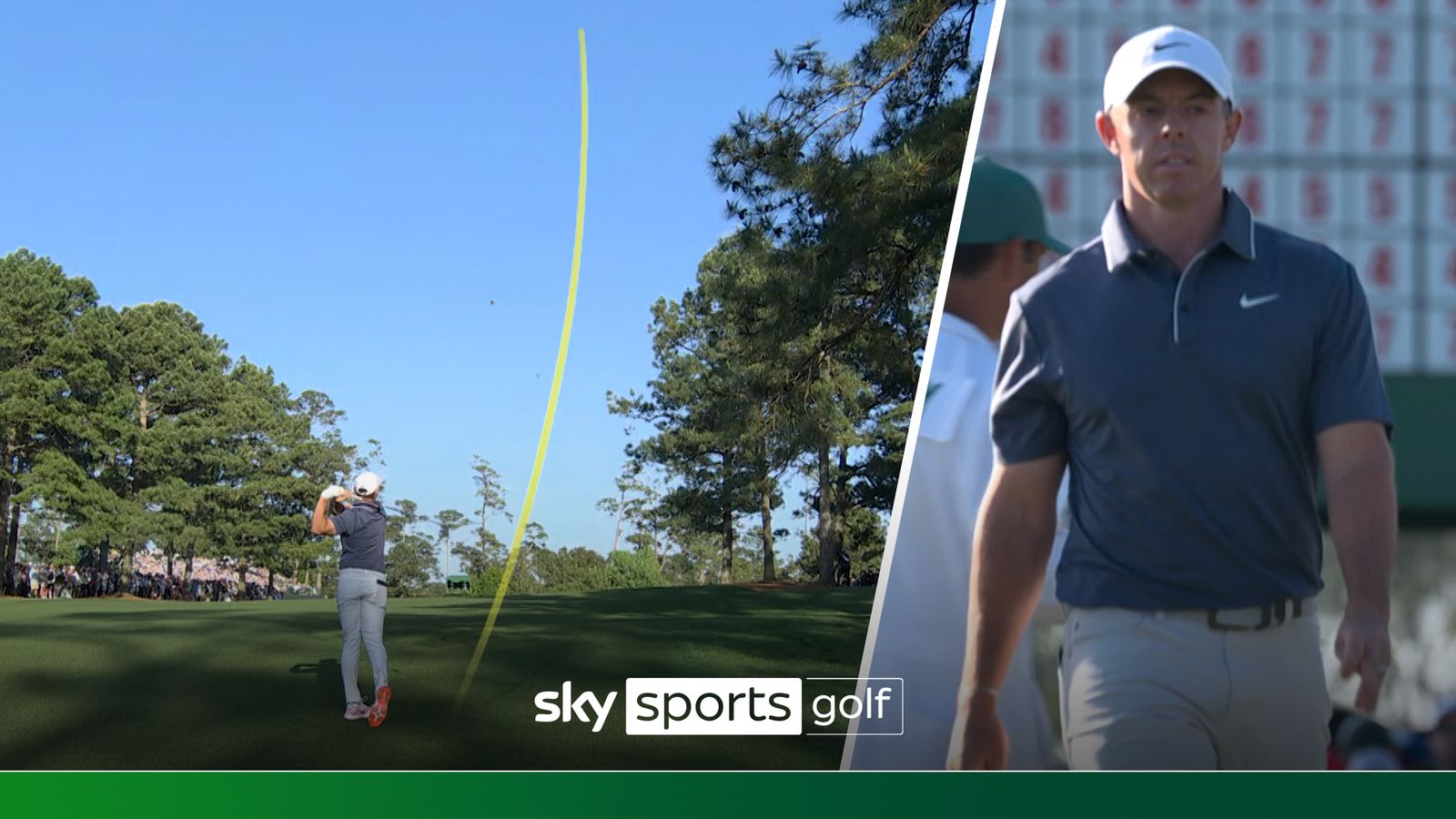
The historic birdie streak at the 2011 US Masters refers to Charl Schwartzel’s unprecedented finish, where he recorded four consecutive birdies on the final four holes (15, 16, 17, and 18) to secure the Green Jacket. This remains the only time in Masters history that a champion closed with four straight birdies to win the tournament.
The 75th edition of the Masters Tournament, held in April 2011, is frequently cited by golf historians as one of the most exhilarating back-nine Sundays in the history of the sport. While the tournament began as a showcase for the rising stardom of Rory McIlroy, it transitioned into a chaotic, multi-player shootout that was ultimately silenced by a clinical, record-setting performance by South Africa's Charl Schwartzel. As we look back from the vantage point of 2026, the 15-year anniversary of this feat reminds us why Augusta National remains the ultimate stage for late-round heroics.
The Landscape of the 2011 Masters Final Round
To appreciate the technical brilliance of Schwartzel’s four-birdie streak, one must first understand the volatile environment of that Sunday afternoon. Entering the final round, a 21-year-old Rory McIlroy held a four-stroke lead. However, the pressure of Augusta National on a Sunday is notorious for dismantling even the most composed leads.
By the time the leaders reached the turn, the leaderboard was in a state of flux. McIlroy suffered a catastrophic collapse, beginning with a triple-bogey on the 10th hole after a hooked tee shot landed deep into the cabins off the fairway. This opened the door for a rotating cast of superstars to take the lead. At various points during the afternoon, as many as eight different players held or shared the lead, including Tiger Woods, Adam Scott, Jason Day, Geoff Ogilvy, and K.J. Choi.
The Tiger Woods Charge
Earlier in the day, Tiger Woods ignited the gallery with a front-nine 31. His charge suggested a comeback for the ages, but his momentum stalled on the back nine, specifically with missed opportunities on the greens at 12 and 15. This left the stage open for the "International" contingent to battle for the title.
The Australian Surge
Adam Scott and Jason Day were poised to become the first Australians to wear the Green Jacket. Scott, in particular, looked like the certain winner after birdying the 14th and 16th holes. When he walked off the 18th green with a total of 12-under par, many believed the tournament was over. However, Charl Schwartzel was still on the course, preparing to execute the most aggressive closing stretch in the history of the tournament.
Anatomy of the Streak: Holes 15 through 18
Schwartzel’s round started with a spark—a chip-in birdie on the first hole and a hole-out eagle from the fairway on the third. However, he remained relatively quiet through the middle of the round, maintaining his composure while the leaderboard shifted around him. It wasn't until he reached the par-5 15th hole that he began the most significant "historic birdie streak" in Masters lore.
Hole 15: Firethorn (Par 5, 530 Yards)
The 15th hole is often where the Masters is won or lost. Players must decide whether to go for the green in two over a pond that guards the front. Schwartzel played the hole with tactical precision. After a solid drive, he reached the green and secured his first birdie of the streak. This moved him to 11-under par, putting him within striking distance of the leaders.
Hole 16: Redbud (Par 3, 170 Yards)
The 16th hole on Sunday is famous for its traditional back-left pin placement, which allows players to use the slope of the green to funnel the ball toward the hole. Schwartzel struck a clinical iron shot to approximately 15 feet. Under immense pressure, he drained the putt to move to 12-under par, tying him for the lead with Adam Scott. The momentum shift was palpable; while Scott had finished his round, Schwartzel was gaining speed.
Hole 17: Nandina (Par 4, 440 Yards)
Hole 17 is a difficult uphill par 4 that requires a precise approach to a firm, multi-tiered green. Schwartzel hit a magnificent 9-iron that landed softly and stopped within 10 feet of the cup. By converting this birdie putt, he moved to 13-under par, taking the solo lead. This was the moment the golfing world realized they were witnessing something statistically improbable.
Hole 18: Holly (Par 4, 465 Yards)
The 18th at Augusta is a demanding uphill finisher with a narrow chute off the tee. Schwartzel found the fairway, then hit a 7-iron approach that settled roughly 20 feet from the hole. At this point, a two-putt par would have won him the tournament. Instead, Schwartzel punctuated his performance by draining the birdie putt, finishing at 14-under par.
| Player | Round 4 Score | Total Score | Finish Position |
|---|---|---|---|
| Charl Schwartzel | 66 (-6) | 274 (-14) | 1st |
| Adam Scott | 67 (-5) | 276 (-12) | T2 |
| Jason Day | 68 (-4) | 276 (-12) | T2 |
| Tiger Woods | 67 (-5) | 278 (-10) | T4 |
| Geoff Ogilvy | 67 (-5) | 278 (-10) | T4 |
| Luke Donald | 69 (-3) | 278 (-10) | T4 |
Technical Depth: Why the Streak is Unparalleled
The difficulty of birdying the final four holes at Augusta National on a Sunday cannot be overstated. The course setup for the final round is designed to reward precision but severely punish even the slightest "miss."
- Green Speeds and Firmness: By Sunday afternoon, the greens at Augusta are typically at their peak speed, often measuring 13 or 14 on the Stimpmeter. Maintaining the "touch" required to make four consecutive putts of varying lengths while the adrenaline of a potential Major victory is pumping is a psychological feat.
- The Geometry of the Back Nine: The stretch from 15 to 18 covers a variety of shot shapes. Hole 15 requires a straight or slightly drawn shot, 16 is a high-faded iron, 17 requires a precise uphill approach, and 18 requires a power draw off the tee followed by a steep uphill approach. Schwartzel displayed a complete mastery of ball flight and distance control.
- Historical Context: Prior to 2011, the best closing birdie streak by a winner was two holes. Notable players like Jack Nicklaus (1986) and Mark O'Meara (1998) used late birdies to win, but none maintained a perfect scorecard over the final four holes. Art Wall Jr. birdied five of his last six in 1959, but Schwartzel's "4-for-4" finish remains the gold standard for closing a victory.
The Significance of the 2011 Victory
Schwartzel’s win was also emotionally significant for the international golf community. It occurred on the 50th anniversary of Gary Player’s first Masters victory in 1961—the first time an international player had won the tournament. Schwartzel, a fellow South African, donned the Green Jacket with Player in attendance, reinforcing the rich history of South African golfers at Augusta.
The 2011 Masters served as a catalyst for several careers. While Schwartzel secured his place in history, the event also marked the emergence of Jason Day and the continued evolution of Adam Scott, who would eventually find his own redemption at Augusta in 2013. For Rory McIlroy, the heartbreak of the 2011 back nine became the fuel for his dominant victory at the U.S. Open just two months later.
Expert Analysis: The "Zone" Phenomenon
Sports psychologists often point to Schwartzel's 2011 performance as a textbook example of "the zone" or a "flow state." Despite the chaotic leaderboard changes and the roars echoing from other parts of the course—particularly for Tiger Woods and Adam Scott—Schwartzel remained internally focused.
According to reports from his caddie at the time, Schwartzel didn't look at a leaderboard until he was on the 18th green. This "process-over-outcome" mentality allowed him to execute highly technical shots without the interference of the "what if" scenarios that plagued other contenders that day.
Frequently Asked Questions
Has anyone ever birdied five holes in a row to win the Masters?
No. Charl Schwartzel’s four consecutive birdies to finish the round (15, 16, 17, and 18) remains the record for the longest closing birdie streak by a Masters champion. While other players have had longer birdie streaks during the tournament, none have done so to close out a victory on Sunday.
What clubs did Charl Schwartzel use during the 2011 Masters?
While specific bag setups can change, Schwartzel was a Nike staff athlete in 2011. He famously used the Nike VR Pro Blade irons and a Nike Method putter to navigate the greens. His ability to control the spin on his Nike One Tour D ball was critical on the firm Sunday greens.
How many South Africans have won the Masters?
As of 2026, three South Africans have won the Masters: Gary Player (1961, 1974, 1978), Trevor Immelman (2008), and Charl Schwartzel (2011). Schwartzel’s victory remains a highlight of the country’s golfing legacy.
What happened to Rory McIlroy in the 2011 Masters?
McIlroy entered the final round with a four-stroke lead but shot an 80 (+8) on Sunday. His collapse began on the 10th hole with a triple-bogey and continued with a three-putt on the 11th and a four-putt on the 12th. It is considered one of the most famous collapses in Major championship history, though he recovered to win four Majors later in his career.
How much did Charl Schwartzel win for the 2011 Masters?
In 2011, the winner's share of the Masters purse was $1,440,000. By 2026 standards, this amount has nearly tripled, reflecting the massive growth in professional golf prize money over the last decade and a half.
Final Recommendations for Golf Enthusiasts
For those looking to study the 2011 US Masters historic birdie streak, the official Masters website offers "Every Shot, Every Hole" archives. Reviewing the film of Schwartzel’s back nine is an excellent lesson in course management and mental fortitude.
If you are a competitive golfer, pay particular attention to Schwartzel's 17th hole approach. It is a masterclass in hitting to a specific "shelf" on a green to ensure an uphill putt. Understanding these technical nuances can help players of all levels improve their strategy during high-pressure rounds.
The 2011 Masters stands as a testament to the fact that at Augusta National, the tournament doesn't truly begin until the second nine on Sunday. Charl Schwartzel’s streak wasn't just a series of good putts; it was a definitive moment of sporting excellence that altered the course of golf history.