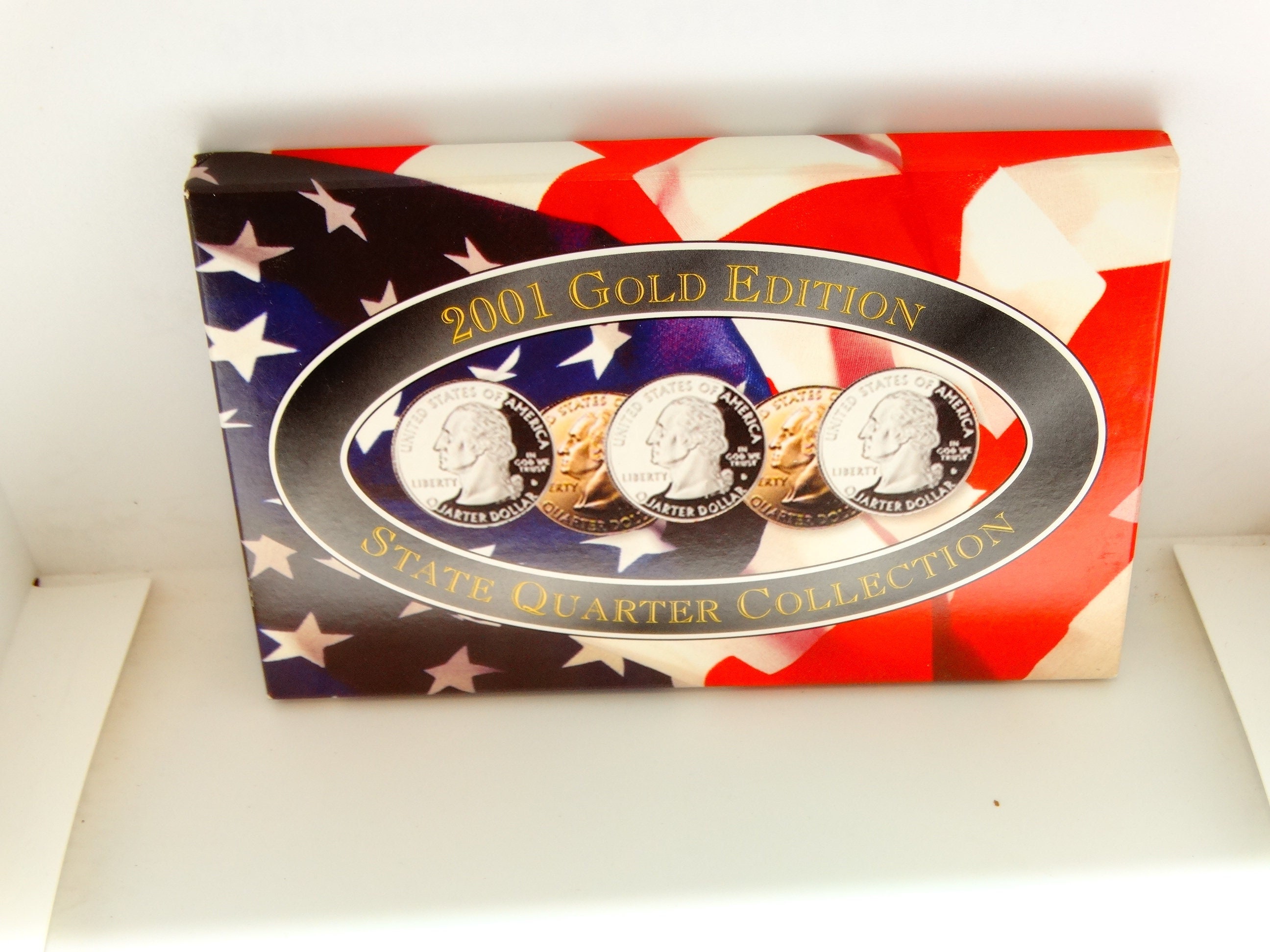
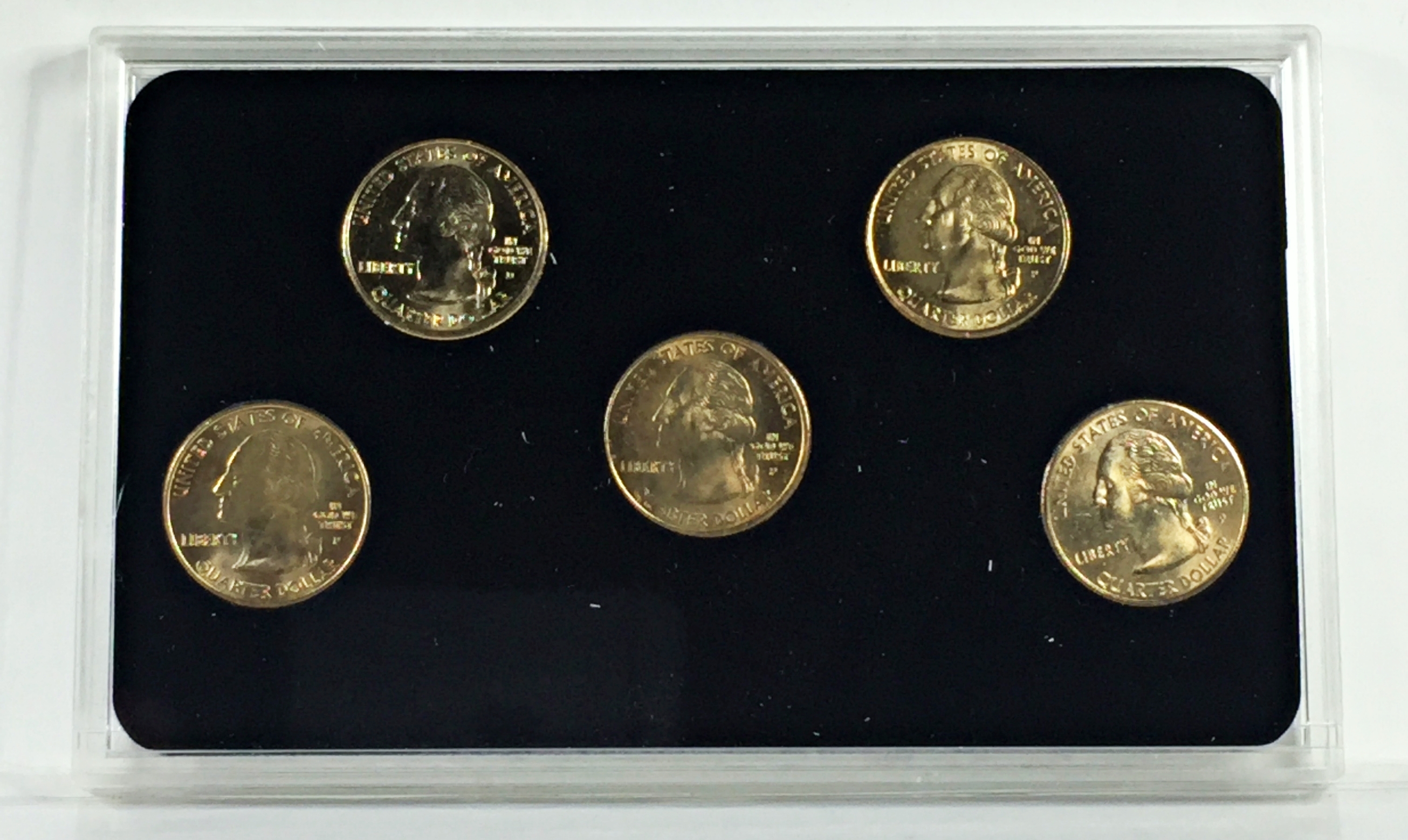
A 2001 "gold" quarter is almost certainly a standard US State Quarter that has been gold-plated by a private company rather than struck in solid gold by the US Mint. As of 2026, these coins typically hold a novelty value of $0.25 to $1.00, as the microscopic layer of gold adds no significant bullion weight and the plating is considered "damage" or "alteration" by professional numismatists.
The appearance of a gold-colored quarter in pocket change often sparks excitement, leading many to believe they have discovered a rare mint error or a forgotten treasury release. However, to understand the true worth of a 2001 gold quarter, one must distinguish between official US Mint products and aftermarket alterations, as well as identify which specific 2001 State Quarter design you possess.
The Origin of the 2001 Gold-Plated Quarter
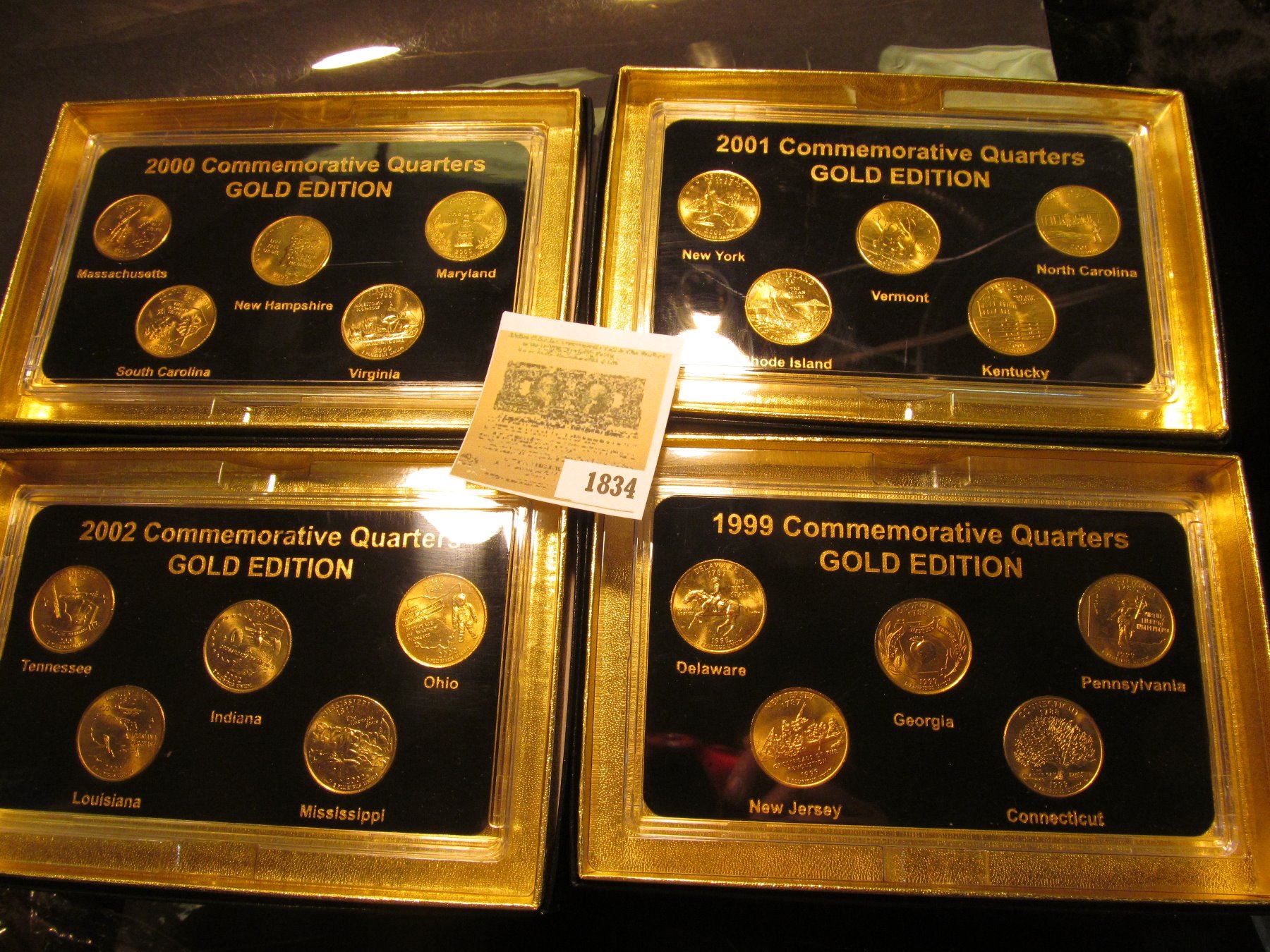
During the height of the 50 State Quarters Program (1999–2008), the United States Mint experienced an unprecedented surge in public interest. Seeing an opportunity, numerous private mints and telemarketing companies purchased massive quantities of standard circulating quarters, electroplated them in a thin layer of 24-karat gold, and sold them in "limited edition" sets or velvet-lined boxes.
These companies marketed the coins as "collector’s items" or "gold heirlooms." While they are indeed visually striking, it is crucial to understand that the US Mint never produced a solid gold quarter in 2001. The gold layer on these coins is typically only a few microns thick—so thin that the cost of recovering the gold would exceed the value of the metal itself.
In 2026, many of these sets have entered general circulation as original buyers pass away or realize the lack of secondary market demand. This is why you might find a shiny gold-colored New York or North Carolina quarter in your local vending machine or grocery store change.
The 2001 State Quarter Designs
To determine what you have, you first need to identify which of the five states released in 2001 is featured on your coin. Each was minted at Philadelphia (P), Denver (D), and San Francisco (S).
- New York: Features the Statue of Liberty superimposed over an outline of the state, with the inscription "Gateway to Freedom."
- North Carolina: Commemorates the first flight of the Wright Brothers at Kitty Hawk in 1903.
- Rhode Island: Depicts a sailboat (a Reliance-class yacht) on Narragansett Bay, celebrating the "Ocean State."
- Vermont: Shows a landscape of Camel's Hump Mountain with people tapping maple trees for syrup.
- Kentucky: Features a stately mansion (Federal Hill) and a thoroughbred horse behind a fence, inscribed with "My Old Kentucky Home."
If any of these designs appear in a gold hue, the coin has been altered. If the coin is silver in appearance but has an "S" mint mark, it might be a 90% silver proof, which carries significantly more value than a gold-plated version.
Technical Analysis: Why Plating Reduces Numismatic Value
In the world of coin collecting, the "original skin" or original surface of a coin is paramount. Any chemical or physical alteration to the surface after the coin leaves the US Mint is generally viewed negatively.
The Electroplating Process
Electroplating involves using an electric current to coat a base metal (in this case, a copper-nickel clad quarter) with a thin layer of another metal (gold). While this makes the coin look "precious," it technically qualifies as "environmental damage" or "altered surfaces" in the eyes of grading services like PCGS or NGC.
Why It Isn't a Mint Error
Some collectors wonder if a quarter could have been accidentally struck on a gold planchet intended for a different coin. In 2001, the US Mint was producing gold $5, $10, $25, and $50 American Eagles. However, these gold planchets are different in diameter, weight, and thickness compared to a quarter. A "wrong planchet" error involving gold is virtually non-existent in the modern era due to the strict security and weighing protocols surrounding precious metals at the mint.
Comparing Values: 2001 Quarter Variations
To understand why the "gold" version is often the least valuable "special" quarter, we must compare it to the official versions released by the Mint. Values below reflect the 2026 market for coins in "Average Circulated" to "Proof" conditions.
| Version | Composition | Mint Mark | 2026 Est. Value |
|---|---|---|---|
| Standard Clad | 75% Copper, 25% Nickel | P or D | $0.25 (Face Value) |
| Gold-Plated Novelty | Clad with micron-thin gold | P or D | $0.25 - $1.00 |
| Clad Proof | 75% Copper, 25% Nickel | S | $1.50 - $3.00 |
| Silver Proof | 90% Silver, 10% Copper | S | $12.00 - $18.00 |
| High-Grade MS68+ | 75% Copper, 25% Nickel | P or D | $20.00 - $100.00+ |
Note: Silver Proof values fluctuate based on the spot price of silver in 2026. High-grade Mint State (MS) coins require professional grading to verify.
How to Identify Your 2001 Quarter
If you have a 2001 quarter that looks different from a standard one, follow these steps to determine exactly what you are holding:
1. Check the Mint Mark
Look for the small letter to the right of George Washington’s ponytail on the obverse (front) of the coin.
- P (Philadelphia) or D (Denver): If these coins are gold-colored, they are definitely plated. They were intended for circulation.
- S (San Francisco): This is a "Proof" coin intended for collectors. If it is gold-colored, it is still likely a plated clad proof. However, if it is silver-colored, it could be a highly desirable silver proof.
2. The Weight Test
A standard copper-nickel 2001 quarter weighs 5.67 grams. A 90% silver proof quarter weighs 6.25 grams. Because the gold plating is so thin, a gold-plated quarter will still weigh approximately 5.67 to 5.70 grams. If you had a solid gold quarter (which, again, does not officially exist), it would weigh significantly more—roughly 8 to 9 grams—due to the density of gold.
3. Inspect the Edge
Look at the reeded (ridged) edge of the coin.
- Standard/Gold-Plated: You will usually see a faint copper stripe or a "sandwich" appearance on the edge, although the gold plating often covers this. If you can see the orange-red of copper, it is a plated clad coin.
- Silver Proof: The edge will be solid silver/white with no copper core visible.
Collector Demand and Market Trends in 2026
The market for gold-plated 2001 quarters is largely driven by "non-numismatists"—people who enjoy the aesthetic of the coin rather than its rarity or historical significance. In 2026, these coins are frequently sold on platforms like eBay or Etsy as "jewelry pieces," "lucky coins," or "educational gifts."
While a serious collector will rarely pay a premium for an altered coin, there is a niche market for "State Quarter Gold Sets" if they are still in their original promotional packaging. A complete 5-coin set from 2001 (NY, NC, RI, VT, KY) in its original display case might sell for $10 to $15, largely for the cost of the packaging and the "curio" factor.
Common Misconceptions
- "It's a Rare Error": Many sellers list these as "Gold Errors" for thousands of dollars. These are almost always scams or misinformed listings.
- "It's Solid Gold": If it were solid gold, the coin would not have a "P" or "D" mint mark in the standard quarter format. The US Mint's actual gold coins (like the 2016 Standing Liberty Gold Quarter) have specific weights and designs that differ from the 2001 State Quarters.
Potential for Value Increase
Does a 2001 gold-plated quarter have any chance of increasing in value? Historically, the answer is no. Because these are considered "damaged" by the numismatic community, their value is decoupled from the coin market. Their value is instead tied to their appeal as a trinket.
If you are looking for an investment-grade 2001 quarter, you should focus on high-grade MS68 or MS69 clad quarters or PCGS/NGC certified Silver Proofs. These are the coins that collectors in 2026 actively compete for in auctions.
Frequently Asked Questions
Is it illegal to have a gold-plated 2001 quarter?
No, it is not illegal to own or even spend a gold-plated quarter. While it is illegal to "fraudulently alter" currency (such as changing a $1 bill to look like a $100 bill), plating a coin for novelty purposes is permitted as long as there is no intent to defraud. Most vending machines and banks will accept them as standard 25-cent pieces.
Can I remove the gold plating to restore the coin's value?
Technically, yes, using chemical dips or electrochemical stripping, but it is not recommended. The process of plating usually involves "pickling" or lightly etching the original surface of the coin to help the gold adhere. Even if you remove the gold, the underlying surface will be "dull" or "cleaned," which also ruins the numismatic value.
Are there any 2001 quarters worth a lot of money?
Yes. 2001-S Silver Proof quarters in "Deep Cameo" condition (perfectly frosted details with mirror-like backgrounds) can be valuable. Additionally, major mint errors—such as a 2001 quarter struck on an experimental "Sacregawea Dollar" alloy planchet (which has a golden color but is a different size)—can be worth thousands of dollars. However, these are exceptionally rare and authenticated by experts.
Why did the US Mint never make a gold 2001 quarter?
The US Mint's mandate for the 50 State Quarters Program was to create circulating coins for the general public. Gold is too expensive and soft for circulation. While they did eventually release a 24k gold "Standing Liberty" quarter in 2016 for the 100th anniversary of that design, the 2001 commemorative program was strictly limited to copper-nickel and 90% silver for collectors.
What should I do if I find a gold 2001 quarter?
The best course of action is to enjoy it as a conversation piece or a unique "find." You can check the weight and the mint mark to ensure it isn't a silver proof that someone gold-plated (which sometimes happens), but in 99.9% of cases, it is a fun novelty worth its 25-cent face value.
Next Steps for Collectors
If you have discovered a gold-colored 2001 quarter and want to verify its status:
- Weigh the coin using a digital scale that measures to at least one decimal point (e.g., 5.7g).
- Examine the edge under a magnifying glass to see if you can spot the copper core beneath the plating.
- Search for "2001-S Silver Proof" images online to compare the luster of your coin to a known silver proof.
- If the coin is exceptionally heavy (over 6 grams) or lacks a copper edge, consider taking it to a local reputable coin shop for a free verbal appraisal. Avoid "We Buy Gold" kiosks, as they often lack numismatic expertise and may only offer the melt value of the base metal.
In 2026, the 2001 gold quarter remains one of the most common "puzzles" for new collectors. While it may not be the "hidden treasure" many hope for, it serves as an excellent entry point into the fascinating world of numismatics and the history of US coinage.