The year 1969 marked a monumental turning point for the Western genre, a cinematic era when traditional tropes of heroic lawmen and clear-cut morality were systematically dismantled, reinvented, and injected with unprecedented grit, moral ambiguity, and modern countercultural anxieties.
The year 1969 stands as one of the most transformative periods in the history of the Hollywood Western. Rather than offering a single definitive 1969 western movie, film history remembers this watershed year for a cluster of revolutionary releases that forever changed how audiences viewed the American frontier. Masterpieces such as The Wild Bunch, Butch Cassidy and the Sundance Kid, True Grit, and Paint Your Wagon radically redefined a genre that had previously relied on romanticized notions of manifest destiny, clear moral binaries, and noble heroes. Instead, 1969 introduced aging outlaws facing obsolescence, morally compromised antiheroes, and stylistic violence that mirrored contemporary socio-political disillusionment. Understanding this cinematic shift requires examining the cultural forces that shaped these productions, analyzing their stylistic breakthroughs, and evaluating how they continue to influence modern filmmaking.
Historical and Cultural Context of the 1969 Western
To understand why the 1969 western movie evolved so dramatically, one must examine the broader cultural landscape of the late 1960s. Hollywood was undergoing a generational shift known as the New Hollywood movement. Younger filmmakers, heavily influenced by European art-house cinema and the gritty realism of Italian "Spaghetti Westerns" directed by filmmakers like Sergio Leone, began rejecting the strict censorship of the traditional Production Code.
At the same time, American society was deeply fractured. The Vietnam War, the civil rights movement, urban riots, and the assassinations of prominent political figures eroded public trust in institutional authority. Audiences no longer wanted reassuring fables about righteous lawmen bringing civilization to the wilderness. They resonated with stories about flawed individuals, systemic corruption, and the tragic inevitability of change. The frontier in a 1969 western movie is rarely a place of fresh beginnings; rather, it is a dying world where outlaws and traditionalists alike find themselves crushed by the march of modern industrialization, encroaching government bureaucracy, and the relentless passage of time.
Landmark Releases That Defined the Era
Several key films released in 1969 established new paradigms for the genre, each approaching the Western mythos from a distinct artistic perspective. Examining these works reveals the diverse ways filmmakers challenged traditional formulas.
The Wild Bunch: Elegiac Violence and the End of an Era
Directed by Sam Peckinpah, The Wild Bunch is frequently cited as the ultimate deconstruction of the traditional Western. The film follows an aging gang of outlaws along the Texas-Mexico border in 1913, struggling to survive in a changing world where corporations, modern weaponry, and ruthless federal lawmen have rendered their way of life obsolete.
Peckinpah utilized rapid-fire editing, groundbreaking slow-motion photography, and visceral sound design to depict violence not as a clean, romantic necessity, but as chaotic, brutal, and profoundly tragic. The opening and closing massacres of the film remain cinematic milestones, stripping away any lingering glory from gunfighting. Through characters like Pike Bishop (played by William Holden), The Wild Bunch presented protagonists who were criminals and killers, yet possessed a rigid, archaic code of loyalty that set them apart from the corrupt modern society encroaching upon them.
Butch Cassidy and the Sundance Kid: Charm, Revisionism, and Modern Antiestablishment
While The Wild Bunch explored the brutal twilight of the outlaws, director George Roy Hill's Butch Cassidy and the Sundance Kid approached the end of the frontier with charismatic levity, melancholy, and stylistic panache. Starring Paul Newman and Robert Redford, the film romanticized the legendary outlaws while subverting traditional narrative structures.
The film embraced an anachronistic tone, featuring upbeat musical interludes (such as "Raindrops Keep Fallin' on My Head"), witty dialogue, and a focus on the characters' evasion of an inexorable, technologically advanced pursuer agency. Instead of focusing on heroic showdowns, the narrative highlights the duo's realization that the era of train and bank robbing is over. The iconic freeze-frame ending—charging defiantly into a hail of Bolivian gunfire—solidified the film's status as a poignant elegy for the untamed American spirit, packaged in a commercially accessible, star-driven vehicle.
True Grit: Traditional Tropes with a Modern Edge
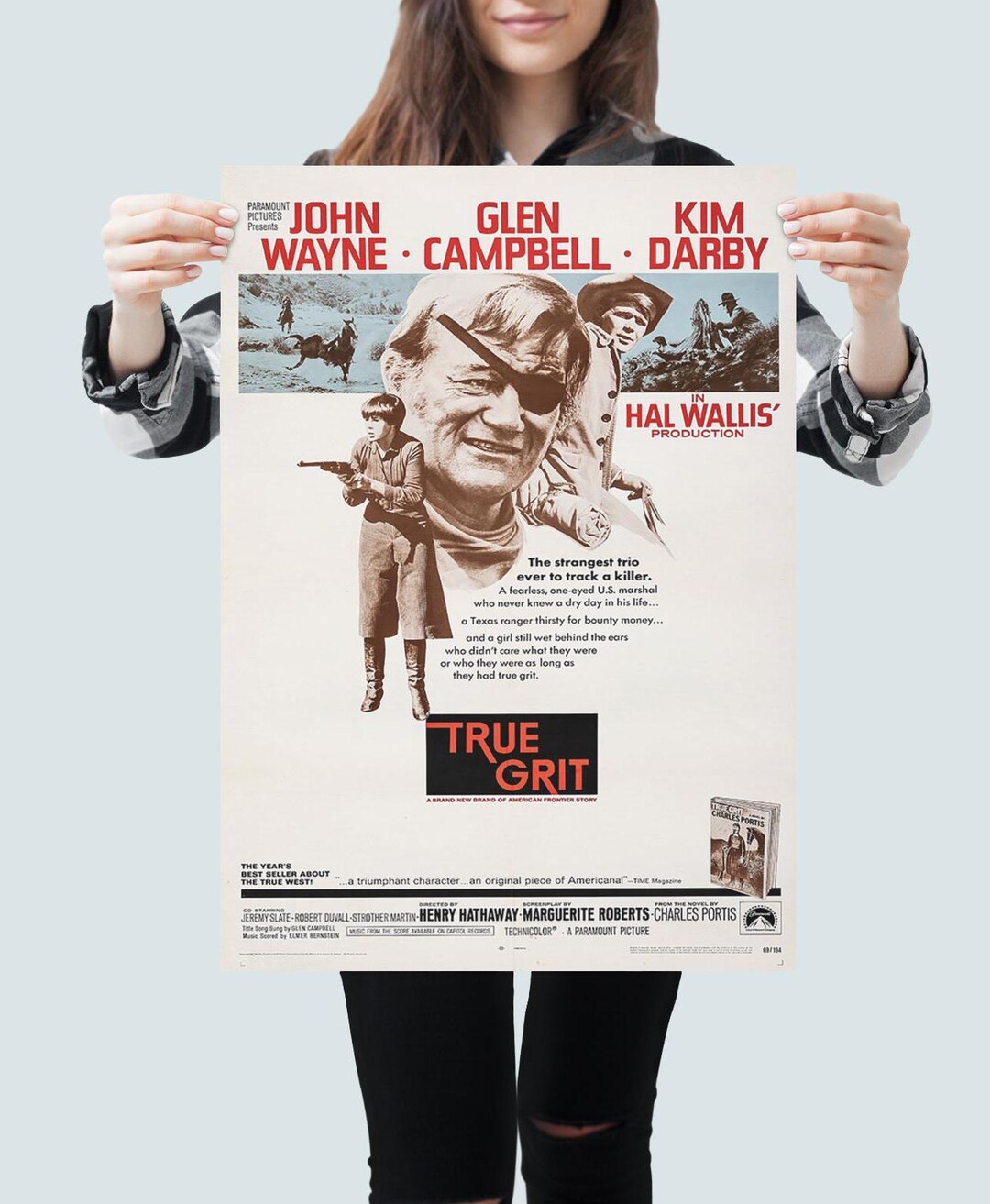
Directed by Henry Hathaway, True Grit offered a more traditional narrative framework than its contemporaries, yet it still contributed to the evolution of the genre by introducing complex, unsentimental protagonists. John Wayne, in his only career Academy Award-winning performance, portrayed the grizzled, hard-drinking, one-eyed U.S. Marshal Rooster Cogburn.
Far from the immaculate, upstanding heroes of 1940s and 1950s Westerns, Cogburn is deeply flawed, cynical, and morally ambiguous. Yet, his pairing with the determined young protagonist Mattie Ross (played by Kim Darby) creates a dynamic rooted in mutual respect and gritty pragmatism. The film demonstrated that traditional storytelling elements could coexist with the emerging desire for psychological depth and realism.
Paint Your Wagon: The Revisionist Musical Western
Though less gritty than The Wild Bunch, the big-budget musical Paint Your Wagon, directed by Joshua Logan and starring Lee Marvin and Clint Eastwood, subverted Western norms through its unconventional narrative themes. Set during the California Gold Rush, the film explores non-traditional domestic arrangements, communal living, and the anarchic freedom of frontier mining camps, offering a countercultural lens on community building that resonated with late-1960s audiences.
Comparative Overview of 1969 Western Masterpieces
The following table compares the defining cinematic characteristics, core themes, and historical significance of the major Western releases from 1969:
| Film Title | Director | Key Cast | Core Themes & Tone | Historical Significance |
|---|---|---|---|---|
| The Wild Bunch | Sam Peckinpah | William Holden, Ernest Borgnine, Robert Ryan | Obsolescence, brutal realism, loyalty among thieves, violent twilight of the frontier. | Revolutionized action editing and introduced unprecedented levels of graphic, stylized violence. |
| Butch Cassidy and the Sundance Kid | George Roy Hill | Paul Newman, Robert Redford, Katharine Ross | Friendship, evasion of modernity, melancholy charm, inevitability of progress. | Blended buddy-comedy dynamics with revisionist Western melancholy, becoming a massive cultural phenomenon. |
| True Grit | Henry Hathaway | John Wayne, Kim Darby, Glen Campbell | Retribution, unlikely companionship, professional pragmatism, psychological depth. | Earned John Wayne his sole Academy Award while bridging classical Western heroism with character flaws. |
| Paint Your Wagon | Joshua Logan | Lee Marvin, Clint Eastwood, Jean Seberg | Communal living, gold rush chaos, non-traditional relationships, anti-authoritarianism. | Combined the traditional scale of Hollywood musicals with countercultural themes of freedom and community. |
Technical and Stylistic Innovations
The cinematic achievements of 1969 were not limited to thematic revisionism; they also represented a massive leap forward in technical execution and aesthetic daring.
Evolution of Cinematography and Location Shooting
Earlier studio-bound Westerns frequently relied on backlots and artificial soundstages. By 1969, directors embraced rugged, authentic natural landscapes. Films like The Wild Bunch utilized the stark, sun-baked deserts of Mexico to mirror the internal desolation and hardened resilience of the characters. Cinematographers employed natural lighting, expansive panavision lenses, and earthy color palettes that prioritized dirt, sweat, and authenticity over polished glamour.
The Sound of Violence and Atmosphere
Sound design underwent a quiet revolution in 1969. In previous decades, gunshot sounds were often sanitized and uniform. The Wild Bunch and other late-60s films introduced distinct, heavy acoustic reports for firearms, reflecting the specific mechanical nature of period weapons like Winchester rifles and Colt revolvers. Combined with evocative musical scores—such as Elmer Bernstein's majestic, melancholic work on True Grit or Burt Bacharach's breezy orchestration for Butch Cassidy—the auditory landscape of the Western became far more emotionally nuanced.
Legacy and Influence on Modern Cinema
The paradigm shift initiated in 1969 left an indelible mark on subsequent generations of filmmakers. Without the deconstructive template established by the 1969 western movie, modern revisions of the genre—ranging from Clint Eastwood’s Unforgiven (1992) to modern neo-Westerns like Hell or High Water (2016) and television series like Deadwood—would lack their foundational DNA.
Modern directors learned that the Western setting serves as an endlessly versatile canvas to explore contemporary anxieties regarding power, justice, capitalism, and human mortality. The collapse of the binary hero in 1969 opened the door for antiheroes across all cinematic genres, proving that audiences prefer complex, relatable struggles over simplistic moral fables.
Frequently Asked Questions
What made 1969 such an important year for Western movies?
1969 was a turning point because it marked the transition from traditional, romanticized Westerns featuring clear heroes and villains to revisionist Westerns. These films featured morally ambiguous characters, explicit violence, and themes of obsolescence that mirrored contemporary societal disillusionment.
Are spaghetti westerns connected to the 1969 American Western revival?
Yes. Italian directors like Sergio Leone popularized gritty realism, cynical protagonists, and stylistic violence earlier in the decade with the "Dollars Trilogy." American filmmakers absorbed these lessons, adapting them to reflect domestic political and cultural tensions by the end of the decade.
How did The Wild Bunch change action filmmaking?
Sam Peckinpah’s The Wild Bunch revolutionized action editing by using multiple cameras running at different frame rates combined with rapid cutting. This technique allowed filmmakers to depict the chaos, beauty, and tragedy of violence with unprecedented visceral impact.
Did John Wayne's role in True Grit break from his traditional image?
While Rooster Cogburn was still a hero, playing a grizzled, heavy-drinking, eye-patched marshal allowed John Wayne to subvert his usual polished, upright persona. This performance offered a self-aware acknowledgment of aging and physical decline that earned him critical acclaim and his first Oscar.
Where can I watch these classic 1969 Westerns today?
Most major 1969 Westerns, including Butch Cassidy and the Sundance Kid, True Grit, and The Wild Bunch, are widely available across major digital streaming platforms, video-on-demand services, and physical media formats like Blu-ray and 4K Ultra HD.
Conclusion and Next Action
Exploring the cinematic landscape of 1969 offers a profound window into a pivotal era of cultural and artistic transformation. To fully appreciate this historic moment in film history, your best next action is to curate a weekend double-feature contrasting the elegiac, brutal realism of Sam Peckinpah’s The Wild Bunch with the charismatic, melancholic escapism of George Roy Hill’s Butch Cassidy and the Sundance Kid. Analyzing how two films from the exact same year approached the death of the frontier from entirely different artistic angles provides a masterclass in cinematic storytelling.