A 15-year mortgage APR (Annual Percentage Rate) represents the true yearly cost of borrowing for a home loan amortized over 180 months, factoring in both the interest rate and mandatory finance charges like origination fees or points. Opting for a 15-year term typically secures a lower interest rate than a 30-year term, resulting in massive long-term interest savings, though it requires a higher monthly payment due to the accelerated repayment schedule.
What Is a 15-Year Mortgage APR?
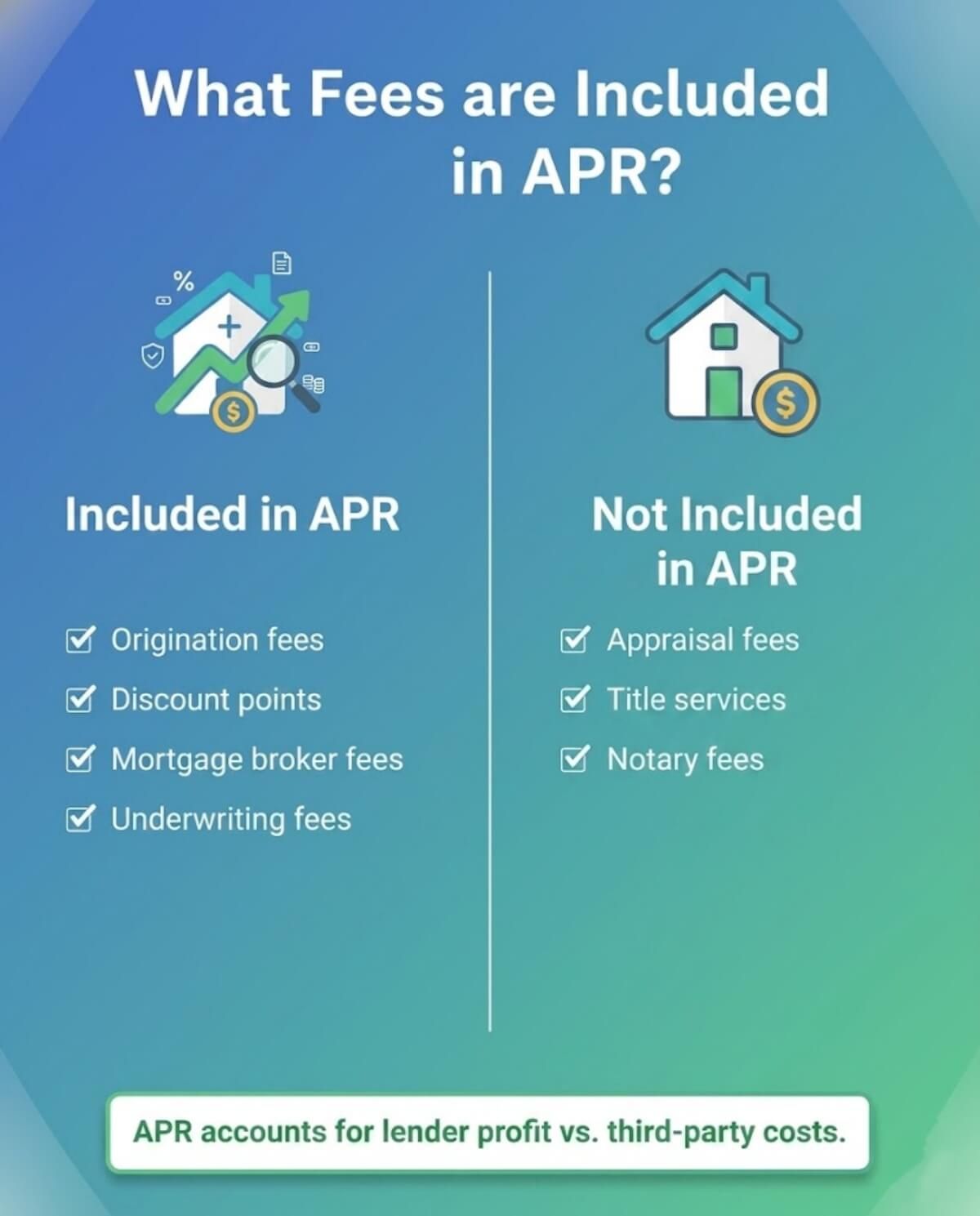
When shopping for a home loan, borrowers encounter two primary figures: the nominal interest rate and the Annual Percentage Rate (APR). The nominal interest rate reflects only the cost of borrowing the principal amount. In contrast, the 15-year mortgage APR provides a broader, more comprehensive measure of the loan’s yearly cost. It incorporates the interest rate alongside additional lender fees, such as loan origination fees, processing fees, and certain closing costs expressed as an annualized rate.
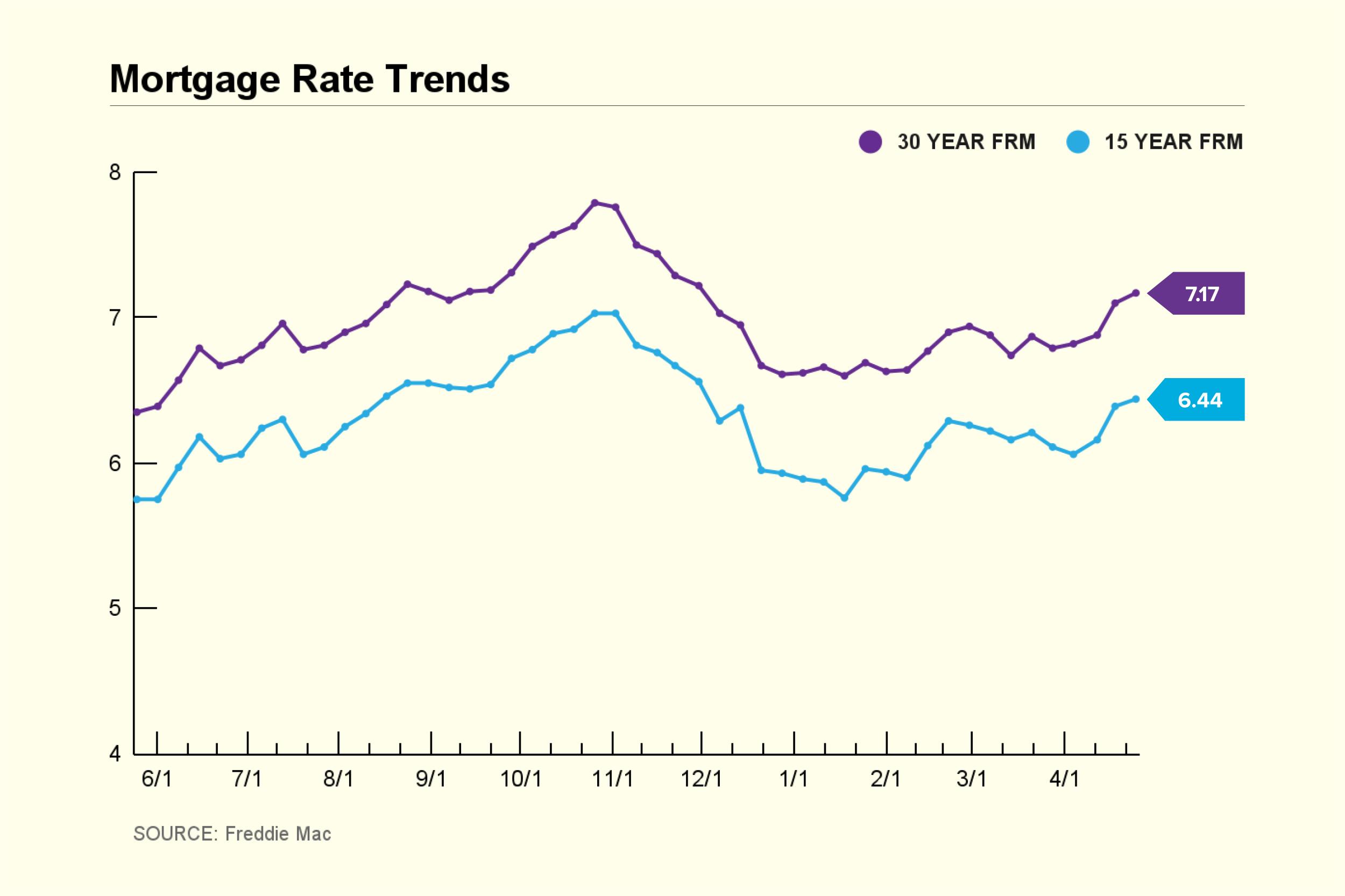
The "15-year" designation specifies the amortization timeline. Unlike a standard 30-year mortgage, which spreads principal repayment across 360 monthly installments, a 15-year mortgage compresses the repayment window into 180 months. Because lenders face lower default risks over a shorter duration, they generally offer lower interest rates for 15-year loans compared to 30-year alternatives.
However, because the principal is paid down in half the time, the monthly payment for a 15-year mortgage is significantly higher than that of a 30-year loan for the exact same loan amount. Borrowers must weigh the advantages of reduced lifetime interest costs against the reality of a strict, higher monthly financial obligation.
How Lenders Calculate the 15-Year Mortgage APR
Calculating a 15-year mortgage APR involves complex mathematical modeling that translates upfront expenses and periodic interest into a single percentage. Under federal lending regulations enforced by agencies like the Consumer Financial Protection Bureau (CFPB), lenders must disclose the APR so consumers can compare the true cost of different loan offers on an apples-to-apples basis.
To arrive at the APR, lenders look at the total finance charges paid over the life of the loan. These charges include:
- The periodic interest accrued on the remaining principal balance.
- Upfront loan origination fees charged by the lender.
- Underwriting and processing fees.
- Certain types of mortgage insurance premiums, depending on the loan product.
Third-party fees that would be paid regardless of the lender—such as home inspections, title insurance, and appraisal fees—are typically excluded from the APR calculation. Once the total finance charges are aggregated, the lender computes the effective annual rate that equates the net loan proceeds to the present value of the scheduled monthly payments over the 15-year term.
15-Year vs. 30-Year Mortgage APR: A Comparison
The choice between a 15-year mortgage and a 30-year mortgage fundamentally alters a household's long-term financial trajectory. To understand why borrowers choose one over the other, it is helpful to examine how their structures, rates, and costs compare side by side.
| Feature | 15-Year Fixed Mortgage | 30-Year Fixed Mortgage |
|---|---|---|
| Typical Interest Rate | Lower (historically 0.5% to 1.0% below 30-year rates) | Higher |
| Monthly Payment | Significantly higher (shorter amortization window) | Lower (spread over twice as many months) |
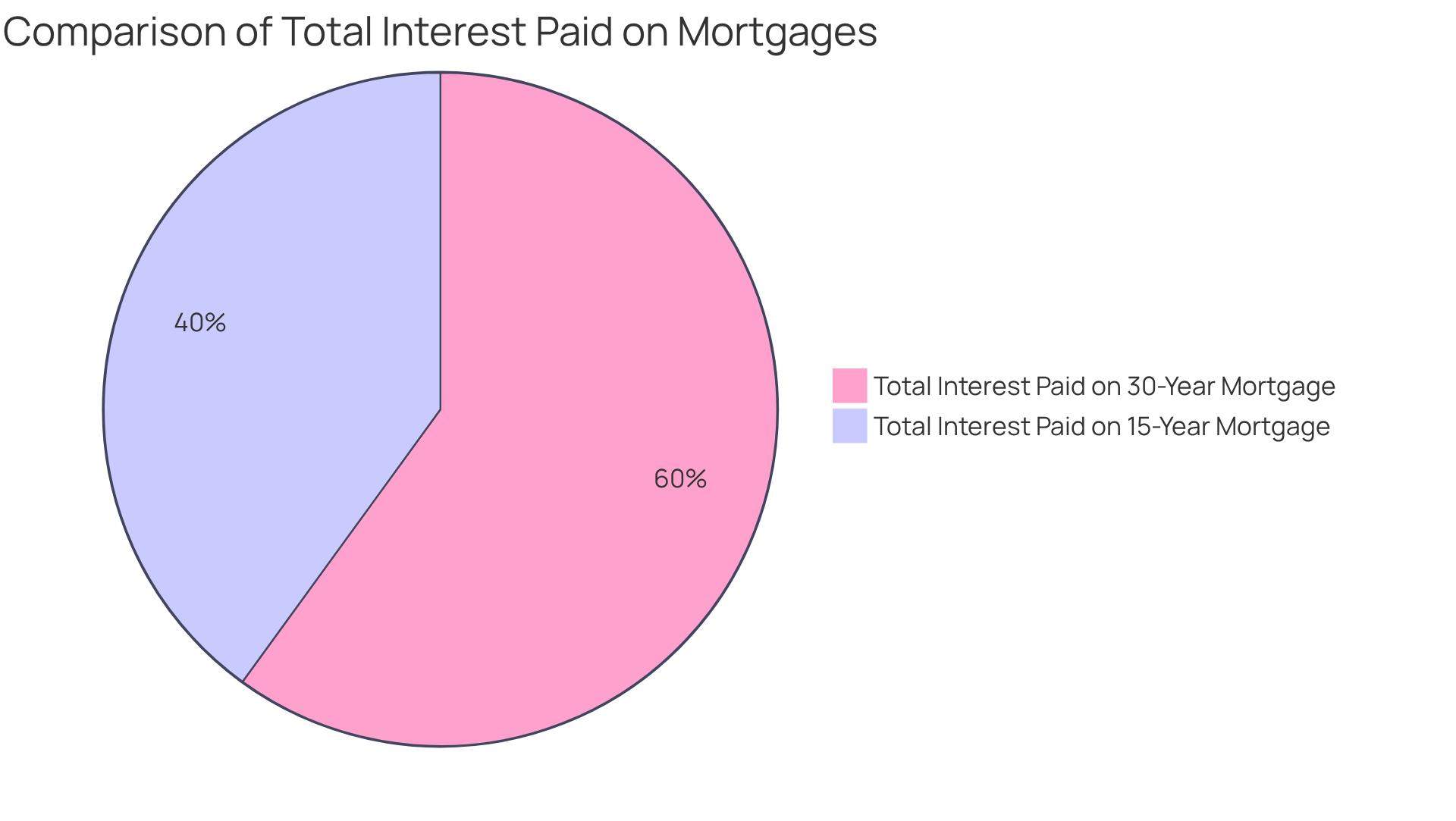
| Total Interest Paid | Substantially lower over the life of the loan | Much higher due to extended compounding |
| Equity Accumulation | Rapid; large portion of payment goes to principal from month one | Slow, especially in the first decade of the loan |
| Budget Flexibility | Lower; mandatory high payment leaves less room for cash flow variations | Higher; lower mandatory payment provides breathing room |
This comparison highlights the core trade-off. While a 30-year mortgage keeps monthly overhead manageable, it increases total borrowing costs. A 15-year mortgage demands fiscal discipline through higher payments, but rewards the borrower with freedom from housing debt much sooner and at a fraction of the interest expense.
Key Factors That Influence Your 15-Year Mortgage APR
No two borrowers receive the exact same APR. Lenders evaluate individual financial profiles to determine the risk of default, adjusting the final rate accordingly. Understanding these variables allows prospective homebuyers to position themselves for the most competitive terms available.
Credit Scores and Credit History
A borrower's credit score is one of the most heavily weighted factors in mortgage pricing. Lenders use credit scoring models to review payment history, credit utilization, length of credit history, and types of credit active. Borrowers with excellent credit scores (typically 740 and above) are rewarded with the lowest available 15-year mortgage APRs, whereas lower scores trigger higher rates to offset perceived lending risk.
Down Payment and Loan-to-Value (LTV) Ratio
The size of the down payment directly affects the Loan-to-Value (LTV) ratio. A larger down payment means the lender takes on less risk because the borrower has immediate equity in the property. Putting down 20% or more often unlocks preferential APR pricing and eliminates the requirement for private mortgage insurance (PMI).
Debt-to-Income (DTI) Ratio
Lenders examine the Debt-to-Income (DTI) ratio to measure a borrower's ability to manage monthly debt payments. This metric compares total recurring monthly debt obligations (including the prospective mortgage payment, car loans, student loans, and credit card minimums) against gross monthly income. A lower DTI ratio signals financial stability and can help secure a favorable APR.
Loan Amount and Property Type
The physical size of the loan and the nature of the property also matter. Jumbo loans (loans exceeding conforming loan limits set by the Federal Housing Finance Agency) may carry different rate structures. Additionally, investment properties and multi-unit dwellings often carry higher APRs than primary single-family residences due to higher default statistics.
Financial Pros and Cons of Choosing a 15-Year Mortgage
Opting for a 15-year term is a powerful wealth-building strategy, but it is not universally appropriate for every financial situation. Analyzing the advantages and disadvantages clarifies whether this loan structure fits personal long-term objectives.
Advantages of a 15-Year Term
- Massive Interest Savings: Because the loan is active for half the time and secures a lower interest rate, borrowers save tens or even hundreds of thousands of dollars in interest compared to a 30-year loan.
- Accelerated Equity Growth: Each monthly payment aggressively chips away at the principal balance, building home equity at an accelerated rate.
- Early Debt Freedom: Homeowners enter retirement or their peak earning years completely free of a monthly mortgage payment, freeing up cash flow for other life goals.
- Lower Overall Risk: Lenders view shorter terms as lower risk, and the psychological peace of mind of owning a home outright sooner is substantial.
Disadvantages and Risks
- Inflexible High Payments: The required monthly payment is unyielding. If a household experiences job loss, medical emergencies, or income reduction, servicing a large 15-year payment becomes much harder than a 30-year payment.
- Opportunity Cost: Capital tied up in home equity is illiquid. Some financial planners argue that taking a 30-year mortgage and investing the payment difference in higher-yielding assets can yield a greater net worth over time.
- Reduced Buying Power: Because the monthly payment is higher for a given loan amount, a buyer's maximum purchase price may be restricted if they strictly target a 15-year term.
Strategies to Secure the Best 15-Year Mortgage APR
Securing the most competitive 15-year mortgage APR requires proactive financial management and strategic shopping. Borrowers can take concrete steps to minimize their borrowing costs:
- Clean Up Credit Profiles Early: Check credit reports for errors months before applying. Pay down revolving credit balances to lower credit utilization ratios and avoid opening new lines of credit during the mortgage application window.
- Shop Multiple Lenders: Rates and fee structures vary significantly between traditional banks, credit unions, and online mortgage brokers. Request Loan Estimates (LEs) from at least three different institutions to compare APRs directly.
- Consider Discount Points: Borrowers can choose to pay upfront fees, known as discount points, at closing to permanently lower their interest rate over the life of the loan. This makes financial sense only if the homeowner plans to stay in the property long enough for the monthly savings to outweigh the upfront cost.
- Lock in the Rate at an Optimal Time: Mortgage rates fluctuate daily based on bond market conditions and economic data. Work with an experienced loan officer to monitor rate trends and lock in a favorable APR when market conditions align.
Frequently Asked Questions About 15-Year Mortgage APRs
Is a 15-year mortgage APR always lower than a 30-year mortgage APR?
Historically and structurally, yes. Lenders price shorter-term loans more competitively because their exposure to market volatility and default risk is compressed into a 15-year window. However, individual APRs depend on creditworthiness, and market anomalies can occasionally narrow the spread.
Can I get a 15-year mortgage with a variable interest rate?
Yes. While the 15-year fixed-rate mortgage is the most common and secure choice, adjustable-rate mortgages (ARMs) with 15-year terms also exist. These loans feature a fixed rate for an initial period—such as five or seven years—before adjusting annually based on market benchmarks. Most borrowers seeking the stability of a 15-year timeline opt for fixed-rate products.
What happens if I take a 30-year mortgage and just make higher payments?
Making additional principal payments on a 30-year mortgage allows a borrower to pay off the loan on a timeline similar to a 15-year mortgage. However, the initial interest rate will be higher than a true 15-year mortgage APR, meaning the borrower will pay more total interest unless the loan is paid off extremely early. Furthermore, the higher monthly payment on a 30-year loan remains mandatory, whereas voluntary extra payments offer more budgeting flexibility.
Do closing costs affect the 15-year mortgage APR?
Yes. Because the APR formula factors in mandatory finance charges and fees required by the lender, higher closing costs will push the APR higher relative to the nominal interest rate. Comparing the APR across multiple Loan Estimates is the most effective way to evaluate which lender is charging the lowest total fees.
Conclusion and Next Actions
Navigating the 15-year mortgage APR landscape requires balancing aggressive wealth accumulation against monthly budget constraints. By securing a lower interest rate and compressing the amortization schedule, homeowners can save substantially on lifetime borrowing costs and achieve complete debt freedom much faster. To take the next step, pull your credit reports, calculate your debt-to-income ratio, and request official Loan Estimates from multiple competing lenders to find the most advantageous financing terms for your home purchase or refinance.