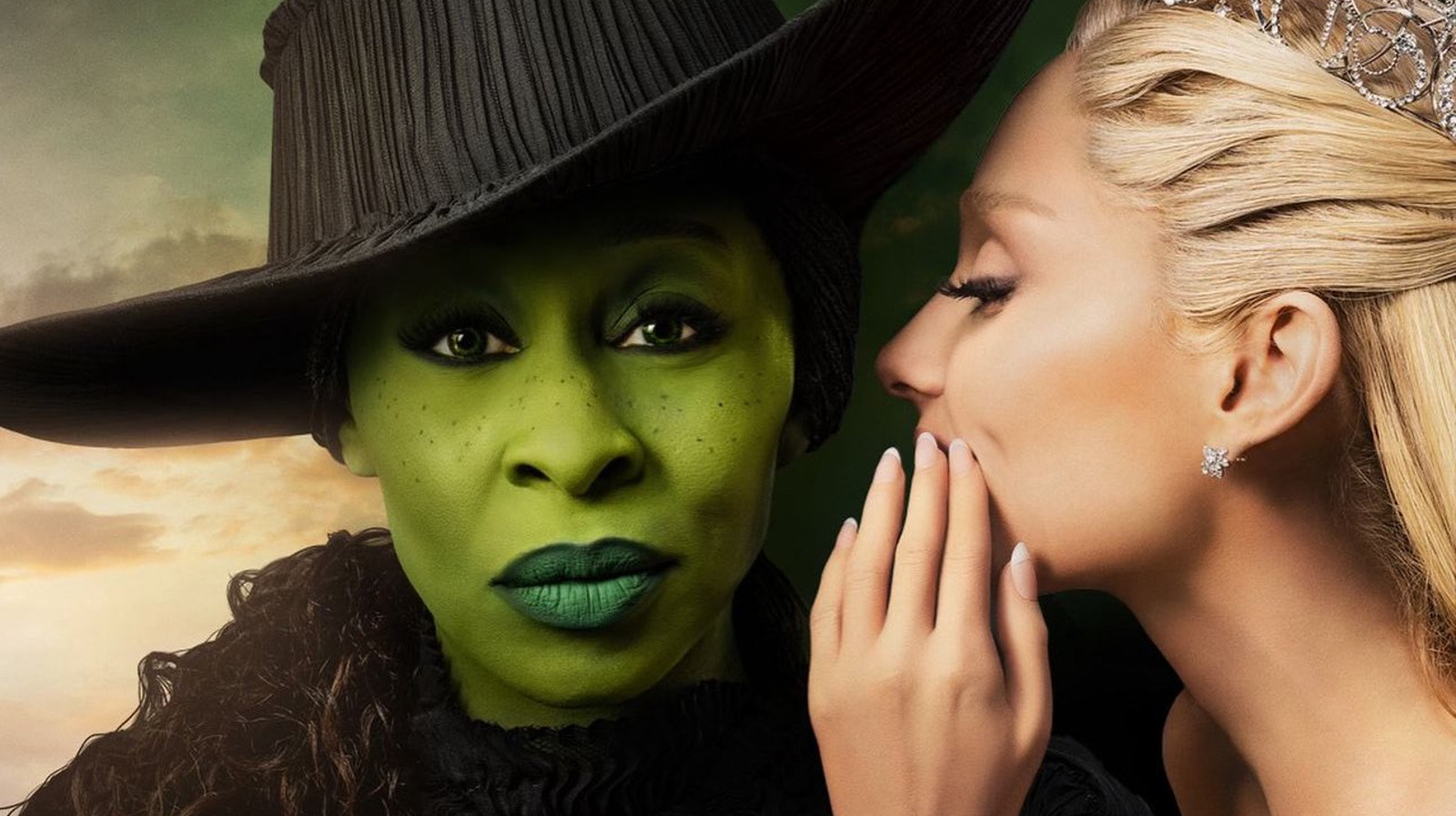
As of early 2026, Wicked: Part Two has solidified its place in cinematic history, with Box Office Mojo figures highlighting a staggering $540 million domestic gross. This performance underscores the enduring appeal of the Oz prequel, outperforming many of its musical predecessors and cementing the two-part strategy as a financial triumph for Universal Pictures. This figure represents the North American cumulative total after the film’s high-profile release in late 2025, reflecting a rare "event cinema" status that sustained momentum well into the new year.
Understanding the $540 Million Figure: A Domestic Deep Dive
The $540 million gross recorded by Box Office Mojo for Wicked: Part Two is not merely a number; it is a testament to the film’s "legs" in the domestic market. In box office terminology, "legs" refers to a film's ability to maintain high ticket sales over several weeks following its opening weekend. While many blockbusters see a 60% or higher drop-off in their second week, Wicked: Part Two benefited from the lucrative holiday corridor, spanning from late November 2025 through the start of 2026.
To reach the $540 million mark, the film had to appeal beyond the core Broadway fan base. Box Office Mojo’s data indicates that the film maintained a consistent presence in the top five rankings for over ten weeks. This sustained performance is often driven by repeat viewings—a phenomenon common with musicals where audiences return to experience the musical numbers and choreography on a premium large-format (PLF) screen, such as IMAX or Dolby Cinema.
The domestic gross of $540 million places Wicked: Part Two in an elite category of films. It has officially surpassed the domestic totals of other major musical adaptations, including the original Grease (adjusted for inflation) and the first Wicked installment, suggesting that the narrative momentum built by Part One successfully converted casual viewers into dedicated fans of the finale.
Box Office Mojo Methodology: How the Figures are Calculated
Box Office Mojo, a subsidiary of IMDb and Amazon, remains the industry standard for tracking theatrical earnings. The $540 million figure cited for Wicked: Part Two is derived from daily reports provided by distributors. These figures are categorized into three primary buckets:
- Daily Gross: The actual ticket sales reported for every 24-hour period.
- Weekend Gross: The primary metric for "success," covering Friday through Sunday.
- Cumulative Gross: The running total of all earnings since the film's premiere.
For Wicked: Part Two, the cumulative domestic gross is the most significant indicator of its cultural footprint. Box Office Mojo also tracks "Theater Counts," which showed that Wicked: Part Two debuted in over 4,200 theaters across North America. The film's ability to maintain a high "Per Theater Average" (PTA) even as the theater count dwindled in early 2026 is what allowed it to cross the half-billion-dollar threshold domestically.
Furthermore, Box Office Mojo distinguishes between "Domestic" (United States and Canada) and "International" (the rest of the world). While the $540 million figure specifically highlights the domestic triumph, it is part of a larger global story where the film’s total worldwide earnings likely exceed the $1 billion mark, depending on the performance in key markets like the United Kingdom, Japan, and Australia.
Comparing Part One and Part Two Performance
One of the most frequent questions from industry analysts is how the second half of the story compared to the first. Typically, sequels or "Part Two" releases can see a slight decline if the initial novelty has worn off. However, Wicked: Part Two bucked this trend.
The "Conclusion" Factor
The second film covers the most recognizable elements of the Wicked story, including the iconic songs "For Good" and "No Good Deed," as well as the direct tie-ins to the events of The Wizard of Oz. This narrative payoff encouraged audiences who might have waited for streaming for Part One to witness the "climactic conclusion" in theaters.
Strategic Release Timing
Universal Pictures strategically timed both releases for the Thanksgiving window. This allowed Wicked: Part Two to dominate the family-friendly market during December 2025. By the time the January 2026 "dump months" arrived, Wicked had already secured its $500 million+ status, leaving little room for competitors to gain a foothold.
Comparative Financial Data
The following table illustrates the performance trajectory of the Wicked duology based on Box Office Mojo's historical tracking data as of 2026.
| Metric | Wicked: Part One (2024) | Wicked: Part Two (2025-26) |
|---|---|---|
| Opening Weekend | $125 Million | $148 Million |
| Domestic Total | $485 Million | $540 Million |
| Theater Count (Peak) | 4,150 | 4,280 |
| Days to $100M | 3 Days | 2 Days |
| Box Office Mojo Rank (Yearly) | #3 | #1 |
Factors Driving the $540 Million Success
Several variables converged to make $540 million a reality for Wicked: Part Two. Understanding these helps clarify why the Box Office Mojo figures reached such heights.
The "A+ CinemaScore" and Word of Mouth
A film’s box office longevity is often determined by its CinemaScore—a grade based on opening-night audience polling. Wicked: Part Two received an A+, indicating nearly universal acclaim. This high level of audience satisfaction translated into "evergreen" ticket sales. When a film has an A+ score, the "multiplier" (the relationship between the opening weekend and the final total) is significantly higher.
Casting and Star Power
The casting of Ariana Grande as Glinda and Cynthia Erivo as Elphaba provided a dual-layered appeal. Grande’s massive social media following and pop-star status brought in younger demographics (Gen Z and Alpha), while Erivo’s Broadway and prestige-acting credentials satisfied older theater-goers and critics. The chemistry between the two leads became a focal point of the marketing campaign, driving repeat viewings from fans who wanted to see the "For Good" sequence multiple times.
Premium Large Format (PLF) Dominance
A significant portion of the $540 million gross came from premium tickets. IMAX and Dolby Cinema screenings often cost 30% to 50% more than standard tickets. Because Wicked: Part Two featured expansive visuals of the Emerald City and the flying sequences, it was marketed as a "must-see" on the largest screens possible. Box Office Mojo reports that PLF screens accounted for nearly 35% of the film’s total domestic gross.
The Role of Marketing and Merchandise Tie-ins
The financial success of a film is often bolstered by its omnipresence in the culture. Throughout the end of 2025 and into 2026, the "pink and green" marketing aesthetic was inescapable. This "color-coding" strategy, reminiscent of the Barbie marketing campaign of 2023, turned theater visits into fashion events.
Universal’s partnerships with major retailers for themed merchandise created a feedback loop: people bought the merchandise, which reminded them of the film, leading them to buy more tickets. While merchandise sales are not included in the Box Office Mojo $540 million figure (which tracks only ticket sales), the visibility created by these products directly impacted the film's theatrical longevity.
Navigating Box Office Mojo for Real-Time Figures
For readers looking to verify these figures or track the final "tail" of the film’s theatrical run, Box Office Mojo provides several specific tools. By searching for "Wicked: Part Two," users can access the "Daily" tab to see if the film is still adding to its $540 million total.
Key Metrics to Watch:
- Drops: Look for the percentage change from the previous weekend. Anything under 30% is considered exceptional.
- Average Per Theater: As the film stays in theaters longer, this number will drop. If it remains above $2,000 in its 12th week, it indicates extremely high demand.
- Calendar View: This tool allows you to compare how Wicked: Part Two performed on specific holidays, such as Christmas Day or New Year’s Day, relative to other historical blockbusters.
Critical Reception vs. Commercial Reality
While some critics initially questioned the decision to split the musical into two parts, the $540 million domestic gross has largely silenced the skepticism. From a commercial standpoint, splitting the film allowed for two distinct "events," doubling the opportunity for opening-weekend records.
The artistic choice also allowed the director, Jon M. Chu, to include almost every lyric and scene from the stage production, plus new material. This "completionist" approach ensured that the core fan base felt the film was a faithful adaptation, which is crucial for a property with such a dedicated following. The financial data proves that the audience was willing to pay for the full journey, rather than a condensed single-film version.
Challenges and Competitive Landscape
Reaching $540 million was not without its challenges. The 2025 holiday season was crowded with other major releases, including several animated sequels and a high-budget sci-fi epic. Wicked: Part Two had to fight for screen space, particularly in IMAX theaters which are often contractually obligated to switch films after two or three weeks.
The film's success in spite of this competition suggests that it functioned as a "four-quadrant" movie—appealing to men, women, and audiences both under and over the age of 25. The female-led narrative, in particular, dominated the box office, filling a void often left by male-centric superhero franchises.
FAQ: Wicked: Part Two Box Office Mojo Figures
Is the $540 million gross worldwide or domestic?
The $540 million figure refers specifically to the Domestic Gross (United States and Canada). When including international markets, the total worldwide gross is significantly higher. Box Office Mojo lists these separately to allow for more granular analysis of market performance.
How does Wicked: Part Two compare to the highest-grossing musicals?
At $540 million domestic, Wicked: Part Two ranks as one of the top-performing musicals of all time. It sits alongside or above heavyweights like The Lion King (2019 remake) and Beauty and the Beast (2017). It has officially eclipsed the domestic totals of films like The Greatest Showman and Hamilton (which had a limited theatrical presence).
Does the Box Office Mojo figure include streaming revenue?
No, Box Office Mojo tracks theatrical ticket sales only. It does not include revenue from Peacock (Universal’s streaming service), PVOD (Premium Video on Demand) rentals on platforms like Amazon or Apple, or physical media sales (Blu-ray/4K Ultra HD).
Why was Wicked split into two parts?
The decision was made to ensure that the scale of the production matched the scope of the Broadway show without cutting significant musical numbers. Financially, this also allowed the studio to generate two separate theatrical "events," which clearly paid off given the $540 million domestic gross for the second part alone.
What was the production budget for Wicked: Part Two?
While exact figures are often kept confidential, industry estimates suggest the combined budget for both Wicked parts was approximately $300 million to $350 million. With a $540 million domestic gross for the second part alone, the film is a massive financial success for Universal Pictures.
Practical Recommendations for Fans and Analysts
For those following the financial trajectory of Wicked: Part Two or looking to understand the broader implications of these Box Office Mojo figures, consider the following actions:
- Monitor the "Oscar Bump": If the film receives multiple Academy Award nominations in early 2026 (particularly in categories like Best Picture, Best Actress, or Visual Effects), expect to see a slight uptick in the Box Office Mojo figures as the film is re-released or expanded in theaters.
- Compare Cumulative Data: Use Box Office Mojo’s "Comparison" tool to overlay the daily performance of Wicked: Part Two against other November blockbusters like Frozen II or The Hunger Games. This provides context on how "event musicals" perform compared to traditional franchises.
- Check International Totals: To get the full picture of the film’s success, navigate to the "Worldwide" tab. Look specifically at performance in "Musical-heavy" markets like South Korea and the UK, which often mirror domestic trends for this genre.
The $540 million milestone for Wicked: Part Two is a landmark achievement for the musical genre. It proves that with the right combination of star power, nostalgic IP, and strategic release timing, theatrical cinema can still achieve massive, sustained success in the mid-2020s.