Understanding corporate financial health requires distinguishing between what a company owns and what it is fundamentally worth to its owners. While casual observers often use terms like "total assets" and "net worth" interchangeably, they represent two fundamentally different accounting metrics, especially when analyzing a massive conglomerate like The Walt Disney Company. Total assets measure the gross economic resources controlled by a business, whereas net worth—more accurately referred to as shareholders' equity or book value in corporate finance—represents the residual interest in the assets after deducting all liabilities.
Defining Total Assets: What Does Disney Own?
Total assets represent all the economic resources, properties, rights, and claims that a business owns or controls, which are expected to provide future economic value. In the context of The Walt Disney Company, this figure encompasses a staggering array of physical and intangible properties accumulated over a century of operations.
To comprehend the sheer scale of Disney’s balance sheet, assets are typically classified into two main categories: current assets and non-current (long-term) assets.
- The Walt Disney Company Total Assets
- Current Assets (Short-Term Liquidity)
- Cash and Cash Equivalents
- Receivables & Short-Term Investments
- Content Production & Advances
- Non-Current Assets (Long-Term Value)
- Theme Parks, Resorts, and Property, Plant, & Equipment
- Intangible Assets (Trademarks, Copyrights)
- Goodwill (Acquisition Premiums)
- Current Assets (Short-Term Liquidity)
Current Assets
Current assets are resources that can be converted into cash, sold, or consumed within one operating cycle or a single fiscal year. For Disney, this includes:
- Cash and Cash Equivalents: Highly liquid holdings ready for immediate deployment.
- Receivables: Money owed to Disney by distributors, advertisers, and licensees.
- Content and Advances: Production costs for films and television series that are currently in production or awaiting release, which will be expensed or amortized as revenue is generated.
Non-Current Assets
Non-current assets are long-term investments that provide value over multiple years. For a multinational media giant, these form the bedrock of corporate valuation:
- Property, Plant, and Equipment (PP&E): The physical infrastructure of the empire, including theme parks (Walt Disney World, Disneyland, Tokyo Disney Resort licensing stakes), cruise ships, corporate offices, and broadcast facilities.
- Intangible Assets: Intellectual property rights, trademarks, and film libraries that generate licensing and streaming revenue.
- Goodwill: The premium Disney has paid historically when acquiring other massive entities—such as Pixar, Marvel Entertainment, Lucasfilm, and the majority of 21st Century Fox—above the fair market value of their net identifiable assets.
Defining Net Worth: The True Residual Value
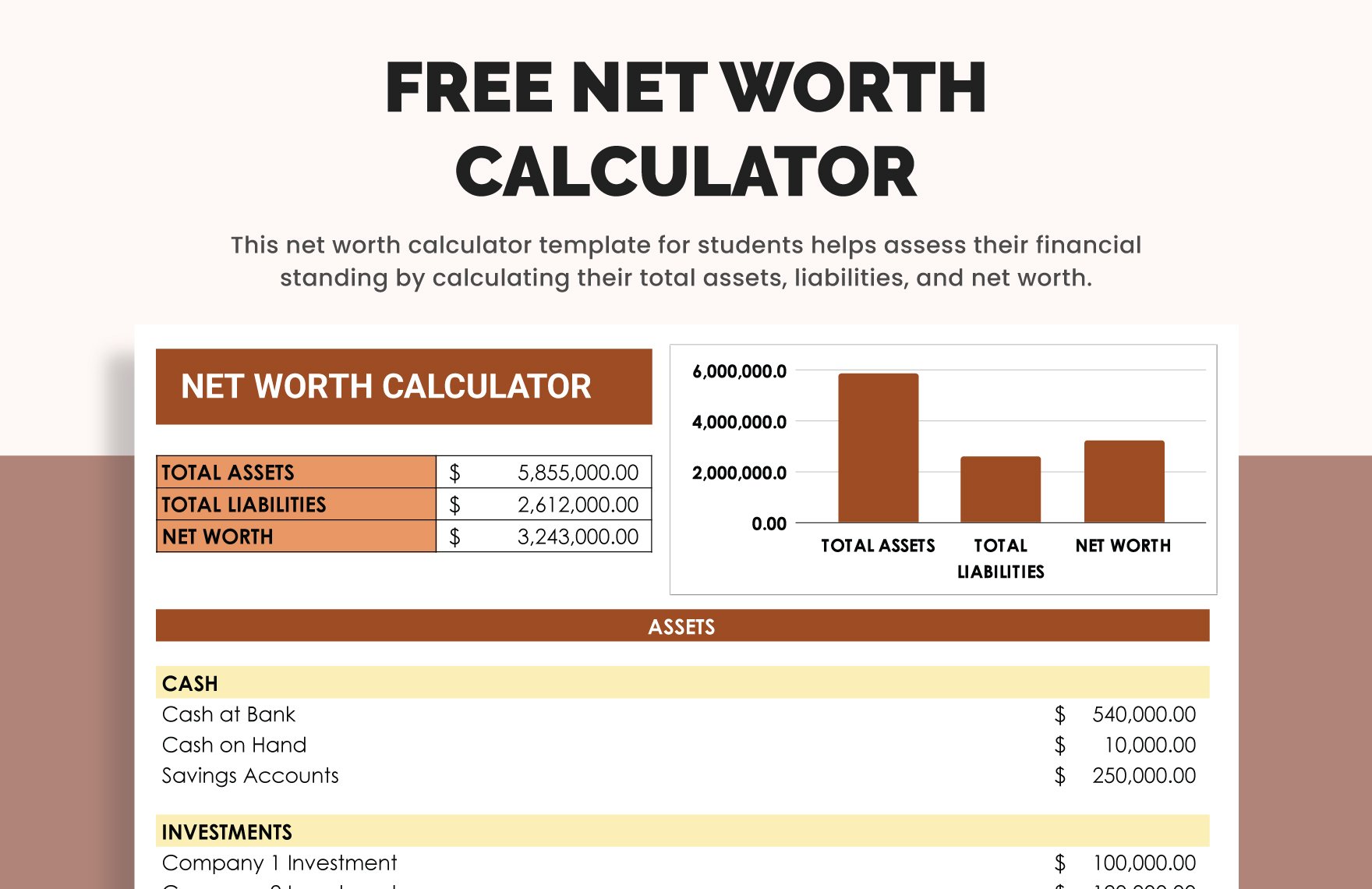
In corporate accounting, the direct equivalent of an individual's "net worth" is Shareholders' Equity (also known as book value or stockholders' equity). It is calculated through the fundamental accounting equation:
$$\text{Net Worth (Shareholders' Equity)} = \text{Total Assets} - \text{Total Liabilities}$$
The Role of Liabilities
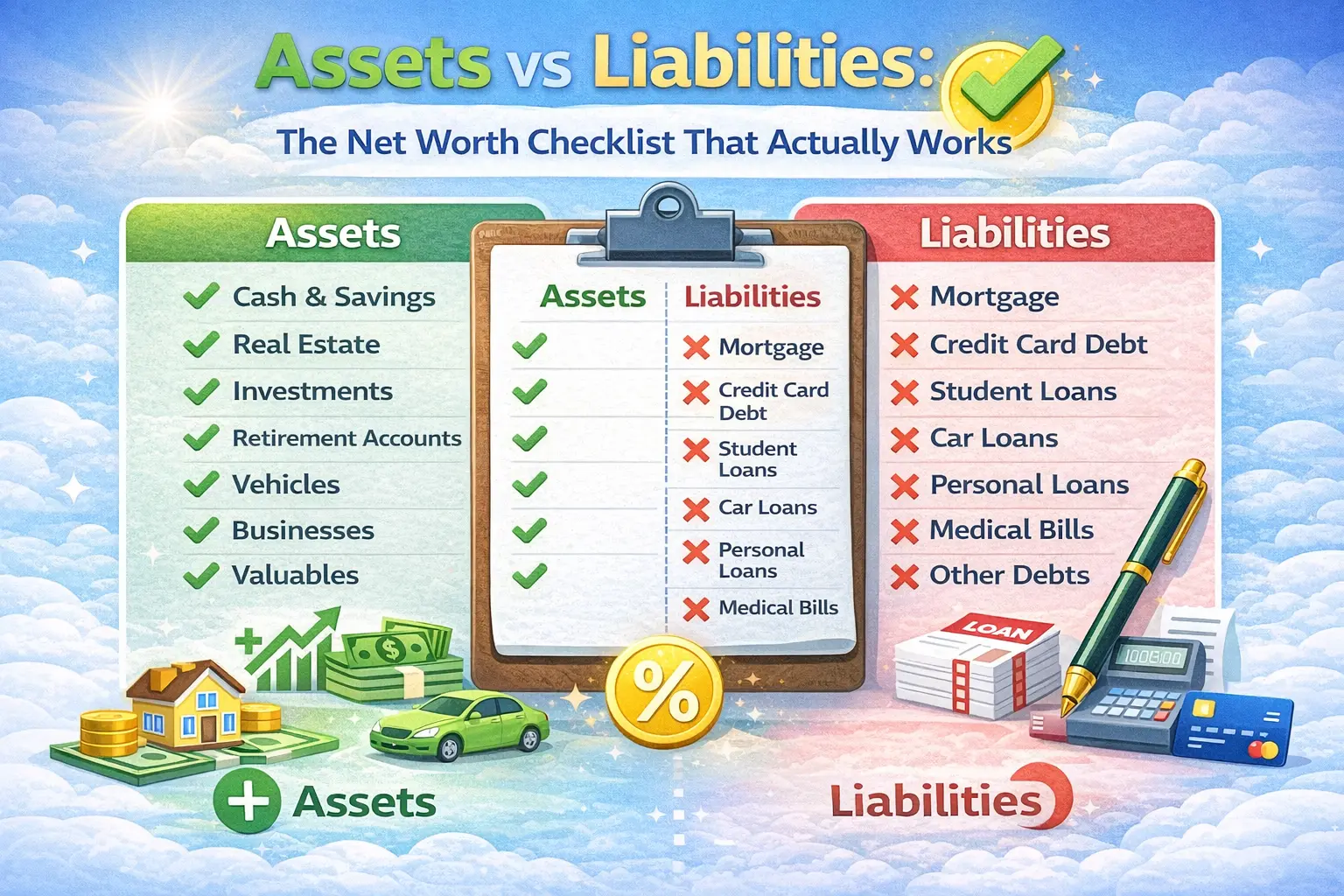
Liabilities are all the debts and obligations that a company owes to outside parties. For Disney, liabilities include:
- Long-term debt (bonds and notes issued to finance operations and acquisitions).
- Accounts payable owed to suppliers and production partners.
- Deferred revenue (such as advance ticket sales for theme parks or annual subscriptions for Disney+ before the service is rendered).
- Pension obligations and lease liabilities.
When financial analysts subtract these total liabilities from Disney's total assets, the remainder is the net worth. This figure belongs entirely to the shareholders of common stock, representing the net book value of their investment in the enterprise.
Total Assets vs. Net Worth: Key Structural Differences
To clarify why these two figures never match on a corporate balance sheet, it is essential to examine their underlying mechanics, purpose, and limitations.
| Feature | Total Assets | Net Worth (Shareholders' Equity) |
|---|---|---|
| Definition | Gross economic resources controlled by the company. | Residual interest after subtracting liabilities from assets. |
| Equation Position | Left side of the balance sheet. | Right side of the balance sheet (along with liabilities). |
| Reflects Debt? | No; measures total holdings regardless of how they were financed. | Yes; directly reduces based on what is owed to creditors. |
| Market Value Correlation | Often lower than market value due to historical cost accounting for real estate and IP. | Often diverges significantly from actual stock market capitalization. |
Why Book Net Worth Differs from Market Capitalization
A common point of confusion for investors is the gap between Disney’s accounting net worth (book value) and its market capitalization (the total dollar value of all its outstanding shares of stock traded on the New York Stock Exchange under the ticker DIS).
- Book Value (Net Worth): Calculated using historical costs. For example, if Disney purchased land in Florida in the 1960s or acquired an animation studio decades ago, those assets are recorded on the balance sheet at their historical purchase price minus accumulated depreciation or amortization, rather than current fair market value.
- Market Capitalization: Forward-looking. It represents what public investors are willing to pay today for future earnings, box office potential, streaming growth, and intellectual property monetization. Consequently, a company like Disney often has a market capitalization that is significantly higher than its accounting net worth.
Disney’s Financial Architecture in Practice
Analyzing Disney through its official financial statements reveals how assets and liabilities interact to shape net worth.
The Asset Heavyweight Nature of Media Empires
Media and entertainment conglomerates require massive capital expenditure. Building a state-of-the-art cruise ship, expanding a theme park land, or financing a multi-million-dollar blockbuster film requires immense upfront capital. Consequently, Disney’s asset base is heavily weighted toward non-current capital investments and intangible intellectual property.
The Impact of Leverage and Debt
Disney routinely utilizes debt financing to fund strategic growth initiatives, such as the massive 2019 acquisition of 21st Century Fox assets. When a company borrows money, its total assets increase (cash or acquired assets go up), but its total liabilities increase by the exact same amount. Therefore, borrowing money does not inherently change net worth on day one, though it increases financial leverage and risk. If the acquired assets fail to generate expected returns, liabilities remain fixed while asset values can be impaired, ultimately eroding net worth.
Frequently Asked Questions
Are total assets the same as a company's net worth?
No. Total assets represent everything a company owns without accounting for what it owes. Net worth (or shareholders' equity) is what remains after subtracting all liabilities and debts from those total assets.
Why is Disney’s market value higher than its accounting net worth?
Accounting rules require most assets—like real estate, equipment, and historical intellectual property—to be recorded at their historical cost minus depreciation. Market capitalization reflects the stock market's forward-looking valuation of Disney's future profitability, brand strength, and growth potential, which far exceeds historical book values.
What is the most valuable asset category for The Walt Disney Company?
While Disney's physical assets (theme parks, resorts, and cruise ships) are immense, its intangible assets and intellectual property—such as the Disney, Pixar, Marvel, Star Wars, and ESPN brands—along with its extensive content libraries, form the core drivers of its long-term economic value.
How do theme park expansions affect Disney's balance sheet?
When Disney builds a new theme park attraction, cash (a current asset) is converted into property, plant, and equipment (a non-current asset). This shifts the composition of total assets rather than changing net worth immediately, provided the project is funded by existing cash reserves rather than new debt.
Conclusion and Next Action
Confusing total assets with net worth obscures a company's true financial standing. Total assets measure the gross scale of what Disney controls, while net worth defines the residual cushion belonging to shareholders after all creditor obligations are settled. When reviewing corporate financial reports or evaluating investment opportunities, always examine the balance sheet in its entirety—comparing assets, liabilities, and equity side by side—rather than relying on a single metric to gauge financial health.