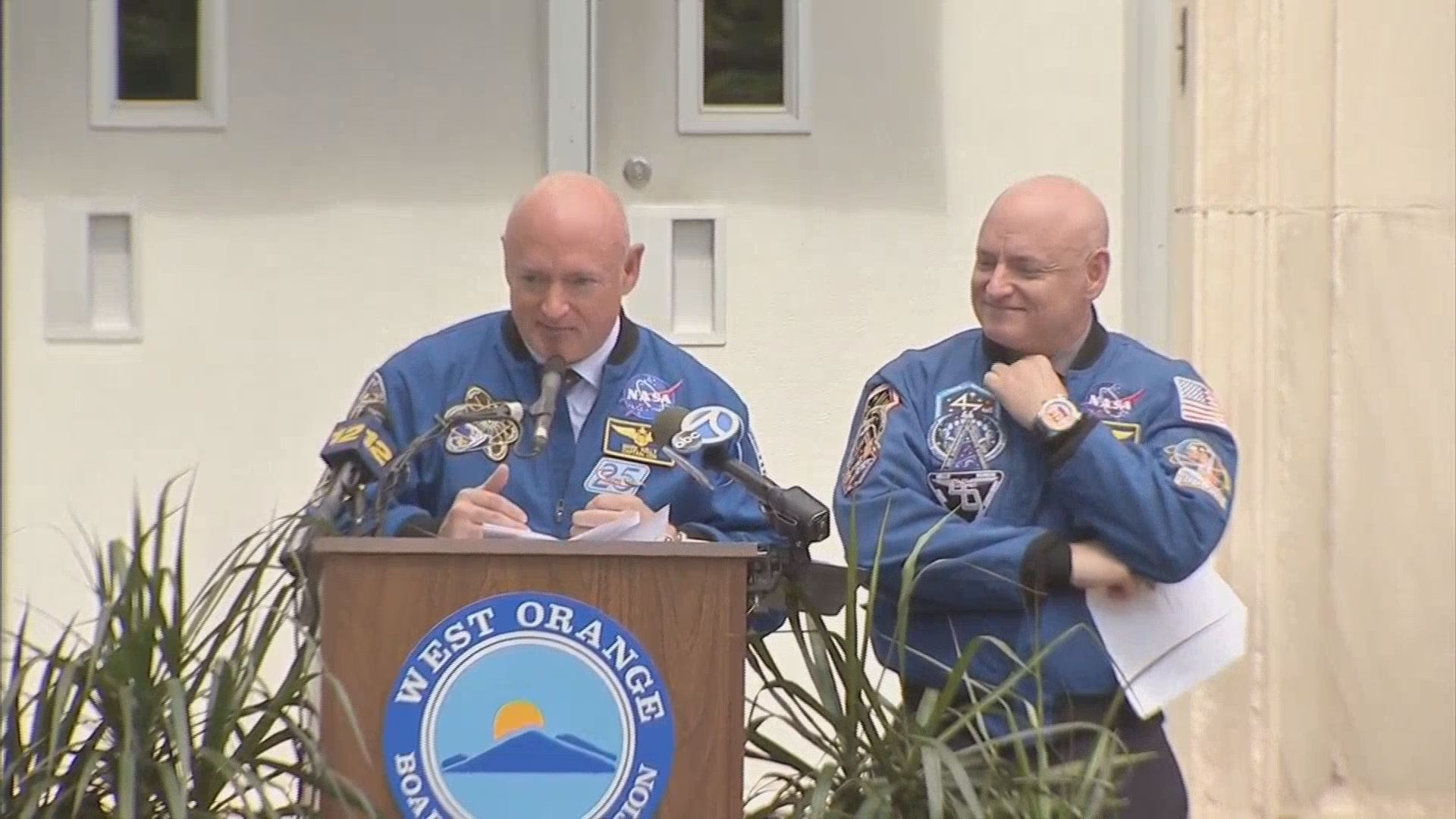
Mark and Scott Kelly are indeed identical twin brothers, a fact that has made them central figures in both aviation history and groundbreaking biological research. Born on February 21, 1964, they are the only siblings to have both traveled into space, providing NASA with a unique opportunity to study the effects of long-term spaceflight on the human body through their identical genetic makeup.
While many people recognize them for their parallel careers as Navy captains and NASA astronauts, their lives have diverged significantly in the years following their retirement from the space agency. As of 2026, Mark Kelly serves as a prominent United States Senator, while Scott Kelly continues his work as an author and global advocate for space exploration and environmental preservation. To understand the significance of the Kelly twins, one must look at their shared beginnings, their independent achievements, and the unprecedented scientific study that used their identical DNA to unlock secrets of human health in microgravity.
The Early Lives of the Kelly Brothers
The story of Mark and Scott Kelly begins in Orange, New Jersey. Born to Richard and Patricia Kelly, both of whom were police officers, the twins were raised in a household that valued public service and discipline. Growing up in West Orange, the brothers were competitive but remarkably similar in their interests, both showing an early aptitude for mathematics and science, though Scott has often admitted in his memoirs that he was the less studious of the two during their early school years.
Their paths toward the stars began with their education. Mark Kelly graduated with highest honors from the United States Merchant Marine Academy in 1986. Scott, inspired by Tom Wolfe’s The Right Stuff, pursued a similar path but through the State University of New York Maritime College, graduating in 1987. Both brothers chose to become naval aviators, a rigorous career path that serves as the primary pipeline for NASA’s pilot-astronauts.
During their time in the Navy, both Mark and Scott flew the F-14 Tomcat and served in various deployments. Mark saw combat during the Gulf War, flying 39 missions in Operation Desert Storm. Their parallel trajectories continued when they were both selected as astronaut candidates in 1996 as part of NASA’s 16th group of astronauts, nicknamed "The Sardines." This selection marked the first time in history that two siblings—let alone identical twins—would enter the astronaut corps together.
Parallel Careers in the Astronaut Corps
Throughout the late 1990s and 2000s, the Kelly twins were fixtures of the Space Shuttle program. While they never flew on the same mission simultaneously—a safety precaution often taken by organizations to protect families—their missions often overlapped in significance.
Mark Kelly’s Missions
Mark Kelly served as a pilot and commander on four different shuttle missions:
- STS-108 (2001): His first flight, which delivered supplies to the International Space Station (ISS).
- STS-121 (2006): A critical "return to flight" mission following the Columbia disaster.
- STS-124 (2008): Delivered the Japanese Experiment Module (Kibo) to the ISS.
- STS-134 (2011): The final flight of the Space Shuttle Endeavour, during which Mark served as the mission commander.
Scott Kelly’s Missions
Scott Kelly’s career eventually shifted toward long-duration missions on the ISS:
- STS-103 (1999): A Hubble Space Telescope servicing mission.
- STS-118 (2007): An assembly mission to the ISS.
- Expedition 25/26 (2010): His first long-duration stay on the ISS.
- The One-Year Mission (2015-2016): A historic 340-day mission that served as the basis for the NASA Twins Study.
By the end of their flying careers, Scott Kelly had spent significantly more time in space (520 total days) compared to Mark (54 total days), primarily due to Scott’s focus on the ISS expeditions.
The NASA Twins Study: A Biological Milestone
The most significant contribution the Kelly brothers made to science is the NASA Twins Study. This research was initiated when Scott Kelly was selected for a nearly year-long mission aboard the ISS starting in 2015. Because Mark and Scott are identical twins, they share nearly 100% of the same genetic code. This allowed scientists to use Mark as a "ground control" while Scott lived in a microgravity environment.
Published in full in the journal Science in 2019, the study involved ten research teams from around the United States. They monitored every aspect of the brothers' physiology, including their gut microbiome, cognitive function, cardiovascular health, and genetic expression.
Key Findings of the Twins Study
The study provided a wealth of data that continues to be analyzed in 2026 as NASA prepares for future missions to Mars. Some of the most notable findings included:
- Telomere Dynamics: One of the most surprising discoveries was that Scott’s telomeres—the protective caps on the ends of chromosomes—actually lengthened while he was in space. Telomeres typically shorten as humans age. However, upon his return to Earth, they shortened rapidly, often ending up shorter than they were before his flight.
- Gene Expression (Epigenetics): While Scott’s DNA did not "mutate" into something new, the expression of his genes changed significantly. Approximately 7% of his gene expression did not return to its pre-flight state even months after returning to Earth. This is a normal biological response to environmental stress, but the scale observed in space was unprecedented.
- Cognitive Decline: Upon returning to Earth, Scott showed a decrease in cognitive speed and accuracy that lasted for several months. Researchers believe this was due to the stresses of re-adapting to Earth’s gravity and the physiological changes the body undergoes during re-entry.
- Immune System Response: The study confirmed that the human immune system remains robust in space. Scott received a flu vaccine while on the ISS, and his body responded exactly as it would have on Earth, a positive sign for long-term interplanetary travel.
Comparing Mark and Scott Kelly
Despite their identical genetics, the two brothers have distinct personalities and have taken very different paths in their post-NASA lives.
| Feature | Mark Kelly | Scott Kelly |
|---|---|---|
| Birth Date | February 21, 1964 | February 21, 1964 |
| Total Days in Space | 54 Days | 520 Days |
| Military Rank | Captain, U.S. Navy (Ret.) | Captain, U.S. Navy (Ret.) |
| Key NASA Role | Commander of STS-134 (Endeavour) | Commander of the One-Year Mission |
| Current Profession (2026) | U.S. Senator from Arizona | Author / Public Speaker |
| Spouse | Gabby Giffords (fmr. Congresswoman) | Amiko Kauderer |
| Focus Area | Public Policy, Veterans, Gun Safety | Space Advocacy, Health, Environment |
Life After NASA: Mark Kelly’s Political Career
Mark Kelly retired from NASA in 2011 to support his wife, former Congresswoman Gabby Giffords, after she survived an assassination attempt in Tucson, Arizona. This life-altering event shifted Mark’s focus toward public service in the legislative branch.
In 2020, Mark Kelly ran for the United States Senate in a special election to fill the seat formerly held by John McCain. He won that election and was subsequently re-elected to a full six-year term in 2022. As a Senator, Mark has leveraged his background as an engineer and astronaut to work on committees related to science, the environment, and national security. In 2026, he remains a central figure in American politics, often cited for his bipartisan approach and his focus on data-driven policy.
His political career has been defined by his advocacy for gun safety legislation—through the organization Giffords, which he co-founded with his wife—as well as his efforts to bolster the domestic semiconductor industry and secure water rights for the American Southwest.
Life After NASA: Scott Kelly’s Scientific Advocacy
Scott Kelly retired from NASA shortly after his one-year mission concluded in 2016. Since then, he has become a prolific author and one of the most recognizable faces in science communication. His memoir, Endurance: A Year in Space, A Lifetime of Discovery, became a global bestseller and provided a raw, honest look at the physical and mental toll of long-duration spaceflight.
In the years leading up to 2026, Scott has remained active in the public eye, frequently appearing as a guest expert on news programs to discuss the progress of the Artemis program and the commercialization of Low Earth Orbit (LEO). He has also been a vocal advocate for international cooperation in space, especially during periods of geopolitical tension.
Scott’s contributions to the Twins Study remain his most enduring legacy. He continues to participate in follow-up medical examinations, providing longitudinal data that helps doctors understand the long-term aging process of humans who have been exposed to cosmic radiation.
Common Misconceptions About the Kelly Twins
Given the complexity of the NASA Twins Study, several myths have persisted in the public consciousness.
"Scott Kelly’s DNA changed by 7%"
This is perhaps the most common misunderstanding. Scott’s actual DNA sequence did not change by 7%. Rather, 7% of his gene expression (how genes are turned "on" or "off") remained altered for a period after his return. He remains the identical twin of Mark Kelly; he did not become a different species or lose his biological relationship to his brother.
"They are fraternal twins"
Because they look slightly different today—partly due to the natural aging process and the different physical stresses they have endured—some people mistakenly believe they are fraternal. Genomic testing conducted by NASA has confirmed they are monozygotic (identical) twins.
"They both went to space at the same time"
As mentioned previously, NASA never launched the brothers on the same mission. This is standard protocol for many high-risk professions involving family members. However, their ground-to-space communications during Scott's year-long mission were a frequent highlight of NASA's public outreach.
FAQs
Are Mark and Scott Kelly identical or fraternal twins?
They are identical (monozygotic) twins. This means they originated from a single fertilized egg that split into two, resulting in nearly identical genetic blueprints. This specific biological trait was the foundation of the 2015-2016 NASA Twins Study.
How much time did each Kelly twin spend in space?
Scott Kelly spent a total of 520 days in space over the course of four missions. Mark Kelly spent a total of 54 days in space over his four shuttle missions. Scott's significantly higher total is due to his participation in long-duration stays on the International Space Station.
Who is older, Mark or Scott?
Mark Kelly is the older twin, born six minutes before Scott on February 21, 1964.
Did the twins' height change after being in space?
Yes, but the change was temporary. While Scott was on the ISS for a year, his spine lengthened in the absence of gravity, making him approximately two inches taller than Mark. However, within a short time of returning to Earth's gravity, his spine compressed back to its normal length, and he returned to his original height.
Is Mark Kelly still in the U.S. Senate in 2026?
Yes, Mark Kelly is currently serving his full six-year term in the United States Senate, having been re-elected in the 2022 midterm elections. He continues to represent the state of Arizona.
The Future of the Kelly Legacy
As we look forward from 2026, the legacy of Mark and Scott Kelly remains a cornerstone of the "human element" of space exploration. The data gathered from their bodies is currently being used to develop countermeasures for the health risks of deep-space travel, including radiation shielding and specialized exercise equipment for Mars-bound astronauts.
Their lives demonstrate the two different ways that a background in science and exploration can be applied to bettering humanity: one through the halls of government and policy, and the other through the pursuit of scientific knowledge and public inspiration. Whether through Mark’s legislative work or Scott’s biological contributions, the Kelly twins have ensured their place in history as pioneers of the 21st century.
For those interested in following their ongoing work, Mark Kelly’s Senate office provides regular updates on legislative matters, while Scott Kelly remains an active voice on social media and the global lecture circuit, sharing the lessons learned from a year spent off-planet.