In 2026, manufacturing solar panel installations are highly worth the investment for most facilities, offering a typical internal rate of return (IRR) between 12% and 25%. Beyond slashing escalating grid energy costs, solar provides industrial operations with critical protection against peak demand charges, enhances ESG compliance for supply chain requirements, and utilizes significant federal tax credits.
The manufacturing sector is uniquely positioned to benefit from solar energy. Unlike residential or small commercial setups, industrial facilities often possess the three primary ingredients for a successful solar project: massive unshaded roof or ground space, high and consistent energy demand, and access to sophisticated financial structures. As we navigate the energy landscape of 2026, the question for most manufacturers has shifted from "Does it work?" to "How quickly can we scale it?"
The Economic Reality of Industrial Energy in 2026
The volatility of the global energy market over the last several years has placed manufacturers in a precarious position. For many industrial sectors, electricity represents one of the top three operational expenses. As the grid transitions toward electrification and faces increased pressure from data centers and electric vehicle infrastructure, utility rates for large-scale consumers have trended upward.
Solar installations allow manufacturers to "hedge" their energy costs. By generating power on-site, a facility locks in a predetermined electricity rate for the 25- to 30-year lifespan of the system. In 2026, the levelized cost of energy (LCOE) for industrial solar is frequently below $0.05 per kWh in many jurisdictions, significantly lower than the average industrial retail rate provided by utilities.
Furthermore, the structure of industrial utility bills makes solar particularly effective. Most manufacturers pay demand charges—fees based on the highest amount of power drawn during a single 15-minute interval. By integrating solar with battery energy storage systems (BESS), manufacturers can engage in "peak shaving," using stored solar energy to dampen those expensive spikes in demand, often leading to a 20% to 40% reduction in the total utility bill beyond simple energy consumption savings.
Financial Incentives and the 2026 Regulatory Landscape
The financial viability of solar in 2026 remains anchored by robust federal and state incentives. The primary driver continues to be the Investment Tax Credit (ITC), which was extended and stabilized by legislative actions in the early 2020s.
The Investment Tax Credit (ITC) and Production Tax Credit (PTC)
Under current 2026 guidelines, most manufacturing solar projects qualify for a base 30% federal tax credit. However, many projects can reach a 40% or even 50% credit by meeting "bonus" criteria:
- Domestic Content Bonus: If a specific percentage of the solar components (steel, trackers, and modules) are manufactured in the United States, the credit increases.
- Energy Communities: Projects located in areas historically dependent on fossil fuel industries or on brownfield sites qualify for an additional 10% kicker.
MACRS Depreciation
Manufacturers can also take advantage of the Modified Accelerated Cost Recovery System (MACRS). This allows businesses to depreciate the solar asset over a five-year period, significantly improving cash flow in the early years of the project. In many cases, the combination of the ITC and the first-year bonus depreciation can recover 50% or more of the total system cost within the first 12 to 18 months of operation.
RECs and SRECs
Renewable Energy Certificates (RECs) represent the environmental attributes of the power generated. In states with aggressive Renewable Portfolio Standards (RPS), these certificates can be sold to utilities, providing a secondary, recurring revenue stream that further shortens the payback period.
Technical Feasibility: Is Your Facility Ready?
While the financial metrics are often compelling, the physical and technical requirements of the facility dictate the ultimate feasibility. A manufacturing plant is a complex environment where solar must integrate without disrupting production.
Structural Integrity of Industrial Roofs
The most common installation site is the facility roof. Most modern warehouses and factories use standing seam metal roofs or TPO (Thermoplastic Polyolefin) membranes. In 2026, mounting technology has advanced to allow for "non-penetrating" attachments on metal roofs, which preserve the roof warranty and reduce the risk of leaks. However, a structural engineering firm must verify that the roof can handle the "dead load" of the panels and the "wind load" or "snow load" specific to the region. If a roof is older than 10–15 years, it is usually recommended to replace the roofing material simultaneously with the solar installation.
Electrical Infrastructure and Interconnection
A manufacturing solar array is not a "plug-and-play" device. It requires a sophisticated interconnection with the facility’s main switchgear. This often involves:
- Interconnection Studies: The local utility must analyze the grid's capacity to handle the solar inflow. In 2026, some regions face "grid congestion," which can delay projects or require the manufacturer to pay for transformer upgrades.
- Voltage Matching: Industrial facilities often operate at 480V or higher. Solar inverters must be sized and configured to match these industrial voltages to minimize line losses.
- Space for Inverters and Storage: While the panels live on the roof, the inverters and potential battery cabinets require footprint at ground level, ideally in a climate-controlled or well-ventilated space near the main electrical room.
Comparing Financial Models: Ownership vs. Third-Party
Manufacturers have several paths to going solar, each with different impacts on the balance sheet and risk profile.
| Feature | Direct Ownership (CAPEX) | Solar Lease (OPEX) | Power Purchase Agreement (PPA) |
|---|---|---|---|
| Upfront Cost | High (Full system cost) | Zero to Low | Zero |
| Tax Benefits | Claimed by Manufacturer | Claimed by Provider | Claimed by Provider |
| Maintenance | Manufacturer Responsibility | Provider Responsibility | Provider Responsibility |
| Energy Price | $0 (Free after payback) | Fixed Monthly Payment | Fixed Rate per kWh |
| Balance Sheet | Asset & Potential Debt | Operating Lease Liability | Off-Balance Sheet |
| Long-term ROI | Highest | Moderate | Lowest (but lowest risk) |
Direct Ownership is generally considered the best "value" for manufacturers with the available capital and tax appetite. It offers the shortest path to "free" energy. However, PPAs are increasingly popular in 2026 for CFOs who prefer to preserve capital for core manufacturing equipment while still achieving immediate energy savings and sustainability goals.
Operational Benefits: Resilience and ESG
The "worth" of a solar installation extends beyond the utility bill. In the current 2026 industrial climate, two factors have moved from "nice-to-have" to "mission-critical."
Power Quality and Resilience
Manufacturing equipment—especially CNC machines, robotics, and high-precision sensors—is sensitive to power fluctuations. Modern commercial inverters provide "grid-forming" capabilities and power factor correction, which can improve the overall quality of power within the plant. When paired with a Microgrid Controller, solar and storage allow a facility to "island" during a grid outage, keeping critical lines running even when the main grid fails. This prevents the catastrophic costs associated with spoiled raw materials or damaged tooling during sudden blackouts.
ESG and Supply Chain Pressure
Major global retailers and automotive OEMs now require their Tier 1 and Tier 2 suppliers to report their carbon footprint. A manufacturer without a clear decarbonization strategy risk losing contracts to "greener" competitors. Solar is the most visible and verifiable way to demonstrate a commitment to ESG (Environmental, Social, and Governance) goals. Because solar produces no emissions during operation, it directly reduces the facility’s Scope 2 emissions, which are often the largest part of a manufacturer's carbon profile.
Common Pitfalls and Challenges
Despite the benefits, solar for manufacturing is not without risks. Successful implementation requires navigating several potential roadblocks:
- Interconnection Delays: As of 2026, utility companies in some regions are overwhelmed with interconnection requests. A project that is "shovel-ready" might still wait 12 to 18 months for the final permission to operate (PTO).
- Operational Interference: Construction on the roof can create noise, dust, and safety hazards. Choosing a contractor experienced in "active-site" industrial installations is crucial to avoid production downtime.
- Technological Obsolescence: While solar panels are durable, the electronics (inverters) have a shorter lifespan (10–15 years). Manufacturers must account for a mid-life inverter replacement in their long-term financial models.
- Permitting and Zoning: Local jurisdictions may have specific requirements regarding fire setbacks on roofs or landscaping for ground-mount systems. Navigating these codes requires local expertise.
Frequently Asked Questions
How long is the typical payback period for a manufacturing solar system in 2026?
For a direct-purchase system, the payback period typically ranges from 3 to 6 years. This varies based on local electricity rates, the availability of state-level rebates, and the facility's ability to utilize the 30%+ federal tax credit. After the payback period, the electricity generated is essentially free for the remainder of the system's 25-plus-year life.
Can solar power a 24/7 manufacturing operation?
Solar only generates power during daylight hours; however, it can still significantly impact a 24/7 operation. During the day, the solar offsets the highest-cost "on-peak" energy. To cover nighttime loads, manufacturers must either remain connected to the grid or invest in a Battery Energy Storage System (BESS). While a 100% "off-grid" manufacturing plant is rare and often cost-prohibitive, many 2026 facilities achieve 50-70% energy independence through solar-plus-storage.
What maintenance is required for an industrial solar array?
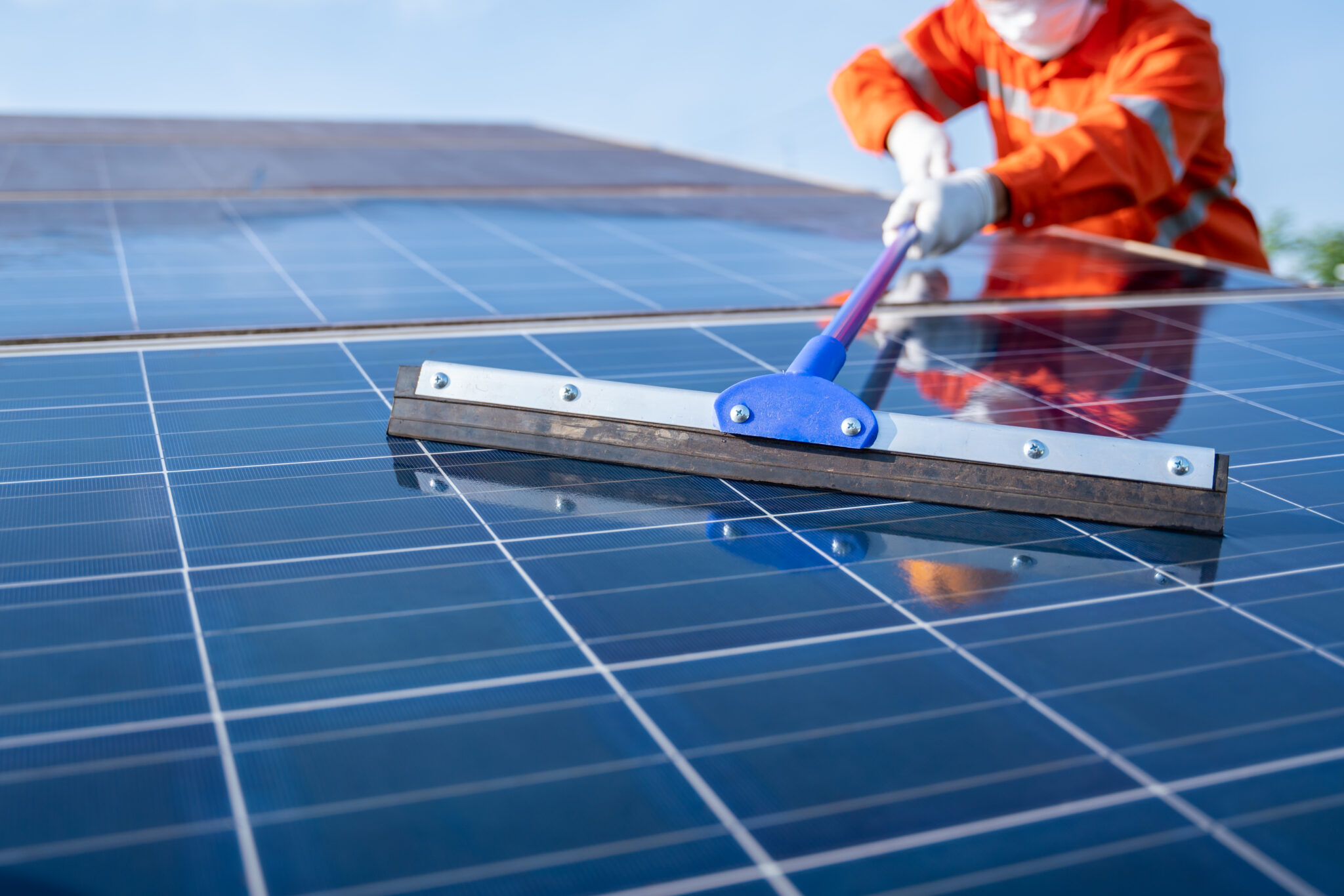
Industrial solar systems are relatively low-maintenance because they have no moving parts (unless using trackers). Standard maintenance involves bi-annual cleanings (especially in dusty manufacturing environments), annual infrared drone inspections to identify "hot spots" or failing cells, and routine electrical testing of the inverters and switchgear. Total annual O&M (Operations and Maintenance) costs typically equate to about 1% of the initial system cost.
Does solar increase the property value of a manufacturing facility?
Yes. Studies have shown that commercial and industrial properties with solar installations command higher market values and attract higher-quality tenants. For an owner-occupier, the solar array increases the Net Operating Income (NOI) by reducing fixed expenses, which directly correlates to a higher valuation based on traditional capitalization (cap) rates.
What happens if we need to move or expand the facility?
Solar systems are modular. If a facility expands, the array can often be expanded as well, provided there is additional roof space and electrical capacity. If a company moves, the solar asset is typically sold with the building. Because of the long-term energy savings, the presence of a solar array is a significant selling point for industrial real estate.
Strategic Recommendation: How to Proceed
For manufacturers evaluating solar in 2026, the data suggests that now is the optimal time to act. The combination of mature technology, stabilized supply chains, and aggressive tax incentives creates a "Goldilocks" window for high ROI.
The first step is a comprehensive feasibility study that includes a 12-month interval data analysis of your utility bills. This allows engineers to size the system not just for your total energy use, but for your specific load profile. Avoid "off-the-shelf" quotes; manufacturing solar requires a custom engineering approach that considers your machinery’s specific power needs and your company’s long-term tax strategy.
By treating solar as a strategic capital improvement rather than a mere utility hedge, manufacturers can secure a competitive advantage that lasts for decades, insulating themselves from the energy uncertainties of the late 2020s and beyond.