Navigating the intersection of attorney-client privilege and workers' compensation requires a clear understanding of how standard rules of confidentiality apply to workplace injury claims, employer investigations, and independent medical examinations. While communications between an injured worker and their retained legal counsel remain strictly protected, unique statutory exceptions, insurer communications, and medical disclosures often create complex boundaries during a claim lifecycle.
Understanding the Foundation of Attorney-Client Privilege
Attorney-client privilege is one of the oldest and most sacred privileges recognized in Anglo-American jurisprudence. Its primary purpose is to encourage full and frank communication between attorneys and their clients, promoting broader public interests in the observance of law and administration of justice. In the context of workers' compensation law, this privilege protects confidential communications made for the purpose of securing legal advice between a covered employee and their retained legal counsel.
However, applying this traditional legal doctrine to a statutory workers' compensation system involves several unique considerations. Unlike a traditional civil tort lawsuit where two private parties face off in court, a workers' compensation claim often proceeds through a specialized administrative agency or commission. This administrative environment introduces insurers, case managers, employer representatives, and independent medical examiners into a sphere that traditionally remains private between a lawyer and a client.
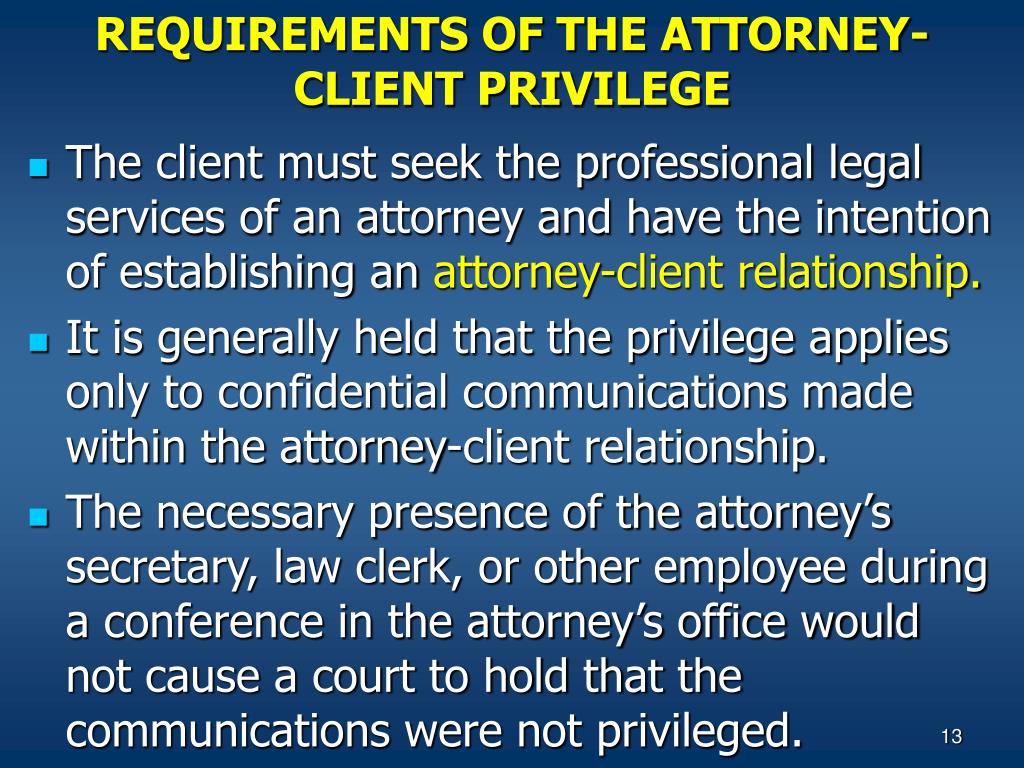
Furthermore, the privilege only attaches under specific conditions. There must be an established attorney-client relationship, the communication must be confidential, and the communication must be made primarily for the purpose of seeking or rendering legal advice. If an injured employee discusses their case in the presence of unrepresented third parties, such as a union representative who is not acting as an agent of the attorney, or a coworker, the shield of privilege may be inadvertently waived.
How Workers' Compensation Systems Impact Confidentiality
Workers' compensation is a no-fault administrative system governed by state-specific statutes rather than uniform federal rules. Because each jurisdiction maintains its own unique code, administrative rules, and case law precedents, the exact boundaries of attorney-client privilege can vary significantly depending on where the injury occurred and where the claim is filed.
In a typical workers' compensation lifecycle, an injured worker reports the injury, the employer or its insurance carrier initiates an investigation, and medical treatment is authorized. Throughout this process, multiple actors request documentation, statements, and medical records.
| Participant Type | Role in Claim | Privilege Status of Communications |
|---|---|---|
| Retained Attorney | Provides legal representation and advocacy | Fully protected by attorney-client privilege |
| Employer/Supervisor | Manages daily operations and initial injury reports | Not privileged; statements can be used by the defense |
| Insurance Adjuster | Evaluates and processes the financial claim | Not privileged; communications are part of the business record |
| Treating Physician | Provides medical diagnosis and care | Subject to medical privacy rules (HIPAA), but often waived regarding the injury |
The administrative nature of these proceedings means that rules of evidence are sometimes more relaxed than in civil court, yet statutory disclosure requirements remain strict. Injured workers must often sign medical authorizations that release relevant health records to the insurer or employer. Navigating these requirements without compromising confidential legal strategies requires careful coordination between the claimant and their legal counsel.
The Intersection of Medical Records and Legal Privilege
One of the most frequent points of friction in workers' compensation cases involves the relationship between attorney-client privilege, the work product doctrine, and medical records. When an employee files a claim for workers' compensation benefits, they generally place their physical or mental condition at issue. This legal reality triggers a broad waiver of the doctor-patient privilege concerning the specific body parts or conditions related to the workplace injury.
However, placing a medical condition at issue does not automatically waive the attorney-client privilege or the work product doctrine. For example, if an attorney hires an independent medical expert to evaluate the worker's condition strictly for the purpose of litigation strategy and consulting—rather than for treatment or submission as a primary medical-legal report—those communications and internal expert notes may remain shielded under the work product doctrine.
Conversely, medical reports generated by treating physicians or designated panel doctors are routinely shared with the employer and the insurance carrier. These documents are evidentiary in nature and fall outside the scope of attorney-client confidentiality. It is vital for injured workers to distinguish between therapeutic communications with a doctor, which serve treatment purposes, and strategic communications with a lawyer, which serve legal advocacy purposes.
Employer Investigations and Internal Communications
Employers and their insurance carriers frequently conduct internal investigations following a workplace accident. These investigations may include gathering witness statements, reviewing security footage, and interviewing supervisors. Injured workers sometimes assume that statements made to company representatives or company-hired medical professionals carry the same confidentiality protections as communications with their own attorney. This is a dangerous misconception.
- Company-Hired Physicians: Doctors selected and paid by the employer or workers' compensation insurance carrier evaluate the worker to determine work capacity and impairment ratings. Communications with these physicians are reportable to the employer and insurer; they are not confidential legal consultations.
- Employer Investigations: Human resources personnel and risk management teams investigate accidents to evaluate liability, safety compliance, and potential defenses. Statements made by an employee to these company agents can be used by the employer to deny or limit a claim.
- Insurance Recorded Statements: Adjusters routinely request recorded statements from claimants shortly after an injury. These recordings are business records for the insurance company, completely unprotected by any legal privilege, and can be used to impeach a claimant's testimony later in the proceedings.
Securing independent legal representation ensures that an injured worker has a dedicated advocate whose communications are shielded by absolute privilege, counterbalancing the investigative machinery of the employer and the insurance carrier.
Common Pitfalls and Accidental Waivers of Privilege
Even when an attorney-client relationship is firmly established, claimants can inadvertently compromise their privilege through everyday actions, digital communications, and poorly managed discussions. Because the privilege belongs to the client, any voluntary disclosure of confidential legal advice to an unauthorized third party can destroy the protection.
Using Employer-Provided Devices
Many employees communicate with their attorneys using company-owned smartphones, corporate email addresses, or workplace computers. Most employers maintain explicit electronic monitoring policies and retain legal ownership of these communication channels. Courts frequently rule that employees lack a reasonable expectation of privacy when using employer-owned equipment, effectively waiving attorney-client privilege for those messages. Claimants should always use personal, secure communication channels when corresponding with legal counsel.
Involving Third Parties in Consultations
Bringing a friend, family member, or coworker into meetings with legal counsel can jeopardize privilege unless that individual acts as a necessary agent or interpreter. While spouses often participate in these discussions without destroying privilege in certain jurisdictions, relying on this exception is risky. Whenever possible, privileged communications should occur solely between the attorney and the client.
Social Media and Public Disclosures
Posting details about an ongoing workers' compensation claim or discussing legal strategies on public social media platforms can severely damage a case. Defense attorneys routinely comb through public and semi-private social media profiles for admissions, contradictions, or disclosures that undermine the confidentiality of legal arguments.
Frequently Asked Questions
Does attorney-client privilege apply to communications with a workers' compensation case manager?
No. Case managers—whether independent, employer-assigned, or insurer-provided—are not attorneys. Communications with a case manager are not privileged, and case managers frequently report their observations, statements made by the worker, and compliance details directly to the insurance adjuster.
Can an insurance company subpoena my attorney's file?
Generally, no. Files, notes, research, and internal communications generated by an attorney or their staff are protected by the work product doctrine and attorney-client privilege. An insurance carrier cannot simply subpoena an opposing attorney's file to discover legal strategy or confidential client notes.
Are text messages and emails with my lawyer protected?
Yes, provided they are sent through secure, private channels (such as personal email accounts or encrypted messaging apps) and involve requests for or transmittal of legal advice. Communications sent via employer email servers or devices typically lose this protection due to corporate monitoring policies.
What happens if I accidentally share a privileged communication with my employer?
Voluntary disclosure of a privileged communication to an opposing party or unrepresented third party usually constitutes a waiver of the privilege regarding that specific communication, and sometimes surrounding topics on the same subject matter. It is critical to consult legal counsel before sharing any correspondence related to your case.
Does the privilege survive the conclusion of my workers' compensation case?
Yes. Attorney-client privilege is perpetual. The duty of confidentiality and the legal protection afforded to confidential communications survive the final settlement, closure, or adjudication of a workers' compensation claim indefinitely.
Practical Next Steps for Injured Workers
Protecting your legal rights during a workers' compensation claim requires vigilance and strict adherence to communication protocols. If you have sustained a workplace injury, retain qualified legal counsel as early as possible to establish a protected advisory relationship. Always communicate with your attorney through secure personal devices, avoid discussing legal advice with coworkers, insurance adjusters, or company-hired medical personnel, and consult your lawyer before signing broad medical or financial authorization releases. By maintaining these boundaries, you safeguard the confidentiality required to build an effective claim strategy.