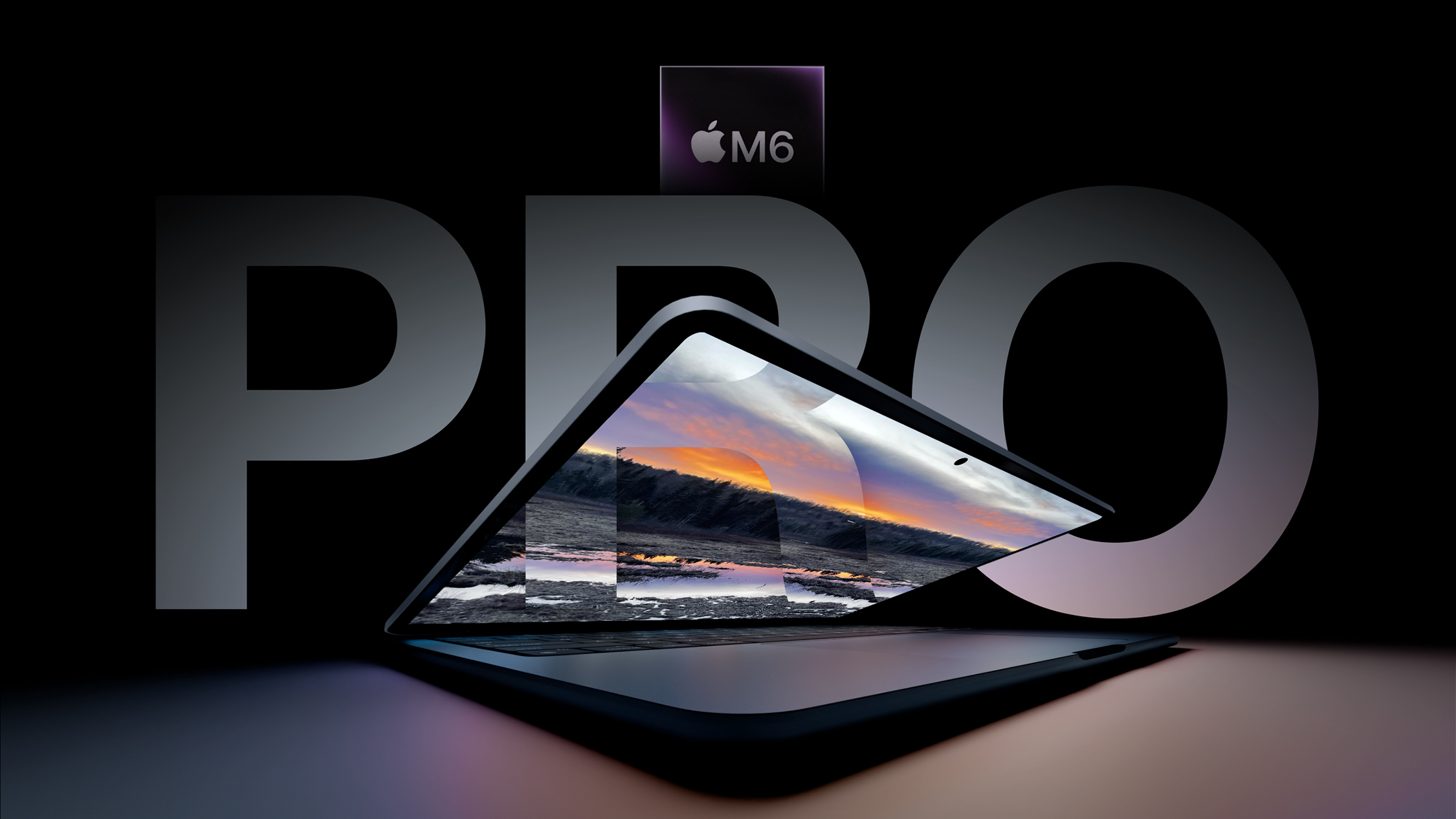
Apple has clarified the release window for the next-generation 14-inch and 16-inch MacBook Pro models, pointing toward a launch in the fourth quarter of 2026. This upcoming cycle is expected to introduce the high-performance M6 Pro and M6 Max chips, alongside a significant transition to OLED display technology for the professional laptop lineup.
The MacBook Pro has long served as the benchmark for mobile workstations, and the 2026 roadmap represents one of the most substantial shifts since the transition to Apple Silicon began in late 2020. For professionals in video production, software development, and 3D rendering, the timing of these releases is critical for hardware lifecycle planning. Based on supply chain updates and historical cadence, the "clarified" timeline suggests Apple is returning to a consistent annual-to-eighteen-month refresh cycle, prioritizing display efficiency and thermal management in the forthcoming 2026 models.
The 2026 MacBook Pro Roadmap: A Focused Timeline
The primary question surrounding Apple’s professional hardware is no longer if it will be updated, but precisely when the next architectural leap will occur. As of early 2026, the current market is served by the M5-series MacBook Pros, which debuted in late 2025. However, recent clarifications from display industry analysts and supply chain reports indicate that the "true" next-generation refresh—defined by a chassis refinement and display overhaul—is scheduled for the latter half of 2026.
Historically, Apple has utilized October or November events to showcase its most powerful portable computers. The 2026 release follows this established pattern. By aligning the M6 Pro and M6 Max launch with the holiday shopping season, Apple maximizes its fiscal year-end revenue while providing corporate clients with a clear window for year-end hardware acquisitions.
Why 2026 is a "Pivot" Year
The clarification of the 2026 date is significant because it aligns several technological milestones. For the past several years, the MacBook Pro has utilized mini-LED technology (marketed as Liquid Retina XDR). While impressive, the industry has been moving toward OLED (Organic Light Emitting Diode) for its superior contrast ratios and power efficiency. The 2026 models are widely expected to be the first professional laptops from Apple to feature tandem OLED panels, similar to the technology introduced in the 2024 iPad Pro M4.
The Shift to OLED Display Technology
One of the most critical aspects of the clarified 2026 release date is the readiness of Apple’s display suppliers. Sources within the supply chain, including reports from Display Supply Chain Consultants (DSCC), have highlighted that high-volume production of 14-inch and 16-inch OLED panels is slated to reach maturity by mid-2026.
Benefits of the OLED Transition
The move from mini-LED to OLED is not merely a lateral move; it addresses several long-standing professional critiques of the current display stack:
- Elimination of Blooming: While mini-LED uses thousands of local dimming zones, it can still produce a "halo" effect around bright objects on dark backgrounds. OLED's per-pixel dimming eliminates this entirely.
- Response Times: OLED panels offer nearly instantaneous response times, which is a boon for video editors working with high-frame-rate footage and for reducing motion blur in UI animations.
- Power Consumption: OLED is inherently more efficient for darker UI elements, as pixels are completely turned off to achieve black levels. This is expected to push MacBook Pro battery life even closer to the 24-hour mark for standard productivity tasks.
- Thinner Profile: OLED panels do not require a separate backlight layer, which may allow Apple to further reduce the thickness of the MacBook Pro lid, contributing to a more refined aesthetic without sacrificing structural integrity.
Tandem OLED Implementation
Expectations are high that Apple will utilize a "tandem" structure for these panels. By stacking two layers of light-emitting pixels, the display can achieve higher peak brightness levels—necessary for HDR content—while doubling the lifespan of the panel. This is a critical requirement for a "Pro" machine that may be used for 10 or more hours a day at high brightness.
Silicon Evolution: M6 Pro and M6 Max
The heart of the 2026 MacBook Pro will be the M6-series silicon. Clarifications regarding the release date also shed light on the chip manufacturing schedule at TSMC (Taiwan Semiconductor Manufacturing Company).
2nm Process Integration
The 2026 M6 chips are anticipated to be among the first consumer processors to leverage a refined 2-nanometer (2nm) or an ultra-refined 3nm "GAA" (Gate-All-Around) transistor architecture. This technical shift allows for more transistors in a smaller area, leading to:
- Higher Compute Density: Expect a 15-20% increase in CPU performance over the M5 series, specifically in multi-core workloads like code compilation and 3D modeling.
- AI and Neural Engine Enhancements: As "Apple Intelligence" becomes more deeply integrated into macOS, the M6 will likely feature a massive leap in TOPS (Trillions of Operations Per Second) to handle local LLMs (Large Language Models) and generative video tools without relying on cloud processing.
- GPU Advancements: Hardware-accelerated ray tracing and mesh shading, introduced in earlier generations, will see increased execution unit counts, making the MacBook Pro a more viable competitor to high-end dedicated mobile GPUs from NVIDIA.
Technical Specifications Comparison
To understand where the 2026 MacBook Pro sits in the current lineup, it is helpful to compare the projected specifications of the M6 models against the previous two generations.
| Feature | MacBook Pro (M4 Series - 2024) | MacBook Pro (M5 Series - 2025) | MacBook Pro (M6 Series - 2026) |
|---|---|---|---|
| Display Tech | Liquid Retina XDR (Mini-LED) | Liquid Retina XDR (Mini-LED) | Tandem OLED |
| Processor | M4, M4 Pro, M4 Max | M5, M5 Pro, M5 Max | M6, M6 Pro, M6 Max |
| Manufacturing Node | 3nm (N3E) | 3nm (N3P) | 2nm / Refined 3nm |
| Max Unified Memory | 128GB | 128GB | 192GB+ |
| Connectivity | Thunderbolt 4 / Wi-Fi 6E | Thunderbolt 5 / Wi-Fi 7 | Thunderbolt 5 / Wi-Fi 7+ |
| Peak Brightness | 1600 nits (HDR) | 1600 nits (HDR) | 2000+ nits (HDR) |
| Typical Battery Life | Up to 22 Hours | Up to 24 Hours | Up to 26 Hours |
Pricing and Configuration Strategies
Apple’s pricing strategy for the MacBook Pro has remained relatively stable since the 2021 redesign, but the 2026 OLED transition may introduce a slight price adjustment. High-quality OLED panels of this size are more expensive to produce than the outgoing mini-LED units.
Expected Entry Points
In 2026, the 14-inch MacBook Pro (base M6) is expected to maintain a starting price of approximately $1,599, targeted at students and creative enthusiasts. However, the high-end M6 Pro and M6 Max configurations, which are the true "workhorse" models, are projected to start at $1,999 for the 14-inch and $2,499 for the 16-inch model.
Memory and Storage Tiers
A significant point of clarification for the 2026 models is the potential for a higher base memory configuration. With the increasing demands of on-device AI, industry experts anticipate that Apple may finally move the base "Pro" models to 24GB or 32GB of unified memory as standard, departing from the long-standing 18GB entry point of previous years.
Connectivity and Port Layout
The 2026 refresh is expected to fully embrace the Thunderbolt 5 standard across all Pro and Max configurations. Thunderbolt 5 represents a massive leap in bandwidth, offering up to 120Gbps for video-intensive tasks—triple the capacity of Thunderbolt 4.
The Impact of Thunderbolt 5
For the professional user, this means:
- Multi-Monitor Support: The ability to drive multiple 8K displays at high refresh rates through a single cable.
- External Storage Speeds: Faster data transfer for editors working directly off NVMe RAID arrays.
- Enhanced Docking: More power delivery and data throughput for complex desktop setups.
The physical port layout is expected to remain consistent with the current design: three Thunderbolt ports, an HDMI 2.1 port, an SDXC card slot, and the MagSafe 3 charging port. While Apple occasionally updates the HDMI spec, the 2026 models will likely prioritize the internal display and Thunderbolt enhancements.
Should You Wait for the 2026 MacBook Pro?
The "clarified" 2026 release date creates a dilemma for buyers currently using older M1 or Intel-based Macs. Deciding whether to upgrade now or wait depends heavily on your current hardware performance and your specific needs regarding display quality.
Reasons to Buy Now (2025/Early 2026)
If you are currently using an Intel-based MacBook Pro or a first-generation M1 Pro, the performance gains available in the M5 series (the current latest model) are already monumental. Waiting an additional 6–10 months for the OLED display may not be practical if your current machine is hindering your income or productivity. The M5 series offers exceptional efficiency and is more than capable of handling high-resolution video editing and complex coding environments.
Reasons to Wait for the 2026 Refresh
If your work requires perfect color accuracy and black levels (e.g., professional color grading or high-end HDR photography), the transition to OLED is worth the wait. Furthermore, if you are looking for a machine that will last the next 5–7 years, the M6's transition to a 2nm process will likely offer better long-term performance-per-watt than the current 3nm iterations.
Frequently Asked Questions
When exactly will the 2026 MacBook Pro be announced?
Apple typically holds a specialized hardware event in October. While the company does not confirm dates more than a week in advance, historical data and supply chain lead times suggest an announcement in mid-October 2026, with retail availability following approximately 7–10 days later.
Will the 2026 MacBook Pro have a new design?
There are strong indications that the 2026 model will feature a "minor refinement" rather than a total redesign. This includes a thinner chassis made possible by the OLED display and more efficient internals. However, the general aesthetic—the notch, the keyboard well, and the aluminum unibody—is expected to remain the foundation of the design.
Does the 2026 MacBook Pro support Face ID?
As of 2026, Face ID remains a highly requested feature for the Mac. While technical hurdles regarding the thinness of the MacBook lid have persisted, rumors suggest that the OLED transition might finally provide the space required for the TrueDepth camera system. However, Touch ID integrated into the power button remains the confirmed biometric standard for this cycle until Apple officially states otherwise.
Will there be an M6 MacBook Air in 2026?
Apple usually staggers the release of the Air and Pro lines. While the MacBook Pro is clarified for a late 2026 release, the M6 MacBook Air is more likely to debut in the spring of 2027. The Air models typically prioritize portability and fanless operation over the high-refresh OLED displays found in the Pro lineup.
Is the MagSafe charger changing in 2026?
No, the MagSafe 3 connector has proven to be highly successful and is expected to remain standard. Apple has shown a commitment to this connector across its entire portable lineup, and there is no evidence of a MagSafe 4 being introduced in the 2026 refresh.
Practical Recommendation for Professionals
For most professional users, the clarification of a late 2026 release date for the OLED MacBook Pro means that the current M5 models will likely see price reductions or "open-box" deals toward the middle of 2026. If you require a machine immediately, the M5 Pro MacBook Pro remains a stellar investment with high resale value. However, if your budget allows for a top-tier configuration and your workflow benefits from superior HDR visualization, we recommend delaying your purchase until the October 2026 announcement. The combination of the M6 chip's neural capabilities and the tandem OLED display represents the most significant "Pro" upgrade in years.