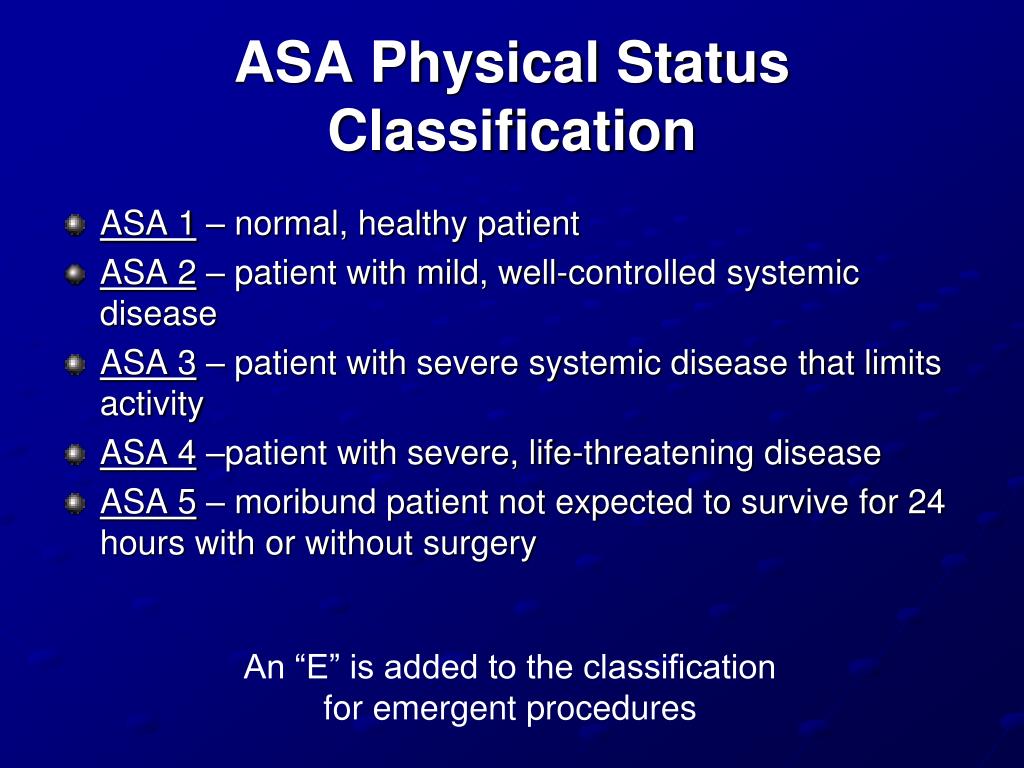
The American Society of Anesthesiologists (ASA) Physical Status Classification System is a global clinical tool used to assess a patient's overall health and physiological reserve before surgery. By categorizing patients into six distinct levels, it provides a standardized language for clinicians to communicate perioperative risk, guide anesthetic management, and improve surgical outcomes.
As we move through 2026, the ASA Physical Status (PS) classification remains the cornerstone of preoperative medicine. Despite the emergence of advanced predictive analytics and artificial intelligence in clinical settings, the ASA PS remains the most widely recognized and utilized metric for evaluating a patient’s fitness for anesthesia. It is more than just a number on a chart; it is a critical communication tool that bridges the gap between surgeons, anesthesiologists, and the wider care team.
The Evolution and Definition of the ASA PS System
Originally developed in 1941 by the American Society of Anesthetists (which later became the American Society of Anesthesiologists), the classification system was designed to provide a simple, clinical assessment of a patient's physical condition. Over the decades, it has undergone several revisions to reflect modern medical understandings of systemic diseases.
The primary goal of the system is to offer a subjective yet standardized summary of a patient's physiological state. It is not intended to predict the specific outcome of a specific surgical procedure, but rather to quantify the patient's baseline vulnerability. In 2026, the ASA PS is used universally in hospitals, ambulatory surgery centers, and dental offices to ensure that every patient undergoes a thorough physiological screening before receiving sedation or general anesthesia.
Decoding the Six ASA Classifications
The system utilizes a scale from I to VI, with an additional modifier for emergency procedures. Understanding the nuances of these levels is essential for both medical professionals and patients.
- ASA I: A Normal Healthy Patient Patients in this category are non-smokers, have no or minimal alcohol use, and are generally fit. They possess a high physiological reserve and are at the lowest risk for anesthesia-related complications.
- ASA II: A Patient with Mild Systemic Disease This class includes individuals with conditions that are well-controlled and do not cause functional limitations. Common examples include social smokers, individuals with well-controlled hypertension, mild obesity (BMI between 30 and 40), or well-controlled type 2 diabetes.
- ASA III: A Patient with Severe Systemic Disease These patients have one or more moderate to severe diseases that result in functional limitations. Examples include poorly controlled diabetes, morbid obesity (BMI >40), active hepatitis, a history of myocardial infarction (MI) more than three months ago, or chronic obstructive pulmonary disease (COPD).
- ASA IV: A Patient with Severe Systemic Disease that is a Constant Threat to Life This classification is reserved for patients with acute or unstable conditions. Examples include a recent MI (less than three months), ongoing cardiac ischemia, symptomatic valvular dysfunction, or end-stage renal disease (ESRD) not undergoing regular dialysis.
- ASA V: A Moribund Patient These individuals are not expected to survive without the operation. This category often includes patients with ruptured abdominal or thoracic aneurysms, massive trauma, or intracranial hemorrhage with mass effect.
- ASA VI: A Declared Brain-Dead Patient This classification is exclusively used for patients whose organs are being removed for donor purposes.
The Significance of the "E" Modifier
In addition to the Roman numerals, the letter "E" is added to any classification when a procedure is an emergency. An emergency is defined as a case where a delay in treatment would significantly increase the threat to life or body part. For example, a healthy patient undergoing an emergency appendectomy would be classified as ASA I E. This modifier is crucial because it signals to the anesthetic team that the patient has not had the benefit of an optimized preoperative preparation (such as fasting or medical stabilization), which inherently increases risk.
Why the ASA Classification Matters for Patient Safety
The ASA classification matters primarily because it serves as a "first alert" system for the surgical team. When a patient is flagged as ASA III or IV, it triggers a cascade of safety protocols that are vital for preventing perioperative morbidity.
Risk Stratification and Resource Allocation
In modern healthcare systems in 2026, resource management is paramount. The ASA score helps hospitals determine the appropriate setting for a procedure. An ASA I or II patient may be perfectly suited for an outpatient ambulatory center. In contrast, an ASA III or IV patient typically requires the resources of a full-service hospital with access to an intensive care unit (ICU) and advanced monitoring capabilities.
By correctly identifying the ASA status, clinical leads can ensure that high-risk patients are scheduled at times when senior anesthesia staff and specialized equipment are readily available. This logistical planning is a key component in reducing the "failure to rescue" rate in surgical departments.
Tailoring Anesthetic Techniques
The classification influences the specific anesthetic plan. For an ASA I patient, the anesthesiologist may have a wide range of options for sedation and pain management. However, for an ASA IV patient, every medication choice—from the induction agent to the maintenance gas—must be carefully selected to minimize cardiovascular and respiratory strain.
Knowledge of the ASA status allows the anesthesia provider to anticipate complications. For instance, an ASA III patient with severe COPD will likely require different ventilation strategies and post-operative respiratory support than a healthy patient. By quantifying the systemic burden, the ASA system forces the clinician to consider these physiological limitations long before the patient enters the operating room.
Impact on Clinical Communication and Documentation
One of the most profound reasons the ASA classification matters is its role as a universal "shorthand" among medical providers. In the fast-paced environment of the operating suite, clear and concise communication is essential for avoiding errors.
Inter-Provider Consistency
When an anesthesiologist tells a surgeon, "We have an ASA IV patient today," the surgeon immediately understands the gravity of the situation. It sets a baseline expectation for the patient’s stability and the likelihood of intraoperative physiological swings. This shared understanding fosters a culture of safety where the team is collectively prepared for higher-than-average complexity.
Integration with Electronic Health Records (EHR)
In 2026, the ASA score is a mandatory data field in almost all Electronic Health Record systems. Because it is a standardized value, it allows for seamless data sharing between different institutions. If a patient is transferred from a rural clinic to a tertiary trauma center, their ASA status provides the receiving team with an immediate, evidence-based snapshot of their surgical risk, ensuring continuity of care.
| ASA Classification | Systemic Health Status | Clinical Examples (2026 Guidelines) | Functional Limitation |
|---|---|---|---|
| ASA I | Normal Healthy | Non-smoker, minimal alcohol, fit | None |
| ASA II | Mild Disease | Smoker, BMI 30-40, Controlled HTN | Minimal/None |
| ASA III | Severe Disease | BMI >40, Poorly controlled DM, COPD | Substantial |
| ASA IV | Constant Threat | Recent MI (<3 months), ESRD, Sepsis | Extreme/Unstable |
| ASA V | Moribund | Ruptured Aneurysm, Severe Trauma | Survival unlikely |
| ASA VI | Brain-Dead | Organ procurement candidate | N/A |
The Economic and Research Implications
Beyond the operating room, the ASA Physical Status classification has significant implications for healthcare economics and clinical research.
Reimbursement and Billing
In the United States and many other healthcare jurisdictions, the ASA classification is used as a modifier for anesthesia billing. Because higher ASA scores correlate with increased complexity and longer time spent on anesthetic management, they are often associated with higher reimbursement rates. This ensures that hospitals are compensated fairly for the additional resources and expertise required to manage medically fragile patients.
Data Analytics and Quality Metrics
Research into surgical outcomes relies heavily on the ASA PS as a covariate. When researchers compare the success rates of two different surgical techniques, they must "correct" for the health of the patients involved. If one technique was used primarily on ASA I patients and the other on ASA IV patients, the raw data would be misleading. By using the ASA classification, researchers can perform "risk-adjustment," allowing for a fair and scientifically valid comparison of outcomes.
Furthermore, hospitals use ASA data to track their own performance. If a facility has high complication rates among ASA I and II patients, it indicates a potential systemic failure, as these patients should ideally have very few adverse events.
Challenges and Limitations of the System
While the ASA classification is indispensable, it is not without its critics. The primary challenge lies in its subjectivity.
Inter-rater Reliability
Studies have shown that different clinicians may assign different ASA scores to the same patient. What one anesthesiologist considers "mild" systemic disease (ASA II), another might categorize as "severe" (ASA III) based on their personal clinical experience. This variability can lead to inconsistencies in documentation and, occasionally, in resource allocation.
To combat this, the American Society of Anesthesiologists has published expanded examples and guidelines to provide more objective criteria for each class. In 2026, many clinical decision support tools integrated into EHRs help clinicians by suggesting an ASA class based on the patient's existing diagnosis list and lab values, though the final decision still rests with the provider's clinical judgment.
Prediction vs. Description
It is important to remember that the ASA score describes the patient, not the surgery. An ASA II patient undergoing a highly invasive neurosurgical procedure may face higher total risk than an ASA III patient undergoing a minor biopsy. For a complete risk assessment, clinicians must combine the ASA PS with other tools, such as the NSQIP Surgical Risk Calculator or specialized cardiac and frailty indices.
The Role of the Patient in ASA Classification
Patients often wonder what their ASA score means for them. In 2026, patient engagement in preoperative health optimization (often called "prehabilitation") has become a standard of care.
When a patient is informed that they are an ASA III, it should not be seen as a "failing grade," but rather as a roadmap for improvement. Many factors that contribute to a higher ASA score—such as smoking, obesity, and poorly controlled blood pressure—are modifiable. Patients who engage in smoking cessation, weight management, and better glucose control can sometimes improve their physiological state, potentially shifting from an ASA III to an ASA II over several months of preparation. This proactive approach significantly reduces the risk of post-operative complications like pneumonia or wound infections.
Frequently Asked Questions
Does a high ASA score mean I shouldn't have surgery?
Not necessarily. A high ASA score (such as ASA III or IV) means that you have a higher risk of complications, which requires the medical team to take extra precautions. It is a tool for planning and safety, not an automatic disqualifier. The decision to proceed is based on whether the benefits of the surgery outweigh the risks identified by the classification.
Can an ASA score change over time?
Yes. The ASA classification is a snapshot of your physical status at the time of the surgery. If you successfully manage a chronic condition, lose weight, or stop smoking, your ASA score for a future surgery could be lower. Conversely, the progression of a disease or a new medical diagnosis could increase the score.
Who is responsible for assigning the ASA score?
The anesthesia provider (Anesthesiologist or CRNA) is typically responsible for assigning the final ASA Physical Status during the preoperative assessment. While surgeons may provide input regarding the patient's condition, the anesthetic team makes the final determination as it directly influences anesthetic management.
Is the ASA classification the same as a "surgical risk score"?
No. The ASA classification only measures the patient’s physical health status. A full surgical risk assessment also considers the complexity of the operation, the skill of the surgical team, and the specific risks associated with the procedure (such as bleeding or infection).
How does the "E" modifier impact my care?
The "E" (Emergency) modifier indicates that your surgery must happen immediately. This tells the care team that there was no time to optimize your health or ensure you have an empty stomach. This modifier alerts everyone to be prepared for a higher risk of aspiration and hemodynamic instability.
Practical Recommendation for Patients and Clinicians
For clinicians, the recommendation is to use the ASA classification as a starting point for a deeper conversation about perioperative care. Do not rely on the number alone; document the specific comorbidities that led to the classification. Use the 2026 updated guidelines provided by the ASA to ensure that your classification is as objective as possible, which improves the quality of hospital data and patient safety.
For patients, if you are told your ASA score is III or higher, ask your doctor what specific steps can be taken to optimize your health before the procedure. Understanding that your classification is a "risk marker" allows you to take an active role in your recovery. Focusing on "prehabilitation"—such as light exercise, nutritional support, and strict adherence to medication—can improve your body’s ability to handle the stress of surgery, regardless of your starting ASA level.