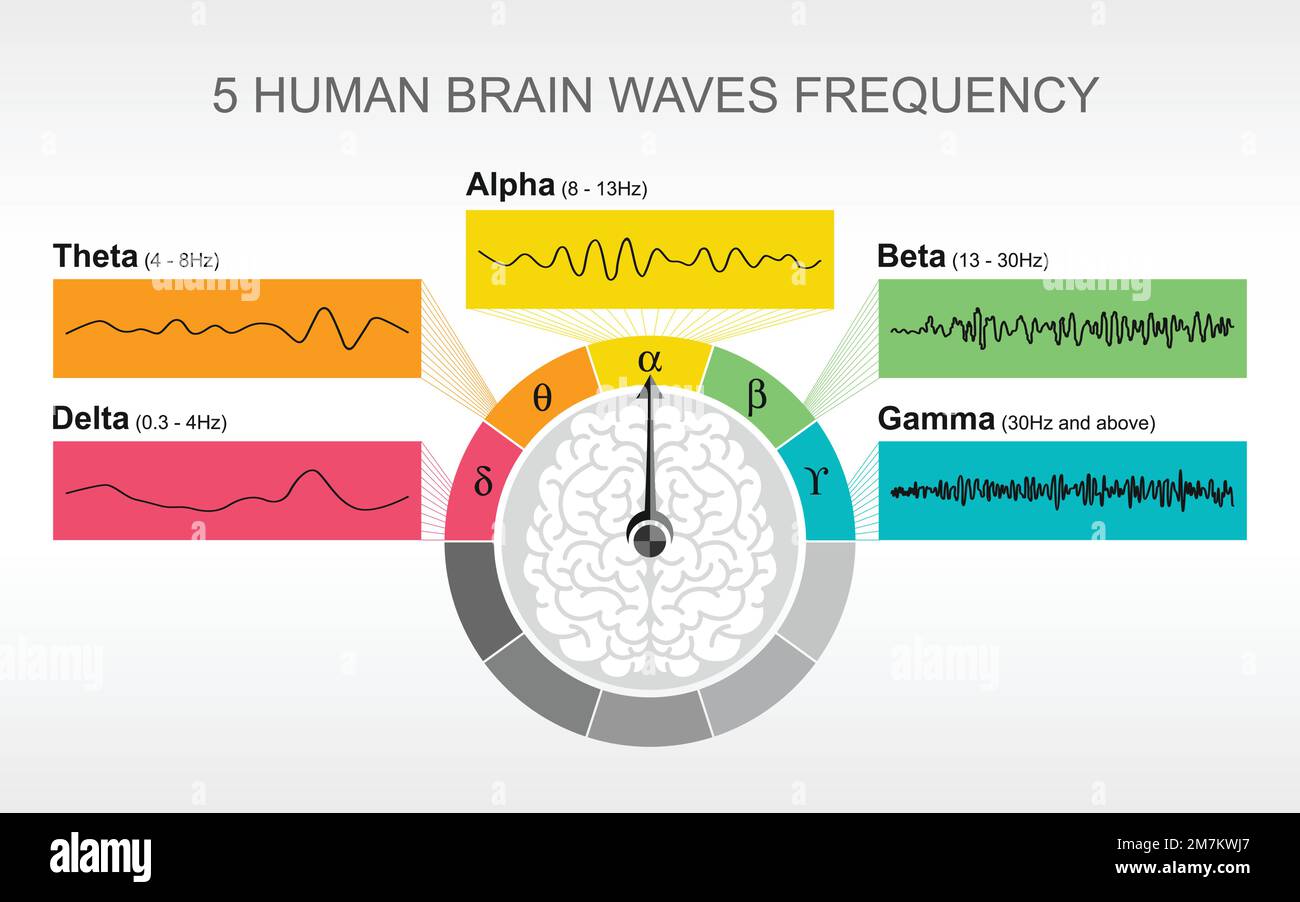
The choice between alpha and beta waves depends entirely on your immediate objective: alpha waves (8–12 Hz) facilitate a state of "relaxed alertness," ideal for creative problem-solving and stress reduction, while beta waves (12–30 Hz) drive the high-intensity focus and logical reasoning required for analytical tasks and rapid execution.
The Science of Neural Oscillations: Understanding Brainwaves
Brainwaves, or neural oscillations, are the rhythmic patterns of electrical activity produced by the synchronized firing of neurons in the brain. Measured via electroencephalography (EEG) in cycles per second—or Hertz (Hz)—these rhythms act as a fundamental communication system within the central nervous system. In 2026, our understanding of these rhythms has evolved from simple "on/off" states to a sophisticated "neural gearbox" model where different frequencies dominate depending on the cognitive load and environmental demands.
Each frequency band, from the deep sleep of Delta to the high-level integration of Gamma, serves a specific evolutionary purpose. However, the interplay between Alpha and Beta waves remains the most critical for daily productivity, mental health, and professional performance. These two bands represent the primary modes of our waking consciousness. Alpha is the "resting" state of the conscious mind, while Beta is the "active" processing state.
To master your cognitive output, you must understand that your brain does not operate on a single frequency at all times. Instead, it produces a complex mixture of all brainwaves simultaneously, with one or two frequencies becoming "dominant" in specific cortical regions. The goal of "serving your goals" is not to force a single wave type, but to optimize the dominance of the rhythm that matches your current task.
Alpha Waves: The Frequency of Flow and Creativity
Alpha waves oscillate between 8 and 12 Hz and are most prominent when you are awake but relaxed, typically with your eyes closed. In the history of neuroscience, alpha was the first rhythm discovered by Hans Berger in 1924, and it remains a cornerstone of neurofeedback and meditation research.
The Role of Cortical Inhibition
A common misconception is that alpha waves represent an "active" creative state. In reality, alpha waves function through cortical inhibition. When your brain generates high-amplitude alpha waves in specific regions, it is effectively "idling" those areas to prevent distracting information from interfering with internal processing. This is why alpha is so closely linked to the "Flow State." By quieting the external sensory input, alpha allows the brain’s internal networks—particularly the Default Mode Network (DMN)—to connect disparate ideas, leading to the "Aha!" moments characteristic of creative genius.
Benefits of Alpha Dominance
- Stress Reduction: Alpha waves are the physiological antithesis of the "fight or flight" response. Increasing alpha activity can lower cortisol levels and promote a sense of calm.
- Enhanced Visualization: Because alpha bridges the gap between the conscious and subconscious (Theta), it is the ideal state for mental rehearsal, athletic visualization, and goal-setting.
- Improved Learning Retention: Research suggests that "alpha-heavy" states prior to studying can prime the brain for better encoding of new information by reducing mental noise.
When Alpha Serves Your Goals
Alpha is your primary rhythm when the goal involves synthesis, reflection, or recovery. If you are a designer brainstorming a new layout, a writer outlining a novel, or a manager reflecting on a conflict within your team, inducing an alpha state will serve you better than the high-pressure focus of beta.
Beta Waves: The Engine of Cognitive Execution
Beta waves oscillate between 12 and 30 Hz and are the hallmark of an engaged, alert, and focused mind. When you are actively thinking, processing sensory data, or solving a math problem, your brain is likely operating in a beta-dominant state.
The Three Tiers of Beta
Beta is not a monolithic state; it is often divided into three distinct sub-bands, each serving a different level of arousal:
- Low Beta (12–15 Hz): Also known as Sensorimotor Rhythm (SMR). This is the "sweet spot" for focus—calm, attentive, and organized. It is often targeted in neurofeedback to treat ADHD.
- Mid-range Beta (15–20 Hz): Associated with active problem-solving, logical thinking, and high-level alertness. This is the state of a programmer writing code or a lawyer reviewing a contract.
- High Beta (20–30 Hz): Linked to complex thought, integration of new experiences, and, if sustained too long, anxiety and stress.
The Power of Analytical Focus
Beta waves are essential for linear, logical processing. While alpha helps you see the "big picture," beta helps you execute the details. Beta oscillations facilitate the transmission of information across the motor cortex and the prefrontal cortex, ensuring that your body and mind are ready for immediate action.
When Beta Serves Your Goals
Beta is the rhythm of execution and survival. Use it when you need to meet a deadline, drive in heavy traffic, perform a technical surgery, or engage in a debate. In these scenarios, the "relaxed" nature of alpha would be a hindrance, potentially leading to errors or slow reaction times.
Alpha vs. Beta: A Functional Comparison
Understanding the technical differences helps in choosing the right mental tool for the job. The following table summarizes the key distinctions between these two dominant brain rhythms.
| Feature | Alpha Waves (8–12 Hz) | Beta Waves (12–30 Hz) |
|---|---|---|
| Primary Mental State | Relaxed, reflective, "idling." | Alert, attentive, active. |
| Cognitive Function | Intuition, visualization, creativity. | Logic, analysis, critical thinking. |
| Biological Impact | Lowers heart rate and cortisol. | Increases metabolic rate and alertness. |
| Ideal Environment | Quiet, dimly lit, familiar. | Structured, task-oriented, stimulating. |
| Common Task | Meditation, brainstorming, light reading. | Coding, math, public speaking, driving. |
| Risk of Excess | Daydreaming, inability to focus. | Anxiety, burnout, hyper-vigilance. |
| Neurofeedback Goal | Stress management and "flow." | Focus training and cognitive speed. |
The "High Beta" Trap: When Focus Becomes Anxiety
One of the most significant challenges in the modern work environment of 2026 is the tendency to remain stuck in High Beta (22–30+ Hz). While beta is necessary for work, chronic high-frequency beta is neurochemically expensive. It consumes large amounts of glucose and oxygen and is closely associated with the production of stress hormones like adrenaline and cortisol.
When you are in a state of chronic high beta, your "focus" becomes fragmented. This is often referred to as "monkey mind." In this state, the brain is hyper-vigilant, constantly scanning for threats (or emails, notifications, and pings). This prevents the brain from shifting down into Alpha for recovery, leading to the clinical definitions of burnout and executive dysfunction.
To serve your goals, you must learn to downshift. Just as a car cannot stay in fifth gear while navigating a parking lot, your brain cannot stay in high beta during your evening meal or before sleep without causing long-term cognitive decline.
Strategic Application: How to Shift Your Rhythms
As of 2026, several validated methods exist to help individuals intentionally shift between alpha and beta dominance. These tools range from lifestyle adjustments to advanced neuro-technology.
Inducing Alpha for Creativity and Recovery
- Closed-Eye Visualization: Simply closing your eyes significantly increases alpha production in the occipital lobe. Spending five minutes visualizing a successful outcome before a meeting can "alpha-prime" your brain.
- Binaural Beats: Using audio frequencies where the difference between the left and right ear equals 8–12 Hz can encourage the brain to entrain to an alpha rhythm.
- Deep Diaphragmatic Breathing: Slow, rhythmic breathing stimulates the vagus nerve, which signals the brain to reduce beta activity and increase alpha/theta production.
Stimulating Beta for Performance and Focus
- Cold Exposure: Brief exposure to cold (e.g., a 30-second cold shower) triggers a spike in norepinephrine and shifts the brain into a high-alert beta state.
- Bright Blue Light: Exposure to specific wavelengths of light (approx. 480 nm) suppresses melatonin and encourages beta-dominant alertness.
- Task Chunking: Breaking a complex project into small, 20-minute sprints encourages the "Low Beta" (SMR) state, allowing for sustained focus without the "High Beta" anxiety.
The Role of Neurofeedback and Wearables
In 2026, the use of consumer-grade EEG wearables has become a standard practice for high-performance professionals. These devices provide real-time data on your alpha-to-beta ratio.
For instance, if your device shows a high beta-to-alpha ratio during a time you've designated for rest, it may suggest a "micro-meditation" to bring the ratios back into balance. Conversely, if you are struggling to focus on a technical report, the data might show "Alpha Intrusion," where your brain is trying to relax when you need it to work. In this case, increasing environmental stimulation (like upbeat music or standing up) can help "recruit" more beta waves.
According to a study published in the Journal of Neural Engineering, training the ability to voluntarily switch between these states—a concept known as neural flexibility—is a stronger predictor of long-term success than high performance in either state alone.
Frequently Asked Questions
Can I have too many alpha waves?
Yes. While alpha is beneficial for relaxation, an excess of alpha activity in the frontal lobes is often associated with depression, lethargy, and ADHD. This is known as "under-arousal," where the brain's executive centers are effectively "sleeping" while you are trying to work. Balance is key.
Are beta waves "bad" for my health?
Beta waves are essential for functioning in a complex world. They are only detrimental when they are in the "High Beta" range (above 20 Hz) for extended periods without recovery. Chronic high beta leads to a state of constant tension, which can contribute to hypertension and cardiovascular issues.
How do binaural beats actually affect alpha and beta?
Binaural beats work through a process called "brainwave entrainment." When the brain is presented with two slightly different frequencies in each ear, it perceives a third "phantom" frequency (the difference between the two). The brain naturally tends to synchronize its internal oscillations to this external stimulus over 15–30 minutes.
Which rhythm is better for studying?
A hybrid approach is best. Use Beta (15–18 Hz) for the active reading and logical processing of information. However, take 10-minute Alpha breaks (eyes closed, deep breathing) every hour. This allows the brain to transition from "acquisition mode" to "consolidation mode," which is necessary for moving information into long-term memory.
Does caffeine increase beta waves?
Caffeine primarily works by blocking adenosine receptors, which prevents the "sleepiness" signals. This indirectly promotes a beta-dominant state by maintaining high levels of dopamine and glutamate. However, excessive caffeine can push the brain into "High Beta," leading to the "jitters" and decreased task efficiency.
Practical Recommendation: Mastering Your Gearbox
To maximize your potential in 2026, treat your brain rhythms like a professional athlete treats their heart rate zones.
- Morning Execution (Beta): Start your day with tasks requiring high logic and focus. Use bright light and structured environments to anchor your brain in the 15–20 Hz range.
- Mid-Day Reset (Alpha): Between 1:00 PM and 3:00 PM, when the circadian rhythm naturally dips, step away from screens. Close your eyes for 10 minutes to induce an alpha state. This "clears the cache" of your working memory.
- Late Afternoon Synthesis (Alpha-Beta Transition): Use this time for brainstorming or collaborative meetings. Allow your mind to soften its focus (Alpha) while remaining engaged in the conversation (Beta).
- Evening Decompression: Actively eliminate beta-stimulating activities (like checking work emails) at least two hours before bed. Your goal is to slide through Alpha and into the slower Theta and Delta waves for restorative sleep.
The most successful individuals are not those who are "always on" (constant Beta), but those who have developed the neurological agility to shift into the rhythm that serves their current goal.