Allergy hair loss occurs when an overactive immune response triggers scalp inflammation, follicular stress, or physical trauma through itching and scratching. While rarely the primary cause of permanent baldness, allergic reactions—ranging from topical contact dermatitis to systemic food sensitivities—can lead to significant thinning, breakage, and temporary shedding that requires targeted dermatological intervention.
The Biological Link Between Allergies and Hair Shedding
The relationship between allergies and hair loss is complex and usually indirect. In a healthy state, hair follicles undergo a structured cycle of growth (anagen), regression (catagen), and rest (telogen). When the body encounters an allergen, the immune system releases histamines and pro-inflammatory cytokines. This localized or systemic inflammation can disrupt the delicate environment of the hair follicle, prematurely pushing hairs into the shedding phase.
There are three primary pathways through which an allergic reaction manifests as hair loss:
- Allergic Contact Dermatitis: This is a localized skin reaction where the scalp becomes inflamed after touching a specific substance. If the inflammation is severe or prolonged, it can damage the hair shaft or weaken the follicle’s attachment, leading to hair falling out in the affected areas.
- The "Itch-Scratch" Cycle: Allergies often cause intense pruritus (itching). Repeated mechanical trauma from scratching can lead to "traction alopecia" or simply break hair strands at the root, leading to visible thinning and scalp irritation.
- Systemic Immune Stress: In cases of severe systemic allergies or undiagnosed food sensitivities, the body may enter a state of chronic stress. This can trigger telogen effluvium, a condition where a large number of hairs enter the resting phase simultaneously and fall out a few months after the initial trigger.
Common Allergens That Trigger Scalp Issues
To effectively manage allergy-related hair loss, one must first identify the offending agent. As of 2026, dermatologists categorize these triggers into topical, environmental, and dietary categories.
Chemical Sensitivities in Hair Products
The most frequent cause of scalp-related allergic reactions is the very products meant to clean or beautify the hair. Paraphenylenediamine (PPD), commonly found in permanent hair dyes, is a notorious allergen that can cause severe redness, swelling, and subsequent hair loss. Other common culprits include:
- Preservatives: Methylisothiazolinone (MIT) and Methylchloroisothiazolinone (CMIT).
- Fragrances: Synthetic scents are a leading cause of contact dermatitis.
- Surfactants: While rare, some individuals react to sulfates or cocamidopropyl betaine.
Food Allergies and Sensitivities
Nutritional status and internal inflammation are closely linked to hair health. For individuals with Celiac disease or non-celiac gluten sensitivity, the consumption of gluten triggers an autoimmune response that can manifest as dermatitis herpetiformis or contribute to alopecia areata. Similarly, severe dairy or nut allergies can cause systemic inflammation that deprives hair follicles of the stability they need to maintain the growth phase.
Environmental and Seasonal Allergens
While pollen or pet dander typically causes respiratory issues, severe hay fever can lead to systemic stress. High levels of histamine in the body can occasionally exacerbate existing scalp conditions like seborrheic dermatitis, which, if left untreated, creates an oily, inflamed environment where hair cannot thrive.
Distinguishing Allergy Hair Loss from Other Conditions
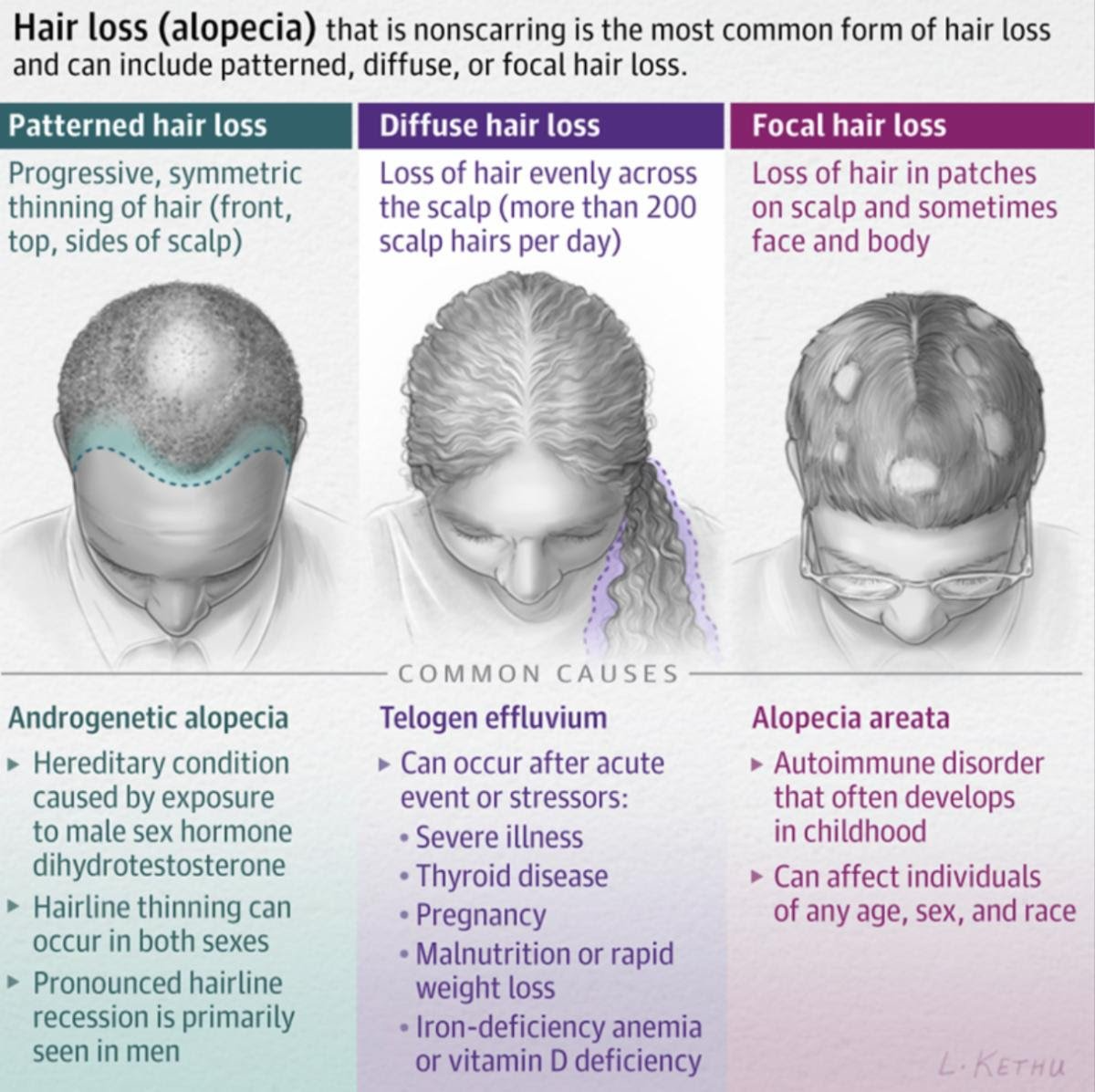
It is essential to differentiate between hair loss caused by allergies and other common forms of alopecia, such as androgenetic alopecia (pattern baldness) or telogen effluvium caused by hormonal shifts.
| Feature | Allergy-Related Hair Loss | Androgenetic Alopecia | Telogen Effluvium |
|---|---|---|---|
| Primary Symptom | Itching, redness, burning, patchy thinning. | Gradual thinning at crown or hairline. | Sudden, diffuse thinning across the whole scalp. |
| Onset | Sudden or following product use. | Very slow, occurring over years. | Occurs 2-4 months after a stressful event. |
| Scalp Condition | Inflamed, flaky, or bumpy. | Usually appears healthy and normal. | Usually appears healthy and normal. |
| Recovery Potential | High, once the allergen is removed. | Low without medical treatment (Minoxidil/Finasteride). | High, once the trigger is resolved. |
| Common Trigger | Hair dye, fragrances, food allergens. | Genetics and dihydrotestosterone (DHT). | Surgery, high fever, extreme weight loss, or stress. |
The Role of the Immune System: Alopecia Areata and Atopy
There is a documented clinical link between "atopy"—a genetic predisposition toward developing allergic hypersensitivity—and Alopecia Areata (AA). Alopecia areata is an autoimmune condition where the body attacks its own hair follicles, resulting in smooth, round bald patches.
Research updated through 2026 suggests that patients with a history of eczema (atopic dermatitis), asthma, and allergic rhinitis are at a higher risk for developing AA. In these cases, the allergy doesn't "cause" the hair loss in the traditional sense; rather, the underlying hyper-reactivity of the immune system makes the individual more susceptible to autoimmune attacks on the hair follicle. Treatment for this specific type of allergy-linked hair loss often requires JAK inhibitors or corticosteroid injections rather than simple antihistamines.
Identifying the Culprit: Diagnostic Steps
If you suspect your hair loss is linked to an allergy, a systematic approach to diagnosis is required. Self-diagnosis often leads to unnecessary dietary restrictions or the purchase of expensive, ineffective "hypoallergenic" products.
Professional Patch Testing
A dermatologist can perform a T.R.U.E. test or expanded patch testing. This involves applying small amounts of common allergens to the skin (usually the back) and monitoring the reaction over 48 to 72 hours. This is the gold standard for identifying allergic contact dermatitis caused by shampoos or dyes.
The Elimination Diet
If a food allergy is suspected, working with an allergist to conduct an elimination diet can be helpful. This involves removing common triggers like gluten, dairy, soy, and shellfish for several weeks and then slowly reintroducing them while monitoring scalp sensations and hair shedding levels.
Blood Tests and Biopsies
In complex cases, a scalp biopsy may be performed to look for specific inflammatory markers or eosinophils, which are white blood cells often present during allergic reactions. Blood tests for IgE levels can also help confirm a systemic allergic state.
Treatment and Recovery Strategies
The good news is that most allergy-related hair loss is reversible. Once the inflammatory trigger is removed, the follicles generally resume their normal growth cycle.
Immediate Medical Interventions
- Topical Corticosteroids: To quickly arrest scalp inflammation and stop the itch-scratch cycle, a doctor may prescribe a fluocinonide or clobetasol solution.
- Antihistamines: Oral medications like cetirizine or loratadine can help manage systemic histamine levels, reducing the urge to scratch.
- Calmative Scalp Oils: Non-allergenic oils, such as pure MCT oil or squalane, can help repair the skin barrier without introducing new fragrances or irritants.
Rebuilding the Scalp Barrier
An allergic reaction often compromises the "acid mantle" of the scalp. To recover, switch to "fragrance-free" and "essential oil-free" cleansers. Note that "unscented" products may still contain masking fragrances; look for labels specifically stating "fragrance-free."
Nutritional Support
While the hair is recovering, ensuring adequate intake of biotin, zinc, and Vitamin D can support the new growth of hair shafts. According to 2026 nutritional guidelines for hair recovery, Omega-3 fatty acids are particularly beneficial for their natural anti-inflammatory properties, which can help soothe a reactive scalp from the inside out.
Long-Term Management and Prevention
Prevention is the most effective strategy for those prone to allergic hair loss. This involves a proactive approach to product selection and environmental control.
- Always Patch Test New Products: Before applying a new hair dye or intensive treatment to your entire head, apply a small amount to the inner arm or behind the ear. Wait 48 hours to check for a delayed hypersensitivity reaction.
- Monitor the Scalp Microbiome: Allergies can disrupt the balance of yeast and bacteria on the scalp. Using a gentle, pH-balanced cleanser helps maintain a barrier that is less susceptible to environmental irritants.
- Filter Shower Water: In some regions, high levels of chlorine or heavy metals in tap water can exacerbate scalp sensitivity and mimic allergic reactions. A high-quality shower filter can mitigate this risk.
- Manage Stress: Because the immune system is highly sensitive to cortisol, stress management techniques like meditation or regular exercise can prevent "allergic flares" from manifesting as hair shedding.
Frequently Asked Questions
Can seasonal allergies cause hair loss?
Seasonal allergies usually do not cause direct hair loss, but the systemic inflammation and increased stress they put on the body can contribute to telogen effluvium. Additionally, if hay fever leads to a lack of sleep or poor nutrition, hair quality may diminish.
How long does it take for hair to grow back after an allergic reaction?
Once the allergen is removed and inflammation subsides, you may see "baby hairs" appearing within 3 to 6 months. Full density typically returns within 6 to 12 months, depending on the length of your hair and the severity of the initial reaction.
Does antihistamine medication cause hair loss?
Most common antihistamines do not cause hair loss. In fact, by reducing inflammation and itching, they often help stop the mechanical damage associated with allergic hair loss. However, always consult your physician if you notice increased shedding after starting any new medication.
Can a gluten allergy cause my hair to thin?
Yes, particularly if the allergy is related to Celiac disease. The malabsorption of nutrients and the systemic autoimmune response triggered by gluten can lead to diffuse thinning and, in some cases, are associated with alopecia areata.
Is hair dye the most common cause of allergy hair loss?
Among topical triggers, hair dye containing PPD is one of the most frequent causes of severe allergic contact dermatitis on the scalp. This inflammation is often intense enough to cause temporary hair shedding in the weeks following the treatment.
Practical Recommendation for 2026
If you are currently experiencing hair loss accompanied by a red, itchy, or burning scalp, your first action should be to simplify your routine. Stop using all styling products, dry shampoos, and colored treatments immediately. Revert to a medical-grade, fragrance-free cleanser for at least two weeks. If the shedding does not slow down or if the scalp irritation persists, schedule an appointment with a dermatologist for a professional patch test. Identifying the specific chemical or food trigger is the only way to ensure permanent recovery and prevent future episodes of allergy-induced thinning.