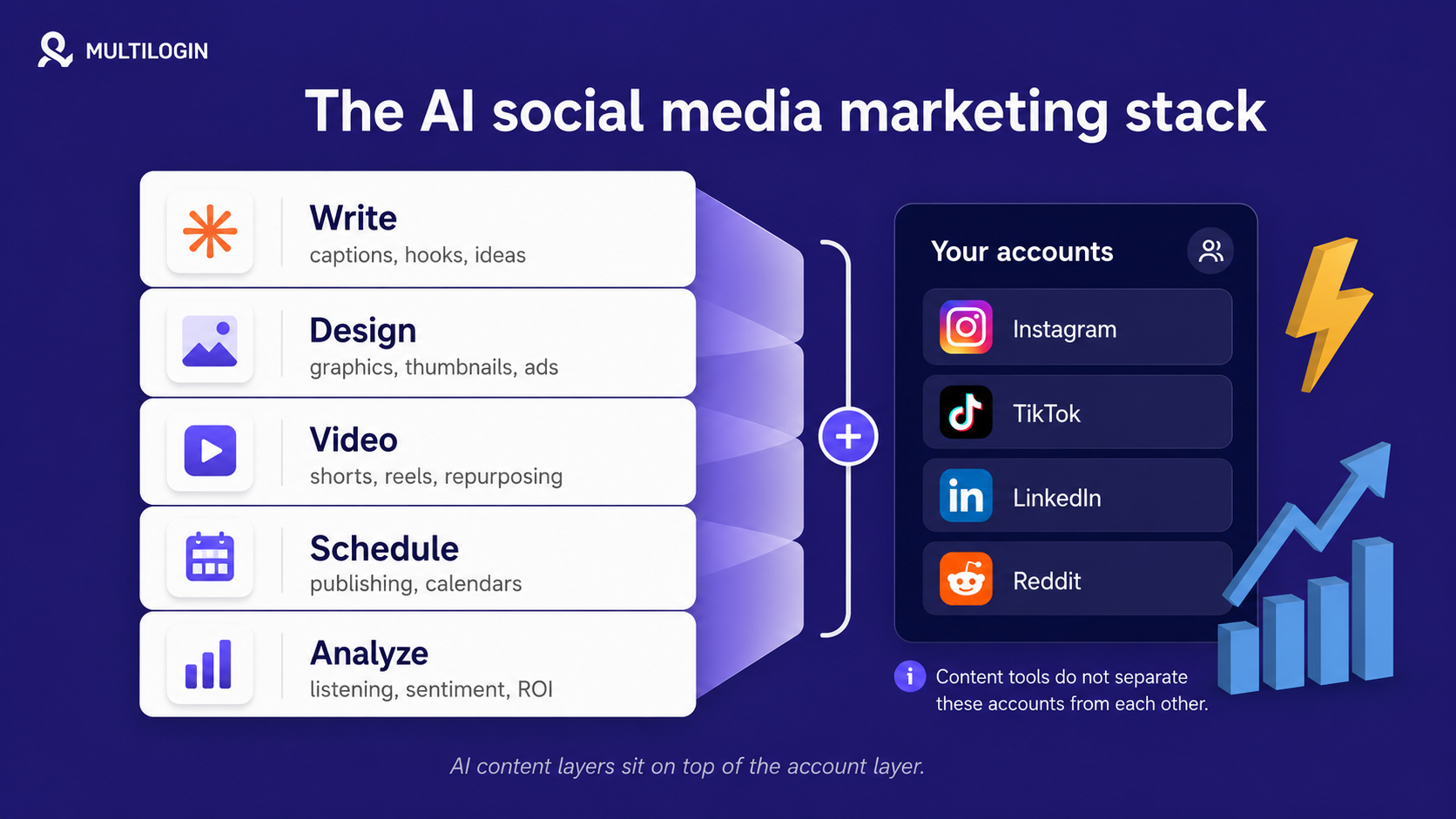
All-in-one social media management is the practice of using a single centralized software platform to coordinate, execute, and analyze every aspect of a brand’s social media presence across multiple networks. By consolidating scheduling, community engagement, paid advertising, and performance reporting into one dashboard, organizations eliminate the "context-switching tax" and gain a unified view of their digital footprint.
The Evolution of Centralized Management
As of 2026, the landscape of social media has shifted from a few dominant players to a fragmented ecosystem of specialized platforms. For a modern business, managing presence on TikTok, Instagram, LinkedIn, X, Threads, and emerging decentralized networks independently is no longer sustainable. All-in-one social media management has transitioned from a luxury for large agencies to a fundamental requirement for any brand seeking to maintain a cohesive voice and responsive customer service.
The primary goal of these systems is to provide a "single source of truth." In previous years, social media managers often struggled with siloed data—where engagement metrics on one platform could not be easily compared with conversion data on another. Today’s all-in-one solutions solve this by leveraging advanced API (Application Programming Interface) integrations that pull raw data into a standardized environment for cross-platform comparison.
Core Pillars of an All-in-One System
To be considered a true all-in-one solution in 2026, a platform must go beyond simple post-scheduling. It must address four critical pillars: content orchestration, unified communication, deep-dive analytics, and strategic AI assistance.
1. Content Orchestration and Cross-Platform Scheduling
This is the foundation of management. A robust system allows users to create a "master post" and then customize it for the unique requirements of each network (e.g., adjusting aspect ratios for video, modifying character counts, and optimizing hashtags). The technical complexity here lies in the automation of platform-specific features, such as first-comment posting on Instagram or the automatic threading of long-form content on X.
2. The Unified Social Inbox
One of the greatest challenges for modern brands is maintaining a fast response time across DMs, comments, and mentions. An all-in-one inbox aggregates these streams into a single feed. In 2026, these inboxes use sophisticated tagging and routing logic to ensure that a customer service inquiry is directed to the support team, while a PR mention is flagged for the communications department. This prevents "blind spots" where a critical customer complaint might go unanswered because it was buried in an unmonitored notification tab.
3. Advanced Analytics and ROI Attribution
Measurement is where all-in-one tools provide the most significant value. Instead of downloading separate CSV files from five different platforms, managers can generate unified reports that show total brand reach and sentiment. More importantly, these tools now integrate with CRM (Customer Relationship Management) systems to track a user’s journey from a social media click to a final purchase, providing a clear picture of Return on Investment (ROI).
4. AI-Driven Optimization and Governance
By 2026, Artificial Intelligence is baked into the core of management software. This isn't just about generating captions; it involves predictive performance modeling. The software analyzes historical data to suggest the exact minute a post should go live for maximum impact. Furthermore, AI governance tools act as a "brand safety" layer, scanning content for compliance with internal guidelines and external regulations before anything is published.
Technical Prerequisites for Implementation
Before migrating to an all-in-one management platform, organizations must ensure they meet specific technical and administrative requirements. Failure to address these can lead to broken integrations and security vulnerabilities.
- Administrative Access and Ownership: You must have "Owner" or "Admin" level access to all native social accounts. Most third-party tools connect via OAuth (Open Authorization), which requires a direct handshake between the tool and the platform.
- API Compatibility: Ensure your chosen tool supports the latest API versions of your primary networks. For instance, if a platform limits its API for "Personal" accounts, you may need to convert to "Business" or "Creator" accounts to enable automated scheduling.
- SSO and Security Protocols: For enterprise-level management, look for platforms that support Single Sign-On (SSO) and Multi-Factor Authentication (MFA). This ensures that when an employee leaves the company, their access to the entire social suite can be revoked instantly.
- Existing Tool Stack Audit: Modern SMM tools do not live in a vacuum. They need to talk to your DAM (Digital Asset Management) system for media files, your Slack or Microsoft Teams for internal notifications, and your Google Analytics 4 (GA4) for web traffic tracking.
Comprehensive Comparison of 2026 Social Management Platforms
The following table provides a breakdown of the leading all-in-one solutions based on their specialized capabilities and suitability for different business scales.
| Platform | Target Audience | Key Strength (2026) | Technical Complexity |
|---|---|---|---|
| Sprout Social | Mid-Market to Enterprise | Deep Social Listening & CRM Integration | High |
| Hootsuite | Large Agencies & Teams | Robust Social Commerce & Ad Management | Moderate |
| Buffer | Small Businesses & Solopreneurs | Minimalist Interface & Cost Efficiency | Low |
| Agorapulse | SMBs & Boutique Agencies | Advanced Inbox Management & ROI Tracking | Moderate |
| Loomly | Content-Heavy Teams | Collaborative Workflow & Approval Gates | Low |
| Zoho Social | Integrated Ecosystem Users | Synergy with Zoho CRM and Marketing Plus | Moderate |
Strategic Advantages of Centralization
The transition to an all-in-one model provides several strategic advantages that are often overlooked during the initial procurement phase.
Operational Efficiency
The most immediate benefit is the reduction in labor hours. When a social media manager no longer has to log in and out of multiple apps, handle multiple two-factor authentication prompts, and manually move media files between platforms, they can redirect that energy toward strategy and creative development. In a competitive market, the ability to respond to a trending topic within minutes rather than hours can be the difference between a viral success and a missed opportunity.
Data Consistency and Accuracy
Manual data entry is prone to human error. When reporting is centralized, the software pulls data directly from the source via API. This ensures that the numbers presented to stakeholders are accurate and calculated using the same methodology across all channels. For example, the definition of an "engagement" can vary between LinkedIn and TikTok; an all-in-one tool can normalize these metrics so you are comparing "apples to apples."
Brand Safety and Crisis Management
In an era of rapid information flow, a social media crisis can escalate in minutes. All-in-one tools offer "Kill Switch" functionality—the ability to pause all scheduled content across every platform with a single click. This is vital if a national tragedy or a PR crisis occurs, preventing the brand from appearing insensitive by posting pre-scheduled promotional content during an inappropriate time.
Common Pitfalls and How to Avoid Them
While the benefits are substantial, many organizations struggle with the implementation of all-in-one management tools.
- Over-Reliance on Automation: Just because you can cross-post the exact same content to every platform doesn't mean you should. Each network has a different culture and algorithm. Use your management tool to customize the delivery, not just to blast identical messages.
- Neglecting Native Features: Social platforms frequently release new features (like new interactive stickers or specific ad formats) that third-party APIs may not support immediately. Managers must stay informed about these gaps and occasionally use native apps to leverage the "cutting edge" features.
- Ignoring API Disconnections: For security reasons, social platforms will occasionally "expire" a connection token. If your team isn't monitoring the platform status, you might miss several days of scheduled posts or incoming messages. Establish a weekly "connection audit" to ensure all tokens are active.
- Data Overload: The sheer volume of data provided by these tools can be overwhelming. Focus on Key Performance Indicators (KPIs) that actually move the needle for your business, such as lead generation or customer sentiment scores, rather than "vanity metrics" like follower counts.
Implementation Workflow: A Step-by-Step Guide
Moving to an all-in-one system should be a deliberate process rather than a rushed migration.
Step 1: The Social Audit
Before connecting any tools, document every social account the company owns, who has access, and what the current engagement benchmarks are. This creates a baseline for measuring the tool's effectiveness later.
Step 2: Permissions Mapping
Identify who needs what level of access. Does your intern need the ability to delete posts, or just to draft them? Most all-in-one tools allow for tiered permissions (Draft-only, Contributor, Manager, Admin). Setting this up correctly from day one prevents security mishaps.
Step 3: Media Asset Migration
Connect your cloud storage (Google Drive, Dropbox, or a dedicated DAM) to the management platform. This allows your creative team to upload assets directly to where the social team can use them, eliminating the need for email attachments or manual downloads.
Step 4: Rule-Based Automation Setup
Configure your "Auto-Moderation" rules. For example, set the system to automatically hide comments that contain specific banned keywords or to flag messages containing the word "help" as a high-priority ticket in the unified inbox.
Step 5: Training and Onboarding
Ensure the team understands how to use the tool's specific features. Most vendors offer certification programs. Investing 10 hours in training during the first month can save hundreds of hours of frustration over the year.
The Future of Social Management: Beyond 2026
Looking ahead, all-in-one social media management is moving toward "Predictive Presence." We are seeing the rise of systems that don't just manage what you've created, but actively suggest what you should create next based on real-time cultural shifts and competitor analysis. The integration of augmented reality (AR) management and virtual world (metaverse) community moderation is also becoming standard for brands targeting younger demographics.
Frequently Asked Questions
Can I manage paid social ads through an all-in-one tool?
Yes, most top-tier platforms like Hootsuite and Sprout Social include ad management modules. These allow you to boost high-performing organic posts and monitor the spend and performance of complex ad campaigns alongside your organic content. However, for extremely high-volume performance marketing, some specialists still prefer using native tools like Meta Ads Manager for more granular control.
Will using a management tool hurt my reach or engagement?
Historically, there were rumors that social networks penalized third-party tools to encourage native use. However, as of 2026, this has been debunked. Platforms like Instagram and LinkedIn provide robust APIs precisely because they want businesses to use professional management tools, as it leads to better content and more responsive customer service, which keeps users on their platforms longer.
What is the typical cost of an all-in-one social media management platform?
Pricing varies significantly based on the number of users and social profiles. For individuals or small teams, costs can range from $15 to $100 per month. For enterprise-grade solutions with advanced security, listening, and unlimited reporting, prices typically start at $300 to $500 per month and can scale into the thousands for large-scale agency deployments.
How do all-in-one tools handle private messages and data privacy?
These tools must comply with global data protection regulations such as GDPR and CCPA. They handle private messages by encrypting data in transit and at rest. Most platforms also allow you to set data retention policies, ensuring that sensitive customer conversations are automatically deleted from the management tool's servers after a set period.
Is it possible to manage decentralized social media networks (like Mastodon or BlueSky) with these tools?
As of 2026, the leading all-in-one platforms have integrated support for major decentralized protocols (like ActivityPub). This allows brands to manage their presence on these "Next-Gen" networks alongside their traditional accounts, providing a truly comprehensive view of their digital footprint.
Next Action for Your Brand
If your team is currently spending more than five hours a week simply logging into different platforms and manually compiling reports, your next step is to sign up for a 14-day trial of an all-in-one tool. Start by connecting just two of your most active channels to test the unified inbox and scheduling workflow. Once you experience the efficiency of a centralized dashboard, you can begin the full migration of your brand's digital assets.