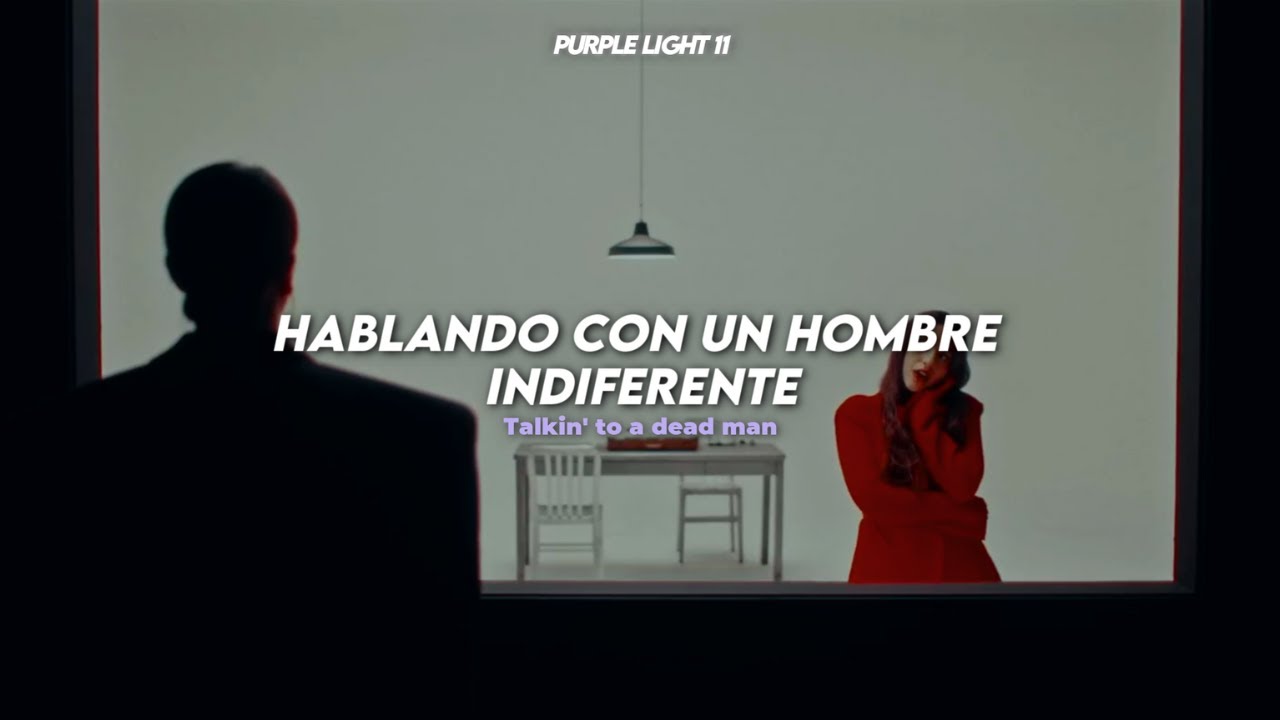
Alessia Cara’s "Dead Man," released in July 2024 as the lead single for her fourth studio album Love & Hyperbole, explores the exhausting dynamics of a one-sided relationship. The lyrics use the metaphor of a "dead man" to describe a partner who is physically present but emotionally vacant, highlighting the futility of trying to revive a connection that has already expired.
The Evolution of Alessia Cara’s Songwriting
By 2026, looking back at the trajectory of Alessia Cara’s career, "Dead Man" stands as a pivotal moment of artistic maturation. Known for her debut "Here," which focused on the social anxiety of a teenage outsider, Cara has spent a decade refining her ability to articulate complex emotional states. "Dead Man" represents a departure from the more straightforward pop-R&B of her The Pains of Growing era, leaning instead into a sophisticated jazz-pop fusion that emphasizes her rhythmic phrasing and lyrical wit.
The track was written by Cara in collaboration with producers who helped craft a sound that feels both vintage and contemporary. In the context of her 2025 album Love & Hyperbole, "Dead Man" serves as the thematic introduction to a collection of songs that examine the extremes of romantic devotion and the inevitable burnout that follows. As we evaluate the song two years after its initial release, its resonance lies in its relatability; it captures the specific frustration of loving someone who has effectively "checked out."
Detailed Breakdown of the "Dead Man" Lyrics
To understand the weight of the song, one must analyze the lyrics through the lens of emotional labor. The song does not depict a sudden breakup but rather the slow, agonizing realization that one person is doing all the work to maintain a pulse in the relationship.
Verse 1: The Recognition of Absence
The song opens with an immediate confrontation. Cara observes her partner’s behavior, noting the lack of engagement and the silence that has filled the space between them. The lyrics point toward a "ghosting" that happens while the person is still sitting right in front of you.
- Key Themes: Observation, emotional distance, and the chilling realization of indifference.
- Vocal Delivery: Cara uses a conversational, almost weary tone in the opening lines, mimicking the feeling of someone who has brought up the same issue a hundred times before.
The Chorus: The "Dead Man" Metaphor
The chorus is where the song finds its hook and its primary thesis. By calling the partner a "dead man," Cara isn't being literal; she is using hyperbole—a central theme of the album—to describe the total lack of reciprocity.
"If you're a dead man, why do you still have a pulse?"
This line is particularly biting. It questions the paradox of a partner who functions biologically but fails to contribute any emotional energy to the partnership. The chorus emphasizes the physical and mental toll on the narrator, who is "tired of trying to breathe life" into someone who refuses to participate.
Verse 2: The Futility of Effort
In the second verse, the lyrics delve deeper into the specific actions the narrator has taken to save the relationship. There is a sense of desperation turned into apathy. The imagery of "mouth-to-mouth" resuscitation serves as a metaphor for the constant ego-stroking and emotional support the narrator provides, only to receive nothing in return.
- Lyrical Focus: The transition from "fixing" to "leaving."
- Metaphorical Depth: The song suggests that staying in such a relationship is akin to haunting a house that is already empty.
The Bridge: The Breaking Point
The bridge of "Dead Man" often serves as the emotional climax in Cara’s live performances during her 2025-2026 tours. Here, the music swells, and the lyrics shift from observation to a declaration of independence. The narrator realizes that by trying to keep the "dead man" alive, she is losing her own vitality.
Musical Composition and Production Style
The sonic landscape of "Dead Man" is as crucial as its lyrics. The song features a driving, syncopated beat and a prominent brass section—most notably a sharp, staccato trumpet that punctuates the end of the choruses. This "jazzy" influence was a deliberate choice for the Love & Hyperbole project, moving away from the synthesized textures of 2021’s In the Meantime.
Instrumentation and Arrangement
The arrangement of "Dead Man" reflects the chaos and energy of the lyrics. While the subject matter is somber, the tempo is upbeat. This juxtaposition is a classic songwriting technique used to highlight the absurdity of a situation. The bassline is walking and melodic, providing a sense of forward motion that mirrors the narrator’s eventual decision to move on.
Vocal Performance
Alessia Cara’s vocal performance in "Dead Man" showcases her range not just in pitch, but in "acting." She maneuvers through the verses with a rhythmic, almost spoken-word quality that reflects her early influences in hip-hop and soul. In the chorus, she opens up her voice, hitting higher registers that convey the strain of the "hyperbole" she is describing.
| Element | Description |
|---|---|
| Tempo | Upbeat, approximately 115-120 BPM |
| Key Signature | Mostly centered around a minor blues scale, enhancing the "moody" feel |
| Primary Instruments | Trumpet, Upright Bass, Snare Drum, Electric Guitar |
| Lyrical Device | Hyperbole and Extended Metaphor |
| Vocal Range | Spans roughly two octaves, focusing on mid-range grit |
Themes of "Love & Hyperbole" (2025 Album Context)
To fully appreciate the lyrics of "Dead Man," one must view it within the broader context of the Love & Hyperbole album. In interviews conducted throughout 2025, Cara explained that the album title refers to her tendency to feel emotions with extreme intensity. To her, a small argument can feel like the end of the world, and a partner’s emotional distance can feel like they are literally deceased.
"Dead Man" was the perfect introduction to this era because it established the "all-or-nothing" emotional stakes of her songwriting. The album as a whole deals with the transition into her mid-20s, a period where relationships become more consequential and the "growing pains" of her earlier work transform into more complex psychological landscapes.
Comparison with Previous Lead Singles
Analyzing "Dead Man" alongside Cara's previous lead singles reveals a clear evolution in her perspective on relationships and self-worth.
- "Here" (2015): Focused on social alienation and being the "anti-social" person at a party. The conflict was external (the party).
- "Growing Pains" (2018): Focused on the internal struggle of transitioning to adulthood and the anxiety of fame. The conflict was internal.
- "Sweet Dream" (2021): Explored insomnia and the need for mental peace. The conflict was biological/neurological.
- "Dead Man" (2024): Focuses on the interpersonal dynamics of a failing relationship. The conflict is relational and interactive.
This progression shows a songwriter who has moved from observing the world to observing herself, and finally, to observing the intricate "dance" between two people.
The Cultural Impact of the Song
Since its release, "Dead Man" has become an anthem for those dealing with "emotional ghosting." In the age of digital connectivity, where someone can be "online" but unresponsive, the lyrics take on a modern resonance. The song has been widely praised by critics at Rolling Stone and Billboard for its "fearless" lyrical approach and its "vintage-cool" production.
The music video for "Dead Man" further emphasizes these themes, featuring surrealist imagery where Cara navigates a world filled with stiff, mannequin-like figures. This visual representation of the "dead man" reinforces the song's message: you cannot have a relationship with someone who is unwilling to be human with you.
How to Interpret the Song’s Ending
The song concludes not with a resolution, but with a fading trumpet solo and a repeating refrain. This suggests that the cycle of the "dead man" relationship is difficult to break. However, the finality of the production—the way it cuts off—implies that the narrator has finally stopped breathing life into the void. It is a song of exhaustion, but also one of eventual liberation.
For fans and musicians, the song offers a rich text for analysis. From its use of the minor second in the melody to its clever wordplay, "Dead Man" is a masterclass in modern pop-jazz songwriting.
Frequently Asked Questions
What inspired Alessia Cara to write "Dead Man"?
Alessia Cara has stated in multiple 2024 and 2025 interviews that the song was inspired by the feeling of being in a relationship where you are the only one trying. She wanted to use the "most dramatic metaphor possible" to describe emotional unavailability, which led to the concept of a man who has a pulse but is effectively "dead" to the relationship.
Is "Dead Man" based on a real person?
While Cara often draws from her personal life, she has noted that the "Dead Man" character is more of a composite of various experiences and observations of modern dating. It represents a specific type of partner rather than one specific individual.
Which album is "Dead Man" on?
"Dead Man" is the lead single from Alessia Cara’s fourth studio album, titled Love & Hyperbole, which was officially released in early 2025.
What does the trumpet solo at the end of the song signify?
The trumpet solo, which became a signature of the "Dead Man" live performances in 2025, signifies the "chaos and noise" of the narrator's internal state. It also serves as a musical "scream" that replaces the words the narrator can no longer find to explain her frustration.
How does "Dead Man" relate to the theme of hyperbole?
The title itself is a hyperbole. By calling someone "dead" because they are emotionally distant, Cara is using extreme language to describe a common feeling. This theme of "over-the-top" emotional expression defines the entire Love & Hyperbole album era.
Final Recommendation for Listeners
If you find yourself relating to the "Dead Man" lyrics, it may be time to evaluate the emotional labor you are investing in your own relationships. Music often serves as a mirror, and Cara’s 2024 hit is a poignant reminder that you cannot fix someone who isn't willing to participate in their own revival. For the best experience, listen to the track as part of the full Love & Hyperbole album to see how the story of this "dead" relationship evolves into the self-actualization found in later tracks.