The Albanian community in the Bronx has evolved from a small group of mid-20th-century immigrants into a dominant socioeconomic and political force by 2026. Centered in neighborhoods like Belmont, Pelham Parkway, and Morris Park, this diaspora has revitalized local economies through aggressive real estate investment, small business ownership, and increasing representation in New York City’s legislative halls.
The Historical Trajectory of Albanian Migration to the Bronx
The story of Albanians in the Bronx is not a single event but a series of waves, each shaped by the geopolitical turbulence of the Balkans. To understand the community's current standing in 2026, one must look back at the three distinct phases that built this foundation.
The Early Pioneers (1945–1980)
The first significant wave consisted largely of political refugees fleeing the rise of the Enver Hoxha regime in Albania. These arrivals were often highly educated but forced into entry-level labor. They settled in the Bronx due to the borough's affordability and its proximity to the Italian-American community. The linguistic and cultural similarities—particularly for those from Northern Albania and Montenegro—made neighborhoods like Belmont a natural fit.
The Post-Communist Influx (1990s)
Following the collapse of the communist government in 1991 and the subsequent civil unrest in 1997, a massive wave of Albanians arrived in New York. Unlike the previous generation, these migrants were often fleeing economic collapse. Simultaneously, the conflict in Kosovo during the late 1990s brought thousands of Kosovar Albanians to the Bronx, seeking asylum. This period solidified the Bronx as the "Albanian Capital of America," as the sheer volume of arrivals created a self-sustaining ecosystem of services, grocery stores, and social clubs.
The 21st Century Professional Shift
By the 2010s and leading into 2026, the migration pattern shifted from survival-based movement to family reunification and professional advancement. The children of the 1990s refugees have now come of age, entering professions in law, medicine, and technology, while maintaining their residential and commercial roots in the Bronx.
Geographic Anchors: From Arthur Avenue to Pelham Parkway
The Albanian presence in the Bronx is most visible through its geographic concentration. While the community has expanded into Westchester and Connecticut, the Bronx remains the cultural and spiritual heart of the diaspora.
Belmont and the "Little Italy" Transition
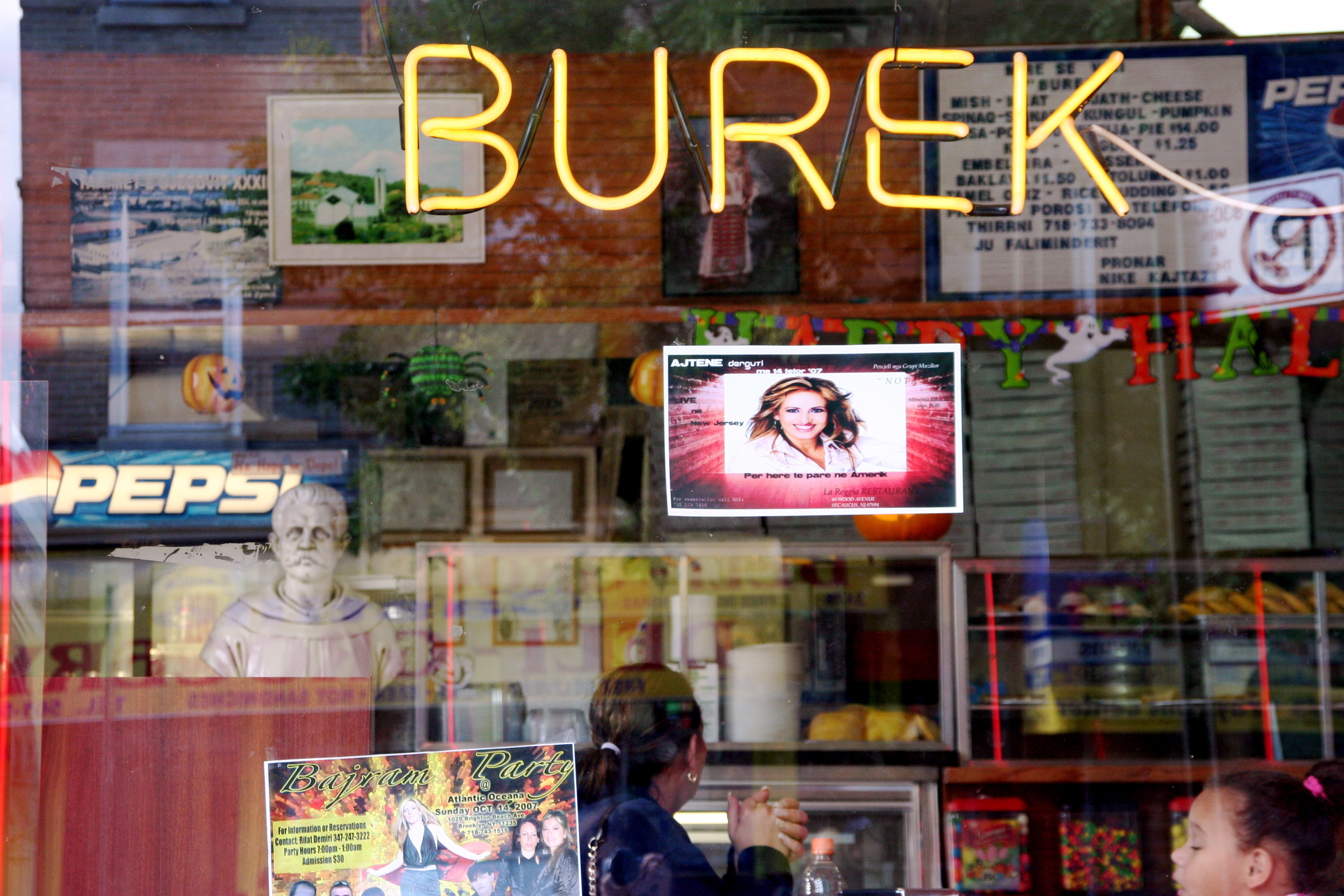
For decades, Arthur Avenue was synonymous with Italian heritage. However, as of 2026, a significant portion of the businesses, bakeries, and restaurants in the Belmont section are owned and operated by Albanians. This transition was seamless; Albanian entrepreneurs maintained the traditional Italian aesthetic of the neighborhood while introducing Balkan specialties like byrek (flaky savory pie) and qofte (grilled meatballs). This dual identity has preserved the "Old World" charm of the area while ensuring its economic survival.
Pelham Parkway and Morris Park
As families grew and sought more residential space, the community expanded eastward. Pelham Parkway has become a primary residential corridor for Albanian-Americans. The wide boulevards and pre-war apartment buildings are home to thousands of families, punctuated by social centers and cafes where the older generation gathers to discuss politics in the mother tongue. Morris Park has followed a similar trajectory, with Albanian homeowners investing heavily in the renovation of single-family homes, significantly boosting local property values.
The Economic Engine: Real Estate and Small Business
The "rise" of the Albanian community is most quantifiable in the realm of economics. The community has moved from providing labor for the city's infrastructure to owning significant portions of it.
Dominance in Property Management
One of the most remarkable aspects of the Albanian success story in the Bronx is their role in real estate. Many early immigrants started as "supers" (building superintendents). Through disciplined saving and communal lending practices, they began purchasing the very buildings they managed. By 2026, Albanian-owned firms manage a substantial percentage of the Bronx’s multi-family housing stock. This vertical integration—from maintenance to ownership—has provided the community with a stable wealth base that is resistant to economic fluctuations.
Entrepreneurial Ecosystems
Beyond real estate, the Bronx features a dense network of Albanian-owned businesses. This includes:
- Construction and Contracting: Albanian firms are major players in NYC’s renovation and masonry sectors.
- Hospitality: Beyond "Little Italy," Albanian-style cafes (kafana) serve as essential social hubs.
- Service Industries: From HVAC repair to logistics, the community has built a "buy-local" culture that keeps capital circulating within the diaspora.
Economic Comparison of Key Neighborhoods (2026 Estimates)
| Neighborhood | Primary Business Type | Growth Driver | Community Density |
|---|---|---|---|
| Belmont | Hospitality & Food Retail | Tourism and University Proximity | Very High |
| Pelham Parkway | Real Estate Management | Residential Stability | High |
| Morris Park | Construction & Professional | Home Ownership/Renovations | Moderate-High |
| Van Nest | Automotive & Logistics | Industrial Zoning | Moderate |
Cultural Preservation and Social Institutions
Maintaining a distinct identity in a "melting pot" like New York City requires intentional effort. The Bronx Albanians have succeeded where other groups have assimilated to the point of invisibility.
The Role of Religious Diversity
The Albanian community is unique in its religious pluralism, comprising Muslims, Catholics, and Orthodox Christians. In the Bronx, this diversity is a point of pride rather than division. The Our Lady of Shkodra Albanian Catholic Church in nearby Hartsdale (frequented by Bronx residents) and various mosques in the Bronx work in tandem to support community welfare. National identity often supersedes religious affiliation, a phenomenon summarized by the famous 19th-century Albanian poem: "The religion of Albanians is Albanianism."
Language and Education
Language schools and cultural centers, such as the Albanian-American Community Center, play a critical role in 2026. These institutions ensure that second and third-generation youth remain fluent in Albanian. Furthermore, the community has advocated for Albanian language programs in Bronx public schools, reflecting their growing influence on the Department of Education.
Political Emergence and Civic Advocacy
The "rise" of the community is perhaps most evident in the political sphere. For decades, the Bronx Albanians were a "silent majority" in their neighborhoods, but the last decade has seen a surge in direct participation.
From Voters to Representatives
The election of figures like Mark Gjonaj to the New York City Council and the State Assembly marked a turning point. It signaled that the community was no longer content with being a voting bloc for others; they wanted a seat at the table. In 2026, Albanian-American political action committees (PACs) are highly active, focusing on issues such as property tax reform, public safety, and small business support.
Naming and Recognition
The physical landscape of the Bronx now reflects this political clout. Streets and intersections have been co-named to honor Albanian heroes. "Mother Teresa Way" in the Bronx serves as a prominent reminder of the community's most famous ethnic daughter, providing a sense of permanence and belonging.
Challenges and the 2026 Outlook
Despite the upward trajectory, the community faces significant hurdles as it continues to integrate into the broader New York fabric.
Gentrification and Displacement
As the Bronx undergoes various stages of redevelopment, the Albanian community is caught between two roles: the developers driving the change and the residents facing rising costs. Balancing the desire for neighborhood improvement with the need to keep housing affordable for newer immigrants remains a central tension.
The "Brain Drain" to the Suburbs
As families achieve financial success, there is a natural pull toward the suburbs of Westchester and Greenwich, CT. The challenge for the Bronx is to remain the "center of gravity" for the community, ensuring that successful professionals keep their businesses and cultural investments within the borough.
Integration vs. Isolation
While the tight-knit nature of the community is its strength, it can occasionally lead to social insulation. Leaders in 2026 are increasingly focusing on cross-community alliances with the Hispanic and African American populations that share the Bronx, recognizing that the borough's future depends on collective advocacy.
Frequently Asked Questions
Why is the Bronx considered the center of the Albanian diaspora?
The Bronx houses the highest concentration of ethnic Albanians in the United States. This is due to historical migration chains where early arrivals from the 1960s and 70s established a foothold, making it easier for subsequent waves in the 1990s to find housing, employment, and a familiar cultural environment. By 2026, the infrastructure of "Little Albania" in the Bronx is the most developed in the country.
What are the most common Albanian traditions seen in the Bronx?
Public celebrations of Independence Day (November 28) are massive events in the Bronx, featuring parades and traditional dance. Additionally, the "Kuvend" or community assembly culture remains strong, where elders and business leaders meet to resolve community disputes or plan social initiatives. The culinary tradition of slow-sipping espresso in cafes is also a hallmark of Albanian-dominated Bronx streets.
How has the community impacted the Bronx real estate market?
Albanians are credited with stabilizing and then revitalizing many distressed properties in the Bronx during the late 20th century. By taking on the roles of superintendents and later owners, they improved building maintenance and safety. In 2026, Albanian-owned management companies are among the most significant private landlords in the borough, contributing to a robust local tax base.
What language is spoken in these communities?
While English is the primary language for business and the younger generation, Albanian (Gheg and Tosk dialects) is widely heard on the streets of Pelham Parkway and Belmont. Many signs are bilingual, and there is a concerted effort through community schools to ensure that the youth maintain their heritage language.
Is the Albanian community in the Bronx religiously homogeneous?
No. The community is famously diverse, including Muslims, Roman Catholics, and Eastern Orthodox Christians. In the Bronx, these groups coexist closely, often sharing the same social spaces and political goals. Their common ethnic identity as Albanians typically takes precedence over religious differences.
Practical Recommendation for Visitors and Residents
For those looking to experience the rise of this community firsthand, a visit to Arthur Avenue and the surrounding Belmont area is essential.
- Culinary Exploration: Visit a traditional Albanian "Burekura" (Byrek shop) to try authentic Balkan pastries.
- Cultural Landmarks: Walk to the intersection of Lydig Avenue and Pelham Parkway to see the heart of the residential community.
- Support Local: When seeking contracting or professional services in the North Bronx, consider the numerous Albanian-owned small businesses that have been the backbone of the area’s 2026 revitalization.
- Stay Informed: Follow the Albanian-American Community Center for updates on public festivals and town hall meetings to see how the community interacts with city governance.