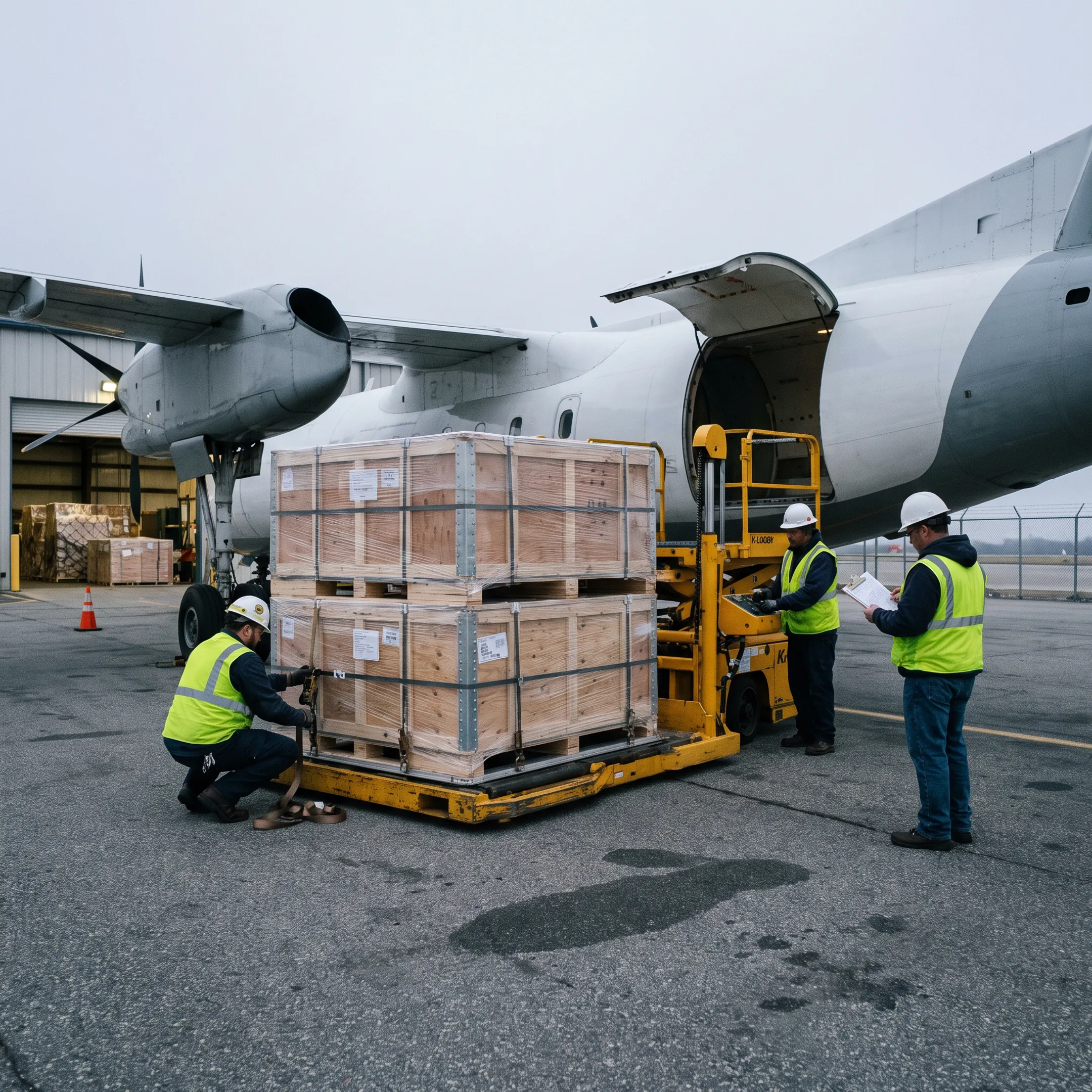
Air cargo charters for flexible freight provide dedicated aviation solutions designed to bypass the limitations of scheduled airline services. By securing an entire aircraft, shippers gain total control over departure times, routing, and handling protocols, which is essential for urgent, oversized, or high-value shipments that require immediate, non-standard transport.
The global logistics landscape in 2026 demands a level of agility that traditional scheduled freight often fails to provide. As supply chains face increasing volatility from geopolitical shifts and climate-related disruptions, the ability to pivot via air cargo charters has moved from a "luxury" option to a strategic necessity. "Flexible freight" refers to cargo that does not fit the rigid requirements of scheduled carriers—whether due to its physical dimensions, the urgency of its delivery, or its destination in a remote or underserved region.
The Evolution of Flexible Freight in 2026
In 2026, the definition of flexible freight has expanded beyond simple "emergency" shipping. Modern manufacturing relies on highly synchronized "just-in-case" inventory models, which, while more robust than the older "just-in-time" systems, still require rapid intervention when disruptions occur. Air cargo charters provide the ultimate safety valve.
The flexibility inherent in chartering an aircraft allows logistics managers to dictate every variable. Unlike scheduled services, where your freight is subject to the carrier's route network and timing, a charter operates on your timeline. This is particularly critical in 2026, as e-commerce expectations for ultra-fast delivery and the rise of decentralized manufacturing hubs have made the "hub-and-spoke" model of traditional airlines less efficient for point-to-point urgent deliveries.
Furthermore, the integration of Sustainable Aviation Fuel (SAF) mandates and carbon-tracking requirements in 2026 means that flexible freight solutions now incorporate environmental data as a standard part of the charter quote. Shippers are no longer just looking for the fastest route, but the most efficient route that balances speed with their corporate ESG (Environmental, Social, and Governance) commitments.
Why Choose Air Charters Over Scheduled Freight?
The decision to move from scheduled belly-hold or freighter capacity to a full air charter typically hinges on three factors: capacity, control, and complexity.
Capacity and Dimensional Freedom
Scheduled airlines use standard Unit Load Devices (ULDs) that must fit within specific cargo door dimensions. For "flexible freight"—such as large aerospace components, oil and gas machinery, or high-capacity power generators—these constraints are often deal-breakers. Charters provide access to specialized nose-loading aircraft or heavy-lift planes like the Boeing 747-8F or the Il-76, which can accommodate outsized items that are physically impossible to load onto a standard passenger-to-freighter (P2F) conversion.
Operational Control and Timing
Scheduled freight moves according to the airline’s schedule. If a flight is delayed or cancelled, your cargo is bumped to the next available slot. In a charter scenario, the aircraft is dedicated to your cargo alone. You decide the "wheels up" time. If your production line is running late and the cargo won't be ready until 11:00 PM, the aircraft waits for you. This level of control is the primary driver for the automotive and pharmaceutical sectors, where a four-hour delay can result in millions of dollars in losses or compromised product integrity.
Destination Accessibility
Major carriers fly into major hubs. However, "flexible freight" often needs to go where the hubs aren't. Whether it’s a remote mining site in Western Australia or a disaster relief zone in Southeast Asia, air cargo charters can utilize secondary airports, shorter runways, or unpaved strips (depending on the aircraft type), bringing the cargo significantly closer to its final destination and reducing "last-mile" trucking delays.
Technical Specifications: Matching Cargo to Aircraft
Successful flexible freight operations require a deep understanding of aircraft capabilities. In 2026, the fleet available for charter is diverse, ranging from small turboprops for regional "go-now" missions to massive strategic freighters.
- Light Aircraft (e.g., Cessna 208, Beechcraft 1900): These are ideal for small, urgent parcels or medical supplies. They offer high frequency and can land at almost any municipal airport.
- Narrow-body Freighters (e.g., Boeing 737-800BCF, Airbus A321P2F): The workhorses of regional flexible freight. They are perfect for e-commerce overflows and medium-sized industrial parts.
- Wide-body Freighters (e.g., Boeing 777F, Airbus A330-200F): These provide the long-range capability needed for transcontinental flexible freight. They offer significant volume and are often used for "series charters" during peak seasons.
- Heavy Lift / Outsized (e.g., Boeing 747-8F, Antonov models): Essential for oversized flexible freight. The 747-8F's nose-loading capability allows for the transport of items longer than the aircraft's internal width, such as pipes or turbine blades.
When selecting an aircraft, technical load planning is paramount. This involves calculating the Floor Load Limit, which is the maximum weight the aircraft floor can support per square foot, and ensuring the Center of Gravity (CG) remains within safe limits for flight. Professional charter brokers use 3D modeling software to simulate the loading process before the aircraft even arrives on the tarmac.
The Operational Logistics of an Air Charter
Booking air cargo charters for flexible freight is a multi-step process that requires coordination between the shipper, the broker, the carrier, and ground handling agents.
Step 1: The Brief and Feasibility Study
The process begins with a detailed "cargo manifest" including dimensions, weight, and any hazardous material (HAZMAT) classifications. In 2026, this step often involves digital twins of the cargo to ensure fitment. The broker conducts a feasibility study to determine which aircraft are positioned near the origin and have the necessary traffic rights.
Step 2: Securing Traffic Rights and Permits
Unlike scheduled flights, charters require specific landing and overflight permits. While some "Open Skies" agreements simplify this, many flexible freight routes involve countries where permits can take 48 to 72 hours to secure. In emergency "life and shift" scenarios, brokers work with civil aviation authorities to expedite these through "humanitarian" or "emergency" channels.
Step 3: Ground Handling and Technical Supervision
Standard airport ground handlers may not be equipped to manage complex flexible freight. A dedicated charter often includes a Loadmaster or a Flying Groom (for livestock). For oversized freight, specialized equipment like heavy-duty cranes or "main deck loaders" must be pre-positioned at the airport.
Step 4: The "Last Mile" Integration
The flexibility of the air portion is moot if the cargo is stuck at the warehouse. Modern air charter solutions in 2026 provide end-to-end visibility, integrating GPS tracking on the pallets with the aircraft's own telemetry. This allows the receiving team to know exactly when to have the offloading cranes ready, minimizing "dwell time" on the tarmac.
Cost Drivers and Pricing Models in 2026
The cost of air cargo charters for flexible freight is significantly higher than scheduled service, but the "cost of failure" for not using one is often higher. Understanding the pricing components is vital for budgeting.
| Cost Component | Description | Variability Factor |
|---|---|---|
| Block Hour Rate | The base cost for the aircraft per hour of flight. | High (Based on aircraft size) |
| Fuel Surcharge | Cost of fuel, often pegged to the IATA Jet Fuel Price Index. | Very High (Fluctuates daily) |
| Repositioning (Ferry) Fees | The cost to fly the empty aircraft from its current location to your origin. | Medium (Depends on fleet density) |
| Landing & Parking Fees | Charges levied by airports for using their facilities. | Low (Fixed by airport) |
| Ground Handling | The cost of loading/offloading, especially for specialized freight. | Medium (Depends on equipment) |
| Crew Expenses | Per diems, hotels, and transport for the flight crew. | Low (Standardized) |
The "Empty Leg" Opportunity
A pro-tip for managing costs in flexible freight is the "empty leg" or "ferry flight." When an aircraft is chartered for a one-way trip, it must return to its base or move to its next destination empty. Shippers can often book these empty legs at a 30% to 50% discount. While this reduces flexibility (as you must conform to the aircraft's existing repositioning schedule), it is an excellent way to move non-emergency but difficult freight.
Regulatory Environment and Compliance
Operating air cargo charters for flexible freight involves navigating a complex web of international and local regulations. All operations must comply with the International Civil Aviation Organization (ICAO) standards for safety and security.
Dangerous Goods (DG)
Flexible freight often includes components that are classified as Dangerous Goods—lithium batteries, pressurized canisters, or volatile chemicals. Charters offer a benefit here: some DG items that are "Cargo Aircraft Only" (CAO) and forbidden on passenger planes can be moved with greater ease on a dedicated freighter, provided the crew is certified and the IATA Dangerous Goods Regulations (DGR) are strictly followed.
Customs and Sanctions
In 2026, automated customs interfaces have streamlined the process, but the "flexible" nature of these flights often means they land at night or at small airports with limited customs staffing. Pre-clearance via Electronic Data Interchange (EDI) is mandatory. Furthermore, brokers must perform rigorous "Know Your Customer" (KYC) and "Denied Party Screening" to ensure that the freight does not violate international sanctions.
Common Challenges and Troubleshooting
Even with meticulous planning, flexible freight can face hurdles.
- Weather Delays: Unlike scheduled airlines with large fleets to swap aircraft, a charter is usually a single tail number. If weather grounds that specific plane, the delay is absolute. Solution: Always have a "Plan B" involving a different airport or a brief storage period in a temperature-controlled facility.
- Mechanical Failure (AOG): "Aircraft on Ground" (AOG) situations are the bane of the charter industry. Solution: Work with brokers who have "sub-charter" clauses in their contracts, allowing them to pull in a replacement aircraft from a partner carrier if the primary one fails.
- Permit Denials: Political tensions can lead to sudden closure of airspace. Solution: Ensure your flight planner has experience with alternative routing, even if it adds flight time and fuel cost.
Frequently Asked Questions
What is the minimum lead time to book an air cargo charter?
For urgent "go-now" missions, a charter can often be positioned within 4 to 12 hours, depending on the aircraft's proximity and crew duty cycles. However, for complex or oversized freight requiring special permits, a lead time of 3 to 7 days is recommended to ensure all ground handling and traffic rights are secured.
Can I track my flexible freight during the charter?
Yes. In 2026, most charter providers offer real-time tracking via IoT (Internet of Things) devices attached to the cargo. These devices provide data on location, temperature, humidity, and even shock/impact, which is vital for sensitive electronic or pharmaceutical freight.
Is insurance included in the charter price?
Standard carrier liability (often based on Warsaw or Montreal Convention limits) is included, but this is usually calculated by weight and may not cover the full value of high-tech or luxury goods. Shippers should always take out "All-Risk" cargo insurance specifically tailored for air charters.
Are there weight limits for flexible freight charters?
The weight limit is determined entirely by the aircraft type. A small turboprop might be limited to 1,500 kg, while a Boeing 747-8F can carry over 130,000 kg. The primary constraint is often not the total weight, but the "piece weight"—the weight of a single indivisible item—which must not exceed the aircraft floor’s structural limits.
How do I ensure my charter is "green" or sustainable in 2026?
Most charter operators now offer the option to purchase SAF (Sustainable Aviation Fuel) credits to offset the emissions of the specific flight. You should request a "Carbon Emissions Report" post-flight, which provides a verified calculation of the CO2 footprint based on actual fuel burn and payload.
Practical Recommendation for Shippers
When arranging air cargo charters for flexible freight, the most critical step is the selection of your partner. Do not simply go with the lowest quote. Look for a broker or carrier with a proven track record in your specific industry—whether that is automotive, heavy-lift, or humanitarian aid.
Verify that they have 24/7 operational support and a robust network of ground agents. In the world of flexible freight, things change rapidly; you need a partner who can adjust a flight plan at 3:00 AM on a Sunday. Finally, always ensure that your cargo is "flight-ready"—properly packed, crated, and documented—before the aircraft arrives. In the charter world, "time is money," and every hour an aircraft sits idle on the tarmac due to paperwork errors is an hour you are paying for.