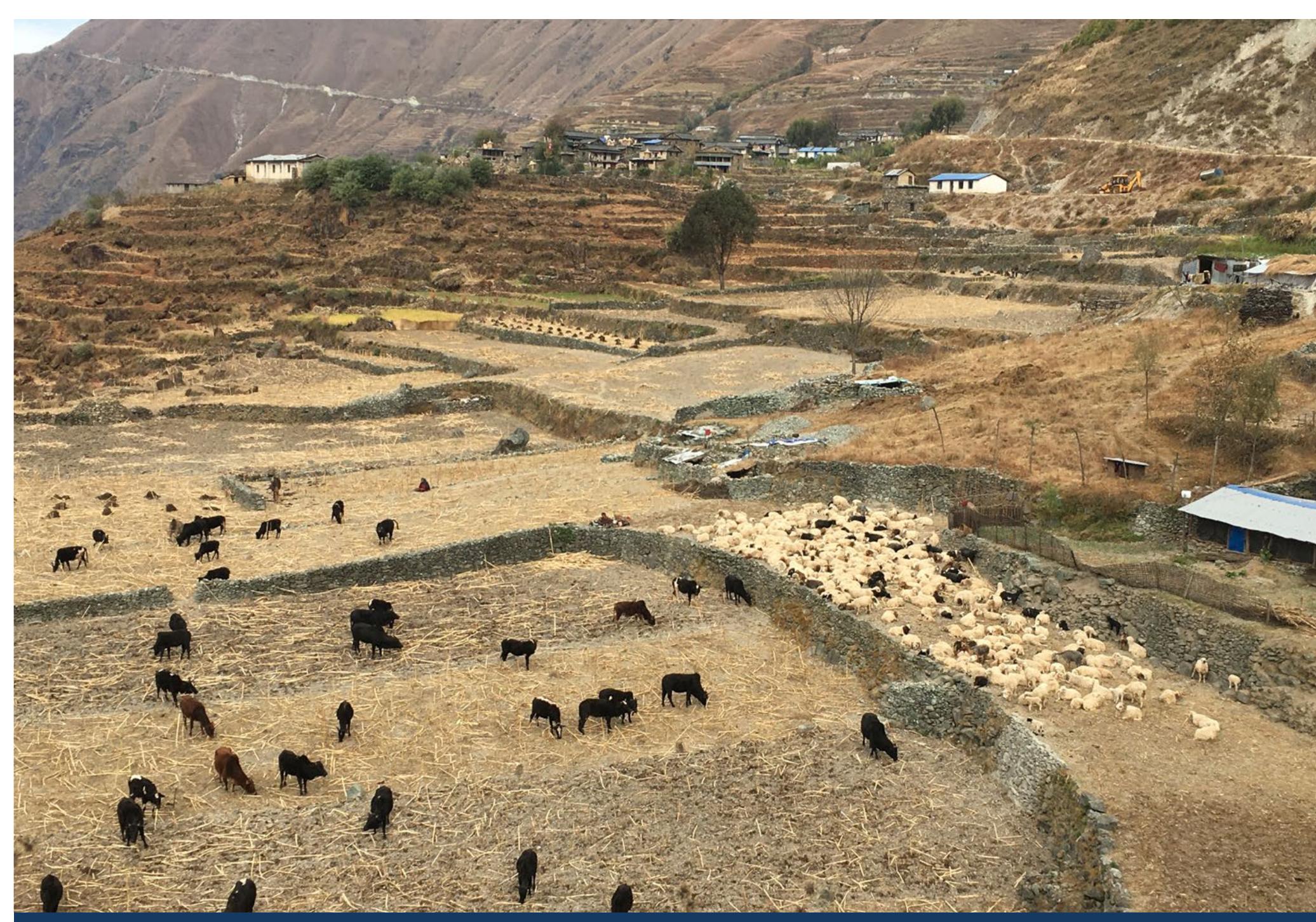
Agro-pastoralism in practice involves the deliberate integration of crop production and livestock rearing within a single ecological and economic framework. This system optimizes land use by using livestock manure to fertilize fields while utilizing crop residues as animal fodder, creating a self-sustaining cycle that enhances food security and environmental resilience.
Agro-pastoralism is not merely the simultaneous existence of cows and corn on the same property; it is a complex management strategy that leverages biological synergies to reduce external inputs and maximize outputs. As of 2026, these systems are increasingly recognized as the cornerstone of regenerative agriculture, providing a robust buffer against the market volatility and climate instability that characterize modern food production. By diversifying income streams and stabilizing the nutrient cycle, agro-pastoralists can achieve higher levels of sustainability than specialized monoculture operations.
The Core Principles of Agro-Pastoral Integration
To understand agro-pastoralism in practice, one must first grasp the principle of nutrient cycling. In specialized systems, nutrients are often lost: a grain farmer must buy synthetic nitrogen, while a concentrated animal feeding operation (CAFO) struggles with excess manure disposal. An agro-pastoral system closes this loop.
Nutrient Cycling and Soil Health
In an integrated system, livestock act as mobile processing units. They consume biomass that is often inedible to humans—such as cover crops, weeds, and post-harvest residues—and convert it into high-quality protein and nutrient-rich manure. This manure is then returned to the soil, improving organic matter content, water retention, and microbial activity. Research by the Food and Agriculture Organization (FAO) suggests that integrated systems can significantly reduce the need for synthetic fertilizers, which is a critical economic advantage in the current 2026 fiscal climate of fluctuating chemical prices.
Risk Mitigation and Economic Diversification
Farming is inherently risky. Weather events, pest outbreaks, or market crashes can wipe out a single-crop enterprise. Agro-pastoralism provides "biological insurance." If a drought stunts grain growth, the crop may still be salvaged as emergency forage for livestock. Conversely, if livestock prices dip, the farmer can rely on crop sales. This dual-revenue model stabilizes the farm's cash flow, making it more attractive to lenders and more resilient during economic downturns.
Practical Steps for Implementing Agro-Pastoral Systems
Moving from a specialized system to an integrated agro-pastoral model requires careful planning and infrastructure. It is not a transition that happens overnight; it requires a phased approach to ensure both animal welfare and crop productivity.
Site Assessment and Zonal Planning
Before introducing livestock into a cropping landscape, a thorough site assessment is mandatory. This involves mapping soil types, water sources, and existing vegetation. In 2026, practitioners often use high-resolution satellite imagery and soil sensors to determine which areas are best suited for intensive cultivation and which are better for grazing.
- Zoning for Forage: Identify marginal lands (slopes or rocky soils) that are unsuitable for plowing but can support hardy grasses or shrubs for grazing.
- Water Infrastructure: Livestock require reliable water access. Installing solar-powered pumps and articulated piping systems ensures that animals can move across the landscape without overgrazing areas near a single water hole.
- Fencing and Containment: Effective agro-pastoralism requires "rational grazing." This involves using permanent or mobile electric fencing to control the intensity and timing of grazing, preventing animals from damaging young crops.
Selecting Compatible Species
Success depends on matching the right animals with the right crops. In temperate climates, this might look like sheep grazing in apple orchards (silvopasture), where the sheep control weeds and provide fertilizer while the trees provide shade. In semi-arid regions, it often involves cattle grazing on sorghum or millet stalks after the grain has been harvested.
- Livestock Choices: Ruminants like cattle, goats, and sheep are the most common choices because they can digest cellulose-heavy residues. Poultry can also be integrated to control insect populations in vegetable or fruit systems.
- Crop Choices: Focus on "dual-purpose" crops. Varieties of maize, sorghum, and legumes have been bred specifically to provide high grain yields for humans and high-quality biomass for animals.
Management Strategies for Success
The "practice" part of agro-pastoralism is found in daily management routines. In 2026, technology has streamlined these processes, but the fundamental ecological requirements remain the same.
Rotational Grazing and Crop Cycles
The most common mistake in agro-pastoralism is overgrazing, which leads to soil compaction and erosion. To avoid this, practitioners use rotational grazing. Animals are moved through a series of paddocks, grazing each area intensely for a short period before being moved to allow the vegetation to recover. When integrated with crops, this rotation includes "fallow" periods where livestock graze the fields during the off-season, naturally fertilizing the ground before the next planting.
Managing the "Competition" Factor
There is a natural tension between livestock and crops. Animals may trample or eat the primary crop if not managed. Practical solutions include:
- Stubble Grazing: Only allowing animals into the fields after the primary harvest is complete.
- Relay Cropping: Planting a forage crop (like clover) into a standing grain crop (like wheat). Once the wheat is harvested, the clover is already established and ready for grazing.
- Zero-Grazing (Cut-and-Carry): In areas where land is scarce or fencing is impossible, farmers harvest the forage and carry it to penned animals. This maximizes forage efficiency and allows for total manure collection.
Technical Comparison of Agro-Pastoral Models
Different regions and goals require different configurations. The following table compares the three most common integrated systems currently in use in 2026.
| System Type | Primary Focus | Land Requirements | Labor Intensity | Key Benefit |
|---|---|---|---|---|
| Integrated Crop-Livestock (ICL) | Annual grain and fodder crops | High-quality arable land | Moderate | Optimized nutrient cycling and high caloric output. |
| Silvopasture | Trees (fruit/timber) and livestock | Variable (often utilizes marginal land) | High (pruning and animal care) | Superior animal welfare (shade) and carbon sequestration. |
| Agrosilvopastoral | Crops, trees, and livestock | Large-scale, diverse landscapes | Very High | Maximum biodiversity and multiple revenue streams (wood, grain, meat). |
Economic Considerations and Cost-Benefit Analysis
While agro-pastoralism reduces the need for external inputs, it does have higher initial capital requirements and labor costs than specialized farming.
Initial Investment
Transitioning to agro-pastoralism requires spending on fencing, watering systems, and veterinary supplies. Furthermore, the farmer may need to acquire different types of machinery, such as seeders capable of no-till planting into grazed sod. By 2026, many government grants under the USDA Natural Resources Conservation Service or equivalent European bodies provide subsidies for these transitions, recognizing their environmental benefits.
Operating Costs vs. Yield
In an integrated system, "yield" must be measured differently. While the yield of a specific crop might be slightly lower than in a high-input monoculture, the total productivity per hectare (including meat, milk, and grain) is usually higher. Additionally, the reduction in costs for fertilizer, pesticides, and supplemental feed often leads to higher net profit margins.
Challenges and Troubleshooting in the Field
Agro-pastoralism is a high-skill endeavor. Practitioners must be both agronomists and animal husbandmen, which increases the complexity of daily operations.
Disease and Biosecurity
The proximity of livestock to crops can occasionally present biosecurity risks, particularly if animal waste is used on fresh produce intended for raw consumption. Practical agro-pastoralism requires strict adherence to composting standards or long "waiting periods" (often 90-120 days) between manure application and the harvest of human-edible crops to ensure pathogen die-off.
Compaction and Soil Structure
If animals are allowed on wet fields, their hooves can cause deep soil compaction, which destroys soil structure and reduces future crop yields. Managing animal movement based on soil moisture levels is a critical skill. In 2026, many farmers use "virtual fencing" technology—GPS-enabled collars that deliver a mild stimulus to keep animals out of sensitive areas—to manage this without physical fences.
Environmental Impact and Climate Resilience
Perhaps the most significant reason for the rise of agro-pastoralism in 2026 is its role in climate change mitigation. Integrated systems are highly effective at sequestering carbon. The combination of perennial grasses (in grazing phases) and reduced tillage (enabled by animal fertilization) allows the soil to act as a massive carbon sink.
Furthermore, these systems are more "plastic" in the face of weather extremes. Deep-rooted forage crops often survive droughts that kill shallow-rooted annuals. The presence of livestock provides a biological buffer, as animals can be moved to better pastures or sold off if conditions become truly dire, providing a liquidity that grain-only farmers lack.
Frequently Asked Questions
Is agro-pastoralism only for small-scale farms?
No. While it is highly effective for smallholders, large-scale operations in Australia, Brazil, and the United States have successfully implemented integrated crop-livestock systems. Large-scale integration often relies more heavily on technology, such as automated waterers and satellite-guided grazing patterns, to manage thousands of hectares and animals efficiently.
How does agro-pastoralism affect biodiversity?
Agro-pastoralism significantly increases both above-ground and below-ground biodiversity. The variety of plant species used for forage and crops creates a more complex habitat for pollinators and beneficial insects. Below ground, the diverse organic matter provided by animal manure and varied root systems supports a wider array of soil microbes and fungi compared to monocultures.
What are the main labor requirements?
The labor requirements are generally higher and more constant throughout the year. While a grain farmer may have intense work periods during planting and harvest with long lulls in between, an agro-pastoralist must manage livestock daily. This requires a broader skill set, including animal health management, fencing maintenance, and forage assessment.
Can I practice agro-pastoralism on leased land?
It is possible but challenging. The infrastructure required—such as permanent fencing and water systems—is expensive and often remains with the land. For leased land, "mobile agro-pastoralism" is often practiced, using portable electric fencing and temporary water tanks. Success on leased land usually requires long-term agreements (5-10 years) to justify the investment in soil health and infrastructure.
Does this system require more water?
Not necessarily. While livestock require drinking water, the improved organic matter in the soil significantly increases its water-holding capacity. Over time, this makes the cropping side of the operation more drought-resistant, often leading to a net reduction in irrigation requirements for the same total biomass production.
Moving Forward: Next Actions for Practitioners
For those looking to implement agro-pastoralism in practice, the best approach is to start small. Begin by integrating a small "test" herd on a portion of your land or by introducing a cover crop that can be grazed after the main harvest.
- Audit your resources: Look for underutilized biomass on your farm, such as crop residues or "weedy" corners, and determine which livestock could most efficiently process it.
- Consult with experts: Reach out to local agricultural extension offices or organizations like the International Livestock Research Institute (ILRI) for region-specific advice on species compatibility and veterinary needs.
- Invest in infrastructure: Prioritize flexible, high-quality fencing and water systems that allow you to adapt your grazing plan as you learn the rhythms of your specific landscape.
By embracing the complexity of integrated systems, modern farmers can move beyond the limitations of industrial specialization toward a more stable, profitable, and ecologically sound future.