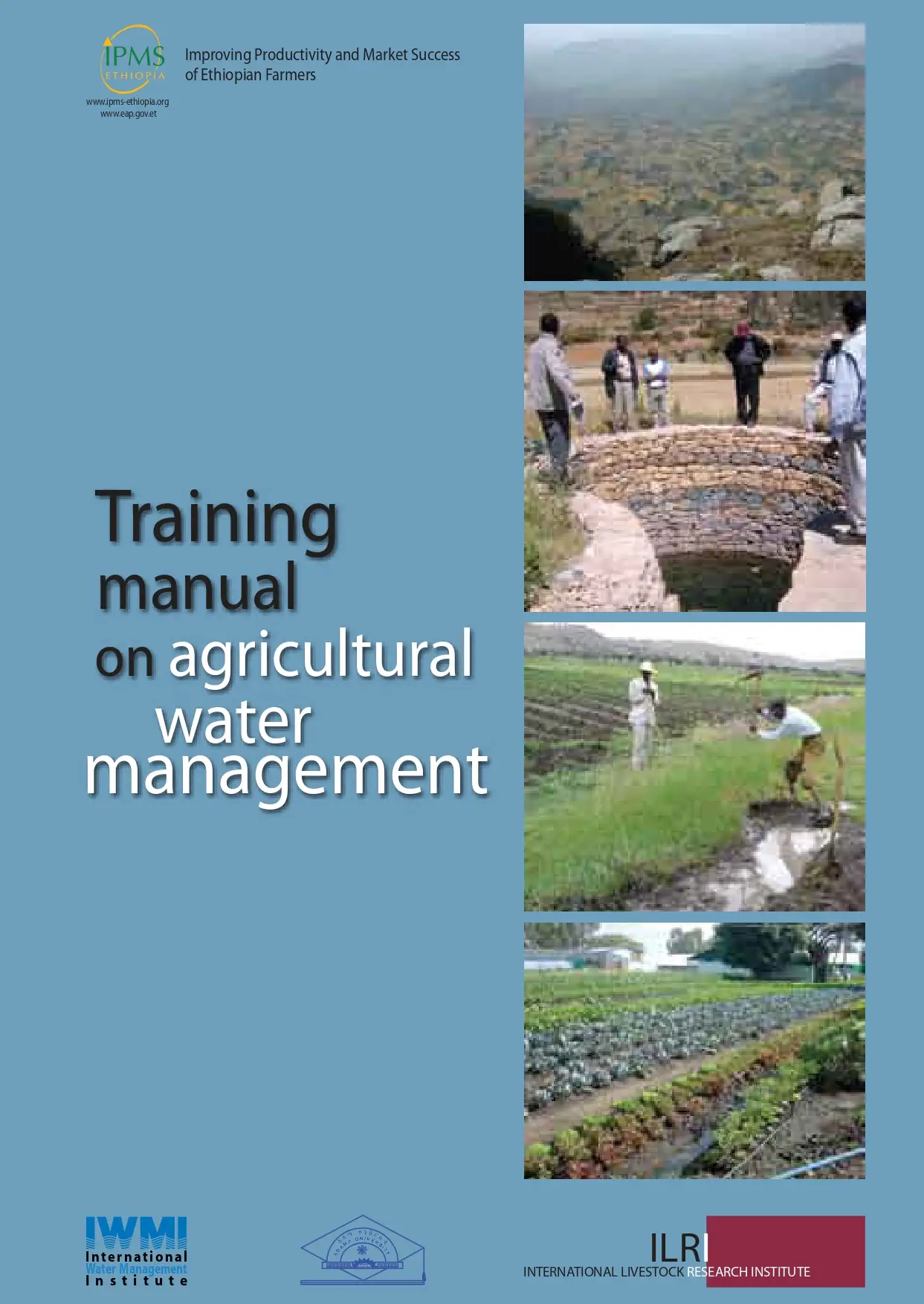
Agricultural water management in practice involves the systematic application of irrigation technologies, soil moisture monitoring, and agronomic scheduling to optimize crop productivity while conserving water. In 2026, effective management relies on integrating high-precision delivery systems with real-time data analytics to address climate variability, ensure soil health, and maximize the efficiency of every liter used.
Agricultural water management (AWM) is no longer a simple matter of moving water from a source to a field. It has evolved into a multidisciplinary field that bridges the gap between hydraulic engineering, soil science, plant physiology, and digital technology. As we navigate 2026, the primary challenge for practitioners is "water productivity"—producing more crop per drop—rather than merely "yield at any cost." This shift is driven by increasing competition for water between the agricultural, industrial, and municipal sectors, as well as the heightening frequency of prolonged drought cycles.
Practical AWM requires a granular understanding of the water-soil-plant-atmosphere continuum. It involves managing the timing and volume of water application to meet the specific physiological needs of a crop at various growth stages while minimizing losses due to evaporation, runoff, and deep percolation. This article provides a comprehensive guide to implementing modern water management strategies at the field and farm scale.
The Fundamentals of Crop Water Requirements
Before implementing any hardware, a practitioner must calculate the crop’s actual water needs. This is determined through the concept of Evapotranspiration (ET), which is the sum of evaporation from the soil surface and transpiration through the plant’s leaves.
Understanding Reference Evapotranspiration (ETo)
In 2026, most managers use automated weather stations or satellite-derived data to calculate Reference Evapotranspiration (ETo). ETo represents the water loss from a standardized "reference" surface, typically a well-watered grass or alfalfa field. Factors influencing ETo include solar radiation, air temperature, humidity, and wind speed.
The Role of Crop Coefficients (Kc)
To translate ETo into the specific needs of a particular crop, practitioners apply a Crop Coefficient (Kc). This value changes throughout the growing season. For example, a young maize plant in the vegetative stage has a lower Kc (perhaps 0.30) than a plant during the silking stage (which may exceed 1.15). The formula $ETc = ETo \times Kc$ allows managers to determine the exact depth of water (usually in millimeters) the crop has consumed since the last irrigation event.
Deficit Irrigation Strategies
In regions where water is strictly rationed, Regulated Deficit Irrigation (RDI) is a common practice. This involves intentionally providing less water than the full ET requirement during growth stages that are less sensitive to water stress (such as the vegetative stage in certain grains). This saves water for critical reproductive stages where moisture stress would significantly impact yield.
Modern Irrigation Systems: Selection and Mechanics
The choice of delivery system is the most significant capital investment in agricultural water management. Each system offers different levels of "Application Efficiency"—the ratio of water stored in the root zone to the total water delivered.
Micro-irrigation and Drip Systems
Drip irrigation remains the gold standard for high-value horticultural crops and is increasingly used for row crops via Subsurface Drip Irrigation (SDI). By delivering water directly to the root zone through a network of emitters, drip systems achieve efficiencies often exceeding 90%.
- Operational Practice: Success with drip systems in 2026 requires rigorous filtration and chemical treatment (such as acidification) to prevent emitter clogging from biological growth or mineral precipitation.
- Fertigation: These systems allow for "fertigation," the application of fertilizers through irrigation water, which improves nutrient use efficiency alongside water use efficiency.
Precision Sprinkler Systems
Center pivots and lateral move systems have been transformed by Variable Rate Irrigation (VRI) technology. Rather than applying a uniform depth across a circular field, VRI systems use GPS and individual nozzle control to adjust application based on soil type, topography, or current moisture levels.
- Low Energy Precision Application (LEPA): Using drop socks to deliver water just above the soil surface reduces wind drift and evaporation losses, which are common in traditional high-pressure impact sprinklers.
Surface Irrigation Improvements
While often criticized for low efficiency, surface irrigation (furrow or flood) remains prevalent globally. In practice, modern surface management uses Laser Land Leveling to ensure a perfectly uniform slope, preventing "puddling" at the top of the field and "dry spots" at the bottom. Surge Irrigation, which applies water in pulses, further improves uniformity by allowing the soil to "seal" during the off-cycle, facilitating faster water advance down the furrow.
Monitoring and Decision Support Systems
Data is the backbone of 2026 water management. Decisions are no longer made by "feeling the soil," but through a combination of ground-based sensors and remote sensing.
Soil Moisture Sensing
There are two primary categories of sensors used in professional practice:
- Tension-based (Tensiometers): These measure how hard the plant roots must work to pull water from the soil particles. They are excellent for identifying the "stress point" of the crop.
- Volumetric-based (Capacitance/TDR Probes): These measure the percentage of water by volume in the soil. Modern multi-depth probes provide a "profile" view, showing managers if water is reaching the active root zone or leaching beyond it.
Remote Sensing and NDVI
Satellite platforms (such as the Copernicus or Landsat programs) provide Normalized Difference Vegetation Index (NDVI) maps. These maps allow managers to identify "hot spots" of water stress in large fields before the plants show visible wilting. By 2026, hyper-spectral imaging from drones has become a standard tool for detecting early-stage transpiration cooling failures.
Water Quality and Salinity Management
Managing water quantity is useless if the water quality degrades the soil. All irrigation water contains some dissolved salts. As plants consume the water, the salts are left behind in the soil.
The Leaching Fraction
To prevent salt buildup (salinization), practitioners must occasionally apply more water than the crop requires. This "extra" water, known as the Leaching Fraction, flushes salts below the root zone. However, this requires adequate drainage. Without a functional drainage system, the water table may rise, leading to waterlogging and severe root asphyxiation.
Recycled and Brackish Water
With freshwater scarcity increasing, the use of treated municipal wastewater and brackish groundwater is expanding. This requires specialized management:
- Blending: Mixing high-salinity water with fresh water to reach an acceptable Electrical Conductivity (EC) level.
- Specialized Emitters: Using "anti-siphon" emitters to prevent soil particles and pathogens from being sucked into the system when it is turned off.
Technical Comparison of Irrigation Methods
The following table compares the typical performance characteristics of the most common irrigation systems in professional use as of 2026.
| System Type | Application Efficiency (%) | Capital Cost (Per Hectare) | Labor Requirement | Best Use Case |
|---|---|---|---|---|
| Surface (Improved) | 60% – 75% | Low | High | Grains, Sugarcane, Level terrain |
| Center Pivot (VRI) | 80% – 90% | Medium-High | Low | Large-scale row crops, Potatoes |
| Solid Set Sprinkler | 70% – 80% | Medium | Medium | Orchards, Berries, Frost protection |
| Surface Drip | 85% – 95% | High | Medium | Vineyards, Vegetables, Greenhouse |
| Subsurface Drip (SDI) | 90% – 97% | Very High | Low (after install) | Alfalfa, Corn, Cotton, Long-term |
Implementation Steps for Farm-Scale Water Management
Transitioning to an integrated water management plan requires a phased approach to ensure technical and financial viability.
- Hydraulic Site Assessment: Conduct a survey of water source capacity (liters per second), water quality (pH, EC, SAR), and topographical elevation changes. This dictates the pumping requirements and filtration needs.
- Soil Mapping: Perform a "Veris" or electromagnetic induction (EMI) scan of the field to map soil texture variations. Sandy soils require frequent, short irrigation events, while clay-heavy soils require infrequent, deep applications.
- System Design and Engineering: Work with an irrigation engineer to size mainlines and sub-mains. In 2026, hydraulic modeling software is used to ensure "Coefficient of Uniformity" (CU) across the entire block, ensuring every plant receives the same volume.
- Automation Integration: Install solenoid valves and a central controller. Modern controllers are often cloud-linked, allowing the system to automatically shut down if high wind speeds or unexpected rainfall are detected via a local API.
- Ongoing Maintenance (The "Practice"): The most common failure in water management is a lack of maintenance. This includes monthly flushing of laterals, checking for leaks, calibrating soil sensors annually, and testing pump efficiency.
Economic and Environmental Sustainability
Agricultural water management is inextricably linked to energy consumption. Pumping water is often the largest single energy expense on a farm. By 2026, many practitioners have integrated solar-PV arrays to power irrigation pumps, using the daytime sun to drive water delivery when ET rates are highest.
Furthermore, managers must adhere to strict environmental regulations regarding "Nitrate Leaching." Over-irrigation doesn't just waste water; it carries expensive nitrogen fertilizers into the groundwater. Precise water management is therefore a primary tool for both cost control and environmental compliance.
For more detailed technical guidelines on water productivity, the Food and Agriculture Organization (FAO) Land and Water Division provides updated Irrigation and Drainage Papers which serve as the global standard for these calculations.
Frequently Asked Questions
How does soil texture affect irrigation frequency?
Soil texture determines the "Available Water Capacity" (AWC). Sandy soils have large pores and cannot hold much water, necessitating frequent, small applications to prevent leaching. Conversely, clay soils have high water-holding capacity but low infiltration rates; they require slower application rates over longer periods to prevent surface runoff.
What is "Smart" irrigation, and how does it differ from traditional methods?
Traditional irrigation relies on fixed schedules (e.g., "four hours every Tuesday"). Smart irrigation uses real-time feedback from sensors or weather data to adjust the schedule dynamically. If a rain event occurs, the system automatically cancels or delays the next cycle, preventing water waste and soil saturation.
Can drip irrigation be used on hills or uneven terrain?
Yes, but it requires Pressure Compensating (PC) emitters. These specialized emitters contain a diaphragm that ensures a constant flow rate regardless of the pressure changes caused by elevation. Without PC emitters, plants at the bottom of the hill would be over-watered while those at the top would be under-watered.
Is it possible to manage salinity without using excess water?
While the leaching fraction is the most effective method, practitioners can also use soil amendments like Gypsum (Calcium Sulfate) to improve soil structure and help flush sodium. Additionally, planting salt-tolerant crop varieties (halophytes) can reduce the "leaching requirement" needed to maintain productivity.
What are the main causes of irrigation system inefficiency?
The most common causes are poor system design (leading to pressure imbalances), lack of maintenance (clogged nozzles or leaks), and "operator error" (applying water when the soil is already at field capacity). Regular auditing of the "Distribution Uniformity" (DU) is essential to identify these issues.
Practical Recommendation
For those beginning or refining an agricultural water management program in 2026, the first action should be the installation of at least one multi-depth soil moisture probe per 20 hectares of uniform soil. This single piece of technology provides the most immediate "window" into the root zone, allowing managers to see exactly when the crop enters stress. Pair this with a local weather station to calculate daily ET, and you will have the foundational data needed to transition from guesswork to precision management.