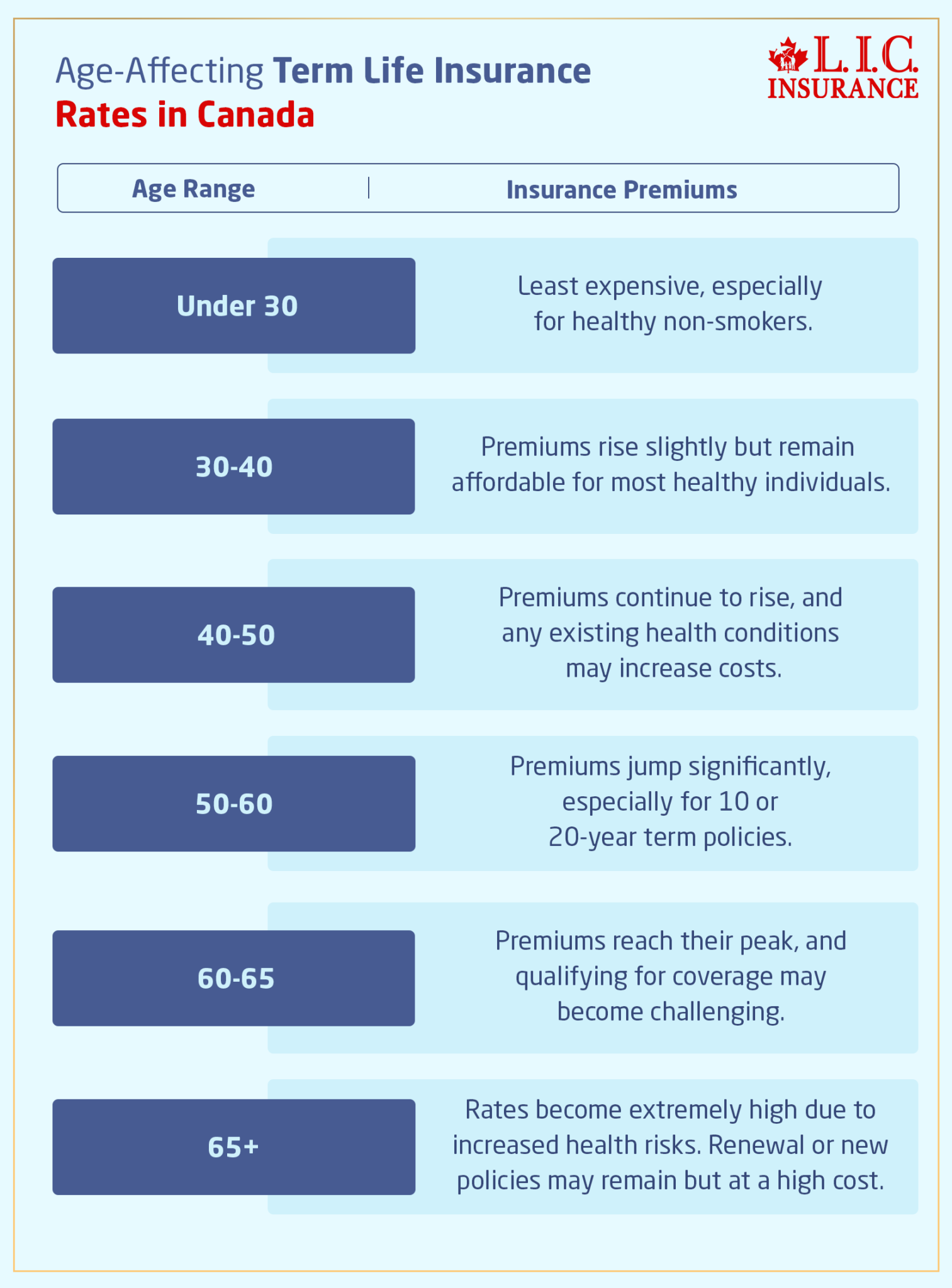
Life insurance companies impose maximum age limits for policy application and coverage termination to manage mortality risk and ensure actuarial solvency. While most term policies expire between ages 75 and 90, permanent life insurance, such as whole or universal life, often provides coverage for the entirety of the insured’s life, provided premiums are paid and specific contract conditions are met.
Understanding the Mechanism of Age Limits
Life insurance is fundamentally a risk-management product. When an insurer issues a policy, they are essentially betting on the longevity of the insured against the financial payout of the death benefit. As a person ages, the statistical probability of death within a specific timeframe increases significantly, which is known as mortality risk. To offset this, insurance carriers establish age limits—specifically "issue age" and "expiry age"—to maintain a predictable risk pool.
The "issue age" refers to the maximum age at which a person can apply for and be approved for a new policy. This varies wildly between providers and product types; for instance, a 20-year term policy might have an issue age cap of 65, meaning an applicant cannot be older than 65 at the time of purchase. The "expiry age" refers to the point at which the coverage contractually ceases or becomes prohibitively expensive to maintain.
Term Life Insurance: The Expiry Constraint
Term life insurance is designed to provide coverage for a specific period—typically 10, 15, 20, or 30 years. The primary constraint here is that the term length chosen, when added to the applicant’s current age, usually cannot exceed the carrier's maximum age limit for that specific product.
For example, if a company has an expiry age of 80 for a term policy, a 65-year-old applicant might only be eligible for a 10-year or 15-year term. They would be ineligible for a 20-year term because the coverage would extend to age 85, surpassing the carrier's underwriting guidelines. This "age-at-expiry" rule is a standard feature across the industry in 2026, though specific thresholds depend on the insurer's internal actuarial data and competitive positioning.
Permanent Life Insurance and Longevity
Unlike term insurance, permanent life insurance—including whole life, universal life, and variable universal life—is designed to remain in force until the death of the insured, regardless of age, provided the policy remains funded. These policies often include a cash value component that grows over time, which can eventually be used to cover premiums.
However, even with permanent products, there is often a "Maturity Age." In many legacy contracts, the maturity age is set at 100 or 121. If the insured reaches this age, the policy is considered "matured." At this point, the insurance company typically pays out the death benefit to the policyholder (the insured themselves) while the coverage terminates. Modern policies often have higher maturity ages, but the concept remains a fundamental legal limit on the duration of death coverage.
Factors Influencing Eligibility Beyond Chronological Age
While chronological age is a primary factor, insurers do not view all applicants of the same age through the same lens. Underwriting guidelines adjust based on:
- Medical History: Pre-existing conditions, chronic illnesses, or a history of major surgeries can lower the effective age limit for an individual. An insurer might decline a 70-year-old with significant health concerns while approving a healthy 75-year-old for a smaller policy.
- Product Type: Simplified issue or "guaranteed acceptance" policies often have different, usually lower, age caps and lower death benefit amounts compared to fully underwritten policies.
- Financial Underwriting: For older applicants, insurers often require higher levels of financial justification. They want to ensure the death benefit is intended for legitimate purposes like estate planning or debt coverage, rather than speculative or high-risk financial maneuvering.
Comparison of Coverage Limits by Product Type
The following table summarizes the typical approach to age constraints across common life insurance structures. Please note that these are industry standards; individual company filings for 2026 take precedence.
| Product Type | Typical Issue Age Limit | Expiry/Maturity Age | Primary Goal |
|---|---|---|---|
| Term Life | 65–80 | 75–90 | Income replacement/Debt protection |
| Whole Life | 75–90 | 100–121 | Permanent protection/Cash accumulation |
| Universal Life | 70–85 | 100–121 | Flexible premiums/Estate planning |
| Final Expense | 50–85 | Lifetime | Burial and end-of-life costs |
| Guaranteed Issue | 45–80 | Lifetime | Guaranteed coverage (no health check) |
The Role of Guaranteed Renewability
Many term life insurance policies include a "guaranteed renewability" rider. This allows the policyholder to extend their coverage annually after the initial term expires without having to undergo a new medical exam. While this circumvents the need for further medical underwriting, the cost of premiums typically increases significantly—often exponentially—every year based on the insured's attained age.
For many individuals, this is not a sustainable long-term solution for death coverage, but it acts as a critical safety net for those who experience a decline in health during their initial term and find themselves ineligible for a new policy at their current age.
Strategies for Seniors Seeking Coverage
If you are navigating the market for life insurance in 2026 as an older adult, the search strategy requires a shift in focus:
- Focus on Final Expense Insurance: If your primary goal is covering funeral costs and immediate end-of-life expenses, "Final Expense" or "Burial Insurance" often has very accessible age limits (up to age 85 or 90) and simplified underwriting that does not require a paramedical exam.
- Estate Liquidity Needs: If the goal is covering estate taxes or leaving a legacy, permanent life insurance is the standard tool. Work with a fee-based financial planner to determine if the premiums remain affordable as you age.
- Evaluate Existing Policies: Before applying for new coverage, review existing policies. Some older policies have "conversion privileges" that allow you to convert a term policy into a permanent policy without new medical evidence, even if you are past the age limit for a standard application.
- Consider Group Life: If you are still working, check if your employer offers group life insurance. These plans often have less stringent age-based underwriting than individual policies, though coverage often decreases significantly upon retirement.
Common Misconceptions Regarding Age and Cost
A frequent point of confusion is the belief that life insurance premiums for seniors are uniform. In reality, the "cost per thousand" of coverage rises sharply after age 70. Applicants often expect to pay rates similar to what they saw in middle age, leading to sticker shock. Furthermore, many applicants assume that because they have "no health issues," they can bypass age-related scrutiny. Even in the absence of disease, the statistical risk of mortality associated with age is a fixed variable that no amount of health optimization can negate in the eyes of an actuary.
Potential Risks and Pitfalls
- Lapsing Policies: In the case of Universal Life, if the policy is not sufficiently funded, the rising cost of insurance (which scales with your attained age) can deplete the cash value. This can cause the policy to lapse, leaving the insured without coverage exactly when they need it most.
- Misleading Marketing: Be wary of advertisements promising "No age limits." Often, these policies have extremely high premiums or restrictive "graded death benefits," meaning the full death benefit is not payable if death occurs within the first few years of the policy.
- Ignoring Inflation: A death benefit that seemed adequate when purchased at age 40 may be insufficient by age 80. Ensure that the coverage amount is revisited in the context of current purchasing power.
Professional Guidance and Next Steps
Determining the right insurance structure as you reach senior years involves balancing your remaining assets, the needs of your beneficiaries, and your current health profile. Because insurance laws and company guidelines vary by state and by individual carrier, there is no "one-size-fits-all" product.
For those requiring high-value coverage for estate planning, consulting a Chartered Life Underwriter (CLU) or a CFP (Certified Financial Planner) is recommended. These professionals can provide a comparative analysis of different carriers’ maximum age limits and help you model how premiums will evolve over the next decade. If you are shopping for basic final expense coverage, request "specimen policies" from multiple A-rated carriers to review the exact contract terms regarding when coverage terminates and how premiums are calculated.
Frequently Asked Questions
1. Can I buy a new life insurance policy after age 80? Yes, but your options are limited. Many carriers cap new applications at age 80 or 85. You will likely be limited to permanent whole life or "final expense" insurance rather than standard term policies. Underwriting will be rigorous unless you opt for a guaranteed acceptance plan, which usually comes with higher costs and lower benefit limits.
2. What happens if I reach the "expiry age" of my term life insurance? The policy coverage ends. Unless the policy is "guaranteed renewable" or has a conversion option to a permanent policy, you will no longer have death coverage. If you are still in good health, you may be able to apply for a new policy, but it will be priced according to your current age, which will be significantly higher than your original premium.
3. Is there a difference between maturity age and expiry age? Yes. "Expiry age" generally refers to term insurance, where the contract simply ends. "Maturity age" is a term used in permanent insurance contracts, defining the age at which the insurance company pays out the policy's face value to the policyholder because the contract has reached its full duration, effectively ending the life insurance protection.
4. Can my life insurance company cancel my policy because I got too old? No, if you hold a permanent life insurance policy, the company cannot cancel it simply because of your age, provided you have paid your premiums and followed the contract terms. Age-related termination only applies to term policies where the contractual term has concluded, or if a policy was specifically structured as an "annual renewable" term product.
5. How do I find the maximum issue age for a specific insurance company? You should review the company's "Underwriting Guide," which is typically available through their licensed agents or brokers. These documents explicitly state the minimum and maximum ages for every product they offer. Avoid relying on third-party marketing websites, as their information may be outdated or generalized.
Recommendation: If you are nearing the age limit of your current coverage or are considering a new policy, begin by requesting an "in-force illustration" from your current provider. This document will show you exactly how your premiums and coverage are projected to change over the next 10 to 20 years. Use this data as a baseline before shopping for new policies or alternatives.