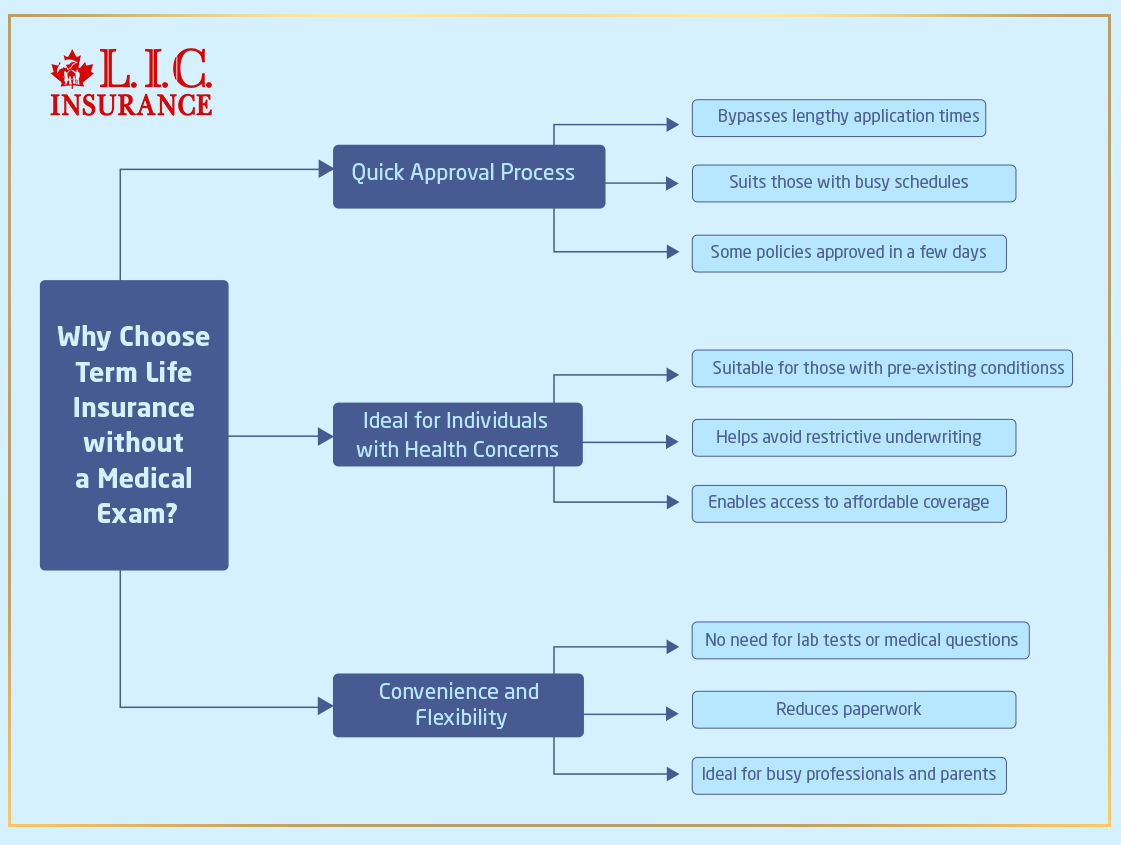
Affordable term life insurance without an exam, often referred to as "no-medical-exam" or "accelerated underwriting" life insurance, provides coverage without the traditional requirement of a blood draw or physical examination. Designed for speed and convenience, these policies utilize electronic health records, prescription history, and public data to evaluate risk, offering a streamlined path to financial protection for applicants in 2026.
Understanding the Mechanics of No-Exam Insurance
Traditional life insurance underwriting usually requires a "paramedical exam," where a nurse visits a potential policyholder to collect blood and urine samples and measure height, weight, and blood pressure. While this thorough process allows insurers to offer lower rates to very healthy individuals, it can take weeks or even months to finalize.
In contrast, term life insurance without an exam—often marketed as "simplified issue" or "accelerated underwriting"—leverages technology to bypass the physical visit. Instead of waiting for laboratory results, the insurance carrier accesses various databases to verify your identity and health status. These databases include the Medical Information Bureau (MIB), prescription drug databases, and motor vehicle records.
The primary goal of these policies is to provide an approval decision in a matter of days, or sometimes even hours. Because the insurer takes on slightly more uncertainty by skipping the manual physical, they may charge a premium, though technological advancements in actuarial science have made these premiums increasingly competitive and, in many cases, nearly identical to fully underwritten policies.
Eligibility and the Application Process
Not every applicant qualifies for the most affordable no-exam term products. These policies are generally targeted at individuals who are in relatively good health and fall within specific age brackets.
1. The Application Workflow
- Digital Submission: The process starts with an online application where you answer a series of health and lifestyle questions. These questions are critical, as they form the basis of the insurer’s risk assessment.
- Data Verification: Once submitted, the insurer runs an automated background check. This looks at your pharmaceutical history (to see if you are taking medication for high-risk conditions like heart disease or diabetes) and your credit-based insurance score.
- Decisioning:
- Instant Approval: If the data matches your disclosures and falls within the "preferred" risk category, you receive an offer immediately.
- Manual Review: If the algorithm finds inconsistencies, it may flag your application for a human underwriter to review.
- Request for Exam: In some instances, the insurer may decide they need more information after all, triggering a request for a traditional medical exam.
2. Common Prerequisites
To increase your chances of securing an affordable rate without an exam, you should be prepared to provide accurate information regarding:
- Your legal residence and citizenship status.
- Tobacco and nicotine use (these significantly increase premiums regardless of the exam status).
- Any history of chronic medical conditions.
- Your occupation and high-risk hobbies (e.g., skydiving or scuba diving), which are often excluded or lead to higher premiums.
Comparing Traditional vs. No-Exam Term Life Insurance
Selecting the right policy requires weighing the value of speed against the potential for higher long-term costs. The following table highlights the key differences between a traditional fully underwritten policy and a no-exam term policy.
| Feature | Traditional Underwriting | No-Exam Term Policy |
|---|---|---|
| Medical Exam | Required (Blood/Urine/Physical) | Generally Not Required |
| Approval Time | 4 to 8 weeks | Minutes to 5 business days |
| Maximum Coverage | Millions of dollars | Usually capped (e.g., $1M to $2M) |
| Cost Basis | Highly personalized / Low rates | Based on broad risk classes / Moderate |
| Data Reliance | Laboratory results | MIB, Rx history, public records |
Pros and Cons of Skipping the Exam
Understanding the trade-offs is essential for making a sound financial decision.
The Advantages
- Speed: If you need coverage to close a business deal, secure a divorce settlement, or satisfy a lender's requirement, the speed of an instant-decision policy is unmatched.
- Privacy: Many applicants prefer not to have a stranger visit their home or office to perform a clinical assessment.
- Simplicity: The lack of manual paperwork and scheduling appointments reduces the likelihood of "abandoned applications," where applicants lose interest or get busy and never complete the process.
The Disadvantages
- Higher Premium Potential: Because the insurer does not have a comprehensive snapshot of your internal health, they price the policy to account for the risk of unknown conditions.
- Lower Coverage Limits: Carriers typically cap death benefits on no-exam policies. If you require a multi-million-dollar policy for estate planning, you will almost certainly be forced into the traditional underwriting path.
- Strict Health Filters: If you have significant health history (such as cancer, heart disease, or chronic illness), the automated system is more likely to deny you coverage outright compared to a human underwriter who can review your full medical file and context.
Factors That Impact Your Premium
Even without an exam, your premium is not arbitrary. Insurers use "actuarial tables" to determine how much risk you present. When you omit the exam, the system relies heavily on two things: your stated health and your digital "footprint."
- Age: The primary driver of cost. Even without an exam, a 50-year-old will pay significantly more for a 20-year term policy than a 30-year-old.
- Coverage Amount: The death benefit is directly proportional to the risk the insurer takes.
- Term Length: A 30-year term policy is more expensive than a 10-year term, as the insurer is locked into a rate for a longer period, exposing them to more inflationary risk and changes in your health over time.
- Lifestyle Factors: Tobacco use, even in the form of vaping or nicotine gum, will move you into a higher rate class immediately.
Common Mistakes to Avoid
When applying for no-exam term life insurance, accuracy is the most important factor. Because the process is automated, you may be tempted to provide "optimistic" answers. This is a common and dangerous mistake.
1. Misrepresenting Health History
Insurers compare your answers against pharmacy databases. If you claim to have no health issues but the database shows a prescription for medication associated with high blood pressure, the system will trigger a red flag. In many cases, this results in an automatic denial or a significantly higher premium offer.
2. Ignoring Policy Conversion Riders
One of the most valuable features of a good term policy is the "convertibility" option. This allows you to convert your term policy into a permanent life insurance policy later in life, without needing to provide new medical evidence. Before purchasing, verify if your no-exam policy offers this, as it protects your insurability if your health declines after the policy is issued.
3. Overlooking the "Look-Back" Period
Insurers have a contestability period—typically two years. If you provide false information on your application and pass away during this period, the insurer can investigate your medical records. If they discover material misrepresentation, they have the legal right to deny the claim and refund the premiums, leaving your beneficiaries without the intended support.
Evaluating Financial Stability of Providers
Not all insurance companies are created equal. When purchasing term life insurance—whether via exam or no-exam—you should check the financial strength ratings of the carrier. Look for ratings from agencies such as AM Best, S&P, or Moody's. A company with an "A" or higher rating is considered financially stable and capable of paying out claims decades into the future. Since you are entering a long-term contract, ensure the provider has a history of stability and consistent customer service performance.
Frequently Asked Questions (FAQ)
Can I get no-exam insurance if I have a pre-existing condition?
It depends. If your condition is well-managed and you have no recent, intensive prescription history, you may still qualify. However, chronic or complex health conditions usually require traditional, fully underwritten policies where you can provide medical records to demonstrate that your condition is stable.
Is the death benefit payout different for no-exam policies?
No. Once the policy is in force, the death benefit payout is identical to that of a traditional policy. As long as you have paid your premiums and been honest in your application, the beneficiaries will receive the full face value of the policy.
Can I upgrade to a policy with an exam later for a better rate?
Yes. If you secure a no-exam policy now but improve your health later (e.g., you lose significant weight or quit smoking), you can apply for a new, fully underwritten policy and then cancel your old one. Ensure your new policy is in force before canceling the old one to avoid a gap in coverage.
Does the lack of an exam affect the incontestability clause?
No. The incontestability clause is a standard legal provision in life insurance contracts. It remains the same whether the policy was issued with or without an exam. After the contestability period—usually two years—the insurer cannot contest the validity of the policy except for non-payment of premiums.
Are premiums for no-exam insurance truly more expensive?
In many cases, they are now very competitive. In 2026, technology has allowed carriers to price risk more accurately using third-party data. While they may be slightly higher than the absolute lowest "preferred plus" rates found in traditional underwriting, the difference is often negligible for most average-risk individuals.
Next Steps: Practical Recommendations
To find the best policy for your specific needs, follow these steps:
- Determine Your Needs: Calculate how much coverage you actually require. Do not just pick a round number; consider your current debt, future educational expenses for dependents, and your income replacement needs over the term of the policy.
- Gather Your Data: Have your Social Security number, recent prescription history, and a list of any past medical visits ready before starting an application.
- Request Quotes from Multiple Carriers: Use a reputable online aggregator or an independent insurance broker to compare quotes from multiple A-rated carriers. Look specifically for "no-exam" or "accelerated underwriting" options.
- Review the Fine Print: Prioritize policies that offer guaranteed renewability and convertibility to permanent insurance.
- Finalize and Monitor: Once approved, set up automatic payments to ensure the policy does not lapse. If you have significant life changes—such as a major shift in health or financial status—re-evaluate your coverage every few years to ensure it still meets your family's needs.