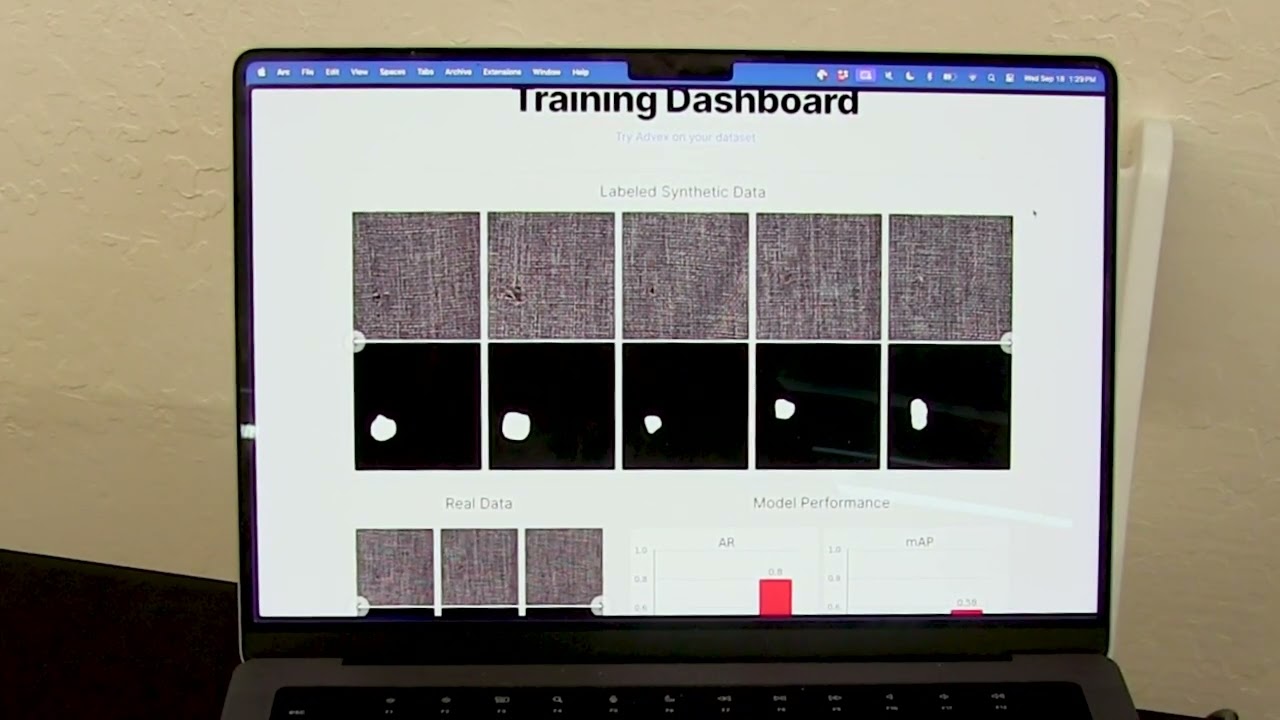
Advex synthetic data for machine vision training provides physically accurate, computationally generated visual datasets designed to train, test, and validate computer vision models without relying solely on scarce or expensive real-world imagery. By simulating complex edge cases, varying lighting conditions, and rare occlusions, this approach accelerates model convergence and enhances robustness in autonomous systems, industrial automation, and robotics.
The Core Challenge of Real-World Data in Machine Vision
Training robust machine vision models requires massive quantities of high-quality, diverse, and accurately labeled image and video data. Historically, development teams have relied on manual collection in physical environments, followed by human-driven annotation. This traditional paradigm presents severe bottlenecks that can derail project timelines and inflate budgets.
Real-world data collection is inherently constrained by geography, weather, equipment availability, and time. If an autonomous driving algorithm needs to recognize a rare road hazard during a snowstorm at dusk, engineers cannot simply command the weather to change to capture the necessary frames. They must wait for nature to cooperate, deploy expensive camera rigs, and hope the event occurs within the field of view.
Furthermore, manual annotation introduces human error, high labor costs, and significant latency. Bounding boxes, semantic segmentation masks, and keypoint annotations require painstaking human effort, particularly for complex scenes with dense overlapping objects. As neural networks grow larger and demand exponentially more training samples, gathering real-world data at scale becomes unsustainable.
Synthetic data addresses these fundamental challenges by decoupling data acquisition from physical reality. By generating computer-graphics imagery paired with automated, pixel-perfect ground truth, development teams can bypass the physical limitations of data collection.
- Traditional Data Pipeline
- Physical Collection
- Manual Annotation
- Bottleneck
- Synthetic Data Pipeline
- Simulation Engine
- Automated Labels
- Scale
Understanding Advex Synthetic Data and Simulation Engines
Synthetic data refers to information that is artificially manufactured rather than generated by actual real-world events. In the context of machine vision, this means rendering 3D scenes using advanced computer graphics engines, physical simulation parameters, and randomized environmental variables.
Advex frameworks and specialized simulation pipelines generate these digital environments with a strong focus on physical plausibility. To prevent neural networks from learning shortcuts based on unrealistic graphics—a phenomenon known as the reality gap—advanced generators incorporate physically based rendering (PBR). PBR ensures that light interaction, surface reflectance, refraction, and shadow casting behave according to the laws of physics.
Key Components of Synthetic Generation Pipelines
- 3D Asset Libraries: Diverse collections of digital models representing objects, backgrounds, humans, vehicles, and industrial components.
- Procedural Generation: Automated scripts that alter object placement, textures, lighting, and camera angles to create millions of unique variations from a single base scene.
- Domain Randomization: A technique that deliberately varies simulation parameters far beyond realistic bounds, forcing the machine learning model to focus on structural and geometric features rather than surface-level appearance.
- Automated Ground Truth Annotations: Because the simulation engine dictates the exact position, depth, and classification of every pixel, masks, bounding boxes, and depth maps are generated instantaneously with zero human error.
Bridging the Reality Gap in Computer Vision
The primary hurdle in deploying synthetic data is the reality gap—the performance drop a model experiences when transitioning from synthetic training imagery to real-world inference. If a simulation lacks fidelity or fails to represent real-world physics, the model learns incorrect correlations.
To overcome this, engineers employ domain adaptation and advanced randomization strategies. Domain adaptation techniques, such as cycle-consistent generative adversarial networks (CycleGANs), transform synthetic images to mimic the textural style of real camera sensors without altering the underlying semantic labels.
| Feature / Dimension | Real-World Data | Synthetic Data (Advex-Style) |
|---|---|---|
| Acquisition Cost | High (hardware, labor, travel) | Moderate to Low (compute-dependent) |
| Annotation Speed | Slow (requires human labor) | Instantaneous (programmatically generated) |
| Edge Case Coverage | Poor (dependent on rare occurrences) | Excellent (programmable hazards and anomalies) |
| Privacy Concerns | High (captures faces, license plates) | None (fully artificial environments) |
| Reality Gap | None | Requires mitigation (domain randomization/adaptation) |
Balancing synthetic and real data is equally critical. Research consistently shows that a hybrid approach—pre-training a model on a large corpus of diverse synthetic data followed by fine-tuning on a smaller, curated set of real-world data—often outperforms models trained exclusively on either domain.
Operational Applications Across Industrial and Autonomous Sectors
Machine vision models span diverse industries, each with unique data requirements and failure tolerances. Synthetic data pipelines provide tailored solutions for these specialized verticals.
Autonomous Systems and Robotics
Autonomous vehicles and mobile robots operate in dynamic, unstructured environments where safety is paramount. Gathering edge cases—such as pedestrians wearing unusual clothing crossing a road at night during heavy fog—is nearly impossible to orchestrate safely in the real world.
Using simulation environments, developers can recreate these exact hazardous scenarios infinitely. They can script erratic behaviors, test sensor placement configurations, and validate perception algorithms against thousands of virtual miles before deploying code to physical hardware.
Industrial Quality Control and Manufacturing
On factory floors, automated optical inspection (AOI) systems inspect products for microscopic defects. Defective items are intentionally rare in a well-managed production line, meaning engineers rarely have enough real images of broken welds, surface scratches, or misaligned components to train an accurate classifier.
Synthetic data solves this by digitally rendering products with procedural defects. By simulating varied lighting angles, conveyor belt speeds, and surface finishes, the machine vision system learns to identify structural anomalies before seeing them on the physical production line.
Implementation Workflow and Integration Steps
Integrating synthetic data into an existing machine learning pipeline requires a structured approach to ensure compatibility between generated assets and downstream neural network architectures.
Step 1: Defining Model Requirements and Failure Modes
Before generating data, engineering teams must analyze existing model weaknesses. Identifying whether a vision model struggles with low-light performance, motion blur, or specific occlusion patterns dictates what parameters the simulation engine must prioritize.
Step 2: Asset Acquisition and Scene Construction
Teams build or license 3D assets that mirror the target domain. In industrial settings, this involves importing CAD models of manufactured parts into the simulation engine. In autonomous driving, this involves constructing digital twins of roadways, intersections, and urban canyons.
Step 3: Parameter Configuration and Batch Generation
Engineers configure scripts to randomize lighting conditions, camera noise profiles, weather effects, and background textures. Large-scale rendering clusters then execute batch generation, outputting images alongside their corresponding annotation files (such as COCO or YOLO format JSONs).
Step 4: Data Validation and Bias Auditing
Before ingestion into the training loop, generated datasets must be audited. Automated checks ensure that bounding boxes do not clip objects incorrectly and that class distributions remain balanced to prevent model bias.
Step 5: Model Training and Evaluation
The model undergoes training using the synthetic dataset, followed by validation against a held-out real-world test set. Performance metrics guide iterative adjustments to the simulation parameters.
Operational Limitations and Common Pitfalls
While synthetic data offers transformative advantages, it is not a universal panacea. Understanding its limitations prevents costly architectural missteps.
- Over-Randomization: Pushing domain randomization too far can yield physically impossible scenes, teaching the neural network to recognize nonsensical patterns and degrading real-world accuracy.
- Sensor Simulation Inaccuracies: Standard RGB rendering does not capture the nuances of physical camera sensors, such as rolling shutter artifacts, lens flare diffraction, or specific CMOS noise profiles. Advanced simulation requires dedicated sensor models.
- High Compute Overhead: Rendering millions of physically plausible, high-resolution 3D scenes with ray tracing requires substantial GPU infrastructure, shifting costs from manual labor to cloud compute expenditure.
Frequently Asked Questions
Can synthetic data completely replace real-world data in machine vision training?
In most production environments, synthetic data cannot entirely replace real data. While it accelerates initial training and solves edge-case scarcity, fine-tuning models on a baseline of real-world imagery remains essential to bridge any remaining perceptual gaps.
How does automated annotation work in synthetic pipelines?
Because the simulation engine maintains a complete internal state of every 3D object, it knows the exact pixel coordinates, depth values, and semantic identity of every element rendered. It writes this metadata directly to annotation files during image export, eliminating manual labeling.
What is domain randomization and why is it important?
Domain randomization involves varying simulation attributes—such as object colors, lighting, textures, and backgrounds—beyond realistic limits. This forces the neural network to ignore superficial features and learn robust geometric representations that transfer effectively to the physical world.
How do I measure whether my synthetic data is high enough quality?
Quality is measured empirically by monitoring downstream model performance. If a model trained with synthetic data shows improved mean average precision (mAP) on a real-world validation set compared to a baseline model, the synthetic data is performing effectively.
Does generating synthetic data require advanced 3D modeling skills?
While creating custom assets requires 3D artists, modern synthetic data platforms utilize modular component libraries, pre-built domain templates, and programmatic APIs that allow machine learning engineers to generate datasets without deep 3D modeling expertise.
Next Actions for Development Teams
To successfully incorporate synthetic data into your machine vision workflow, begin by auditing your current model's failure cases to identify specific data gaps. Evaluate available simulation frameworks and cloud rendering tools that align with your compute budget. Run a small-scale pilot project: generate a targeted dataset for a single edge case, train a test model, and measure its performance against your existing real-world baseline before scaling production pipelines.