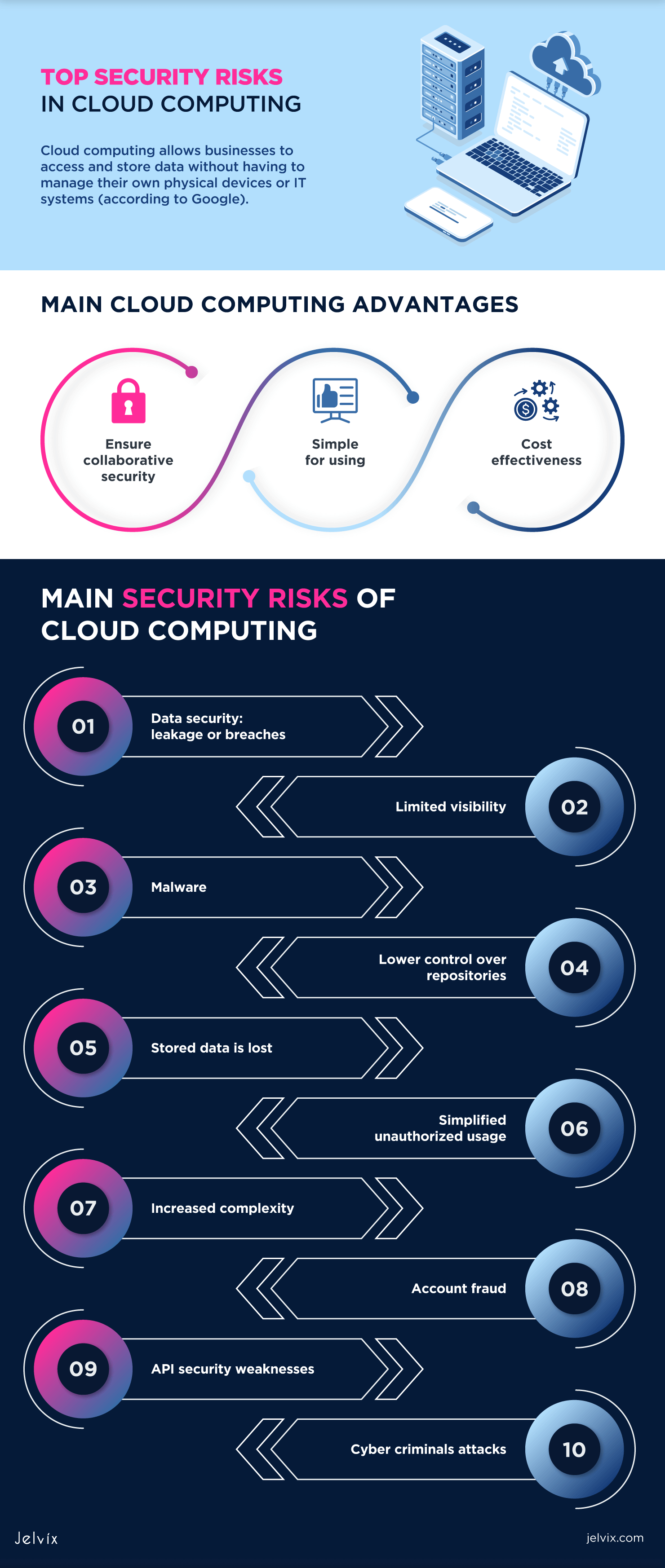
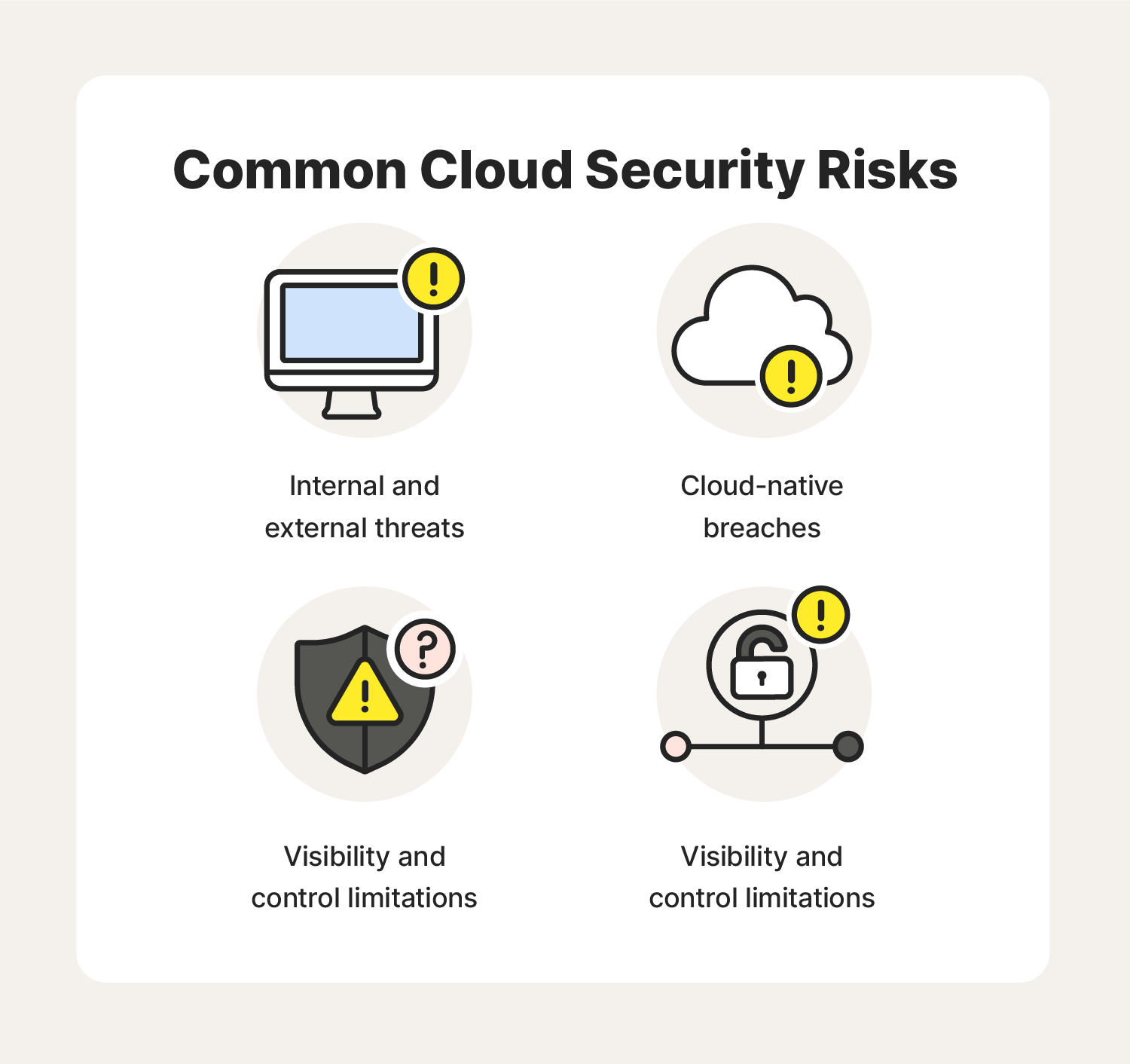
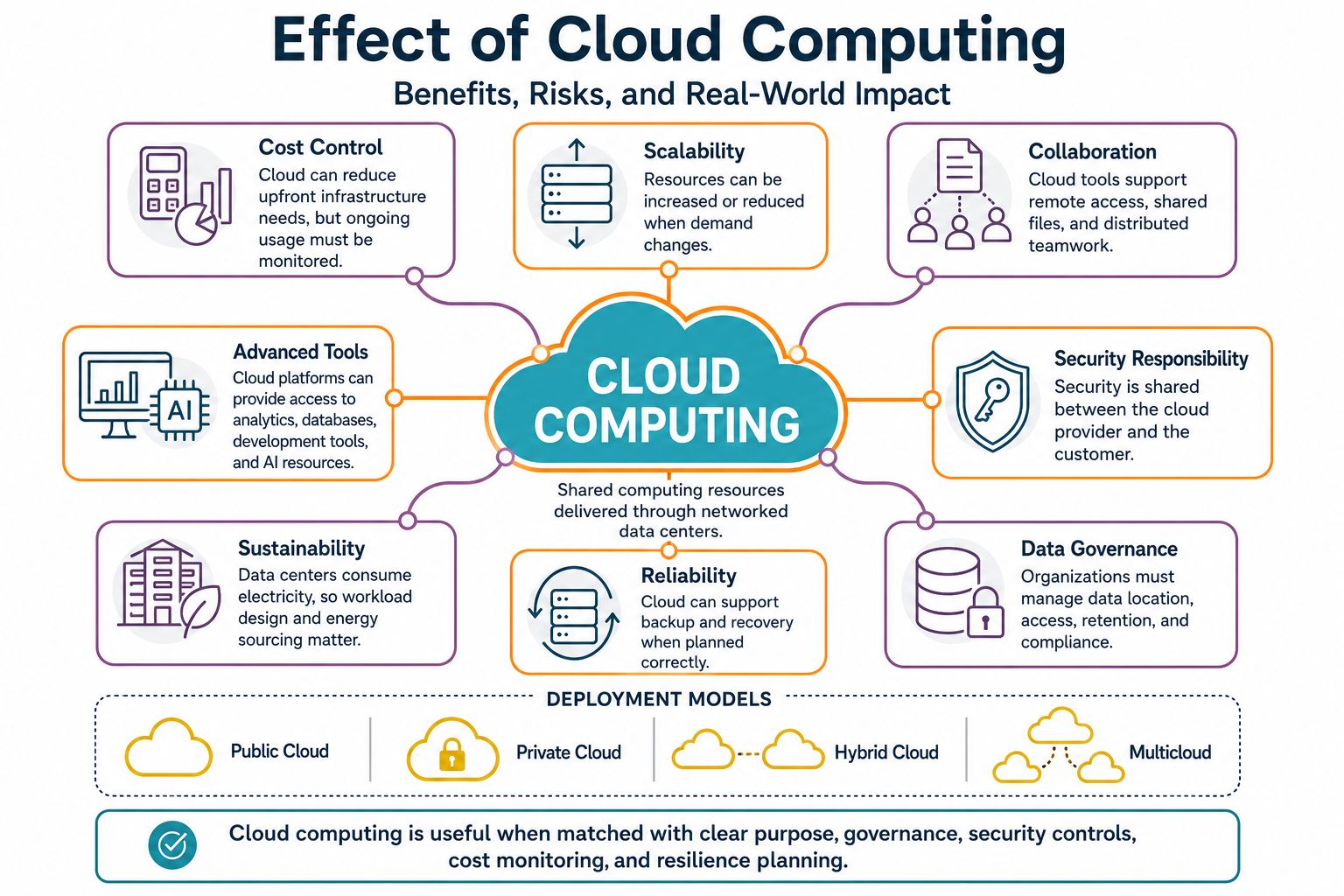
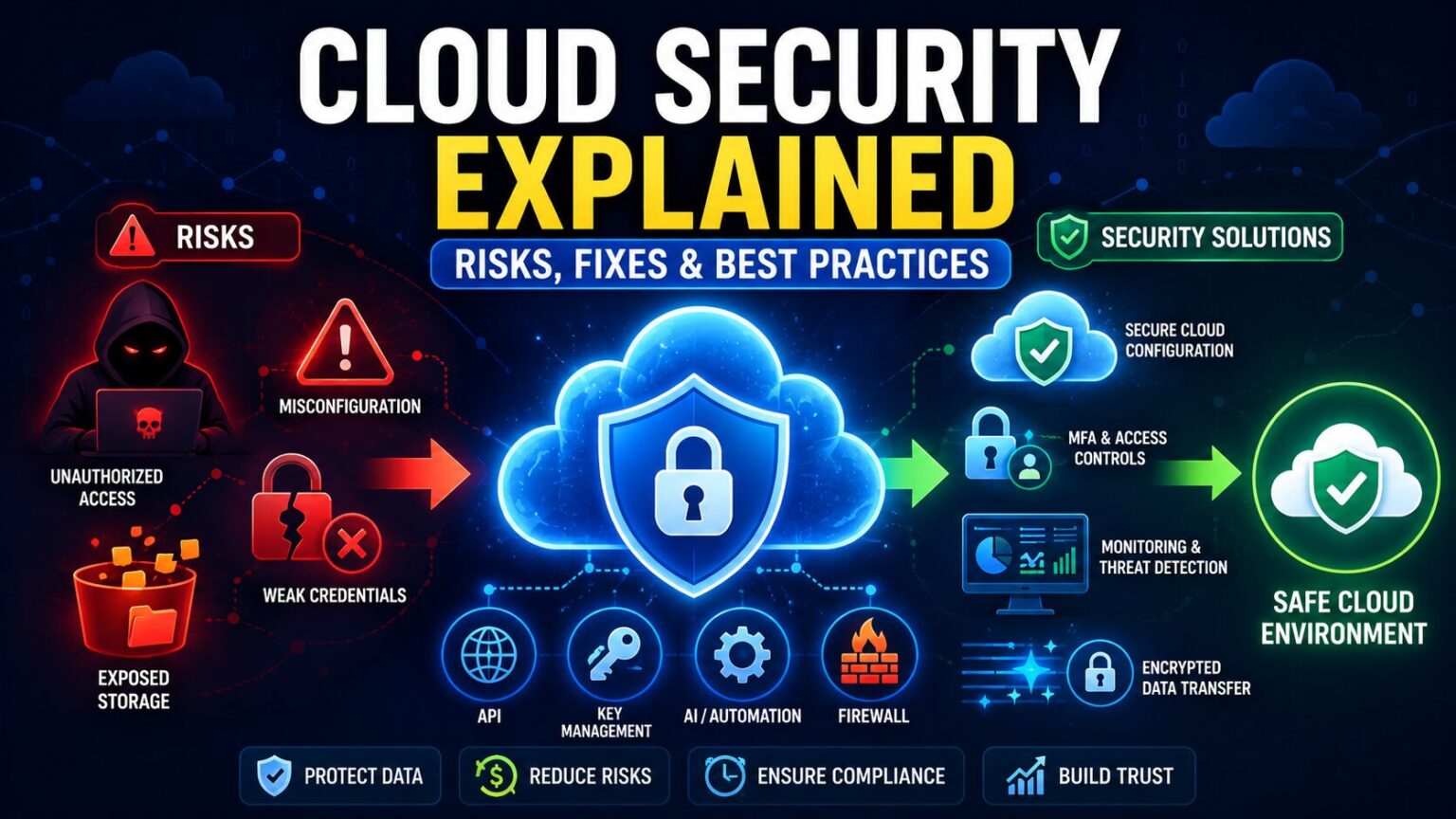
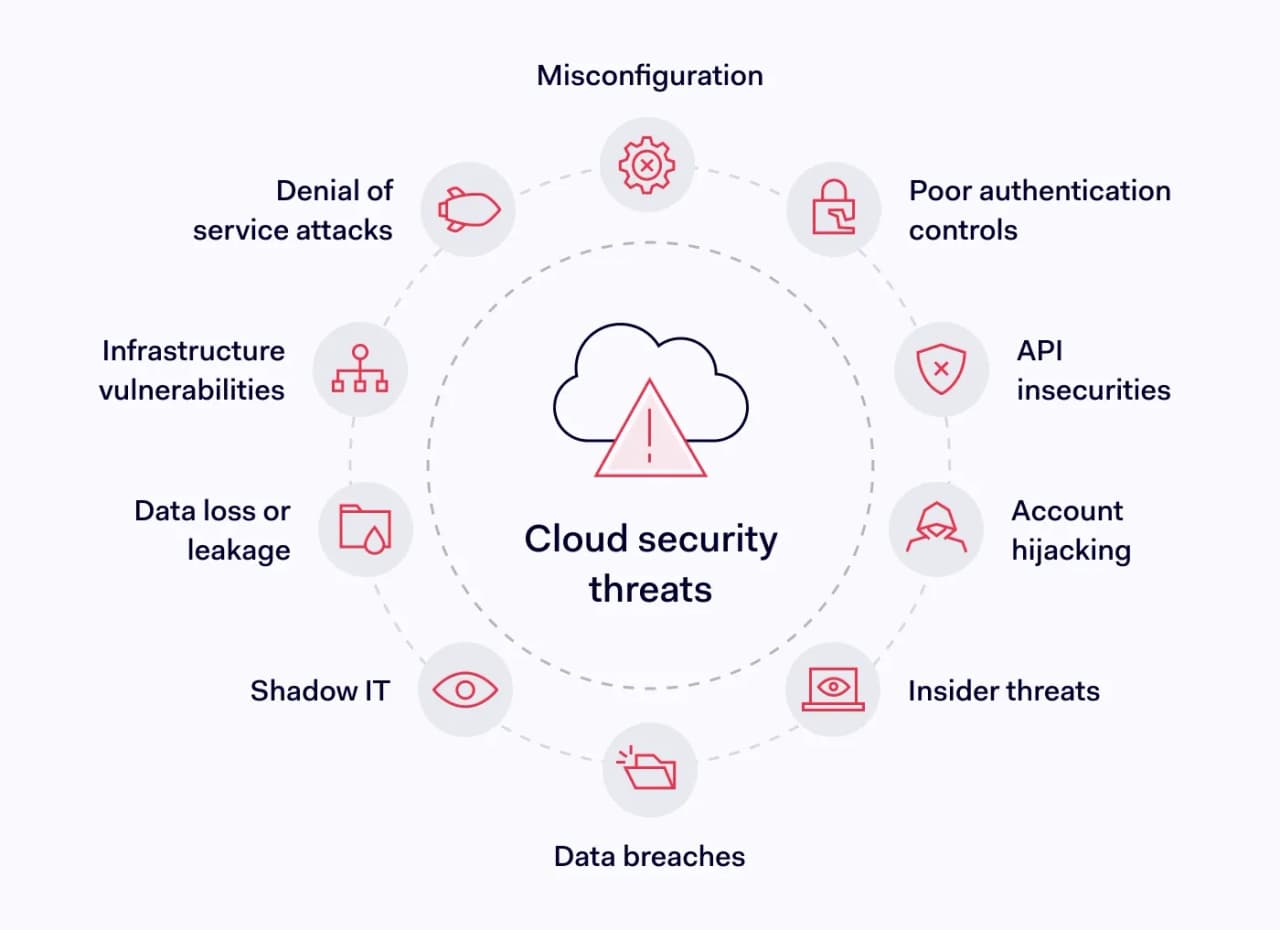
Moving to the cloud introduces several unique security risks not found in traditional on-premises environments, primarily revolving around the shared responsibility model, multi-tenancy, and API-driven management planes. These "additional" risks require organizations to shift from physical perimeter defense to identity-centric security, automated configuration management, and rigorous third-party oversight to prevent catastrophic data exposure.
The transition from localized data centers to distributed cloud architectures has redefined the threat landscape. While major cloud providers offer robust physical security and infrastructure resilience, the move introduces a layer of abstraction that creates new vulnerabilities. In 2026, as enterprise reliance on multi-cloud and hybrid environments reaches its peak, understanding these specific, additional risks is essential for maintaining a secure posture. This overview compares the inherent risks of cloud models against traditional setups and analyzes the unique threats that emerge within IaaS, PaaS, and SaaS frameworks.
The Shared Responsibility Model: The Primary Source of Risk
One of the most significant "additional" risks in cloud computing is the ambiguity inherent in the shared responsibility model. In a traditional on-premises environment, the organization is responsible for the entire "stack"—from the physical security of the server room to the encryption of the data. In the cloud, this responsibility is split between the Cloud Service Provider (CSP) and the customer.
The risk arises when customers assume the provider is handling security tasks that actually fall under the user's jurisdiction. For instance, while a provider ensures the physical hardware is secure, the customer is almost always responsible for configuring Identity and Access Management (IAM), securing data at rest, and managing application-level vulnerabilities. Misunderstanding this boundary leads to "security gaps" where critical controls are left unmanaged because each party assumes the other is responsible. As of 2026, the majority of cloud security failures continue to result from customer misconfigurations rather than provider-side breaches, highlighting the persistent danger of this shared model.
Multi-tenancy and Resource Isolation Risks
Cloud computing relies on multi-tenancy, where multiple customers (tenants) share the same physical hardware and underlying infrastructure. While CSPs use sophisticated virtualization and containerization to isolate these tenants, this creates a specific class of risk known as "cross-tenant" or "side-channel" attacks.
In an on-premises world, your data lives on a server you physically control. In the cloud, your virtual machine (VM) may reside on the same physical processor as a malicious actor's VM. Vulnerabilities in the hypervisor—the software that manages these VMs—could theoretically allow an attacker to "escape" their environment and gain unauthorized access to the data of other tenants on the same host. Although CSPs have made massive strides in hardware-level isolation, the theoretical risk of "noisy neighbor" performance issues or, more severely, resource-exhaustion attacks and data leakage via shared cache remains an additional burden unique to the cloud.
The Vulnerability of Management Planes and APIs
In cloud environments, everything is software-defined and managed through APIs (Application Programming Interfaces). These APIs are the "front door" to your entire infrastructure. If an attacker gains access to a cloud management console or an API key with high-level permissions, they don't just compromise one server; they can potentially delete entire databases, spin up thousands of expensive resources for crypto-mining, or exfiltrate the organization's entire data library.
This represents a radical departure from traditional networking, where an attacker usually needs to move laterally through a network to reach sensitive assets. The cloud management plane provides a single point of failure that can bypass traditional firewalls. In 2026, securing these "insecure APIs" is a top priority, as they are frequently targeted by automated bots looking for exposed credentials in public repositories or poorly coded integration points.
Cloud-Native Misconfigurations and Shadow IT
The ease with which cloud resources can be provisioned is a double-edged sword. On one hand, it drives agility; on the other, it leads to "Shadow IT" and rampant misconfigurations. Employees can spin up new cloud instances or storage buckets (like Amazon S3 or Azure Blobs) using a personal credit card or unauthorized department budget, often bypassing the central IT security team's oversight.
These unsanctioned resources are rarely configured with the necessary security controls. A single "public-read" setting on a storage bucket can expose millions of sensitive records to the internet. Unlike on-premises servers, which are shielded by physical network perimeters, cloud resources are "internet-adjacent" by default. If a configuration is not explicitly set to private, the risk of accidental exposure is exponentially higher than it would be in a local data center.
Comparative Risk Matrix: On-Premises vs. Cloud Service Models
To understand the shifting burden of security, it is helpful to compare traditional environments with the three primary cloud delivery models: Infrastructure as a Service (IaaS), Platform as a Service (PaaS), and Software as a Service (SaaS).
| Risk Category | On-Premises | IaaS (Infrastructure) | PaaS (Platform) | SaaS (Software) |
|---|---|---|---|---|
| Physical Security | High customer burden | Provider managed | Provider managed | Provider managed |
| Hypervisor Security | Customer managed | Provider managed | Provider managed | Provider managed |
| OS Patching | Customer managed | Customer managed | Provider managed | Provider managed |
| Network Config | Customer managed | Shared responsibility | Provider managed | Provider managed |
| IAM/Access Control | Customer managed | Customer managed | Customer managed | Customer managed |
| Data Protection | Customer managed | Customer managed | Customer managed | Shared responsibility |
| API Vulnerabilities | Low/Niche | High Risk | High Risk | Moderate Risk |
| Visibility | Complete | Reduced (Virtual) | Limited | Minimal |
Data Sovereignty and Geopolitical Risk
Cloud computing often involves data being stored across multiple geographic regions to ensure high availability and low latency. However, this introduces "additional" legal and compliance risks that do not typically apply to localized on-premises storage. Data sovereignty laws—such as the EU's GDPR or various national data localization acts—mandate that certain types of data remain within specific borders.
In a cloud environment, an organization might unknowingly replicate sensitive data into a jurisdiction with different legal standards regarding government surveillance or data privacy. If a CSP is headquartered in one country but stores data in another, the legal "ownership" of that data can become a point of contention during a subpoena or legal discovery process. Managing this regulatory sprawl is a significant overhead for 2026 compliance officers.
Ephemeral Resources and Forensic Challenges
One of the most complex technical risks in the cloud is the "ephemeral" nature of resources. In modern cloud-native architectures involving serverless functions (FaaS) or auto-scaling container clusters, a computing resource may exist for only a few seconds or minutes before it is terminated.
If a security incident occurs on one of these ephemeral resources, the evidence—such as logs, memory dumps, and file system changes—often disappears along with the resource. This makes traditional digital forensics and incident response (DFIR) incredibly difficult. In an on-premises environment, the server is a physical object that can be pulled from the rack and analyzed. In the cloud, the "server" may no longer exist by the time the security team receives an alert. This requires organizations to invest in real-time logging and observability tools that capture data at the moment of execution, adding to the technical complexity of the security stack.
Supply Chain and Third-Party Dependencies
The cloud ecosystem is heavily reliant on a complex supply chain. When you use a SaaS provider, you are not only trusting that provider but also every other sub-processor or cloud infrastructure company they use. A vulnerability in a common third-party library or a breach at a low-level infrastructure provider can have a "cascading" effect across thousands of cloud customers.
This "concentration risk" is a major concern for 2026 financial regulators and security experts. If a major CSP experiences a regional outage or a systemic security flaw, the blast radius is significantly larger than an outage at a single private data center. Organizations must now perform rigorous vendor risk management (VRM) to ensure that their "cloud-on-cloud" dependencies do not create unmanageable weak points in their security architecture.
Advanced Persistent Threats (APTs) in the Cloud
Modern attackers have adapted their tactics to exploit cloud-specific features. Instead of just installing malware on a machine, an APT might target the cloud's automation scripts or CI/CD (Continuous Integration/Continuous Deployment) pipelines. By compromising a developer's credentials, an attacker can inject malicious code directly into the "gold images" used to build every server in the company.
Furthermore, attackers use "living off the cloud" techniques. They leverage the CSP's own legitimate tools—such as administrative consoles, command-line interfaces (CLI), and monitoring agents—to move laterally and exfiltrate data. Because these actions appear to be legitimate administrative traffic, they are much harder to detect than traditional malware infections. This shift requires a move toward Zero Trust Architecture, where every request is continuously verified, regardless of where it originates.
Frequently Asked Questions
Is cloud computing inherently less secure than on-premises?
No, cloud computing is not inherently less secure; in many cases, it is more secure because major providers invest billions into infrastructure protection that small companies could never afford. However, the nature of the risk changes. The "additional" risks arise from the user's lack of control over the underlying hardware and the potential for misconfiguring the complex management tools the provider offers.
What is the most common cause of cloud data breaches?
In 2026, the most common cause remains misconfiguration. This typically involves leaving storage buckets open to the public, failing to rotate API keys, or granting overly broad permissions to users through Identity and Access Management (IAM) roles. These are human errors that exploit the "internet-exposed" nature of the cloud.
How does multi-tenancy affect my data privacy?
Multi-tenancy means your data shares physical resources with other companies. While providers use strong logical isolation (virtualization and encryption) to keep this data separate, there is a technical risk of side-channel attacks where an attacker on the same hardware attempts to read data from CPU caches or memory. While rare and difficult to execute, it is a risk unique to the cloud environment.
What are "Shadow IT" risks in the cloud?
Shadow IT occurs when departments or individuals purchase cloud services (like a project management SaaS or a dev-test IaaS instance) without the knowledge or approval of the central IT security team. These resources often lack standard security configurations, encryption, and logging, making them easy targets for attackers and a major source of data leaks.
How do I manage security across multiple cloud providers?
Managing "multi-cloud" security requires centralized visibility tools, often referred to as Cloud Security Posture Management (CSPM) and Cloud-Native Application Protection Platforms (CNAPP). These tools provide a "single pane of glass" to monitor configurations and threats across AWS, Azure, Google Cloud, and others, ensuring consistent security policies regardless of the underlying platform.
Practical Recommendation for 2026 Cloud Security
To mitigate these additional risks, organizations should prioritize the implementation of a Cloud-Native Security Posture. First, move away from static passwords and adopt a strict Zero Trust model with mandatory Multi-Factor Authentication (MFA) for all administrative interfaces. Second, utilize Infrastructure as Code (IaC) to deploy resources; this allows security teams to "pre-scan" configurations for vulnerabilities before they are live. Finally, invest in automated CSPM (Cloud Security Posture Management) tools that can detect and automatically remediate misconfigurations—such as an open S3 bucket—in real-time. By automating the "guardrails," you can embrace the speed of the cloud without falling victim to its unique architectural vulnerabilities.