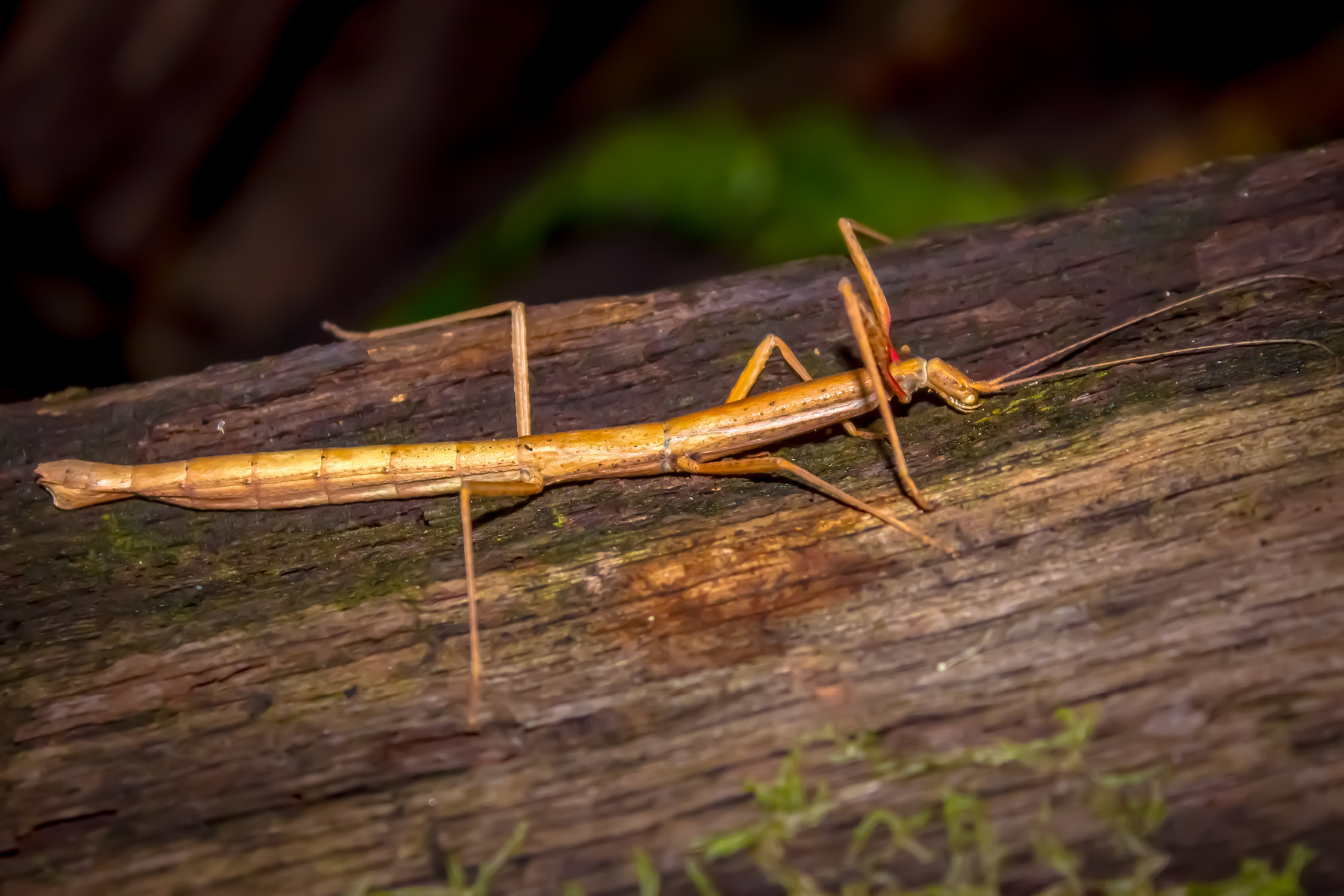
The primary adaptation of the stick insect (order Phasmatodea) is structural and behavioral crypsis, which allows it to seamlessly blend into its vegetative surroundings. Beyond visual camouflage, stick insects rely on complex survival strategies, including wind-mimicking movements, limb autotomy, defensive chemical sprays, facultative parthenogenesis, and seed-like egg structures that exploit ant colonies for underground protection.
Understanding Phasmids: Evolutionary Overview of Order Phasmatodea
Stick insects and leaf insects belong to the insect order Phasmatodea (commonly referred to as phasmids). Comprising over 3,000 described species globally, these terrestrial herbivores are predominantly distributed across tropical and subtropical ecosystems, though species exist in temperate zones as well. The evolutionary lineage of phasmids traces back over 100 million years, during which natural selection molded their anatomy and behavior around a singular ecological imperative: avoiding detection by visual predators.
Because phasmids are slow-moving and soft-bodied organisms, they represent an attractive food source for birds, small mammals, reptiles, amphibians, and predatory arthropods. Lacking the aggressive biting mouthparts or speed of other insect orders, phasmids have evolved some of the most sophisticated morphological, physiological, and behavioral adaptations in the animal kingdom. Their survival hinges not on confronting threats, but on rendering themselves virtually invisible to their environment and outsmarting predators through passive and active defensive mechanisms.
Morphological Adaptations: Structural Camouflage and Crypsis
The most evident adaptations of the stick insect are morphological—physical traits that alter the body shape, texture, and color to mimic living or decaying plant material. This evolutionary strategy is known as crypsis.
- Morphological Adaptations (Crypsis)
- Phyto-Mimicry (Form & Texture)
- Cylindrical bodies (twigs)
- Flattened foliaceous legs (leaves)
- Mossy, moss-like, & bark textures
- Homochromia (Coloration)
- Dynamic epidermal pigment shift
- Cryptic green, brown, lichen tones
- Light/humidity response
- Phyto-Mimicry (Form & Texture)
Phyto-Mimicry: Twig and Leaf Specialization
Phyto-mimicry refers to the imitation of plant structures. Phasmids exhibit extreme morphological specialization depending on their preferred ecological niche within the forest canopy or understory:
- Stick Mimics (Terete Bodies): Species such as Ctenomorpha chronus (the gray phantom stick insect) and Phryganistria chinensis possess elongated, cylindrical body segments (thoracic and abdominal segments) that mirror woody twigs or plant stems. Their cuticle often features nodes, bark-like ridges, and uneven textures that break up the insect's silhouette.
- Leaf Mimics (Foliaceous Expansions): Members of the family Phylliidae (true leaf insects) display broad, flattened bodies with lateral expansions on their abdomen and leg segments (femora and tibiae). Their forewings (tegmina) resemble foliage down to leaf veins, complete with subtle blemishes that mimic leaf damage, necrotic brown spots, or fungal growth.
- Moss and Lichen Mimics: Arboreal species like Trychopeplus laciniatus develop elaborate cuticular outgrowths, spines, and filamentous projections. These physical structures break up light reflection and enable the insect to blend into moss-covered tree trunks and epiphyte-laden branches.
Coloration and Dynamic Homochromia
Color matching, or homochromia, ensures that a phasmid's cuticle corresponds to the background substrate. Most stick insects are rendered in shades of green, brown, gray, or tan. However, several species possess the capacity for dynamic physiological color change.
In species such as Carausius morosus (the Indian stick insect), epidermal cells contain granules of brown, green, and red pigments. Driven by circadian rhythms, temperature variations, and ambient humidity levels, these pigment granules migrate within the cells:
- Nighttime / High Humidity: Pigment granules disperse toward the outer surface of the epidermal cells, causing the insect to darken significantly. This dark hue matches damp night foliage and protects against thermal loss.
- Daytime / Low Humidity: Pigments concentrate toward the base of the cells, scattering light and turning the insect a lighter green or pale tan, matching sunlit daytime foliage.
Behavioral Adaptations: Motion, Feigned Death, and Escape Tactics
Morphological camouflage is effective only if an insect's behavior does not betray its presence. Phasmids have developed specialized behaviors that complement their physical appearance.
The Swaying Gait (Wind Simulation)
When exposed to air movement or when walking across exposed branches, stick insects perform a side-to-side rocking motion known as the swaying gait. This movement is driven by rhythmic muscular adjustments in the legs.
By swaying back and forth, the insect simulates a twig or leaf moving naturally in a breeze. This behavioral adaptation counteracts the visual detection systems of predators—such as birds and lizards—which are biologically tuned to detect linear, deliberate movement against a static background.
Thanatosis and Catalepsy (Playing Dead)
When a predator discovers a stick insect or touches it directly, many species immediately initiate thanatosis (feigned death). During thanatosis:
- The insect drops from its perch to the dense leaf litter on the forest floor.
- It enters a state of catalepsy, rigidifying its body and tucking its forelegs forward alongside its head to conceal its antennae and respiratory spiracles.
- The insect remains completely motionless for extended periods—ranging from several minutes to hours—until the predator loses interest and moves away.
Because many visual predators rely on prey movement to trigger strike responses, remaining rigid in leaf litter effectively renders the phasmid invisible.
Autotomy: Sacrificing Limbs for Survival
If a predator grasps a leg, stick insects utilize autotomy—the reflex action of detaching a body part to escape capture.
Predator Seizes Limb
Reflexive Muscle Contraction
Cleavage at Trochanter-Femur Joint
Sphincter Valves Seal Hemolymph
Limb Regrowth via Ecdysis
Specialized muscles at a predetermined break point—typically between the trochanter and femur of the leg—contract violently.
The leg snaps off cleanly without tearing adjacent soft tissues.
Internal sphincter valves and rapid hemolymph clotting prevent fatal fluid loss.
If the insect is still in its juvenile nymphal stages, the lost limb gradually regenerates over successive molts (ecdysis). Regenerated limbs are often smaller initially but become fully functional over time.
Chemical Defenses and Physiological Mechanisms
While mimicry is the primary shield, several phasmid lineages possess chemical weaponry and internal physiological adaptations to deter persistent attackers.
Noxious Secretions and Spraying Glands
Members of the suborder Neophasmatodea possess pair-wise prothoracic exocrine glands located just behind the head. These glands produce potent, volatile chemical compounds that can be sprayed directly at predators with remarkable accuracy.
A prominent example is Anisomorpha buprestoides (the twostriped walkingstick). When threatened, it can spray a defensive fluid up to 30 centimeters (12 inches). The spray contains monoterpene dialdehydes, primarily anisomorphal. If the liquid strikes the eyes or mucous membranes of a bird, rodent, or human, it causes severe burning, temporary blindness, and localized tissue irritation, allowing the insect ample time to escape.
Other species, such as Oreophoetes peruana, exude foul-smelling, distasteful quinoline-containing secretions across their body joints when handled, making them unpalatable to birds and frogs.
Deceptive Startle Displays (Deimatic Behavior)
Species with functional wings, such as Extatosoma tiaratum (macleay's spectre) or Podacanthus wilsoni, utilize deimatic (startle) displays when cornered:
- They rapidly open their forewings to reveal brightly colored hindwings featuring bold patterns of red, yellow, or black.
- Simultaneously, they raise their abdomen, flex their spiny hind legs into the air, and produce rasping or hissed stridulatory sounds by rubbing specialized wing veins together.
- This sudden transition from an invisible twig to a noisy, colorful, and aggressive threat startles the predator, creating a brief window for the insect to drop into deep cover.
Reproductive Adaptations: Parthenogenesis and Seed-Mimicking Eggs
The reproductive biology of Phasmatodea features extraordinary adaptations designed to maintain population density and ensure offspring survival in environments rich in egg predators and parasitoid wasps.
- Phasmid Reproductive Traits
- Parthenogenesis (Virgin Birth)
- Reproduction without males
- Unfertilized eggs yield female clones
- Preserves population during low male density
- Myrmecochory (Seed Mimicry)
- Eggs resemble plant seeds
- Lipid-rich capitulum attracts ants
- Eggs stored safely in underground nests
- Parthenogenesis (Virgin Birth)
Parthenogenesis: Reproduction Without Males
Many stick insect species exhibit facultative parthenogenesis—the ability of females to produce viable, unfertilized eggs when males are absent or scarce. A few species are obligate parthenogens, consisting entirely of female populations.
In parthenogenetic reproduction:
- Unfertilized eggs hatch into all-female offspring that are genetic clones of the mother.
- This adaptation ensures that isolated females can re-establish local populations without spending energy or exposing themselves to predators while searching for mates.
- When males are present, sexual reproduction occurs, yielding a mix of male and female offspring and restoring genetic diversity to the population.
Myrmecochory: The Ant-Egg Mutualism
The eggs of stick insects are among the most structurally complex in the insect world. They resemble plant seeds in size, shape, outer shell (chorion) texture, and color.
Many species equip their eggs with a lipid-rich knob at one end called a capitulum. This structure mimics the elaiosome found on certain plant seeds, driving an evolutionary relationship with ants known as myrmecochory:
- Drop Mechanism: Female stick insects flip or drop their eggs from the forest canopy onto the forest floor.
- Ant Collection: Foraging ants (such as species from the genus Rhytidoponera) locate the dropped eggs, mistaking them for nutritious plant seeds due to the lipid-dense capitulum.
- Underground Storage: Ants carry the eggs into their subterranean nests and consume only the nutritious capitulum, leaving the main egg body intact inside safe underground chambers.
- Protection and Emergence: Inside the ant nest, the egg is protected from harsh weather, forest fires, leaf-litter predators, and parasitic wasps (such as Chrysididae). Once the nymph hatches, it safely exits the ant nest and climbs nearby host plants to begin feeding.
Comparative Summary: Key Stick Insect Adaptations
The table below summarizes the core adaptation types, underlying biological mechanisms, representative species, and primary ecological advantages across the order Phasmatodea:
| Adaptation Category | Specific Mechanism | Representative Species | Primary Ecological Advantage |
|---|---|---|---|
| Phyto-Mimicry | Elongated body segments mimicking twigs; flattened expansions mimicking leaves | Ctenomorpha chronus, Phyllium giganteum | Prevents visual detection by diurnal predators like birds and lizards. |
| Dynamic Homochromia | Epidermal pigment granule migration driven by circadian rhythm and light | Carausius morosus | Adjusts body coloration to match shifting ambient light and moisture levels. |
| Swaying Gait | Side-to-side rocking motion that matches vegetation movement | Sipyloidea sipylus | Disguises movement against wind-blown plant backgrounds. |
| Thanatosis & Catalepsy | Feigning death, dropping to ground, and entering a rigid state | Extatosoma tiaratum | Nullifies predatory attack responses triggered by movement. |
| Limb Autotomy | Reflexive limb shedding at the trochanter-femur joint | Medauroidea extradentata | Allows escape when a predator grabs an extremity; limbs regenerate during molts. |
| Chemical Defense | Secretion/spraying of irritants (e.g., anisomorphal) from prothoracic glands | Anisomorpha buprestoides | Temporarily incapacitates or deters predators through painful chemical irritation. |
| Parthenogenesis | Female production of viable unfertilized eggs | Bacillus rossius | Ensures population survival when male population densities are low. |
| Myrmecochory | Seed-like eggs with lipid-rich capitulums that attract ants | Extatosoma tiaratum | Protects eggs from parasitic wasps and fires inside underground ant nests. |
Ecological Role and Conservation Status
Stick insects play a vital role in terrestrial food webs and nutrient cycling:
- Canopy Herbivorous Processing: By feeding on high-canopy foliage, phasmids speed up the breakdown of organic material, returning nutrients to the forest soil via their droppings (frass).
- Pruning Effect: Their selective browsing on canopy plants creates light gaps, allowing sunshine to reach the forest understory and encouraging plant biodiversity.
- Prey Base: Despite their camouflage, phasmids are a crucial food source for specialized predators, including insectivorous birds, bats, mantises, spiders, and small arboreal mammals.
Threats and Conservation
While many species are abundant, habitat fragmentation, deforestation, and pesticide runoff pose significant risks to localized species. Tropical rainforest destruction degrades the canopy microclimates essential for phasmid egg incubation and nymph development.
A prominent conservation success story is the Lord Howe Island stick insect (Dryococelus australis), often dubbed the "land lobster." Believed to be extinct by the mid-20th century due to invasive black rats, a small remnant population was rediscovered on Ball's Pyramid, an isolated volcanic stack off the coast of Australia. International breeding programs have successfully multiplied their numbers, highlighting the resilience of phasmids when targeted conservation measures are applied.
Frequently Asked Questions
How do stick insects hide from predators?
Stick insects hide primarily through crypsis—a combination of physical camouflage and behavioral mimicry. Their bodies resemble twigs, bark, or leaves in texture, shape, and color. To complete the disguise, they rock side-to-side to imitate wind-blown foliage and remain completely motionless during daylight hours.
Can stick insects regrow lost legs?
Yes, young stick insects (nymphs) can regrow lost legs through a process called autotomy and regeneration. If a leg is severed or grabbed by a predator, special muscles snap the limb off at a break point. Over subsequent molts (ecdysis), a new leg forms and grows larger with each stage until the insect reaches adult maturity. Adult stick insects no longer molt, so any legs lost during adulthood cannot be regenerated.
How do stick insect eggs survive on the forest floor?
Stick insect eggs survive by mimicking plant seeds. Many eggs feature a fatty cap called a capitulum. Foraging ants mistake the egg for a seed, bring it down into their underground nest, and eat only the fatty cap. The main body of the egg remains safe underground, shielded from parasitic wasps, drying heat, forest fires, and surface predators until it hatches.
Are stick insects dangerous or poisonous to humans?
Most stick insects are completely harmless to humans. They do not bite or sting. However, certain species—such as the twostriped walkingstick (Anisomorpha buprestoides)—possess defensive spray glands on their thorax. They can spray a harsh chemical fluid into the eyes of humans or pets, causing intense temporary pain and irritation. Handlers should keep these species away from their face.
Why do stick insects sway back and forth when walking?
Stick insects sway back and forth to mimic the natural movement of twigs and leaves blowing in the wind. Visual predators like birds and lizards easily spot linear, steady movements. By rocking irregularly as they walk, stick insects blend into moving foliage and avoid triggering a predator's attack instinct.
Practical Recommendations for Observing and Studying Phasmids
Whether you are a biology student, educator, or nature enthusiast, observing stick insect adaptations requires patience and specific techniques:
- Field Observation Techniques:
- Nighttime Searches: Phasmids are predominantly nocturnal. Use a red LED headlamp to search low canopy foliage and understory plants after dark; red light is less likely to startle the insects or trigger thanatosis.
- Beat-Sheet Sampling: Hold an inverted umbrella or broad canvas frame beneath branches while gently tapping the limbs above. Falling phasmids can be examined briefy before being returned to their host plant.
- Responsible Captive Rearing:
- Host Plant Matching: Always ensure a continuous supply of pesticide-free host plants (such as bramble, oak, eucalyptus, or rose, depending on the species).
- Humidity Control: Maintain appropriate ambient moisture using fine water misters to facilitate successful molting (ecdysis). Trapped limbs during a molt are a common cause of mortality in low-humidity enclosures.
- Substrate Preparation: Provide a shallow layer of peat moss or coco coir at the bottom of the enclosure to catch dropped eggs safely.