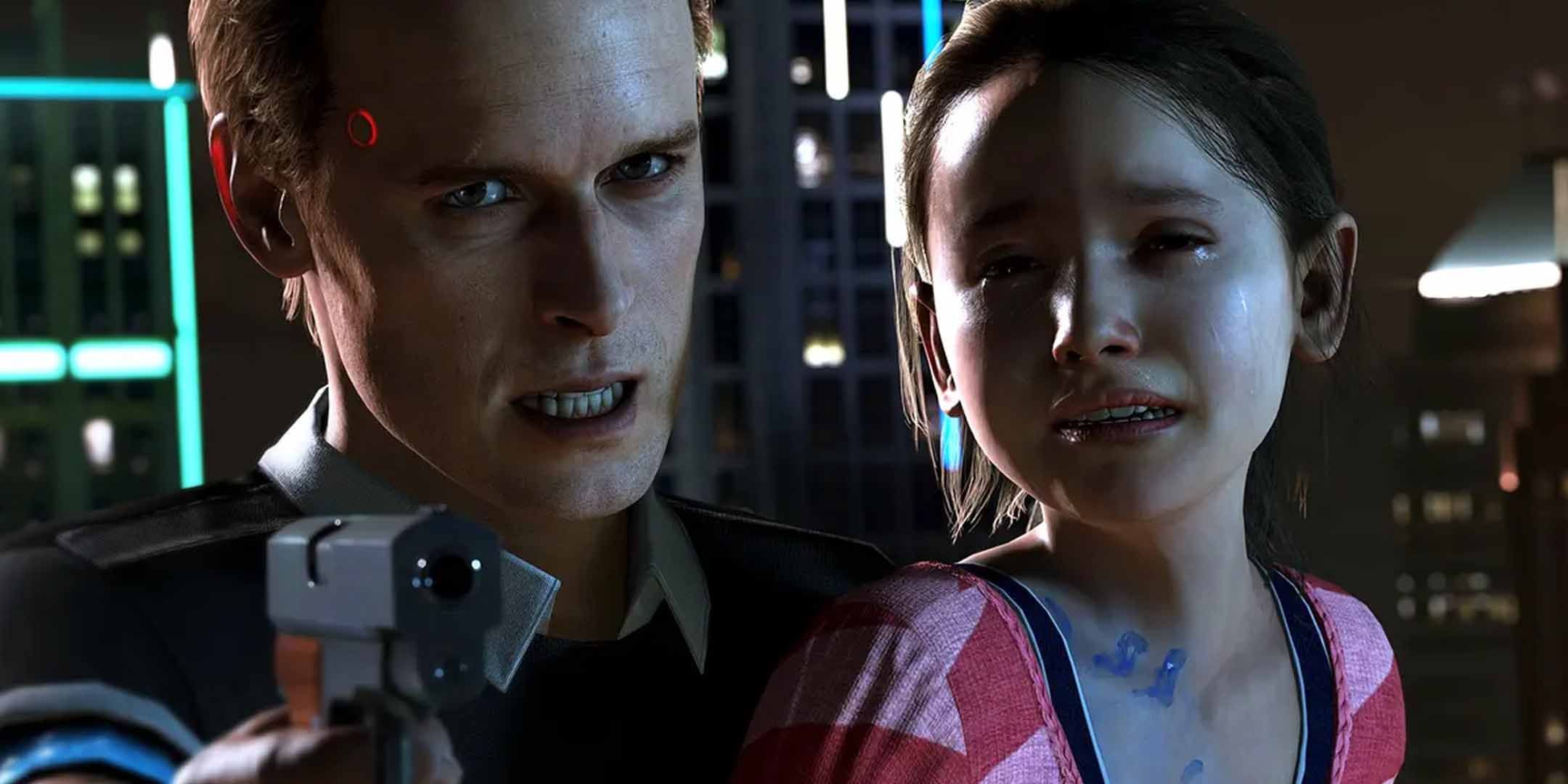
The cast of Detroit: Become Human features professional actors who delivered physical performances and voice lines using advanced performance capture technology. Bryan Dechart portrayed Connor, Valorie Curry played Kara, and Jesse Williams starred as Markus, alongside a large supporting ensemble that brought Quantic Dream's narrative-driven science fiction game to life.
Introduction to the Performance Capture Cast of Detroit: Become Human
Released by Quantic Dream and directed by David Cage, Detroit: Become Human relies heavily on cinematic storytelling and interactive drama. Set in a near-future Detroit where androids serve human society, the game explores themes of artificial consciousness, autonomy, and civil rights. To make these digital androids resonate with players, the developers utilized state-of-the-art performance capture technology. This process records an actor's body movements, facial expressions, and voice simultaneously, translating human nuance directly into digital characters.
Understanding the actors behind the androids and humans in Detroit: Become Human provides insight into how modern video game performances are constructed. The cast includes a mix of experienced television and film actors who spent years working on a script that spanned thousands of pages. This article examines the primary cast members, the supporting actors, the technology that enabled their performances, and the lasting impact of their work on the gaming industry.
The Primary Protagonists and Their Actors
The narrative of Detroit: Become Human is structured around three distinct android protagonists, each representing a different facet of the android experience in Detroit. The choices made by the player dictate whether these characters fulfill their programmed duties or deviate to become "deviants"—machines exhibiting free will and emotion.
Connor (Portrayed by Bryan Dechart)
Connor is an advanced RK800 prototype android sent by CyberLife to assist the Detroit City Police Department in investigating deviant android cases. His storyline focuses heavily on logic versus emerging empathy, particularly through his relationship with his hard-drinking, cynical human partner, Lieutenant Hank Anderson.
Bryan Dechart brought Connor to life with precise, measured physical movements that gradually evolved as Connor experienced emotional awakening. Dechart's dedication to the role extended beyond the motion capture stage; following the game's release, he built a massive community following by streaming playthroughs of the game on Twitch, often interacting directly with fans who loved his character's complex redemption arcs.
Kara (Portrayed by Valorie Curry)
Kara is an AX400 household android designed for domestic chores and childcare. Her narrative begins immediately after a traumatic malfunction where she breaks her programming to protect a young girl, Alice, from an abusive father, Todd Williams. Kara's journey is a desperate survival story across a hostile city, focusing on maternal love, empathy, and the struggle to find a safe haven.
Valorie Curry, known for her roles in television and film such as The Following and The Twilight Saga: Breaking Dawn – Part 2, delivered an emotionally vulnerable performance. Curry's work required immense physical exertion on the motion-capture stage, simulating cold, fatigue, fear, and deep affection while wearing a marker-studded suit and head-mounted camera rig.
Markus (Portrayed by Jesse Williams)
Markus is an RK200 prototype serving as a caretaker for a kind, aging painter named Carl Manfred. After a tragic turning point, Markus finds himself in the junkyard among discarded machines, where he repairs himself and escapes to become the leader of the android resistance movement. His storyline tackles themes of civil rights, peaceful protest versus violent rebellion, and political strategy.
Jesse Williams, widely recognized for his long-running role on the television medical drama Grey's Anatomy, brought gravitas and leadership presence to Markus. Williams utilized his platform and acting experience to ground the high-stakes science fiction narrative in themes reminiscent of historical civil rights struggles, giving the android revolution emotional weight.
Key Supporting Cast and Notable Roles
While the three protagonists drive the main plot branches, the supporting cast provides the friction, mentorship, and antagonism that shape the game's branching paths.
- Clarence Gilyard Jr. / Minka Kelly / Various: The supporting ensemble features dozens of actors who spent months filming scenes at Quantic Dream’s Paris studio.
- Clancy Brown as Lieutenant Hank Anderson: Hank is Connor's cynical, grieving human partner. Clancy Brown, a veteran character actor famous for Highlander and The Shawshank Redemption, injected world-weary humor and deep pathos into the dynamic between human and machine.
- Lexi DiBenedetto as Alice: Alice is the young android child whom Kara protects throughout the game. Her performance anchors Kara's maternal drive and provides high-stakes emotional leverage during critical narrative junctures.
- Lance Henriksen as Carl Manfred: The legendary science fiction actor (Aliens, Terminator) portrays the eccentric, philosophical artist who mentors Markus and encourages him to express himself creatively before his life is upended.
- Neil Newbon as Gavin Reed and Elijah Kamski: Neil Newbon dual-role performance highlights his versatility. He portrays the abrasive, hostile DPD detective Gavin Reed, as well as Elijah Kamski, the enigmatic, reclusive genius creator of CyberLife who left backdoor fail-safes hidden within his machines.
Performance Capture Technology and Production Process
Creating the performances in Detroit: Become Human required a specialized production pipeline that blended traditional filmmaking with computer-generated animation. Unlike traditional voice acting recorded in sound booths, performance capture records the actor's exact body language, voice, and facial expressions simultaneously.
- Stage Recording: Actors wear motion-capture suits with reflective markers and head-mounted camera rigs.
- Data Synchronization: Body tracking, facial camera data, and audio are synchronized into a unified digital file.
- Animation Retargeting: Data is mapped onto digital character models (skeletons and facial rigs).
- Polish & Integration: Animators refine imperfections, and directors integrate scenes into game engine logic.
Quantic Dream utilized a massive sound stage in Paris where actors performed on sparse sets with physical props representing doors, cars, and weapons. The actors wore black suits covered in white reflective dots tracked by dozens of infrared cameras positioned around the room. A lightweight helmet rig with two cameras pointed directly at the actor's face captured every twitch, blink, and micro-expression.
This method allowed director David Cage to capture raw, authentic performances that could be directly translated onto digital character models. If an actor improvised a subtle head tilt or hesitation in their voice, the animators could preserve that nuance, making the androids feel remarkably human while retaining subtle mechanical stiffness where appropriate.
Comparison of Principal Actors and Their Roles
The following table outlines the principal cast members, their character designations, and their primary narrative focus within the game.
| Actor Name | Character Name | Model / Role Type | Primary Narrative Focus |
|---|---|---|---|
| Bryan Dechart | Connor | RK800 Android / DPD Investigator | Logic vs. empathy, investigating deviancy |
| Valorie Curry | Kara | AX400 Android / Caretaker | Maternal survival, protection, and escape |
| Jesse Williams | Markus | RK200 Android / Caretaker & Leader | Civil rights, revolution, and android liberation |
| Clancy Brown | Hank Anderson | Human / DPD Lieutenant | Grief, alcoholism, and bonding with Connor |
| Lance Henriksen | Carl Manfred | Human / Artist | Mentorship, philosophy, and artistic expression |
| Neil Newbon | Elijah Kamski / Gavin Reed | CyberLife Creator / DPD Detective | Corporate secrets, hostility, and philosophical tests |
Common Misconceptions About the Cast and Production
Audiences unfamiliar with modern video game development often harbor misconceptions regarding how performances like those in Detroit: Become Human are created. Clarifying these points highlights the true nature of the actors' labor.
Motion Capture Versus Voice Acting
A common belief is that video game actors merely step into a booth to record lines after the animation is finished. In reality, the cast of Detroit: Become Human performed the vast majority of their roles on a physical stage years before release. Their bodily movements and facial performances drive the visual narrative on screen, making their work closer to traditional theater or film acting than standard voiceover work.
The Extent of Script Branching
Because Detroit: Become Human features thousands of narrative branches and potential character deaths, the actors had to film numerous variations of the same scene. An actor might perform a cheerful greeting, a hostile confrontation, and a dying confession for the exact same plot beat depending on player choices made across previous chapters. This required intense memorization and stamina over the multi-year shooting schedule.
Frequently Asked Questions
Did the actors do their own stunts on the motion capture stage?
While actors performed the dramatic movements, physical fights, and running sequences themselves on a padded stage, specialized stunt doubles were brought in for high-risk physical falls, heavy combat choreography, and complex acrobatics to ensure safety and precision.
How long did it take to film the performances for Detroit: Become Human?
Principal photography and performance capture for the game spanned over a year, building upon a multi-year writing and pre-production process led by director David Cage.
Are the character models based on the real-life actors?
Yes. Quantic Dream scanned the faces and body types of the primary actors to build the digital models. While subtle adjustments were made to give androids a flawless, manufactured aesthetic, the resemblance to actors like Bryan Dechart, Valorie Curry, and Jesse Williams is intentional.
Can players interact with the cast outside the game?
Many of the principal actors, particularly Bryan Dechart and Amelia Rose Blaire (who played the android Traci), engaged heavily with the gaming community through social media, conventions, and live streaming platforms, frequently playing through the game and discussing behind-the-scenes stories.
What other games or media have these actors appeared in?
Bryan Dechart has appeared in television shows like Switched at Birth, Valorie Curry starred in The Following and The Boys, and Jesse Williams is widely known for Grey's Anatomy and his Tony-nominated work on Broadway. Neil Newbon is also well-known in gaming for voicing Astarion in Baldur's Gate 3.
Conclusion and Next Actions
The performances delivered by the cast of Detroit: Become Human elevated a complex branching narrative into an emotionally resonant experience. By utilizing advanced performance capture, actors like Bryan Dechart, Valorie Curry, and Jesse Williams successfully portrayed the nuances of artificial beings grappling with consciousness.
For those interested in exploring further, reviewing behind-the-scenes documentaries released by Quantic Dream offers a deeper look at the motion-capture pipeline. Additionally, studying the filmographies of the principal cast members reveals how television and theater actors continue to shape modern interactive storytelling in the gaming industry.