Extensive agriculture is a farming method characterized by low inputs of labor, capital, and synthetic fertilizers relative to the large land area being cultivated or grazed. Instead of maximizing yields per hectare, it relies on natural soil fertility, native vegetation, rainfall, and expansive terrain to produce food, fiber, and livestock efficiently over vast distances.
What Is Extensive Agriculture? Key Principles and Concepts
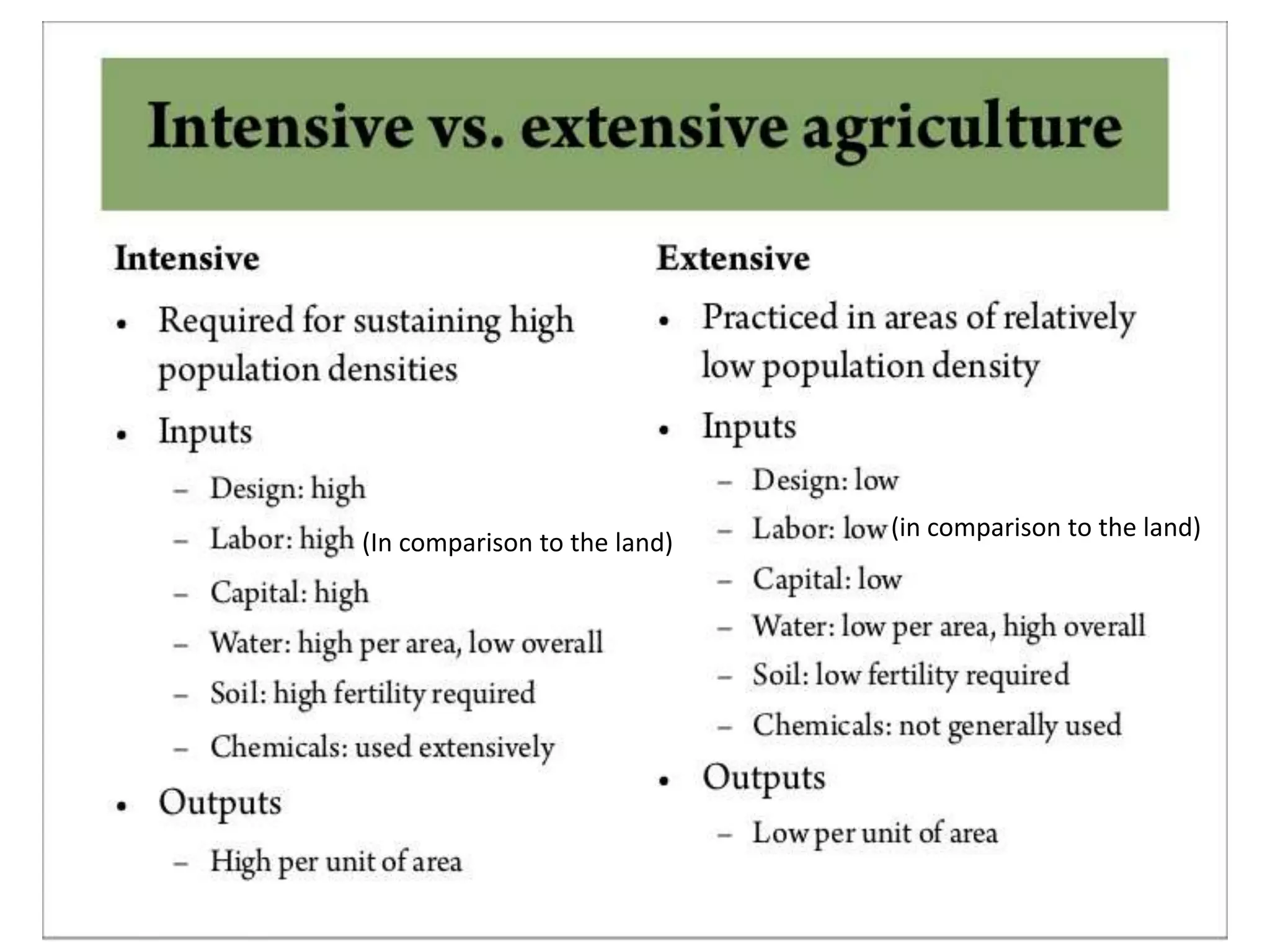
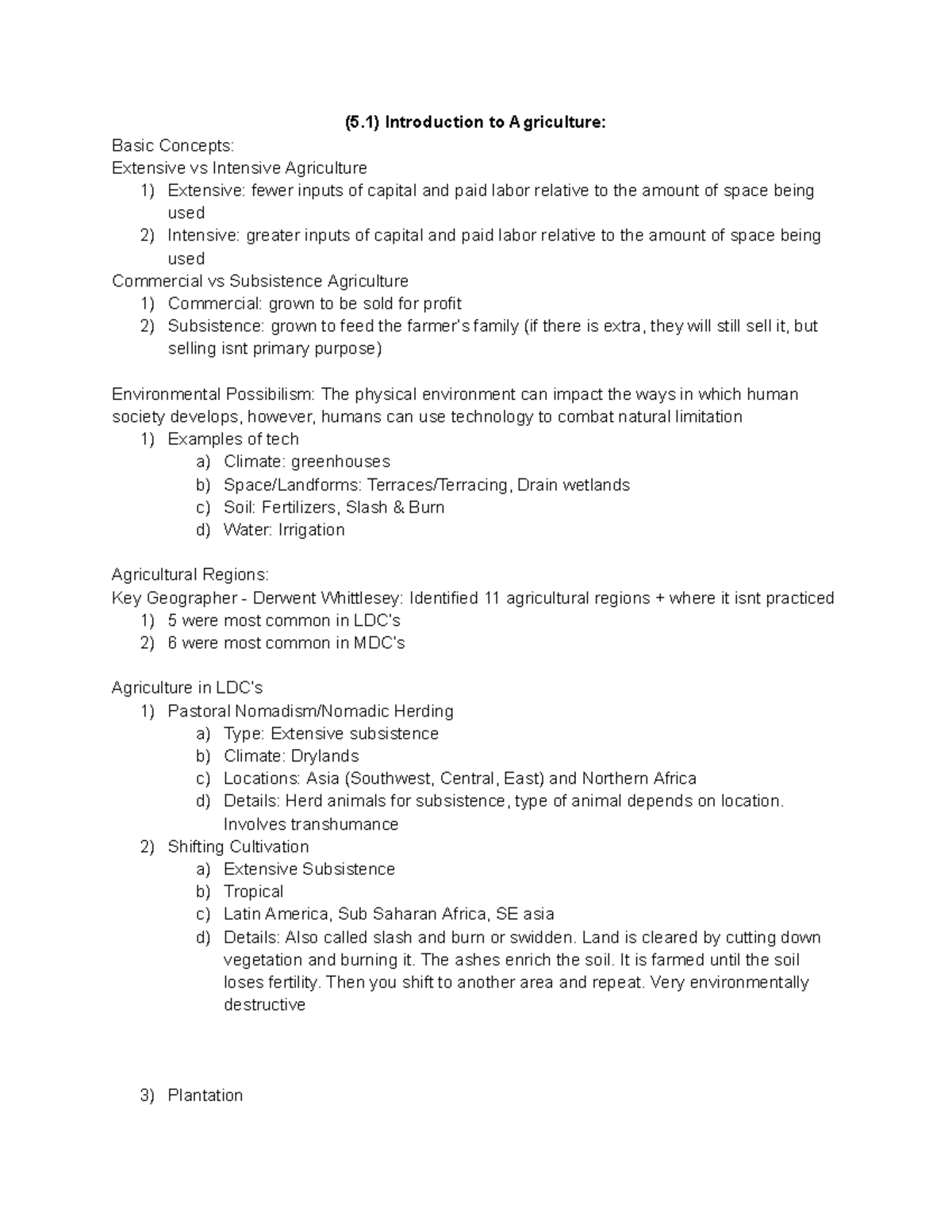
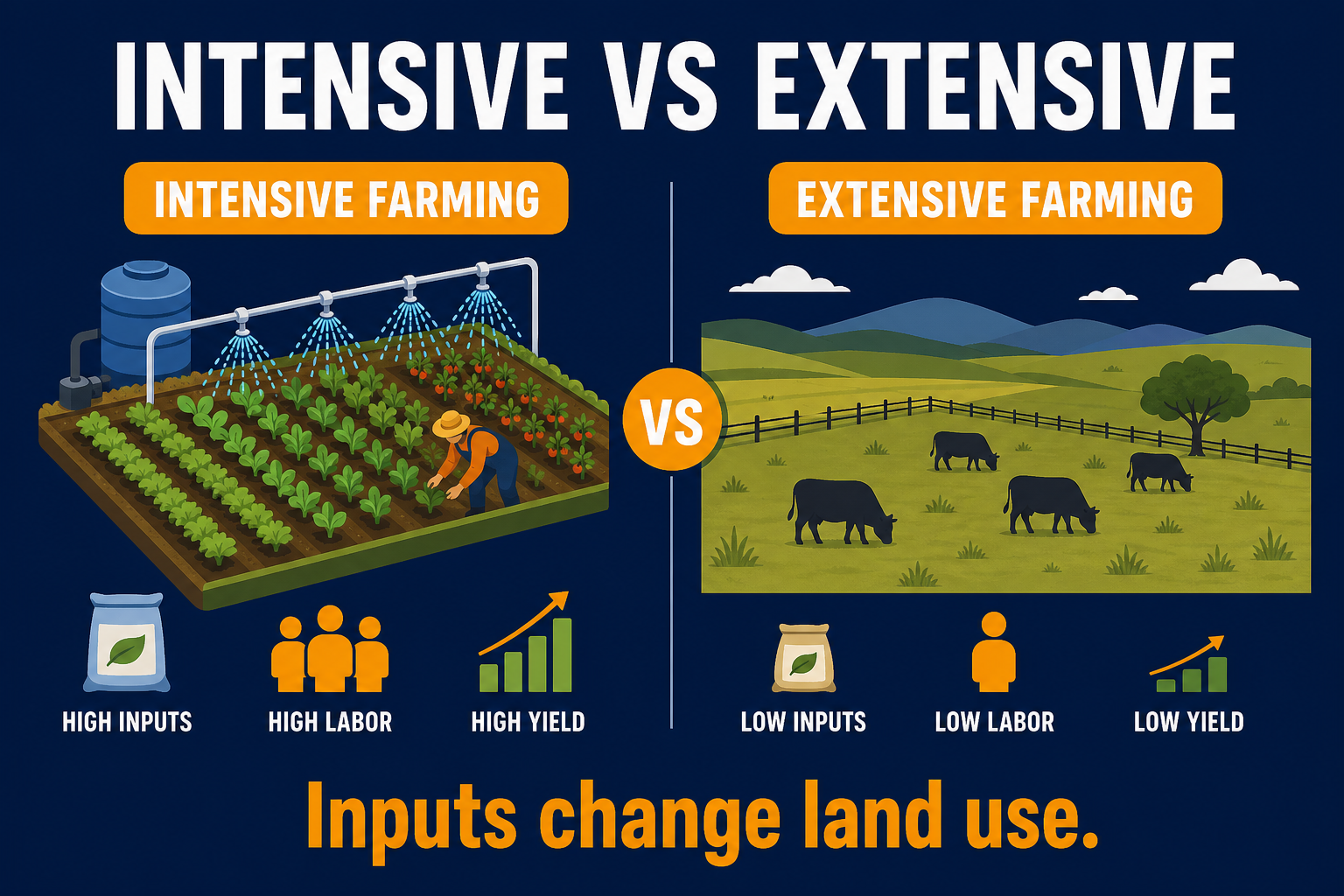
Extensive agriculture refers to agricultural production systems where land area is the primary factor of production, while capital investments, labor force, and chemical inputs remain comparatively low per unit of land. This farming philosophy contrasts sharply with intensive systems, which concentrate heavy investments of fertilizer, irrigation, labor, or technology onto small, high-yielding plots.
In extensive agricultural systems, the primary yield metric is often output per worker or output per unit of monetary investment, rather than output per acre or hectare. Because land is abundant or cheap—often due to remote locations, semi-arid climates, rugged topography, or poor native soil quality—farmers and pastoralists spread their operations across large geographic tracts.
| Feature | Extensive Farming | Intensive Farming |
|---|---|---|
| Land Area | Large / Expansive | Small to Medium |
| Capital Input / Hectare | Low | High |
| Labor Input / Hectare | Low | High |
| Yield per Hectare | Modest / Low | High |
| Yield per Worker | Often Very High | Variable |
| Common Environments | Steppes, Savannas, Arid Rangelands | Fertile Plains, Urban Peripheries |
Key Factors Shaping Extensive Farming
- Geographic and Climatic Constraints: Extensive systems predominantly occupy areas unsuitable for high-density cropping, such as semi-arid regions, high-altitude plateaus, or dense tropical forests where soil degradation occurs rapidly under continuous cultivation.
- Low Input Costs: Producers minimize expenditure on synthetic nitrogen fertilizers, chemical pesticides, complex irrigation infrastructure, and fuel per hectare.
- Scale Efficiency: Profitability relies on total operational volume across hundreds or thousands of hectares, offsetting lower per-hectare productivity.
5 Examples of Extensive Agriculture
Understanding how extensive agriculture functions in practice requires examining different environments, cultural practices, and economic frameworks across the globe. Below are five distinct, real-world examples of extensive farming systems.
1. Outback Cattle Ranching in Australia (Pastoral Rangelands)
In the arid and semi-arid interior of Australia, commonly referred to as the Outback, cattle producers operate some of the largest pastoral stations on Earth. Farms such as Anna Creek Station in South Australia encompass millions of acres—an area larger than several small European nations combined.
| Attribute | Details |
|---|---|
| Geographic Setting | South Australian Outback, Northern Territory |
| Primary Output | Beef Cattle (e.g., Brahman, Angus crosses) |
| Average Stocking Rate | 1 animal per 10 to 50+ hectares |
| Primary Inputs | Minimal fencing, solar water pumps, helicopters |
Because natural rainfall is erratic and vegetation consists primarily of low-density native grasses, saltbush, and scrub, the land cannot support high livestock densities. Ranchers stock cattle at extremely low rates—sometimes just one cow per 20 or 50 hectares.
Operational Dynamics
Capital inputs per unit area are minimal. Infrastructure is largely limited to boundary fencing, basic watering boreholes powered by solar pumps, and dirt access tracks. Managing herds over thousands of square kilometers relies on low-density techniques, such as seasonal mustering using helicopters, light aircraft, and all-terrain vehicles (ATVs).
Economic Rationale
Attempting to fertilize or irrigate millions of acres of desert rangeland is economically non-viable. Instead, pastoralists leverage scale: low per-hectare operating costs allow operations to remain profitable despite modest individual animal weight gains and low stocking density. The Food and Agriculture Organization (FAO) documents pastoral rangeland systems as vital food sources in hyper-arid zones where arable crop production is impossible.
2. Nomadic Pastoralism in the African Sahel
Extending across sub-Saharan Africa—from Senegal eastward to Sudan and Ethiopia—the Sahel zone features long dry seasons and sparse, seasonal precipitation. Pastoral communities such as the Fulani, Tuareg, and Zebu-herding groups practice nomadic and semi-nomadic pastoralism, moving livestock across vast public and communal lands.
| Attribute | Details |
|---|---|
| Geographic Setting | Sahelian Belt (West to East Africa) |
| Primary Output | Cattle, Goats, Sheep, Milk, Hides |
| Grazing Strategy | Seasonal Transhumance / Water-Driven Movement |
| Primary Inputs | Traditional Knowledge, Family Labor |
Nomadic herding is a classic form of subsistence-oriented extensive agriculture. It uses virtually zero synthetic chemical inputs, zero machinery, and zero permanent pasture irrigation. Instead, pastoralists rely on mobile herd management (transhumance) to track seasonal rainfall patterns and vegetation growth.
Resource Management Strategy
Herders move cattle, goats, and sheep hundreds of kilometers annually, allowing grazed pastures time to rest and regenerate naturally during dry periods. Livestock survive on wild grasses, shrubs, and stubble left in harvested agricultural fields through mutual agreements with settled agrarian communities.
Ecological and Economic Function
This mobility prevents localized overgrazing and land exhaustion in fragile arid environments. Capital investment is represented directly by herd size rather than stationary infrastructure or equipment, making mobility the central mechanism for risk management against drought.
3. Traditional Shifting Cultivation (Swidden or Slash-and-Burn Agriculture)
Shifting cultivation, historically termed swidden or slash-and-burn farming, is an ancient extensive crop system practiced in tropical rainforest regions across the Amazon Basin, Central Africa, and Southeast Asia.
| Attribute | Details |
|---|---|
| Cultivation Phase | 2–3 Years (Utilizes natural ash fertility) |
| Fallow Phase | 10–20+ Years (Forest regenerates naturally) |
| Primary Crops | Cassava, Yams, Maize, Upland Rice |
| Machinery / Inputs | Hand tools (machetes, hoes), zero fertilizers |
In shifting cultivation, farmers clear small patches of dense forest using hand tools, burn the felled vegetation to release nutrients stored in biomass into the topsoil, and plant crops like cassava, maize, mountain rice, or yams.
Why It Is Classified as Extensive
While labor per small plot during clearing can be high, the overall spatial footprint required to sustain the system over time is vast. Soil fertility in humid tropical forests degrades rapidly after clearing due to heavy rainfall leaching nutrients from thin soils. As a result, plots can only be cultivated for two to three consecutive years before yields decline sharply.
The Fallow Cycle
Farmers abandon the exhausted plot and move to a new forest section, leaving the original plot fallow for 10 to 20 years or more. During this fallow period, wild vegetation regenerates, soil organic matter recovers, and natural nutrient cycles rebuild the soil bed. Because a single family requires access to a land area 10 to 20 times larger than the plot cultivated in any given year, the system yields relatively little food per total hectare of land held across the full rotation cycle.
4. Dryland Grain Cultivation in the North American Great Plains
Dryland grain farming across the North American Great Plains—spanning parts of Kansas, eastern Montana, North Dakota, and the Canadian Prairies of Alberta and Saskatchewan—provides a highly mechanized example of commercial extensive agriculture.
| Attribute | Details |
|---|---|
| Geographic Setting | US Great Plains & Canadian Prairies |
| Primary Output | Hard Red Winter Wheat, Spring Wheat, Barley |
| Mechanization Level | Extremely High (Combine harvesters, air seeders) |
| Labor Intensity | Extremely Low per Hectare |
In these semi-arid continental climates, annual precipitation is low (often between 300 mm and 500 mm), making intensive crop production and high-density irrigation financially or physically prohibitive without depletion of deep aquifers like the Ogallala.
High Mechanization with Low Input Per Hectare
Farmers grow cereal crops—primarily hard red winter wheat, spring wheat, and barley—on individual operations covering thousands of acres. Unlike intensive European wheat farms that apply heavy doses of synthetic nitrogen fertilizers and fungicides to maximize per-hectare yield, dryland grain operations in North America minimize chemical applications per acre to balance input costs against unpredictable moisture availability.
Efficiency Metrics
A single operator equipped with large tractors, 60-foot air seeders, and high-capacity combine harvesters can manage thousands of acres independently.
- Yield per Hectare: Modest compared to high-rainfall, heavily fertilized European wheat fields.
- Yield per Labor Hour: Exceptionally high, demonstrating how commercial extensive agriculture achieves high total output through operational scale rather than chemical forcing. Data from the United States Department of Agriculture (USDA) demonstrates how mechanization allows large-scale dryland operations to remain cost-competitive in international grain markets.
5. Extensive Sheep Farming in Argentine Patagonia
The Patagonian region of southern Argentina consists of vast, wind-swept, semi-arid cold steppes. The sparse vegetation consists of tough tussock grasses and low shrubs capable of surviving severe winds and low moisture levels.
| Attribute | Details |
|---|---|
| Geographic Setting | Southern Argentine & Chilean Patagonia |
| Primary Output | Fine Wool (Merino), Mutton |
| Carrying Capacity | 0.2 to 0.5 sheep per hectare |
| Infrastructure | Perimeter fencing, shearing sheds, estancias |
The dominant agricultural land use across Patagonia is extensive sheep farming, concentrated on massive rural estates known as estancias. Producers raise fine-wool breeds such as Merino and Corriedale for international textile markets and meat production.
Grazing Management
Because the carrying capacity of Patagonian steppe land is low, stocking rates range from 0.2 to 0.5 sheep per hectare (meaning each sheep requires 2 to 5 hectares of land to survive). Sheep graze on open pasture year-round with minimal supplemental feed, artificial shelter, or labor intervention beyond annual shearing, herd sorting, and basic veterinary care.
Capital and Labor Structure
Capital expenditure per square kilometer is among the lowest in modern commercial agriculture. Labor requirements are minimal; a small team of ranch hands using sheepdogs and horses manages flocks of thousands of animals across tens of thousands of hectares. Economic viability depends entirely on minimizing variable operating costs per head while processing large volumes of wool.
Comparative Analysis of Extensive Farming Systems
The five examples of extensive agriculture share common core principles—low land-to-capital ratios and reliance on natural ecological processes—yet differ significantly in their operational mechanics, regional climate, and market orientation.
| Agricultural System | Primary Geographic Regions | Primary Commodity | Mechanization Level | Primary Source of Soil / Nutrient Input | Key Productivity Metric |
|---|---|---|---|---|---|
| Outback Cattle Ranching | Australia | Beef Cattle | Moderate (Helicopters, ATVs) | Native forage, natural rangeland ecology | High output per farm hand |
| Nomadic Pastoralism | African Sahel, Central Asia | Cattle, Goats, Milk | Very Low (Hand labor, traditional) | Seasonal rainfed pastures, stubble grazing | Herd survival & yield per family |
| Shifting Cultivation | Amazon Basin, Central Africa | Cassava, Yams, Maize | Very Low (Hand tools, manual) | Biomass ash from burned vegetation | Total yield across long fallow cycle |
| Dryland Grain Farming | US Great Plains, Canadian Prairies | Wheat, Barley, Canola | Extremely High (Air seeders, combines) | Residual soil nitrogen, minimal synthetic fertilizer | Exceptionally high output per worker |
| Patagonian Sheep Farming | Argentina, Chile | Wool, Mutton | Low to Moderate (Horses, mechanical shears) | Semi-arid tussock grass ecology | Low input cost per wool bale |
Economic and Environmental Impacts of Extensive Agriculture
Extensive agriculture plays a distinct role in global food systems and ecological management. Its broad spatial footprint creates both environmental advantages and land management challenges.
Environmental Advantages
- Preservation of Natural Habitats and Ecosystem Services: Because extensive pasture systems (such as Australian cattle stations or Patagonian estancias) do not involve tilling the soil or clearing native flora completely, large tracts of native vegetation remain intact. This supports endemic wildlife species, preserves native seed banks, and maintains natural carbon sinks in unplowed rangelands.
- Lower Synthetic Chemical Dependence: Extensive systems use far fewer synthetic pesticides, herbicides, and nitrogen-based fertilizers per unit area than intensive crop farms. This significantly reduces nitrogen run-off into local waterways, helping prevent aquatic eutrophication and toxic algal blooms.
- Soil Structure Conservation: Systems that rely on permanent pasture grazing or long fallow cycles experience less soil compaction and disruption than lands subjected to annual tillage, helping preserve delicate soil microbiomes.
| Benefits | Risks & Vulnerabilities |
|---|---|
| • Low chemical runoff & pollution | • High land consumption |
| • Native biodiversity preservation | • Risk of overgrazing & erosion |
| • Lower fossil fuel use per hectare | • Deforestation (if unmanaged) |
| • Natural soil structure retention | • Vulnerability to climate shifts |
Challenges and Vulnerabilities
- Extensive Land Consumption: The primary trade-off of extensive agriculture is its large spatial requirement. Producing a given quantity of food under extensive management requires significantly more land area than under intensive methods. Where extensive farming encroaches on pristine habitats—such as uncontrolled shifting cultivation or forest clearing for low-density pasture—it can drive deforestation and biodiversity loss.
- Susceptibility to Land Degradation and Overgrazing: When stocking rates exceed the ecosystem's carrying capacity, extensive grazing can degrade soil vegetation cover. In dryland environments like the Sahel or Patagonia, overgrazing strips vegetation, exposing topsoil to severe wind and water erosion, which can lead to irreversible desertification.
- Climate Sensitivity: Because extensive farming relies heavily on natural rainfall and native pasture growth rather than controlled irrigation or synthetic interventions, it is vulnerable to changing weather patterns, prolonged droughts, and temperature extremes.
Frequently Asked Questions
How does extensive agriculture differ from intensive agriculture?
Extensive agriculture uses small inputs of labor, capital, and fertilizers relative to a large land area, resulting in low yields per hectare but high efficiency per worker or investment unit. In contrast, intensive agriculture applies high amounts of capital, chemical inputs, technology, and labor to small or medium land areas to maximize yield per unit of land.
Is extensive agriculture environmentally friendly or harmful?
It depends on management practices and ecosystem context. Extensive farming typically uses fewer synthetic chemicals and preserves natural ecosystems over large areas. However, if managed poorly, it can cause habitat fragmentation, deforestation, or overgrazing leading to desertification due to its large land requirement.
Why is extensive farming common in arid or remote regions?
In semi-arid, mountainous, or remote locations, land is abundant and inexpensive, but water, soil nutrients, and transportation infrastructure are limited. Applying high-cost intensive inputs (like complex irrigation or heavy fertilizing) in such environments is financially risky or physically impossible, making extensive grazing or dryland cropping the most viable economic option.
Can extensive farming feed a growing global population on its own?
Extensive farming alone cannot meet global food demand due to its lower yield per hectare. Feeding growing urban populations requires high-yield intensive crop production on fertile soils to avoid converting remaining global forests into agricultural land. However, extensive agriculture remains vital for converting non-arable rangelands into protein (meat and dairy) without using fresh water reserves or synthetic fertilizers.
What role does technology play in modern extensive agriculture?
Modern extensive agriculture relies heavily on spatial and operational technology rather than chemical land acceleration. Farmers use GPS-guided auto-steer machinery, satellite crop and pasture imagery, drone monitoring, automated water sensors, and aerial mustering to manage vast land tracts efficiently with minimal personnel.
Strategic Outlook and Next Steps
Extensive agriculture remains an essential strategy for managing semi-arid ecosystems, drylands, and natural rangelands worldwide. As land resources face pressures from urban expansion, climate volatility, and conservation requirements, managing extensive systems requires balancing spatial efficiency with ecological preservation.
Key Takeaways for Agricultural Planning
- Match System to Ecology: Deploy extensive grazing and dryland cropping primarily on non-arable lands where intensive cultivation would exhaust water tables or trigger topsoil erosion.
- Monitor Stocking Rates: In pastoral setups, maintain flexible stocking densities tailored to annual rainfall variations to prevent land degradation and desertification.
- Leverage Spatial Tech: Incorporate satellite vegetation tracking (such as NDVI mapping) and remote water monitoring to optimize land management over broad landscapes without escalating labor costs.
For further detailed guidelines on sustainable pastoral management and soil conservation standards, consult regional agricultural extensions and resources from the United Nations Environment Programme (UNEP).