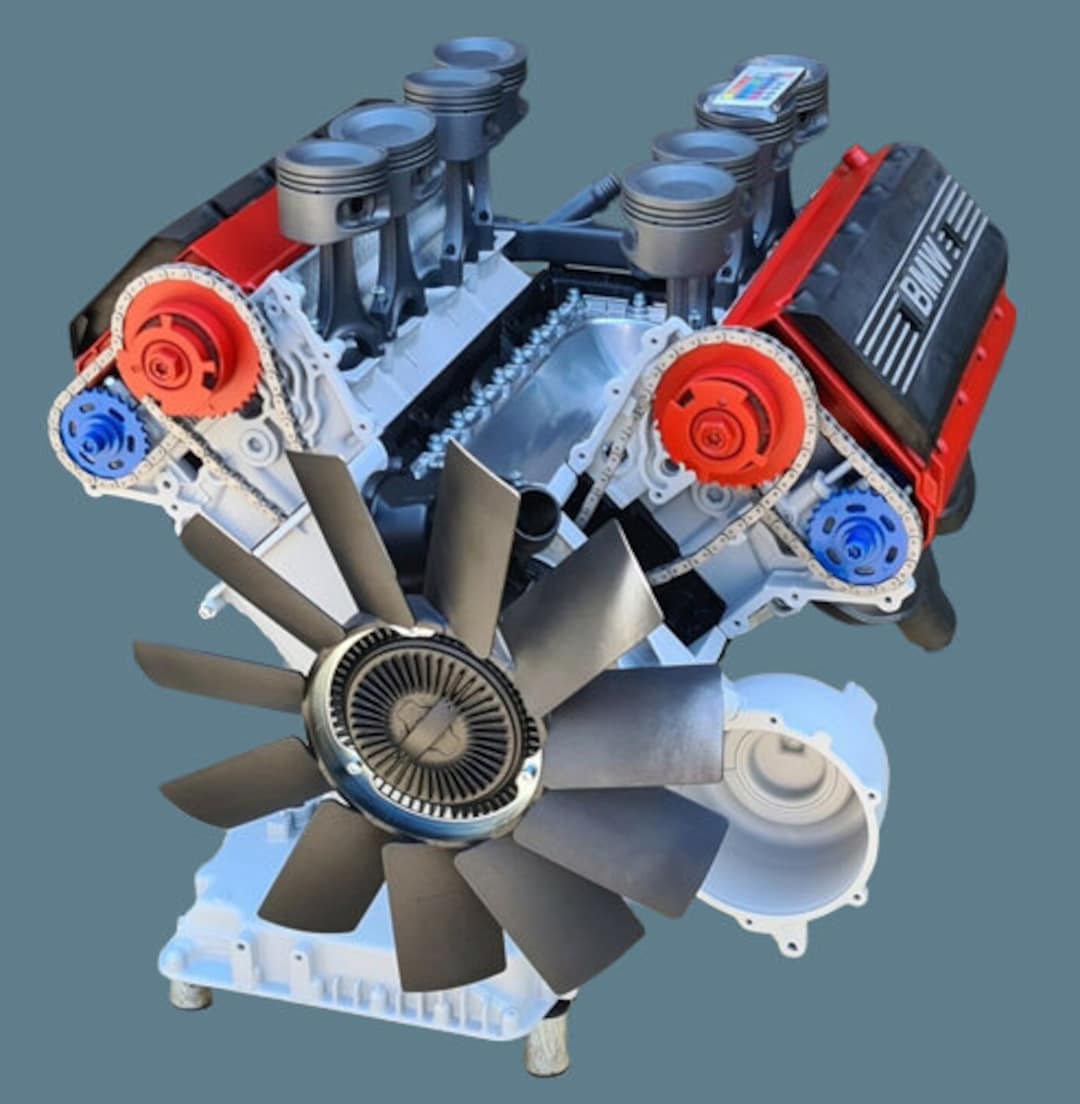
The 4.4-liter V8 engine is a powerful internal combustion architecture utilized across several luxury and high-performance automotive brands, most notably in applications from Land Rover, Jaguar, and BMW. Balancing robust displacement with sophisticated forced induction or naturally aspirated configurations, this engine family provides substantial torque and horsepower for heavy SUVs, executive sedans, and grand tourers.
Introduction to the 4.4L V8 Engine Architecture
The 4.4L V8 engine occupies a specialized space in automotive engineering, bridging the gap between medium-displacement six-cylinder configurations and massive, fuel-heavy large-displacement eight-cylinders. Over the decades, various manufacturers have developed displacement variants approximating 4.4 liters (roughly 4,398cc to 4,400cc), tailoring the platform to meet specific performance goals, packaging constraints, and emissions regulations.
When evaluating a 4.4-liter V8, automotive enthusiasts, buyers, and technicians generally focus on three distinct iterations: the BMW M62/N63 families, the Jaguar Land Rover (JLR) AJV8 variants, and Volvo’s high-output V8 used in specific transverse applications. Each of these powerplants uses unique engineering philosophies, ranging from hot-V turbocharging setups to smooth, naturally aspirated power delivery. Understanding the mechanical foundations, operational characteristics, and common maintenance realities of these engines is vital for anyone looking to own, service, or restore a vehicle equipped with this configuration.
Historical Context and Evolution
The genesis of modern 4.4L V8 engines dates back to the late 1990s and early 2000s, when stringent fuel economy standards forced manufacturers to downsize large-displacement V8s while maintaining or improving power output.
BMW's Contribution: From M62 to N63
BMW introduced its 4.4-liter displacement category with the M62B44 engine in 1996, which served as a natural evolution of the M60. Featuring an all-aluminum block and variable valve timing (VANOS), the M62 powered iconic models like the 540i, 740i, and early X5. As technology progressed, BMW transitioned to the N62, adding double-VANOS and Valvetronic variable valve lift. Eventually, the modern era ushered in the N63 and S63 twin-turbocharged 4.4-liter V8s, which introduced the "hot-V" layout—placing the turbochargers inside the V-bank to improve packaging and throttle response.
Jaguar Land Rover's AJV8
Concurrently, Jaguar developed the AJV8 engine family, which eventually grew to a 4.2-liter and later a 5.0-liter, but also found specific 4.4-liter applications, particularly through a licensing agreement with BMW before Ford Motor Company developed its own iteration for Land Rover products. The AJV8 family became a staple in luxury British motoring, prized for its linear powerband and aluminum lightweight construction.
Technical Specifications and Design Characteristics
While specific engineering varies by manufacturer, most 4.4L V8 engines share several core architectural traits designed to optimize volumetric efficiency and structural rigidity.
| Feature | Typical Specification Range |
|---|---|
| Displacement | ~4,398 cc to 4,400 cc |
| Cylinder Configuration | 90-degree V8, Aluminum Block & Heads |
| Valve Train | DOHC, 4 Valves per Cylinder, Variable Timing |
| Induction System | Naturally Aspirated or Twin-Turbocharged |
| Fuel Delivery | Multi-Point Port Injection or Direct Injection |
Engine Block and Rotating Assembly
To keep weight manageable over the front axle, nearly all modern 4.4L V8 powerplants utilize an aluminum alloy engine block with cast-iron or plasma-arc sprayed cylinder liners. The 90-degree V-angle is standard, as it provides inherent primary and secondary balance, reducing unwanted vibrations and ensuring smooth operation through the RPM range. The forged steel crankshaft and fractured-split connecting rods are engineered to withstand high peak cylinder pressures, particularly in forced-induction applications where boost adds significant mechanical stress.
Induction and Airflow Management
The breathing capabilities of a 4.4-liter engine dictate its power profile. Naturally aspirated variants rely on tuned intake manifold runners and variable valve timing to maximize volumetric efficiency at high revolutions. In contrast, modern twin-turbocharged iterations—such as BMW’s N63 and S63—utilize dual twin-scroll turbochargers or parallel turbochargers mounted in the valley of the engine. This "hot-V" configuration shortens the exhaust runner length to the turbine inlet, virtually eliminating turbo lag and providing instantaneous low-end torque.
Performance Profiles Across Major Applications
The performance characteristics of a 4.4L V8 depend heavily on the vehicle segment it serves. In executive luxury sedans, the tuning prioritizes whisper-quiet operation and effortless passing power. In high-performance sports cars and heavy-duty off-road SUVs, the calibration shifts toward aggressive throttle response and high towing capacities.
Heavy-Duty Off-Road Performance
In vehicles like the Range Rover, the 4.4L V8 is tuned to deliver maximum torque at low engine speeds (RPM). This characteristic is crucial for crawling over obstacles, negotiating steep inclines, and towing heavy trailers. The flat torque curve ensures that power is instantly available without requiring aggressive downshifting from the transmission.
High-Performance Sports and Executive Saloons
When integrated into performance-oriented platforms, a 4.4L twin-turbo V8 can produce anywhere from 450 to over 600 horsepower. These engines thrive in the mid-to-high RPM range while maintaining broad torque plateaus that launch heavy sedans and coupes from 0 to 60 mph in under four seconds. Advanced engine management systems coordinate ignition timing, boost pressure, and direct-injection fuel maps to optimize combustion efficiency under extreme loads.
Maintenance Considerations and Common Issues
Owning a vehicle powered by a complex 4.4L V8 engine requires diligence regarding preventive maintenance. Due to tight tolerances, high operating temperatures, and intricate electronics, neglecting routine service can lead to costly repairs.
Cooling System Integrity
Because these engines operate in compact engine bays—often packed with turbochargers, intercoolers, and auxiliary accessories—under-hood temperatures are exceptionally high. Plastic cooling components, expansion tanks, thermostat housings, and auxiliary water pumps are prone to thermal degradation over time. Regular inspection and replacement of cooling system hoses and fittings prevent catastrophic overheating events that can warp aluminum cylinder heads.
Oil Leaks and Gasket Degradation
Gaskets and seals, including valve cover gaskets, timing chain cover seals, and oil filter housing gaskets, harden over years of exposure to heat cycles. Oil leaks are a common maintenance item for older 4.4L V8 platforms. Addressing these leaks promptly prevents oil from contaminating surrounding rubber mounts, belts, and electrical connectors.
Timing Chain Guides and Tensioners
In earlier naturally aspirated variants like the BMW M62, plastic timing chain guides are known to become brittle and wear down over high mileage. Preventive replacement of the timing chain guides, tensioners, and chains is a standard milestone service for high-mileage examples to prevent engine-destroying valve-to-piston contact.
Frequently Asked Questions
What vehicles use a 4.4L V8 engine?
Vehicles featuring a 4.4L V8 engine span several brands, most notably BMW (utilizing the M62, N63, and S63 engines in models like the 5 Series, 7 Series, X5, and M5), Land Rover (in select Range Rover generations), and Volvo (which offered a transverse 4.4L V8 in the XC90 and S80).
Is the 4.4L V8 reliable?
Reliability varies significantly by specific manufacturer, generation, and maintenance history. Naturally aspirated versions generally exhibit high durability if cooling and timing systems are maintained. Modern twin-turbo versions require strict adherence to short oil change intervals and proactive thermal management to remain dependable over high mileage.
How often should oil be changed on a 4.4L V8?
While factory manuals may suggest extended service intervals, automotive technicians and specialists strongly recommend changing the engine oil and filter every 5,000 to 7,500 miles—particularly for twin-turbocharged variants—to prevent carbon buildup and protect sensitive turbocharger bearings.
What is a "Hot-V" engine design?
A hot-V design mounts the turbochargers inside the "V" space between the cylinder banks rather than on the outside of the engine block. This layout shortens the exhaust paths, reduces turbo lag, and creates a more compact engine package that fits more easily into engine bays.
Can a 4.4L V8 engine be easily modified for more power?
Forced-induction 4.4L V8 engines respond exceptionally well to ECU software tuning, upgraded intercoolers, and exhaust modifications, often yielding substantial horsepower and torque gains. However, modifications increase thermal and mechanical stress, requiring stricter adherence to maintenance schedules.
Conclusion and Next Actions
The 4.4L V8 engine stands as a remarkable achievement in automotive engineering, combining the smooth, authoritative power delivery of a multi-cylinder layout with advanced forced induction and variable valve technologies. Whether you are evaluating a luxury SUV, maintaining a classic executive cruiser, or exploring high-performance tuning options, understanding the specific generation and mechanical nuances of your 4.4L V8 is essential. For current owners, prioritizing cooling system health, frequent oil changes, and prompt seal maintenance will ensure long-term reliability and peak performance. Prospective buyers should always review comprehensive service history records and secure a pre-purchase inspection from a marque specialist before finalizing acquisition.