Selecting the ideal bowling ball for a Typical House Shot (THS) requires a balance between aggressive traction and controllable motion, as these patterns are designed with a high concentration of oil in the middle and significantly less on the outside. In 2026, the three best bowling balls for house shots are the Storm Phaze II for its unmatched benchmark consistency, the 900 Global Zen Gold Label for its ability to open up angles as lanes transition, and the Hammer Black Widow 3.0 for players seeking maximum versatility from an asymmetric core.
Understanding the Dynamics of the House Shot
Before diving into specific equipment, it is essential to understand the environment of a "house shot." Unlike professional "sport" patterns, which feature flatter oil distributions (ratios like 1:1 or 3:1), a house shot is typically a "blocked" pattern with oil ratios often exceeding 10:1. This means there is ten times more oil in the center of the lane than near the gutters.
This creates a "funnel" effect. If a bowler misses their target toward the outside (the dry part of the lane), the friction causes the ball to hook back toward the pocket. Conversely, if a bowler misses toward the inside (the oily part), the lack of friction helps the ball slide further, preventing it from crossing over to the "Jersey" side. To exploit this pattern effectively in 2026, a bowler needs equipment that provides a predictable "read" of the lane—neither overreacting to the dry nor sliding uncontrollably through the oil.
The three balls selected here represent different "shapes" on the lane, ensuring that regardless of your rev rate or ball speed, you can find a solution that maximizes the forgiveness inherent in a house pattern.
1. The Benchmark Standard: Storm Phaze II
Even in 2026, the Storm Phaze II remains a cornerstone of the bowling world. Originally released nearly a decade ago, its staying power is a testament to its "benchmark" status. A benchmark ball is the first ball out of the bag; it tells the bowler exactly what the lane is doing.
Technical Specifications and Core Physics
The Phaze II utilizes the Velocity Core, a low-RG (Radius of Gyration) symmetric core that wants to start spinning early. In a 15-pound ball, the RG is 2.48 with a differential of 0.051. This combination allows for a strong, continuous motion that does not "quit" at the back of the lane.
The true secret to the Phaze II's longevity on house shots is the TX-16 (Traction Control) Solid Reactive coverstock. While many modern coverstocks are designed to be "flippy" or hyper-responsive to friction, the TX-16 offers a unique blend of chemical friction and smoothness. It creates a "footprint" on the lane that is wide enough to handle the heavy oil in the middle of a house shot but stays calm enough when it hits the dry boards on the outside.
Performance on a House Shot
On a fresh house shot, the Phaze II excels because it blends the lane. It smooths out the transition from the oil to the dry. For a "stroker" (lower rev rate), it provides enough teeth to reach the pocket. For a "cranker" (high rev rate), it offers a predictable arc that prevents the ball from jumping uncontrollably when it encounters the high-friction "wall" of a house pattern.
2. The Transition Specialist: 900 Global Zen Gold Label
As a league session progresses into the second and third games, the oil on a house shot begins to move and deplete—a process known as transition. The "track" area (usually between the 8th and 12th boards) becomes dry, and the Phaze II might begin to hook too early. This is where the 900 Global Zen Gold Label becomes the superior choice.
The Power of the Meditate Core
The Zen Gold Label is built around the Meditate Symmetric Core. This is one of the largest symmetric cores ever produced, providing a massive amount of "engine" for a ball that is designed to go long. With an RG of 2.49 and a differential of 0.051, it mirrors the strength of the Phaze II but delivers that energy much further down the lane.
Reserve Blend 801 Pearl Coverstock
In 2026, the Reserve Blend 801 Pearl coverstock (factory finished with Reacta Gloss) is the gold standard for navigating "burnt" or transitioning house shots. Unlike solid coverstocks that absorb oil and create friction early, the pearl additives in this blend allow the ball to skid through the front 40 feet of the lane with ease.
When it encounters the dry backend of a house shot, the Zen Gold Label produces a "sideways" motion that is both powerful and aesthetic. It is specifically designed to "open up the lane," meaning you can move your feet further inside (left for a right-hander) and trust the ball to recover from a wide angle. On a house shot, this creates a massive margin for error.
3. The Versatile Asymmetric: Hammer Black Widow 3.0
For many bowlers, a symmetric core feels too "lazy" or predictable. They want a ball that has a distinct "flip" or a "gear change" when it hits the friction. The Hammer Black Widow 3.0 is the pinnacle of asymmetric performance for house patterns in 2026.
The Iconic Gas Mask Core
The Black Widow line is famous for the Gas Mask Core. As an asymmetric core, it features an "intermediate differential" (0.016), which allows the ball to transition from skid to hook to roll more aggressively than a symmetric ball. This core is designed to help the ball "pop" off the pattern, which is incredibly useful on house shots where the oil is concentrated in the middle.
HK22 Coverstock Technology
The 3.0 version utilizes the HK22 (HyperKinetic22) base resin. This was a revolutionary development in coverstock chemistry that allowed for more vibrant colors and, more importantly, a higher level of responsiveness to friction. The Black Widow 3.0 is a "Solid" reactive, but the HK22 base makes it behave almost like a hybrid. It has the mid-lane read of a solid but the backend "snap" usually reserved for pearl balls.
Why it Works for House Shots
The Black Widow 3.0 is the "problem solver." If you find that your ball is hitting the pocket but "leaving the 10-pin" (for right-handers), it often means the ball has run out of energy. The asymmetric Gas Mask core ensures that the ball maintains its rotation through the pin deck. On a house shot, this ball allows you to play multiple parts of the lane—you can play "down and in" or "swing it" wide, making it one of the most versatile tools in a 2026 bowling arsenal.
Technical Comparison Table
The following table compares the primary technical attributes of these three top-tier house shot options. Note that these specifications are based on 15lb weights; 14lb and 16lb versions may have slight variations in RG and Differential.
| Feature | Storm Phaze II | 900 Global Zen Gold Label | Hammer Black Widow 3.0 |
|---|---|---|---|
| Core Type | Symmetric (Velocity) | Symmetric (Meditate) | Asymmetric (Gas Mask) |
| Coverstock | TX-16 Solid Reactive | Reserve Blend 801 Pearl | HK22 - Aggression Solid |
| RG (15 lb) | 2.48 | 2.49 | 2.50 |
| Diff (15 lb) | 0.051 | 0.051 | 0.058 |
| Int. Diff | N/A | N/A | 0.016 |
| Factory Finish | 3000-grit Abralon | Reacta Gloss | 500/1000/2000 Siaair |
| Best Lane Condition | Fresh / Heavy-Med Oil | Transition / Med Oil | Versatile / Med-Heavy Oil |
| Primary Motion | Smooth, Continuous Arc | Long Skid, Angular Flip | Strong Mid-lane with Punch |
Choosing the Right Ball for Your Style
While these three balls are the best in their class for 2026 house shots, your individual "release specs" will determine which one should be your primary choice.
The "Stroker" (Low Revs, Moderate Speed)
If you are a bowler who plays a straighter line and has a lower revolution rate, the Hammer Black Widow 3.0 is often the best choice. The asymmetric core provides the "help" needed to create a stronger entry angle into the pocket. Without that extra help from an asymmetric core, a stroker might find their ball "washing out" or hitting the pins with a "flat" deflection.
The "Tweener" (Moderate Revs, Moderate Speed)
The Storm Phaze II is the quintessential "Tweener" ball. If you have a balanced rev-to-speed ratio, the Phaze II will respond perfectly to your hand. It won't over-react if you get a little fast with your feet, and it won't jump through the roof if you slow down. It is the definition of "controllable power."
The "Cranker" (High Revs, High Speed)
High-rev players often struggle with house shots because the balls hook too much. For these players, the 900 Global Zen Gold Label is a dream. It allows the player to use their natural power to send the ball deep into the lane, knowing that the pearl coverstock will hold its energy until it reaches the dry backend. The Zen Gold Label prevents the "early hook" that often plagues high-rev players using solid-covered balls.
Surface Management: The Pro's Secret
In 2026, savvy bowlers know that the "out of the box" finish is only a suggestion. To truly master a house shot, you must manage the surface of your bowling ball.
- Sanding (Lower Grit): If your Phaze II is sliding too far in the oil, don't be afraid to take a 2000-grit pad to it. This will make the ball read the lane earlier and smooth out the backend.
- Polishing (Higher Grit/Gloss): If your Black Widow 3.0 is hooking too early or "burning up," applying a high-grit polish or "lane shine" can help it get further down the lane before reacting.
- Cleaning: Reactive resin balls are porous—they literally "breathe" in the oil. After every session on a house shot, use a dedicated ball cleaner to remove the lane oil from the coverstock. This maintains the "tackiness" required to handle the friction.
Frequently Asked Questions
Why shouldn't I just buy the most expensive "Pro" ball for a house shot?
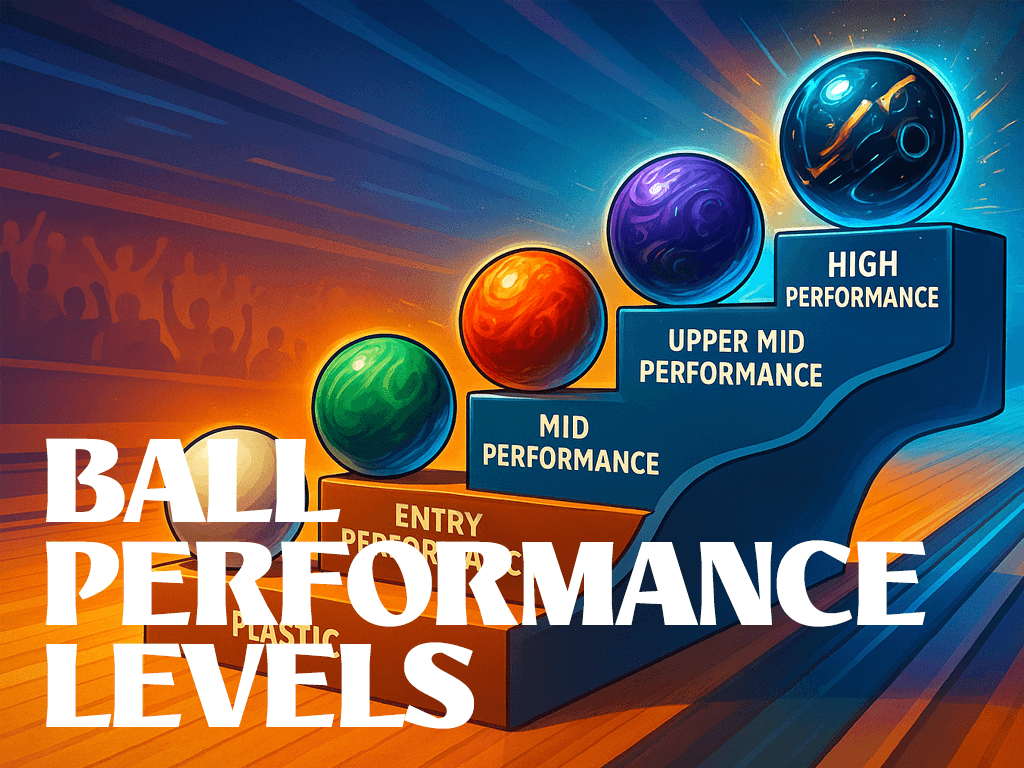
The most expensive balls are often "heavy oil" balls designed for professional patterns with massive amounts of volume. On a house shot, these balls can actually be a disadvantage. Because there is so much dry friction on the outside of a house shot, a "hook monster" will often use up all its energy in the first 30 feet, leaving nothing for the pins. The balls listed above are "upper-mid" to "high" performance, specifically chosen for their ability to handle the imbalance of a house shot.
How often should I replace my house shot bowling ball?
With modern 2026 coverstock technology, a ball can last 200 to 300 games if properly maintained. However, the "plasticizers" in the coverstock will eventually leach out, causing the ball to lose its "pop." For a regular league bowler (30 weeks, 3 games a week), a ball will typically remain at peak performance for about two seasons.
Do I need a different ball for the 10-pin (spare shooting)?
Yes. While the three balls discussed here are the best for striking on a house shot, they are designed to hook. Trying to "flatten out" a Phaze II to hit a 10-pin (for a right-hander) is difficult and inconsistent. Every bowler should carry a dedicated Plastic/Polyester spare ball. These balls do not react to the oil or friction, allowing you to throw a perfectly straight line at your spares.
What is "lane shine" and how does it affect these balls?
"Lane shine" occurs when a ball's surface is naturally smoothed out by the friction of the lane and the mechanics of the pinsetter. Most balls will eventually settle into a 4000-5000 grit "shiny" state. For the Zen Gold Label, this is fine. For the Phaze II, however, lane shine might make it go too long. Many bowlers "re-surface" their benchmark solids every 10-15 games to keep them at the intended 3000-grit finish.
Recommendation for Next Actions
If you are looking to build a "house shot arsenal" in 2026, start with the Storm Phaze II. It is the most reliable baseline for determining how the lanes are playing. If you find you need more "angle" or the lanes are drying out, your next purchase should be the 900 Global Zen Gold Label. Finally, if you feel you need more "punch" and a ball that can handle a variety of positions, the Hammer Black Widow 3.0 is the ultimate versatile addition. Always consult with a certified Pro Shop operator to ensure your "drill pattern" (layout) matches your specific PAP (Positive Axis Point) and bowling style.