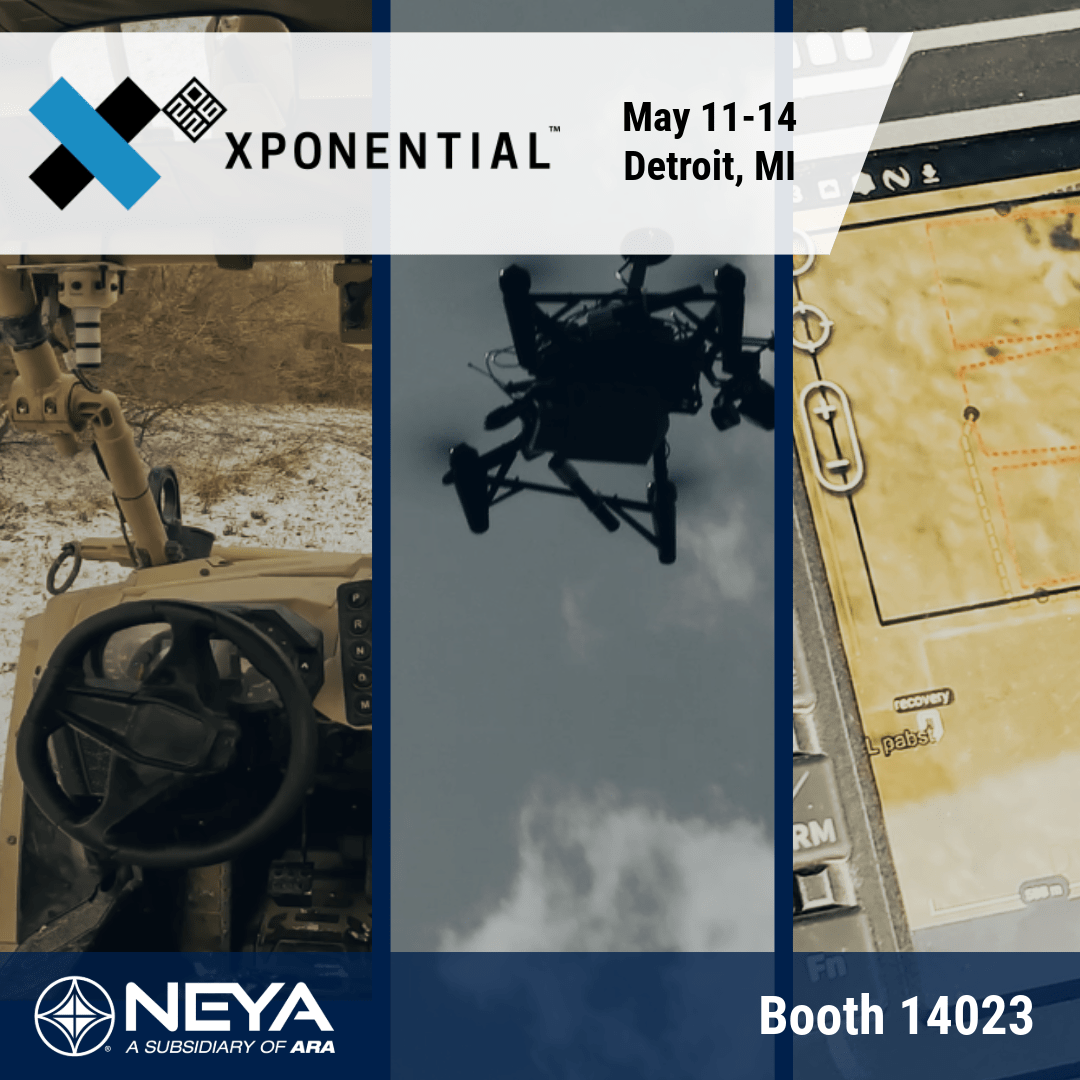
AUVSI XPONENTIAL 2026, held at Huntington Place in Detroit, Michigan from May 18–21, 2026, serves as the global focal point for uncrewed systems, autonomy, and advanced mobility. The landmark conference unites air, ground, and maritime robotics leaders, setting a strategic timeline for technology commercialization, regulatory framework evolution, and regional industrial growth.
The Strategic Convergence: Why Detroit Hosts XPONENTIAL 2026
The selection of Detroit for the 2026 Association for Uncrewed Vehicle Systems International (AUVSI) XPONENTIAL conference marks a pivotal shift in the autonomous systems landscape. Historically hosted in coastal technology hubs or aerospace-heavy regions, bringing XPONENTIAL to the epicenter of American automotive manufacturing underscores the blurring lines between aerial robotics, ground autonomy, and smart mobility infrastructure.
Michigan’s mobility ecosystem offers a unique operational backdrop for the conference. The state houses advanced testing corridors such as Mcity at the University of Michigan, the American Center for Mobility (ACM) in Ypsilanti, and the defense-focused Ground Vehicle Systems Center (GVSC) at the Detroit Arsenal in Warren. These assets create a natural bridge between commercial software developers, defense program managers, and high-volume automotive suppliers.
- AUVSI XPONENTIAL 2026 (Detroit)
- Automotive & Ground Mobility
- Advanced Air Mobility (AAM)
- Defense & Dual-Use Robotics
- Cross-Domain Integration & Economic Expansion
By hosting XPONENTIAL 2026 in Detroit, industry stakeholders gain direct access to Tier 1 automotive suppliers capable of scaling low-cost, high-reliability components—such as LiDAR, radar, electric powertrains, and compute stacks—originally engineered for ground vehicles but increasingly crucial for uncrewed aerial vehicles (UAVs) and autonomous surface vessels (ASVs). This convergence lowers manufacturing costs across all robotics domains while accelerating time-to-market for enterprise hardware.
Key Highlights and Core Program Pillars
XPONENTIAL 2026 centers on actionable technology deployments, cross-domain autonomy, and regulatory frameworks required to scale commercial and defense operations. The programming is organized around four core pillars designed to solve real-world operational bottlenecks.
1. Advanced Air Mobility (AAM) and Commercial Drone Scaling
As the Federal Aviation Administration (FAA) continues to refine rules for Beyond Visual Line of Sight (BVLOS) operations, XPONENTIAL 2026 showcases enterprise flight operations operating without human visual observers. Key highlights include:
- Unmanned Traffic Management (UTM) Demonstrations: Live simulations displaying low-altitude airspace management, integrating radar networks, optical sensors, and cloud-based flight authorization systems.
- Heavy-Lift & Logistics Cargo Drones: Tactical and middle-mile cargo platforms built to transport industrial parts, medical supplies, and military material.
- Vertiport Infrastructure & Grid Integration: Engineering standards for electric Vertical Takeoff and Landing (eVTOL) charging networks, acoustic monitoring, and passenger terminal security.
2. Autonomous Ground Vehicles (AGVs) and Industrial Automation
Leveraging Detroit's deep manufacturing roots, ground autonomy takes center stage. Session topics and show-floor exhibits emphasize high-endurance, off-road, and urban ground platforms:
- Dual-Use Ground Robotics: Modular tracked and wheeled platforms developed for remote inspection, hazardous material handling, and combat support operations.
- Vehicle-to-Everything (V2X) Communication: Cellular V2X (C-V2X) and Dedicated Short-Range Communications (DSRC) solutions engineered to allow uncrewed ground vehicles to interface seamlessly with municipal traffic management systems.
- Agriculture and Heavy Machinery Autonomy: Automated equipment equipped with high-precision GPS (RTK), computer vision, and safety shutdown systems for construction and farming applications.
3. Maritime and Subsea Autonomous Systems
Given Detroit's position on the Great Lakes maritime corridor, waterborne autonomy receives expanded coverage at the 2026 event:
- Autonomous Surface Vessels (ASVs) for Environmental & Hydrographic Surveying: Real-time data collection systems designed for riverine, coastal, and freshwater ecosystem monitoring.
- Subsea Inspection & Defense UUVs: Uncrewed Underwater Vehicles (UUVs) engineered for deep-water pipeline inspection, seabed mapping, and naval port security.
4. AI On-Device, Cyber-Physical Security, and Supply Chain Resiliency
Hardware performance relies heavily on secure software architectures. Program highlights include:
- Edge Compute and Sensor Fusion: Onboard AI processors capable of real-time object classification and path planning without relying on persistent cloud connectivity.
- GPS-Denied Navigation Systems: Visual inertial odometry (VIO), optical flow, and magnetic anomaly detection that allow platforms to navigate safely during electronic warfare or signal degradation.
- National Defense Authorization Act (NDAA) Compliance: Solutions for establishing trusted microelectronics supply chains, eliminating reliance on restricted foreign hardware components.
Comprehensive XPONENTIAL Detroit Impact Timeline
The influence of XPONENTIAL 2026 extends beyond the four-day event window at Huntington Place. The event acts as a catalyst within a multi-phase impact timeline spanning from late 2025 through 2028 and beyond.
- PHASE 1: Pre-Event Ecosystem Preparation (Q4 2025 - Q1 2026)
- Infrastructure upgrades, testing corridor expansions, state grant allocations.
- PHASE 2: Event Execution & Policy Summits (May 18–21, 2026)
- Product launches, live tech demos, B2B procurement, regulatory workstreams.
- PHASE 3: Short-Term Commercial & Regional Activation (Q3 2026 - Q4 2026)
- Joint venture finalize, local pilot projects deploy, economic capital influx.
- PHASE 4: Long-Term Industrial & Regulatory Legacy (2027 - 2028+)
- Scaling workforce programs, commercializing dual-use patents, supply chain shift.
Phase 1: Pre-Event Ecosystem Preparation (Q4 2025 – Q1 2026)
- Testing Corridor Upgrades: Regional test sites, including Mcity and the American Center for Mobility, implement high-density 5G testing networks and sensor towers to accommodate incoming international demonstration teams.
- Public-Private Grant Allocations: State economic development agencies release targeted grant funding to foster joint ventures between local automotive suppliers and emerging drone manufacturers.
- Municipal Permitting Frameworks: Local municipalities establish standardized permits for temporary BVLOS flight testing and autonomous shuttle demonstrations across Detroit’s urban core.
Phase 2: Event Execution & Strategic Alignment (May 18–21, 2026)
- Global Product Launches: Defense contractors, commercial OEM manufacturers, and software start-ups unveil next-generation platforms live on the exhibition floor.
- Regulatory Roundtables: Federal regulators (FAA, FCC, DOT) host working groups with international counterparts to harmonize airworthiness certifications and radio spectrum allocations.
- High-Volume B2B Procurement: Supply chain matchmaking sessions pair automotive Tier 1 suppliers directly with aerospace original equipment manufacturers (OEMs).
Phase 3: Short-Term Commercial & Regional Activation (Q3 2026 – Q4 2026)
- Deployment of Pilot Programs: Contracts finalized during the event translate into active regional pilots, including automated cargo transport corridors across Southeast Michigan.
- Direct Regional Economic Impact: Local hospitality, logistics, and convention sectors capture immediate economic returns generated by thousands of global industry delegates.
- Venture Capital Allocation: Regional seed and growth funds direct capital into autonomous software startups that demonstrated scalable edge-AI platforms during the conference.
Phase 4: Long-Term Industrial & Regulatory Legacy (2027 – 2028+)
- Cross-Domain Supply Chain Integration: Automotive component suppliers achieve sustained volume manufacturing for drone and robotics platforms, lowering structural production costs.
- Workforce Development Expansion: Universities and vocational institutes across the Great Lakes region establish specialized curricula in uncrewed system maintenance, robotics software development, and autonomous fleet management.
- Permanent Regulatory Advancement: Operational data gathered during XPONENTIAL 2026 flight and ground demonstrations informs permanent FAA and DOT rulemaking for routine commercial BVLOS flights and driverless commercial transport.
Technical Domain Comparison Matrix
The technological landscape featured at XPONENTIAL 2026 spans diverse operational domains. The matrix below compares the key technical focus areas, primary applications, and regulatory hurdles across domains.
| Domain | Key Technology Focus | Primary Applications | Target Regulators & Standards | Core Operational Bottlenecks |
|---|---|---|---|---|
| Aerial Uncrewed Systems (UAS / AAM) | - BVLOS Navigation- Sensor Fusion- Hybrid-Electric Powertrains | - Infrastructure Inspection- Medical Logistics- Defense Reconnaissance | - FAA (Part 108 / BVLOS)- EASA- ASTM International | - Detect-and-Avoid (DAA) reliability- Airspace spectrum availability |
| Autonomous Ground Vehicles (AGVs) | - Solid-State LiDAR- RTK-GPS & V2X- High-Compute AI Edge | - Off-Road Mining & Farming- Defense UGVs- Last-Mile Delivery | - NHTSA- DOT / State DOTs- ISO 26262 (Functional Safety) | - Edge-case safety verification- Adverse weather perception |
| Maritime & Subsea Robotics (ASVs / UUVs) | - Acoustic Communications- Subsea Imaging- Autonav Navigation | - Port Security- Hydrographic Mapping- Offshore Energy Support | - U.S. Coast Guard (USCG)- IMO (Maritime Autonomy)- NOAA | - Limited underwater bandwidth- Long-duration energy storage |
| Cybersecurity & Command Systems | - Zero-Trust Networks- Encrypted C2 Links- Anti-Jamming GNSS | - Fleet Operations Centers- Defense C4ISR- Critical Infrastructure | - CISA- NIST SP 800-171- DoD Cybersecurity (CMMC) | - GPS-spoofing resilience- NDAA supply chain compliance |
Operational Guidance for Attendees and Stakeholders
Maximizing ROI from XPONENTIAL 2026 requires tailored planning depending on organizational objectives. The following strategic steps guide key attendee cohorts through pre-event preparation and post-event execution.
For Enterprise Buyers and Commercial Operators
- Audit Fleet Requirements Early: Define operational constraints—such as payload capacity, weather limits, and flight times—prior to evaluating show-floor platforms.
- Focus on Open Architecture: Prioritize vendors offering modular payloads and open APIs. Hardware platforms locked into proprietary ecosystems increase long-term maintenance costs and integration friction.
- Verify Regulatory Compliance: Ensure hardware manufacturers comply fully with remote identification rules, NDAA procurement bans, and cybersecurity frameworks required by enterprise risk policies.
For Defense Procurement Officers and System Integrators
- Prioritize Dual-Use Technologies: Evaluate commercial platforms that can be rapidly modified with tactical datalinks or specialized sensors for defense use cases.
- Inspect Microelectronics Provenance: Validate the origin of all flight controllers, communications modules, and processing chips to comply with strict defense acquisition standards.
- Engage with Rapid Prototyping Demos: Attend outdoor live-demonstration tracks to evaluate platform stability under real-world interference and adverse weather conditions.
For Automotive Suppliers and Technology Developers
- Identify Cross-Industry Hardware Adaptations: Evaluate how existing automotive-grade sensors (LiDAR, radar, cameras) can be lightweighted or ruggedized for aerospace and maritime customers.
- Establish Strategic Partnerships: Form joint ventures with software developers specializing in specialized perception algorithms, autonomous navigation, or mission management.
Overcoming Key Operational and Regulatory Challenges
While XPONENTIAL 2026 showcases rapid innovation, scaling autonomous systems requires solving several core industry bottlenecks.
- Operational & Regulatory Challenges
- Technical Vulnerabilities
- GPS Spoofing / Jamming
- C2 Link Interruption
- Adverse Weather Perception
- Regulatory & Supply Chain
- NDAA Component Compliance
- BVLOS Approvals & Safety
- Spectrum Allocation (C-Band)
- Technical Vulnerabilities
Spectrum Allocation and Command-and-Control (C2) Reliability
Robust uncrewed operations require dedicated, interference-free spectrum for command and control. Industry leaders at XPONENTIAL address the transition toward protected radio bands—such as C-band for terrestrial unmanned aircraft—and the deployment of multi-path communications combining cellular (5G/6G), satellite communications (Satcom), and direct RF datalinks.
GPS-Denied Navigation and Electronic Resilience
Modern autonomous platforms must operate reliably in environments where GNSS (GPS, GLONASS, Galileo) signals are jammed, spoofed, or unavailable. Solutions emphasized at the 2026 conference include integrated visual inertial odometry, LiDAR-based SLAM (Simultaneous Localization and Mapping), and terrain contour matching. These technologies allow platforms to maintain pinpoint position estimation during complete signal loss.
Supply Chain Security and NDAA Compliance
The defense and government procurement sectors require strict adherence to National Defense Authorization Act (NDAA) guidelines. Domestic manufacturers and friendly foreign partners are filling gaps left by restricted components. XPONENTIAL highlights American-made flight controllers, non-restricted optical sensors, and secure motor controllers engineered to ensure complete supply chain transparency.
Frequently Asked Questions (FAQ)
What is AUVSI XPONENTIAL 2026?
AUVSI XPONENTIAL 2026 is the world's largest trade show and conference dedicated to uncrewed systems, autonomous technology, and robotics. Hosted by the Association for Uncrewed Vehicle Systems International (AUVSI), the event gathers thousands of professionals across defense, commercial, regulatory, and academic sectors to demonstrate technology, establish standards, and build business partnerships.
Where and when is XPONENTIAL 2026 being held?
XPONENTIAL 2026 takes place at Huntington Place in Detroit, Michigan, from May 18 through May 21, 2026. Live technology demonstrations occur both inside the convention center and at dedicated outdoor flight, ground, and aquatic testing sites in the greater Detroit region.
Why was Detroit selected as the host city for 2026?
Detroit was chosen due to its world-class automotive manufacturing infrastructure, leading autonomous vehicle test facilities (such as Mcity and the American Center for Mobility), and close proximity to military research facilities like the Ground Vehicle Systems Center (GVSC). This environment provides a ideal backdrop for combining aerospace, automotive, and defense autonomous technologies.
Who should attend XPONENTIAL 2026?
The conference is designed for commercial fleet managers, defense procurement officials, robotics software engineers, hardware OEMs, Tier 1 automotive suppliers, regulatory policy experts, and public safety personnel who build, operate, or regulate uncrewed air, ground, and maritime systems.
What are the main regulatory themes discussed at the event?
Key regulatory focus areas include FAA rules for routine Beyond Visual Line of Sight (BVLOS) operations, nationwide Unmanned Traffic Management (UTM) integration, driverless commercial vehicle safety standards set by NHTSA, maritime autonomous vessel rules, and NDAA supply chain compliance.
Actionable Recommendations for Participants
To gain the highest value from XPONENTIAL 2026 in Detroit, participants should align their pre-conference planning with clear technical and commercial goals:
- Pre-Book Matchmaking Sessions: Leverage the official AUVSI event platform early to schedule targeted meetings with Tier 1 component suppliers, software developers, and federal program managers.
- Attend Live Outdoor Demos: Allocate dedicated time to inspect hardware operating in real-world conditions at local testing tracks outside the main exhibition hall.
- Participate in Regulatory Workshops: Join FAA, DOT, and CISA policy roundtables to gain early insight into upcoming compliance mandates that will shape product design requirements over the next three to five years.
- Track the Post-Event Impact Timeline: Establish internal reviews 30, 90, and 180 days post-conference to convert connections made at Huntington Place into active commercial pilots and supply agreements.