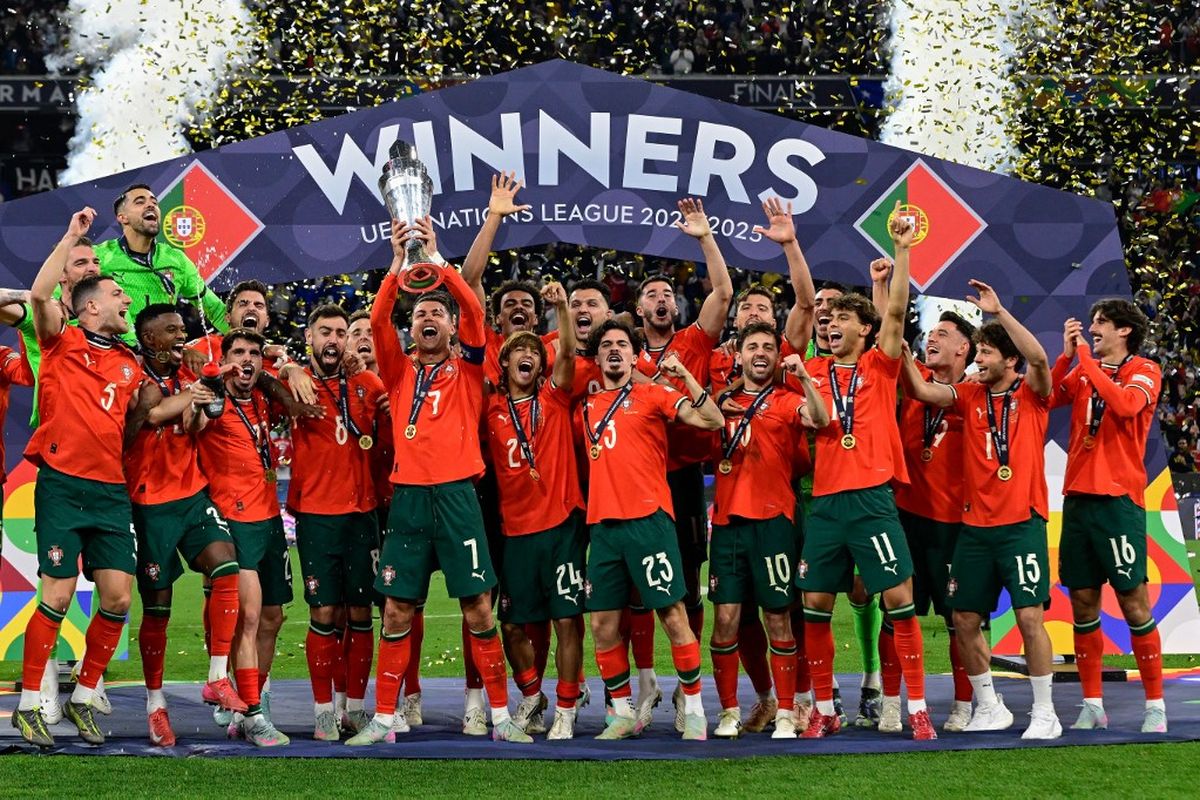
The 2019 UEFA Nations League victory remains a cornerstone of Portuguese football history, serving as a catalyst for a strategic shift in the nation's sporting development and coaching philosophy. By 2024, the long-term impact of this title had manifested in a revamped squad, a modernized tactical approach under new leadership, and a rigorous preparation cycle aimed at sustaining competitiveness on the continental and global stages through to 2026.
The 2019 Nations League as a Developmental Milestone
When Portugal lifted the inaugural UEFA Nations League trophy in Porto, it represented more than just another piece of silverware for the Seleção das Quinas. It validated a specific model of high-performance football that balanced the experience of senior leaders like Cristiano Ronaldo and Pepe with the integration of a emerging "Golden Generation."
Between 2019 and the buildup to 2024, the Portuguese Football Federation (FPF) utilized the momentum from that victory to secure structural changes in youth development. The 2019 triumph proved that Portugal could transition from an underdog status to a perennial tournament favorite. This success dictated the expectations for 2024: the team was no longer just aiming to qualify for major tournaments, but was expected to navigate them as a top-tier contender capable of dominating possession and tactical transitions.
Tactical Evolution: From 2019 Pragmatism to 2024 Versatility
The tactical identity of the Portuguese team underwent a significant evolution in the five years following the Nations League title. In 2019, under Fernando Santos, the team relied heavily on a structured defensive base and the clinical efficiency of its attacking stars. By 2024, under the guidance of Roberto Martínez, the focus shifted toward greater tactical flexibility.
The 2024 outlook was defined by a transition toward a more expansive, ball-dominant style. This change was necessitated by the sheer depth of talent in the midfield—featuring players like Bruno Fernandes, Bernardo Silva, and Vitinha. The tactical mandate shifted from protecting a lead to controlling the tempo of the game regardless of the opponent. This evolution sought to address the criticism that Portugal had become too reliant on individual moments of brilliance rather than collective systems of play.
Squad Composition and the Generational Handover
A critical element of the 2024 outlook was the management of the squad’s age profile. Following 2019, the FPF invested heavily in scouting and pathways from the U-21 setup. By 2024, this resulted in a robust pipeline of talent. The challenge for the coaching staff was the delicate process of phasing out the 2016 and 2019 veterans while maintaining the necessary leadership on the pitch.
The 2024 roster reflected a synthesis of eras. Players who were debutants around the 2019 period—such as Rúben Dias and João Cancelo—had evolved into the backbone of the team. Meanwhile, the integration of newer profiles allowed for greater defensive versatility and speed in the transition phase. This balance was essential, as the 2024 campaign required a high level of physical conditioning to compete in a congested international calendar.
Comparative Metrics of Performance: 2019 vs. 2024
To understand the trajectory of the Portuguese team, it is useful to evaluate the shift in performance indicators across different cycles. The following table highlights the structural changes in how the team approached international competition between the 2019 Nations League window and the 2024 outlook.
| Metric | 2019 Nations League Era | 2024 Outlook Period |
|---|---|---|
| Tactical Focus | Defensive Stability / Counter | Possession / High Press |
| Squad Age Profile | Weighted toward established veterans | Balanced blend of youth and experience |
| Primary Personnel | Fixed XI with specialized roles | Rotational depth across all positions |
| Tournament Expectation | Compete for progression | Targeted trophy contention |
| Development Priority | Immediate results | Long-term tactical flexibility |
Infrastructure and Technical Development
The 2024 outlook was also heavily influenced by the infrastructure projects launched in the years following the 2019 success. The Cidade do Futebol in Oeiras continued to serve as the heart of Portuguese football. By 2024, the technological integration within the facility—including advanced data analytics and recovery technology—had become a benchmark for European national teams.
These facilities allowed the technical staff to monitor players throughout the domestic leagues in Europe, ensuring that by the time international windows arrived, the physical data of each player was aligned with the team’s tactical requirements. The ability to monitor fatigue levels and injury risks was a major technical advantage that helped define the team's consistency in the 2024 calendar.
The Role of Domestic Talent Pathways
The success of 2019 was not an isolated event but a byproduct of the Portuguese domestic leagues, specifically the academies of Benfica, Sporting CP, and FC Porto. The 2024 outlook relied on these institutions to maintain a standard of excellence. The technical depth of the 2024 squad was directly correlated to the number of minutes young Portuguese players were receiving in top-flight European leagues.
The strategy was clear: leverage the high-intensity environment of the Portuguese league to prepare players for the demands of UEFA competition. This created a cycle where players were "match-ready" upon entering the national camp, significantly reducing the amount of time needed for tactical assimilation during international breaks.
Challenges and Limitations in the 2024 Cycle
Despite the optimism surrounding the 2024 outlook, there were inherent challenges. The primary obstacle remained the difficulty of transitioning away from a legendary era of players. The 2019 Nations League team was built around specific personalities who set the standard for effort and discipline. Ensuring that the next cohort of players maintained that same intensity without the presence of the original veterans remained a primary concern for the technical management.
Furthermore, the increased tactical complexity of the game in 2024 meant that the team was more susceptible to high-pressing opponents if their internal positioning was not perfect. This vulnerability was a recurring theme in post-2019 analyses, and it informed the rigorous training sessions mandated by the staff throughout the 2024 season.
Strategic Goals and Future-Proofing
The goal for 2024 was to solidify Portugal’s reputation as an attacking powerhouse. By building on the foundation of the 2019 victory, the national team focused on:
- Verticality: Implementing faster ball progression to exploit gaps in high-pressing defensive lines.
- Positional Rotation: Allowing creative midfielders to interchange positions, making the team harder to defend against than the 2019 iteration.
- Set-Piece Specialization: Maintaining the defensive prowess in dead-ball situations that characterized the 2019 victory, while increasing offensive output from set pieces.
These objectives were not merely abstract goals but formed the basis of the team's operational planning for the qualification cycles and international tournaments throughout the year.
Frequently Asked Questions
How did the 2019 Nations League success change the expectations for Portugal in 2024? The 2019 title shifted expectations from "qualification as a success" to "contending for every trophy." It proved that the team could navigate knockout football against top European opposition, setting a standard that demanded consistent performance in every subsequent tournament cycle.
What was the most significant tactical shift between 2019 and 2024? The shift moved from a conservative, counter-attacking base to a proactive, possession-oriented system. While the 2019 squad relied heavily on defensive solidity, the 2024 team prioritized controlling the midfield and dictating the pace of play.
How did the generational change affect the team's outlook? The transition involved replacing the "Old Guard" with a younger group of technically gifted players. By 2024, the team was built around players who had developed in high-pressing, modern systems, allowing for a more fluid and aggressive style of play compared to the more rigid structures of 2019.
What role did technology play in the 2024 preparation? Advanced data analytics and recovery technology at the Cidade do Futebol allowed staff to monitor individual player fatigue and performance metrics. This data-driven approach ensured the squad remained physically competitive during the heavy fixture lists characteristic of the 2024 footballing calendar.
Was the 2019 squad more successful than the 2024 team? Success is relative. The 2019 squad successfully captured a trophy, establishing a new peak for Portuguese football. The 2024 squad, however, represented a more mature tactical project with greater depth and versatility, aiming to achieve sustained excellence rather than single-tournament flashes.
Next Actions for Tactical Analysis
For those interested in tracking the continued progress of the team, the most effective next step is to analyze the match reports from the 2024 UEFA qualifying and friendly cycles. Focus specifically on the "Expected Goals" (xG) and "Pass Completion in the Final Third" metrics, as these provide the clearest evidence of whether the team is meeting its goal of transitioning from a counter-attacking side to a dominant, possession-based one. Keeping a record of individual player evolution, particularly in the midfield positions, will offer the best insight into the longevity and potential of this current generation.