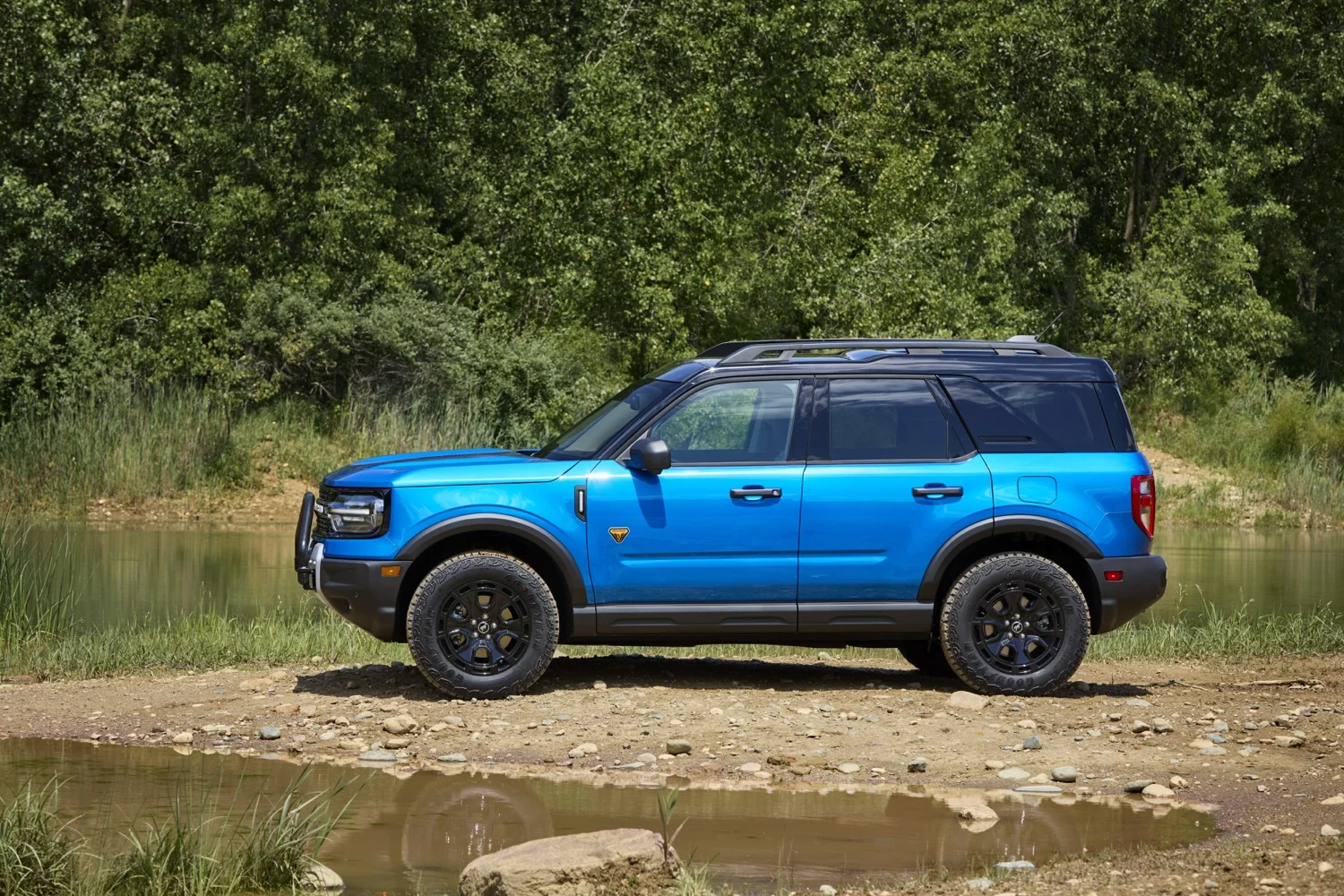
The 2024 Ford Bronco Sport did not receive a new engine design for the model year; rather, it maintained the established 1.5L EcoBoost three-cylinder and 2.0L EcoBoost four-cylinder engine lineup. Updates were centered on the introduction of the Free Wheeling trim and refined equipment packages, while mechanical specifications remained consistent with the preceding production cycles to ensure performance reliability.
Overview of the Bronco Sport Powertrain Strategy
When enthusiasts search for a "2024 Bronco Sport engine update," they are often looking to confirm if Ford introduced a new hybrid system, a higher-output turbo option, or a displacement change. For the 2024 model year, Ford opted for consistency. The vehicle continues to utilize the two primary engines that have defined the Bronco Sport’s performance since its launch.
By retaining these platforms, Ford focused on mechanical maturity. Both engines utilize forced induction—turbocharging—to provide the torque necessary for off-road maneuvering and highway merging. Understanding these engines requires looking at their displacement, forced induction technology, and how they distribute power through the standard eight-speed automatic transmission.
The 1.5L EcoBoost Engine: Efficiency and Daily Capability
The standard engine across the Base, Big Bend, Heritage, and Outer Banks trims is the 1.5-liter EcoBoost inline-three cylinder. This engine is designed to balance fuel economy with the demands of an active lifestyle vehicle.
Technical Characteristics
- Displacement: 1,497cc
- Configuration: Inline-3 with Turbocharging
- Performance: 181 horsepower at 6,000 RPM and 190 lb-ft of torque at 3,000 RPM
- Injection: Direct Fuel Injection with Port Fuel Injection synergy
The use of a three-cylinder architecture allows for reduced internal friction compared to a traditional four-cylinder, which contributes to its EPA-estimated fuel economy. Ford utilizes a cylinder deactivation system that can shut down one cylinder during light-load driving conditions. This is a subtle update that has been refined over the years to be virtually imperceptible to the driver, improving efficiency without sacrificing the engine's response when the driver demands acceleration.
The 2.0L EcoBoost Engine: Enhanced Performance for Badlands
For those requiring more robust power for towing, steep inclines, or sandy terrain, the 2.0-liter EcoBoost inline-four cylinder engine remains the flagship option. This engine is exclusive to the Badlands trim level.
Technical Characteristics
- Displacement: 1,999cc
- Configuration: Inline-4 with Turbocharging
- Performance: 250 horsepower at 5,500 RPM and 277 lb-ft of torque at 3,000 RPM
- Cooling System: Optimized for heavy-duty cooling requirements
The 2.0L engine provides a significant increase in peak torque, which is the primary metric for off-roading. With 277 lb-ft, the Badlands trim can navigate technical trails that require immediate power delivery at low speeds. Furthermore, the 2.0L engine allows for higher towing capacity when equipped with the Class II Trailer Tow Package, making it the preferred choice for those who carry cargo, bikes, or light camping trailers.
Comparative Analysis of Powertrain Options
Choosing between the two engine configurations depends largely on the intended use of the vehicle. While the 1.5L engine is sufficient for daily commuting and light-duty trail exploration, the 2.0L engine is engineered for more demanding environments.
| Feature | 1.5L EcoBoost I3 | 2.0L EcoBoost I4 |
|---|---|---|
| Primary Trim Availability | Base, Big Bend, Heritage, Outer Banks | Badlands |
| Horsepower | 181 hp | 250 hp |
| Torque | 190 lb-ft | 277 lb-ft |
| Transmission | 8-Speed Automatic | 8-Speed SelectShift Automatic |
| Best Suited For | Daily commuting, highway driving | Towing, sand, rock crawling |
Transmission and Drivetrain Integration
The engine is only one component of the powertrain. Both engines are paired with an eight-speed automatic transmission. In the 2.0L Badlands model, this transmission includes "SelectShift" capability with paddle shifters mounted on the steering wheel, providing the driver with manual control over gear selection.
The Bronco Sport uses an Intelligent 4x4 system. This is an active all-wheel-drive setup that monitors vehicle sensors to detect wheel slip and distribute torque accordingly. On the 2.0L engine models, this system is supplemented by a twin-clutch rear drive unit, which acts as a mechanical locking differential. This allows the vehicle to send power to the outside rear wheel while cornering, or effectively lock the rear axle to push the vehicle through deep mud or sand. This hardware is a key part of what makes the 2.0L engine's performance feel significantly different from the 1.5L version, even though the engine block remains constant throughout the 2024 model year.
Maintenance Considerations and Longevity
Because the 2024 Bronco Sport utilizes established EcoBoost architecture, parts availability and service knowledge at authorized Ford dealerships are high. Regular maintenance is the most critical factor in ensuring these turbocharged engines reach high mileage.
- Oil Specifications: Always use the motor oil viscosity recommended in the owner's manual (typically 5W-20 or 5W-30 synthetic). The turbocharger relies on high-quality oil for lubrication and cooling; failing to follow the recommended oil change intervals can lead to premature wear on the turbocharger bearings.
- Air Filter Hygiene: Engines with forced induction require consistent airflow. Ensure the engine air filter is inspected every 10,000 to 15,000 miles, or more frequently if the vehicle is driven in dusty or off-road conditions.
- Cooling System Health: With the increased heat generation of a turbocharged system, monitor the coolant levels regularly. The 2024 models feature modern sensors that will alert the driver to overheating, but visual checks remain a best practice for long-term ownership.
Frequently Asked Questions
Did the 2024 Bronco Sport add a hybrid engine?
No, the 2024 Bronco Sport does not feature a hybrid powertrain. The lineup continues to rely on internal combustion turbocharged EcoBoost engines as established in previous years.
Is the 2.0L engine available on the base trim?
No, the 2.0-liter EcoBoost engine is reserved exclusively for the Badlands trim. The other trim levels come standard with the 1.5-liter three-cylinder engine.
Can the 1.5L engine handle steep mountain passes?
Yes, the 1.5L engine is capable of handling mountain passes, though it will operate at higher RPMs to generate the necessary power compared to the 2.0L engine. The transmission is programmed to downshift to keep the turbocharger in its optimal power band.
What is the difference between the 1.5L and 2.0L transmissions?
Both use an eight-speed automatic, but the transmission paired with the 2.0L engine includes paddle shifters and different gear ratios optimized for the higher torque output of the four-cylinder engine.
How does the turbocharger affect long-term reliability?
Modern EcoBoost turbochargers are designed for the lifespan of the vehicle, provided that the engine oil is changed according to the Ford-specified maintenance schedule. Using high-quality synthetic oil is the most effective way to prevent thermal breakdown of the lubricant within the turbocharger housing.
Expert Recommendation for Prospective Owners
If your primary concern is fuel economy for urban environments and occasional highway travel, the 1.5L EcoBoost engine is the most efficient and practical choice. It provides ample power for standard driving and is perfectly suited for the Bronco Sport’s chassis. However, if your ownership plan involves frequent off-roading, heavy cargo transport, or driving at high altitudes, the 2.0L EcoBoost engine in the Badlands trim offers a tangible performance advantage. The extra torque and the sophisticated rear-drive system significantly improve the vehicle's capability in challenging terrain, providing a more versatile experience. Before purchasing, evaluate your local environment; if you rarely encounter off-road conditions, the additional cost of the 2.0L engine may not be necessary for your day-to-day requirements.