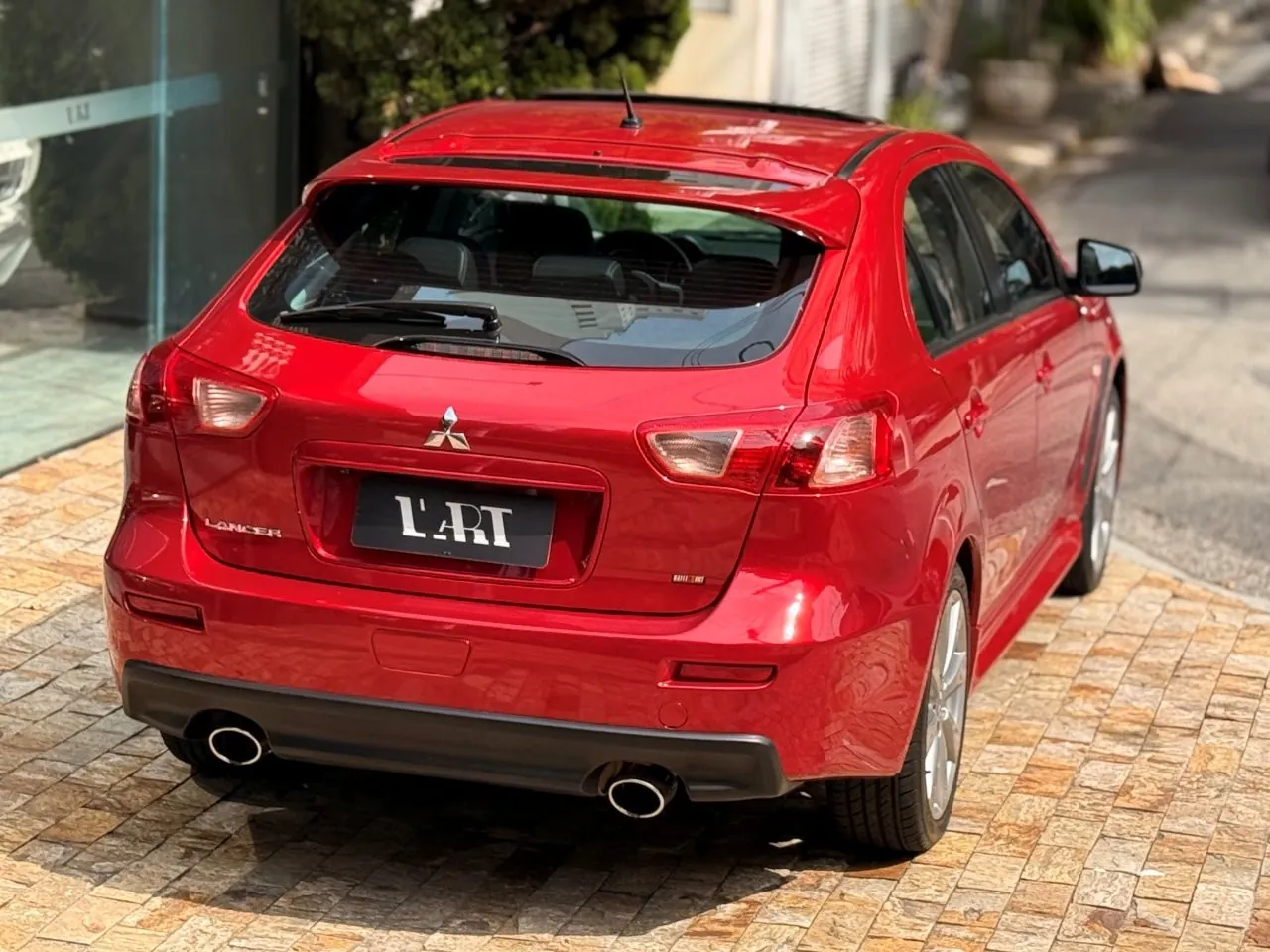
The 2012 Mitsubishi Lancer Ralliart serves as a high-performance bridge between the standard Lancer and the flagship Evolution X. It features a 237-horsepower turbocharged 2.0L engine, a sophisticated Twin-Clutch Sportronic Shift Transmission (TC-SST), and an advanced All-Wheel Control system. This combination provides a versatile, all-weather performance package suited for both daily commuting and spirited driving.
The Engineering Philosophy: Bridging the Gap
To understand the performance of the 2012 Mitsubishi Lancer Ralliart, one must first understand its position within the Mitsubishi hierarchy. During this era, Mitsubishi sought to capture the "prosumer" enthusiast—someone who desired the mechanical DNA of the World Rally Championship-bred Evolution but required a more civilized ride and a lower price point.
The Ralliart is often described as an "Evo Lite," but that label simplifies the extensive engineering that went into the car. It utilizes the same basic chassis architecture as the Lancer family but receives significant bracing and subframe reinforcements. However, it lacks the Evolution’s ultra-stiff "Inverted" strut suspension and wider track. This results in a vehicle that is more compliant over potholes and road imperfections than the uncompromising Evo, making it a superior long-distance tourer while still maintaining high-speed stability and cornering grip.
Powertrain Dynamics: The Detuned 4B11T
At the heart of the 2012 Ralliart is the 4B11T engine. This is an all-aluminum, 2.0-liter, 16-valve inline-four engine equipped with a twin-scroll turbocharger and Mitsubishi's MIVEC (Mitsubishi Innovative Valve timing Electronic Control) system. While it shares the same engine block as the Evolution X, the Ralliart version is tuned differently to prioritize mid-range torque over peak top-end power.
Turbocharger and Power Delivery
The Ralliart utilizes a smaller TD04 turbocharger compared to the larger TD05 found in the Evolution. This choice was intentional. A smaller turbocharger spools significantly faster, reducing turbo lag and providing a punchy, responsive feel in city traffic.
- Peak Horsepower: 237 hp at 6,000 rpm
- Peak Torque: 253 lb-ft at 3,000 rpm
By delivering maximum torque at just 3,000 rpm, the Ralliart feels energetic and "light on its feet" during passing maneuvers. In contrast to high-revving naturally aspirated engines, the 4B11T provides a broad plateau of power that allows the driver to exit corners with significant momentum without needing to downshift constantly.
Internal Components
Unlike the older 4G63 engine, the 4B11T features a timing chain rather than a belt, which improves long-term reliability and reduces maintenance costs. However, in 2026, high-mileage examples of the 2012 Ralliart should be inspected for timing chain stretch, a known issue if oil changes were neglected. The Ralliart's intercooler is also smaller than the Evo's, which can lead to "heat soak" during repeated hard runs on a track, though it remains perfectly adequate for spirited street driving.
The TC-SST Transmission: Innovation and Complexity
The most defining—and controversial—feature of the 2012 Lancer Ralliart performance profile is its transmission. Mitsubishi opted not to offer a manual gearbox for this trim, instead standardizing the 6-speed Twin-Clutch Sportronic Shift Transmission (TC-SST) developed by Getrag.
Understanding Normal and Sport Modes
The TC-SST works by pre-selecting the next gear using two separate clutches (one for odd gears, one for even). This allows for gear changes that occur in milliseconds, far faster than a human could shift a manual.
- Normal Mode: The transmission prioritizes fuel economy and smooth shifts. It tends to hunt for higher gears quickly, which can make the car feel slightly sluggish during relaxed driving.
- Sport Mode: This mode changes the shift logic entirely. It holds gears longer, shifts with more aggressive clamping force, and executes perfectly rev-matched downshifts when braking into a corner.
The primary drawback of the Ralliart’s version of the TC-SST, compared to the one found in the Evolution MR, is the absence of "S-Sport" mode. S-Sport mode provides even faster shifts and higher RPM hold points, though many owners in the aftermarket community have successfully flashed the MR software onto Ralliart units to unlock this capability.
Reliability and Maintenance in 2026
In the current market, the health of the TC-SST is the single most important factor in a Ralliart's performance. It is a high-maintenance unit that requires DiaQueen SSTF-I fluid changes every 30,000 miles. Neglecting this service leads to the failure of the internal mechatronics unit or the clutch packs, which can be prohibitively expensive to repair. When testing a 2012 model today, any shuddering at low speeds or "slip" under heavy throttle indicates a transmission nearing the end of its functional life.
All-Wheel Control (AWC) and Handling
The 2012 Ralliart features an exceptionally capable drivetrain that sets it apart from competitors like the front-wheel-drive Volkswagen GTI or the standard Subaru WRX of that era.
The Active Center Differential (ACD)
The Ralliart uses the Evolution IX’s version of the Active Center Differential. This hydraulically controlled system manages the torque split between the front and rear axles. Drivers can toggle between three settings via a dash-mounted button:
- Tarmac: Provides a 50/50 split but allows for more differential slip to improve turn-in on dry pavement.
- Gravel: Increases the locking factor of the differential for loose surfaces.
- Snow: Maximum locking force to ensure traction on slippery, low-grip roads.
Unlike the Evolution X, the Ralliart does not feature "Super Active Yaw Control" (S-AYC) on the rear differential. Instead, it uses a mechanical limited-slip differential in the rear and a helical differential in the front. While this means the Ralliart cannot "torque vector" with the same surgical precision as the Evo, it still offers phenomenal mechanical grip that allows it to power out of corners with minimal understeer.
Braking and Chassis Rigidity
While the acceleration and grip levels are impressive, the Ralliart’s braking system is often cited as its primary performance bottleneck.
The 2012 Ralliart is equipped with dual-piston sliding front calipers and single-piston rears. While adequate for a single emergency stop or light canyon carving, they lack the heat dissipation and "bite" of the four-piston Brembo units found on the Evolution. Drivers who intend to use the Ralliart for autocross or track days frequently upgrade the pads, lines, and fluid to mitigate brake fade.
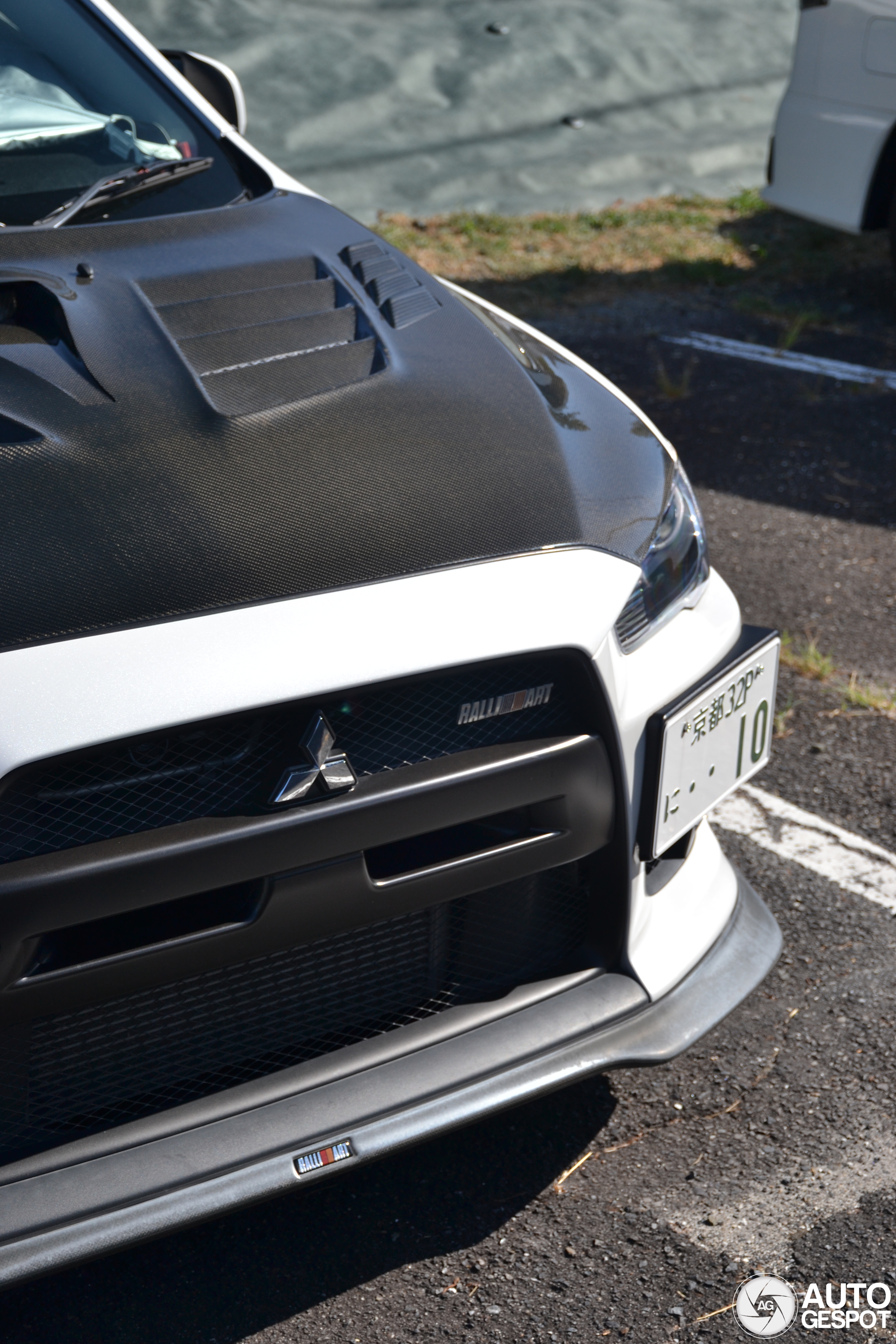
The chassis itself is a steel unibody. To improve weight distribution, Mitsubishi equipped the Ralliart with an aluminum hood featuring functional vents to extract heat from the turbocharger. This helps lower the car's center of gravity and improves front-end turn-in response.
2012 Ralliart Technical Specifications
The following table outlines the core performance specifications for the 2012 model year.
| Feature | Specification |
|---|---|
| Engine Type | 2.0L Turbocharged 4B11T Inline-4 |
| Horsepower | 237 hp @ 6,000 rpm |
| Torque | 253 lb-ft @ 3,000 rpm |
| Transmission | 6-Speed TC-SST (Dual-Clutch) |
| Drivetrain | Full-time AWD with Active Center Differential (ACD) |
| 0-60 MPH | ~5.5 to 5.8 Seconds |
| Quarter Mile | ~14.2 Seconds @ 96 mph |
| Top Speed | 145 mph (Electronically Limited) |
| Curb Weight | 3,461 lbs (Sedan) |
| Brakes (Front/Rear) | 11.6-inch Vented Disc / 11.9-inch Solid Disc |
| Wheel Size | 18 x 7.5-inch Alloy |
| Tires | 215/45R18 Yokohama ADVAN A10 |
Comparative Analysis: Ralliart vs. Evolution X vs. WRX
In the 2012 marketplace, the Ralliart occupied a unique niche. Its closest rival was the Subaru WRX. The WRX of that era offered more raw power (265 hp) and a traditional 5-speed manual, making it the choice for purists. However, the WRX used a simpler viscous-coupling center differential, whereas the Ralliart offered the technologically superior ACD and the lightning-fast shifts of the SST.
Compared to the Evolution X, the Ralliart is roughly 50 horsepower down and lacks the wide-body aesthetic. However, the Ralliart’s tighter turning radius and softer suspension make it a significantly better "only car" for a buyer who needs to haul groceries and survive a daily commute while still having the capability to enjoy a mountain road on the weekend.
Owning a 2012 Ralliart in 2026: Maintenance and Longevity
Buying or maintaining a Ralliart in 2026 requires a proactive approach to mechanical care. Because these cars are now nearly 14 years old, certain performance-degrading issues become common.
Critical SST Maintenance
As mentioned previously, the transmission is the heart of the vehicle’s performance. In 2026, owners should perform a "Teach-In" procedure via specialized diagnostic software (like MUT-III or Tactrix OpenPort) every time the fluid is changed. This recalibrates the clutch engagement points to account for wear, ensuring the car continues to shift smoothly and quickly.
Suspension and Bushings
The rubber bushings in the control arms and subframe are likely reaching the end of their service life by 2026. Replacing these with polyurethane or fresh OEM rubber can restore the "sharpness" that the car had when it left the showroom. Similarly, the factory struts often begin to leak around the 80,000-mile mark.
The ACD Pump Issue
A common failure point in the Lancer's AWD system is the ACD pump. Located behind the passenger-side rear wheel, the pump is exposed to road salt and debris. If the pump fails, the car reverts to a static torque split, and the "AWC Service Required" light will illuminate. In 2026, many owners have moved these pumps to the trunk to protect them from the elements or have opted for refurbished units with improved weather sealing.
Performance Modifications: The Path to 300+ HP
The Ralliart is highly receptive to modifications because it shares so much DNA with the Evolution. It is common for owners to swap the Ralliart’s TD04 turbo for the Evolution’s TD05 unit. With a larger intercooler, a more efficient exhaust system, and a professional ECU tune, the 2012 Ralliart can easily achieve 300 to 330 wheel horsepower.
However, the limiting factor for modifications is always the TC-SST. While the engine internals are robust, the factory clutch packs in the transmission begin to slip when torque exceeds approximately 300 lb-ft. Owners looking for high-power builds must budget for upgraded clutch discs (such as those from Dodson Motorsport or Kozmic Motorsports) to handle the increased load.
Frequently Asked Questions
Does the 2012 Lancer Ralliart require premium fuel? Yes, the 4B11T is a high-compression, turbocharged engine that requires 91 octane (AKI) or higher. Using lower-grade fuel can cause the engine's ECU to retard timing to prevent "knock," which significantly reduces horsepower and can lead to long-term engine damage.
Can you convert a Ralliart to a manual transmission? While technically possible, it is an extremely labor-intensive and expensive process. It requires the transmission, pedals, master cylinder, wiring harness, and ECU from a donor Lancer or Evolution. For most owners, it is more cost-effective to buy an Evolution GSR if a manual gearbox is a requirement.
What is the "Touring" package on the 2012 Ralliart? The Touring package was an optional equipment group that added luxury features like HID headlamps, a power sunroof, leather seating surfaces, and an upgraded Rockford Fosgate sound system. While it adds weight (roughly 100 lbs), it does not change the core engine or drivetrain specifications.
How does the Ralliart perform in the snow? The Ralliart is exceptional in winter conditions. When equipped with dedicated winter tires and set to "Snow" mode on the ACD, the car provides high levels of predictable traction. The AWD system is much more advanced than the "slip-and-grip" systems found on many modern crossovers.
Final Recommendation
The 2012 Mitsubishi Lancer Ralliart remains a compelling performance value in 2026 for those who understand its specific needs. It offers a unique combination of rally-derived AWD technology and dual-clutch speed that was ahead of its time. To ensure optimal performance, prospective buyers should prioritize vehicles with a documented history of SST fluid changes and inspect the ACD pump for operation. With proper maintenance and a few strategic upgrades to the braking system, the Ralliart continues to deliver a driving experience that is both engaging and practical.