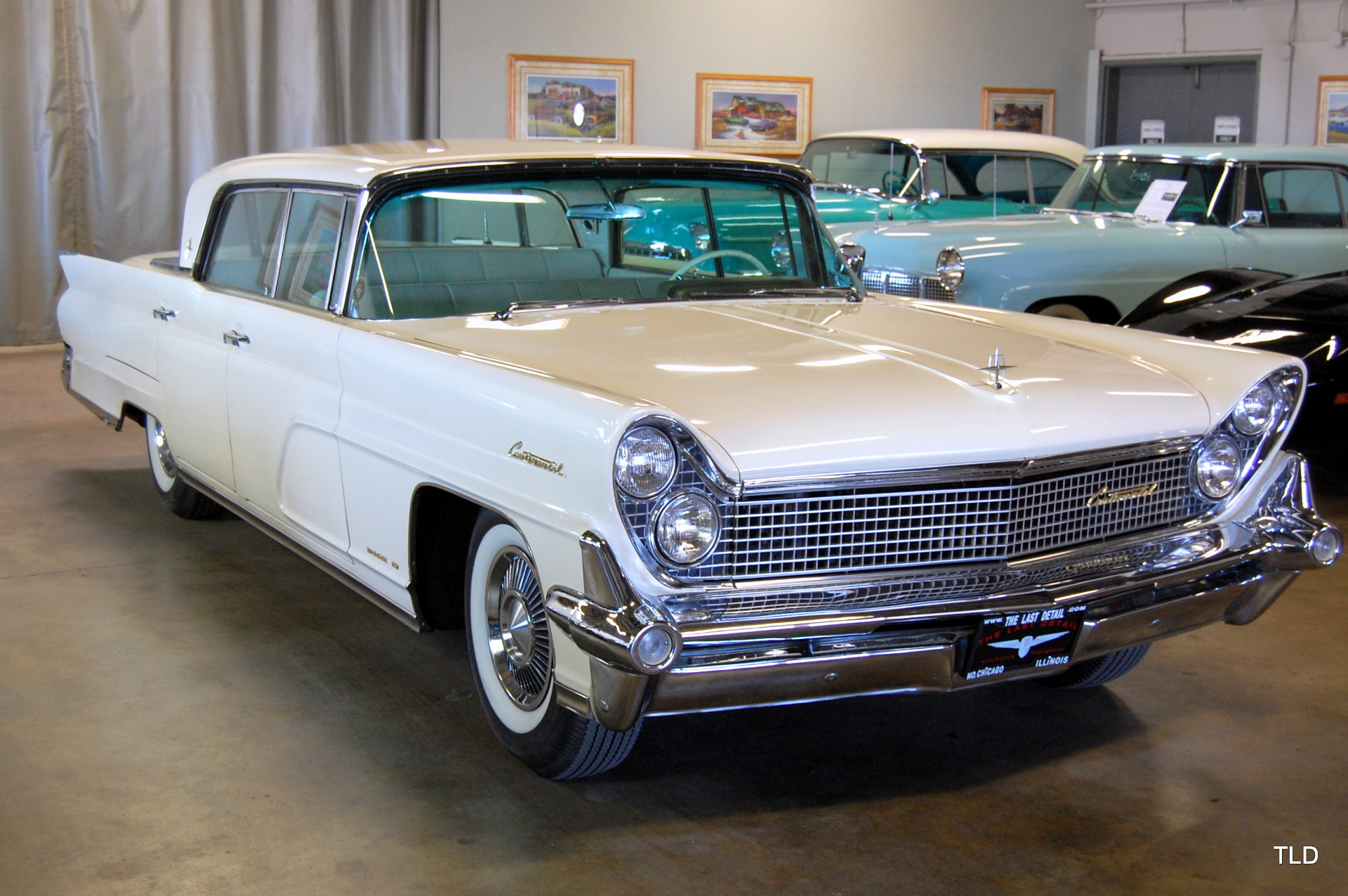
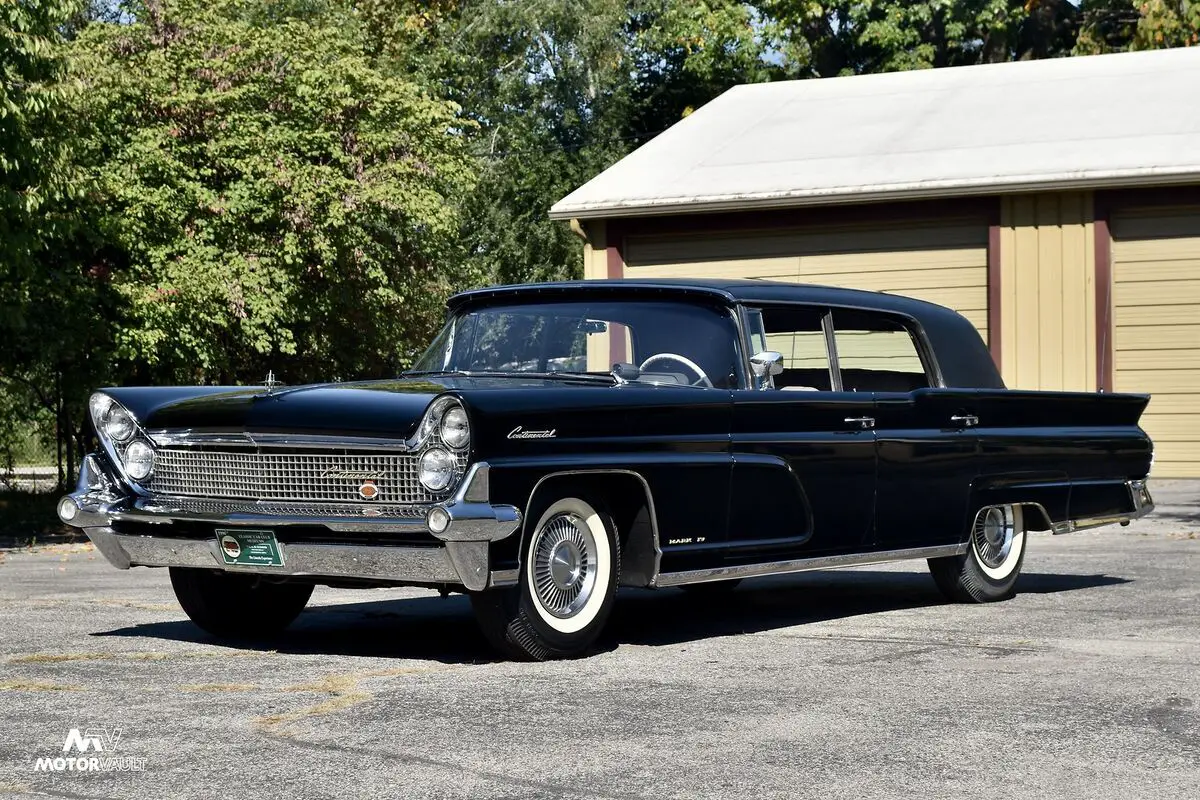
The 1959 Lincoln Continental Mark IV represents a high-water mark of late-1950s American automotive excess, characterized by its sheer physical scale, distinctive reverse-slant rear window, and unibody construction sharing. Built during an era when Detroit stylists competed to produce the longest, lowest, and most ornate vehicles on the road, the Mark IV distinguished itself through subtle luxury, immense proportions, and unique styling cues that set it apart from contemporary Cadillacs and Chryslers.
The Genesis of the Continental Division and the Mark Series
To understand the 1959 Lincoln Continental Mark IV, one must first look at the restructuring of Ford Motor Company’s luxury vehicle strategy during the mid-1950s. Following the massive success and cultural icon status of the 1956–1957 Continental Mark II—a hand-built, ultra-exclusive coupe that famously lost money on every single unit sold—Ford needed a way to capture the prestige of the Continental name without the catastrophic manufacturing costs of the Mark II.
In response, Ford management dissolved the standalone Continental division and integrated it back into Lincoln as a top-tier series. The goal was to retain hand-crafted levels of interior luxury while lowering production overhead by utilizing shared unibody platforms and assembly lines with standard Lincoln models. This transition birthed the Mark III for the 1958 model year, which was subsequently updated and refined into the Mark IV for 1959.
Exterior Design and the Infamous "Breezeway" Window
The exterior styling of the 1959 Lincoln Continental Mark IV is most famous for one specific, polarizing feature: the reverse-slant, retractable rear window, often referred to as the "Breezeway" window. Unlike traditional flat or wraparound rear glass, this window angled inward toward the interior cabin, mirroring the roofline design previously seen on certain 1950s station wagons and concept cars.
| Feature | Specification |
|---|---|
| Wheelbase | 131.0 inches (3,327 mm) |
| Overall Length | 227.1 inches (5,768 mm) [Longest non-limousine car] |
| Curb Weight | Approx. 5,000 to 5,200 lbs (2,268 - 2,359 kg) |
| Engine | 430 cubic inch (7.0L) MEL V8 |
| Transmission | Turbo-Drive 3-speed automatic |
| Body Styles | Hardtop Coupe, Landau, Town Car, Convertible |
Beyond the rear window, the 1959 Mark IV featured several design updates compared to its 1958 predecessor. While the 1958 model featured heavy-handed, scalloped side ornamentation and a front grille packed with quad headlights and massive bumper guards, the 1959 iteration cleaned up the flanks. Designers toned down the side chrome, substituted simpler side sweeps, and refined the front grille mesh to give the massive automobile a slightly more cohesive, elegant profile.
Despite these cleanups, the car remained staggering in scale. Measuring over 227 inches long with a 131-inch wheelbase, the Mark IV was longer than many contemporary Cadillacs and required dedicated parking accommodations in standard American garages.
Engineering, Powertrain, and Performance
Propelling the substantial weight of the 1959 Lincoln Continental Mark IV required a massive power plant. Ford utilized its heavy-duty MEL (Mercury-Edsel-Lincoln) engine family, specifically a 430-cubic-inch (7.0-liter) big-block V8 equipped with a four-barrel carburetor.
- Horsepower: Rated at 350 horsepower at 4,400 rpm.
- Torque: Produced a robust 490 lb-ft of torque at 2,200 rpm, engineered to move the heavy unibody frame effortlessly off the line.
- Transmission: Power was channeled through Lincoln’s three-speed Turbo-Drive automatic transmission, known for its smooth, seamless gear shifts designed to isolate passengers from mechanical harshness.
Unlike traditional body-on-frame construction used by most American manufacturers at the time, the Lincoln Continentals of this era utilized a massive unibody platform built at the Wixom, Michigan assembly plant. This construction method was intended to provide exceptional structural rigidity and a quieter ride, though it also made the vehicles exceptionally susceptible to structural corrosion if exposed to road salt or moisture over extended periods.
Interior Luxury, Options, and Comfort
Inside the cabin, the 1959 Mark IV aimed to compete directly with imported European luxury cars and domestic handcrafted coachwork. The dashboard featured aircraft-inspired instrumentation, deep-cushioned bench seats upholstered in premium broadcloth, leather, or specialized nylon weaves, and an array of power-operated accessories that were advanced for the era.
Drivers and passengers enjoyed standard or optional features including:
- Power windows (including the signature rear Breezeway glass operated from the driver's seat)
- Six-way power-adjustable front seats
- Power steering and power-assisted drum brakes
- Factory-integrated air conditioning (a relatively rare and expensive luxury option in 1959)
- Advanced radio systems with dual-speaker setups and power antennas
The interior space was cavernous, designed to accommodate six adult passengers in supreme comfort, though the sloping roofline and massive dimensions made tight-space maneuvering challenging even with power steering assistance.
Production Figures and Market Reception
The late 1950s was a economically volatile period in the United States, marked by a sharp recession in 1958 that severely impacted luxury car sales across all major manufacturers. While the 1958 models struggled financially, the market saw a modest recovery by 1959.
| Body Style | Production Volume (1959) |
|---|---|
| Mark IV Hardtop Coupe | 11,049 units |
| Mark IV Town Car (Formal Sedan) | 214 units |
| Mark IV Landau (Formal Roof Coupe) | 1,085 units |
| Mark IV Convertible | 3,115 units |
While these production numbers represented a reasonable volume for an ultra-luxury vehicle of the era, Ford's luxury division was still failing to turn the kind of high-margin profits management desired. This financial reality forced Lincoln to completely pivot for the 1961 model year, abandoning the long, ornamented look of the late 1950s in favor of the clean, timeless slab-side design of the famous 1961 Continental.
Common Restoration and Ownership Considerations Today
For modern classic car collectors and automotive historians, preserving a 1959 Lincoln Continental Mark IV presents distinct challenges and rewards.
Structural Integrity and Rust
Because these cars utilized complex unibody construction rather than a separate frame, rust is the primary enemy. Critical structural areas—such as the rocker panels, lower quarter panels, floor pans, and torque box attachment points—are prone to hidden corrosion. Finding an example with solid, original sheet metal is paramount before undertaking any restoration project.
Mechanical Maintenance
The 430-cubic-inch MEL V8 is a robust engine, but sourcing specific engine ancillaries, cooling components, and exhaust systems can be difficult. Furthermore, the complex vacuum-operated systems that controlled accessories, heater controls, and the Breezeway window require meticulous tuning and fresh rubber vacuum lines to function correctly.
Braking and Suspension
Weighing over 5,000 pounds, the braking system works hard. Most surviving examples require complete rebuilds of the power brake booster and drum brake assemblies to ensure safe operation on modern roads. Power steering components must also be inspected regularly for leaks and play.
Frequently Asked Questions
What makes the 1959 Lincoln Continental Mark IV different from the 1958 Mark III?
The 1959 Mark IV shares the same basic unibody platform and mechanical underpinnings as the 1958 Mark III, but features revised exterior styling. Designers cleaned up the side ornamentation, modified the front grille mesh, and refined interior trim options to create a slightly more understated luxury aesthetic compared to the heavily chromed 1958 model.
Why is the rear window on the 1959 Mark IV called the "Breezeway" window?
The rear window features a distinct reverse-slant angle and can be rolled down electrically into the body. This design allowed passengers to lower the rear glass while driving to create a flow-through ventilation effect ("breeze") through the cabin without the turbulent wind buffeting typically caused by opening side windows.
Was the 1959 Lincoln Continental Mark IV profitable for Ford?
No. Despite high retail price tags, the immense development costs of the unibody platform, complex styling features, and relatively low production volumes meant that Ford Motor Company lost money on the Continental Mark series through the late 1950s, prompting a complete redesign for the 1961 model year.
How rare is the 1959 Lincoln Continental Town Car or Landau?
Extremely rare. While standard hardtop coupes and convertibles were produced in thousands, formal roof variants like the Town Car and Landau featured specialized padded vinyl roof treatments and limited production numbers (just 214 Town Cars built), making them highly sought-after collector pieces today.
What kind of fuel economy did the 1959 Mark IV get?
Fuel economy was not a primary design metric in 1959. Equipped with a 430-cubic-inch V8 and weighing more than 5,000 pounds, the Mark IV typically achieved between 8 and 11 miles per gallon under normal driving conditions, requiring a large fuel tank for cross-country touring.
Next Actions for Collectors and Enthusiasts
If you are considering purchasing or restoring a 1959 Lincoln Continental Mark IV, prioritize inspecting the structural unibody frame for rust before evaluating cosmetic paint or interior upholstery. Join marque-specific registries such as the Lincoln and Continental Owners Club (LCOC) to connect with specialized parts suppliers, technical advisors, and fellow enthusiasts who can assist with authentic restoration guidance.