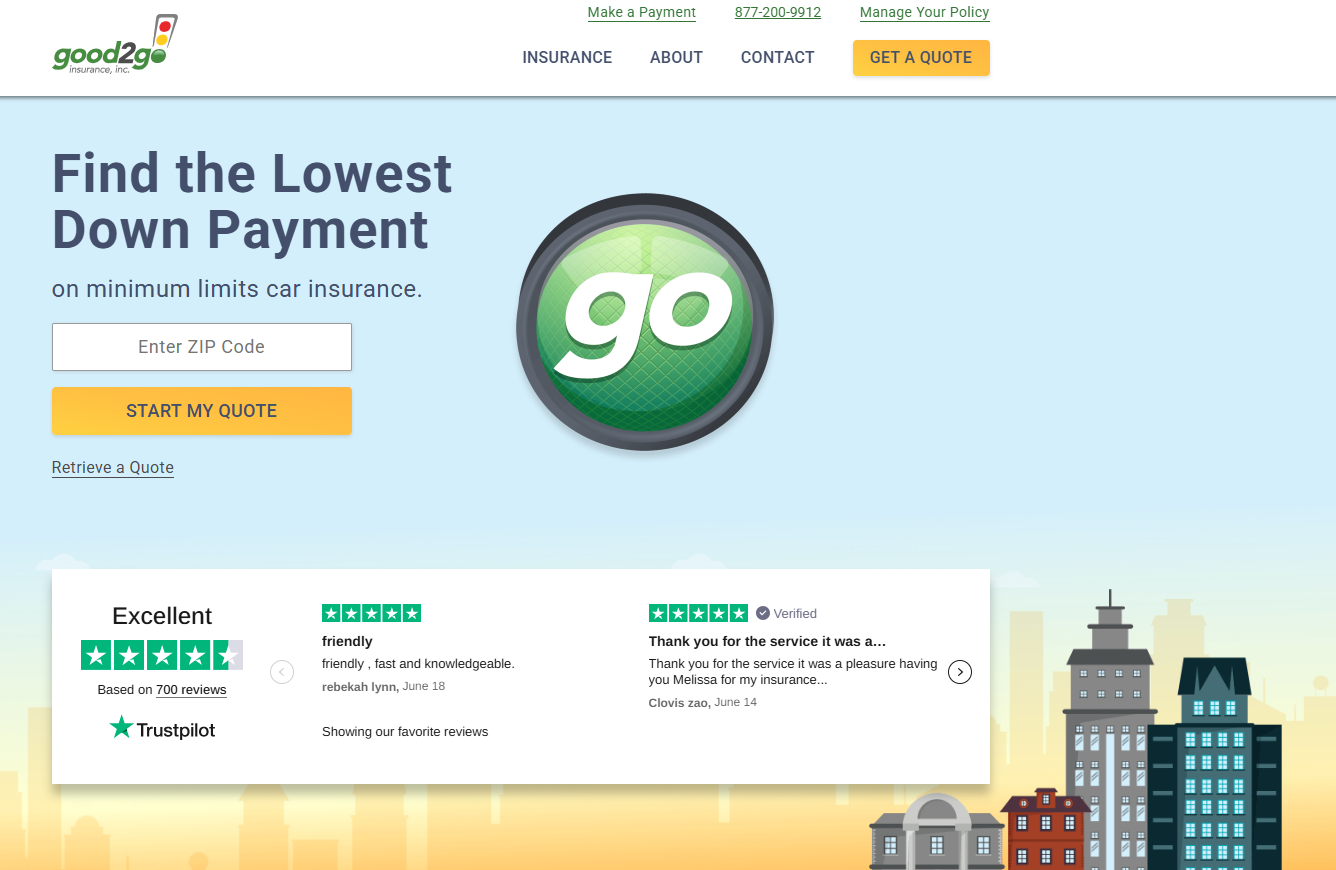
The Good2Go auto insurance commercial serves as a primary marketing vehicle for the specialized insurer, highlighting their focus on minimum-limits coverage, high-risk drivers, and drivers needing immediate proof of insurance to reinstate suspended licenses. These advertisements typically emphasize affordability, fast online quotes, and accessible coverage options for motorists who struggle to find policies through traditional mainstream carriers.
Introduction to Good2Go Auto Insurance and Its Marketing Strategy
Good2Go auto insurance, a brand managed under Privilege Underwriters, Inc., or affiliated entities specializing in non-standard auto insurance, targets a very specific demographic within the broader American personal lines market. Understanding the positioning of a Good2Go auto insurance commercial requires looking past the catchy jingles or memorable visual gags to examine the underlying product offering. Non-standard auto insurance companies cater to drivers who have blemishes on their driving records, such as multiple speeding tickets, at-fault accidents, DUI convictions, or lapses in continuous insurance coverage.
The primary search intent surrounding queries for a commercial overview of this brand usually stems from consumers who have seen an advertisement on television or digital platforms and want to know if the advertised promises translate into a legitimate, cost-effective policy. Marketing campaigns for non-standard insurers like Good2Go face unique challenges. They must address the pain points of budget-conscious drivers—often those facing state mandates to file SR-22 certificates of financial responsibility—while reassuring them that obtaining coverage will not be an overly complicated or humiliating ordeal.
By analyzing the messaging, target audience, structural elements, and regulatory context of these commercials, potential policyholders can better evaluate whether the advertised services align with their actual driving needs and financial situations. This overview explores the core components of these promotional spots, the realities behind the non-standard insurance market, and how to verify if a budget-focused insurer is the right choice for your vehicle.
The Core Target Audience of Good2Go Advertising
Mainstream insurance carriers like State Farm, Geico, or Progressive often focus their marketing budgets on preferred drivers: individuals with clean driving records, excellent credit scores, homeowners status, and long histories of continuous coverage. Conversely, Good2Go auto insurance commercials speak directly to the non-standard driver segment. This target audience includes several distinct groups of motorists who frequently face rejection or exorbitant quotes from standard carriers:
- High-Risk Drivers: Individuals with points on their license due to moving violations, recent accidents, or reckless driving charges.
- Drivers Needing SR-22 or FR-44 Filings: Motorists who have had their licenses suspended and must prove to the state Department of Motor Vehicles (DMV) that they carry mandatory liability insurance.
- Budget-Constrained Consumers: Lower-income households or gig-economy workers for whom state-minimum liability insurance is the only financially viable option to keep their vehicles legally on the road.
- Lapsed Coverage Drivers: People who experienced a gap in insurance coverage, which traditionally triggers higher rates and strict underwriting requirements from standard insurers.
The messaging in a typical Good2Go auto insurance commercial is deliberately tailored to these groups. Rather than emphasizing complex bundle discounts for home and auto or elaborate accident forgiveness programs, the commercials focus heavily on getting drivers legal quickly, offering low down payments, and accepting drivers regardless of their past driving history.
Key Messaging and Visual Themes in Good2Go Commercials
Advertising campaigns for non-standard auto insurance rely on distinct visual and auditory tropes designed to resonate instantly with viewers who feel priced out or excluded by major carriers. When dissecting a Good2Go auto insurance commercial, several recurring themes emerge:
Accessibility and Simplicity
The commercials emphasize that getting a quote and purchasing a policy takes only a few minutes. This appeals to consumers who may need instant proof of insurance to clear a registration hold or reinstate a suspended driver's license. The call to action usually directs viewers to a streamlined online portal or a toll-free phone number staffed by bilingual agents.
Affordability and Minimum Limits
A central pillar of the marketing narrative is cost. Good2Go frequently highlights low down payments and budget-friendly monthly rates. It is important for consumers to understand that these low rates typically correspond to state-minimum liability coverage. This means the policy is designed primarily to satisfy legal driving requirements rather than provide comprehensive physical damage protection for the insured's own vehicle.
Overcoming Driving Record Stigma
The tone of these advertisements is generally non-judgmental. While major insurers might run campaigns highlighting safe driving habits to earn rewards, non-standard commercials often acknowledge that "accidents happen" or that past mistakes should not prevent someone from driving to work or supporting their family. This empathetic positioning builds rapport with drivers who feel marginalized by traditional insurance underwriting models.
Product Realities: What Good2Go Actually Sells
To fully understand a Good2Go auto insurance commercial, viewers must separate marketing presentation from insurance industry realities. Non-standard insurance serves a vital economic function, but it operates under specific parameters that consumers must understand before purchasing a policy.
| Coverage Type | What It Covers | Standard Inclusion in Basic Non-Standard Policies |
|---|---|---|
| Bodily Injury Liability | Medical expenses and legal fees if you injure someone in an at-fault accident. | Yes (set to state-minimum limits by default). |
| Property Damage Liability | Repair or replacement costs for another person's property damaged in an accident. | Yes (set to state-minimum limits by default). |
| Collision Coverage | Repairs to your own vehicle resulting from a crash with another car or object. | Optional (often excluded to keep monthly premiums low). |
| Comprehensive Coverage | Non-collision incidents such as theft, fire, vandalism, weather events, or animal strikes. | Optional (frequently declined by budget-conscious buyers). |
| SR-22 Certification | Electronic filing submitted to the state DMV proving continuous financial responsibility. | Available upon request for high-risk drivers. |
Consumers who purchase coverage based on a commercial's promise of ultra-low rates often select state-minimum liability. While this makes the policy as cheap as possible, it leaves the driver entirely unprotected against losses to their own vehicle and exposes them to severe personal financial liability if they cause an accident that exceeds their policy's low coverage caps.
Cost Considerations and Financial Trade-Offs
While Good2Go commercials emphasize low upfront costs, insurance pricing is dictated by actuarial risk rather than advertising slogans. Several factors influence the actual cost of a non-standard auto insurance policy:
- State Regulations: Insurance is regulated at the state level. Coverage requirements, minimum limits, and rating factors vary significantly between states like California, Texas, Georgia, and Florida.
- Driving Record Severity: Even within the non-standard market, a driver with multiple DUIs will pay substantially more than a driver with a single minor speeding ticket.
- Down Payment Structures: Non-standard insurers typically require a down payment to activate coverage, followed by monthly installments. Advertised low down payments often require enrollment in automatic payment plans (autopay) and electronic document delivery.
- Fees: Policyholders should review all administrative fees, installment fees, and cancellation charges, as these can add up quickly on lower-premium policies.
Comparing Non-Standard Insurance Advertising to Standard Carriers
| Feature | Good2Go / Non-Standard Commercials | Major Standard Carriers (e.g., Geico, Progressive) |
|---|---|---|
| Primary Target | High-risk drivers, license reinstatements, budget limits. | Preferred drivers, homeowners, multi-car households. |
| Key Selling Point | Acceptance regardless of record; fast, cheap minimum limits. | Extensive discounts, robust digital apps, accident forgiveness. |
| Coverage Focus | State-minimum liability and SR-22 filings. | Comprehensive and collision protection, high liability limits. |
| Marketing Tone | Direct, problem-solving, empathetic to past driving mistakes. | Lifestyle-oriented, humorous, reward-focused for good behavior. |
Recognizing this distinction prevents consumer frustration. A driver seeking full coverage and vanishing deductibles will find that non-standard commercials do not speak to their needs, whereas a driver struggling to find an insurer willing to accept an SR-22 requirement will find the specialized focus highly relevant.
Common Consumer Mistakes When Responding to Insurance Commercials
Television and digital insurance advertisements are designed to prompt immediate emotional responses. When evaluating a Good2Go auto insurance commercial, consumers frequently fall into several common traps:
- Confusing Cheap Rates with Adequate Protection: Selecting the absolute minimum legal coverage to save money on monthly premiums without considering personal asset exposure in a major accident.
- Ignoring Deductibles and Exclusions: Assuming that optional coverages like roadside assistance or rental car reimbursement are automatically included in low advertised rates.
- Failing to Verify State Availability: Assuming that a nationally marketed brand offers identical products, pricing, and licensing in every single state. Insurance products are underwritten by specific subsidiary companies that must be licensed by individual state insurance commissioners.
- Overlooking Down Payment Requirements: Focusing solely on the monthly payment figure quoted in an ad while overlooking the initial binder payment required to start the policy.
How to Verify and Research a Non-Standard Auto Insurer
Before purchasing a policy seen in an auto insurance commercial, consumers should perform due diligence to ensure the company is financially stable and licensed to operate in their specific jurisdiction.
- Check State Insurance Department Records: Visit your state’s Department of Insurance or Office of the Insurance Commissioner website. Verify that the underwriting company behind the brand holds an active, valid license to sell property and casualty insurance in your state.
- Review Financial Strength Ratings: Look up independent rating agencies such as A.M. Best to assess the insurer's financial stability and claims-paying ability.
- Examine Consumer Complaint Ratios: State insurance departments track consumer complaints regarding claims handling, premium billing, and customer service. Reviewing these ratios provides an objective look at how the company treats policyholders.
- Get Multiple Quotes: Never rely on a single commercial or quote. Compare rates across multiple non-standard and standard carriers to ensure you are getting the best value for your specific risk profile.
Frequently Asked Questions
Does a Good2Go auto insurance commercial mean the company offers full coverage?
Not necessarily. While Good2Go offers various coverage levels, their marketing and core business model focus heavily on state-minimum liability insurance and non-standard risk solutions. Full coverage—including comprehensive and collision—is usually available as an optional add-on that will increase the overall premium.
Can I get an SR-22 certificate after seeing a Good2Go commercial?
Yes. Good2Go specializes in non-standard auto insurance, which frequently includes electronic SR-22 or FR-44 filings for drivers who need to prove financial responsibility to their state DMV following a license suspension.
Are the low rates shown in insurance commercials guaranteed for everyone?
No. Insurance rates are strictly personalized based on individual underwriting factors, including your driving record, age, vehicle make and model, ZIP code, and credit history (where permitted by law). Advertised rates typically reflect idealized driver profiles.
How do I know if Good2Go is licensed in my state?
You can verify licensing by checking the official website of your state’s department of insurance or by entering your ZIP code directly into the insurer's official quoting portal to see if policies are actively sold in your area.
What should I do if my insurance quote is higher than the price in the commercial?
This is a common occurrence because commercial pricing represents best-case scenarios. Review the coverage limits and deductible levels in your quote, adjust them to match your financial needs, and shop around with competing non-standard insurers to compare market rates.
Practical Next Steps for Drivers
If you have viewed a Good2Go auto insurance commercial and believe their non-standard offerings align with your situation, your next step should be gathering your vehicle identification number (VIN), driver's license details, and current driving history. Visit their official website or contact a licensed agent directly to request a personalized quote. Ensure you carefully review the declarations page of any proposed policy to confirm that the liability limits and optional coverages match your legal requirements and personal risk tolerance before making a payment.